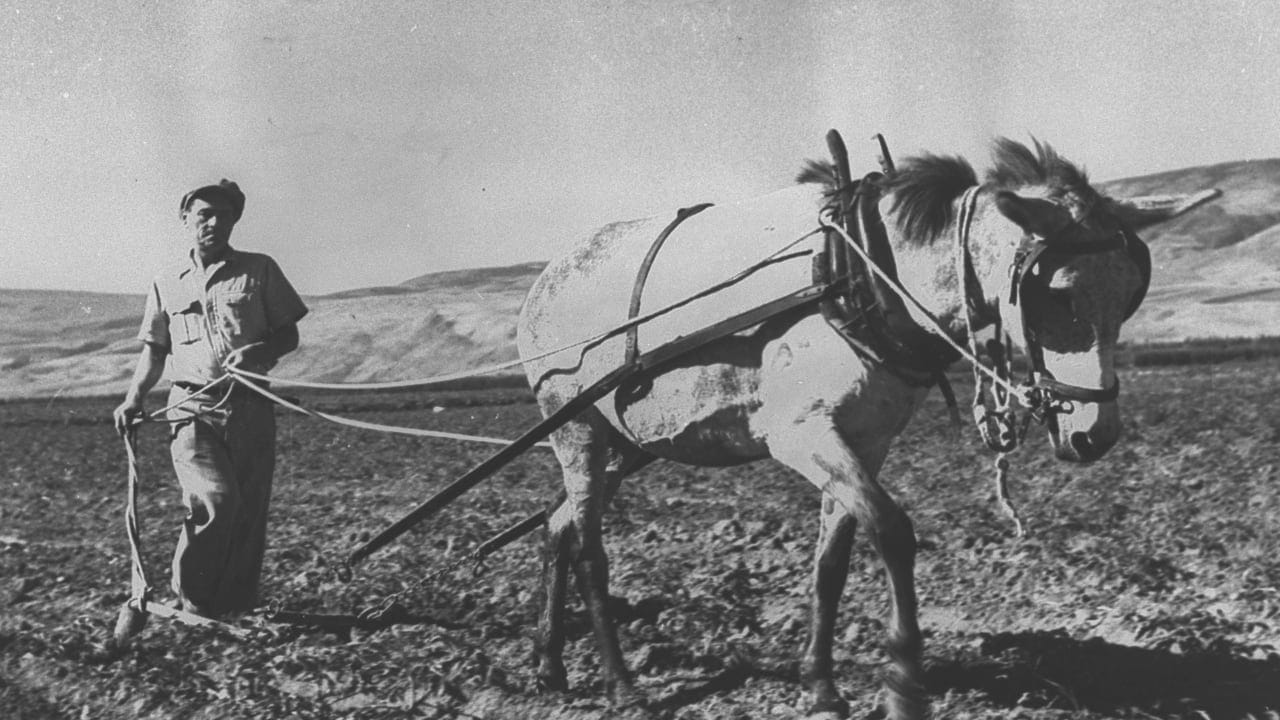
ByJUDITH SEGALOFFJULY 18, 2026 13:44More than a century after they were first founded, have kibbutzim grown up? Let’s start at the very beginning.The first kibbutz: Deganya – The mother of all kibbutzimIn 1910, the State of Israel had not yet been established. Yet a small group of idealistic immigrants from Ukraine and Russia set up Kibbutz Deganya on the shores of the Kinneret. The core group of 10 men and two women leased land through the Keren Kayemeth LeIsrael-Jewish National Fund (KKL-JNF). They engaged in grain cultivation (the name “Deganya” is from dagan, meaning grain), vegetables, and basic irrigated farming suited to the hot climate. The early founders came from the nearby Kinneret farm. Collectively, they created a model that achieved economic success and profitability from the start, despite harsh conditions, which helped popularize the kibbutz model. Income was collective. Members shared labor and proceeds from crops and basic livestock. The Zionist farming commune emphasized self-sufficiency and Jewish labor.That pioneering settlement endures today, a testament to the vision that shaped modern Israel. One hundred and sixteen years later, approximately 259 secular kibbutzim and 24 religious kibbutzim remain both symbols of the past and showcase communal resilience in the present.RECENT TIMES, with a tractor from the early days in the background. (credit: Alef; Flash90)Kibbutzim emerged as a uniquely Israeli response to the challenges of nation-building. Early pioneers sought not only to drain swamps and farm the land, but to defend emerging borders and forge a new Jewish society.“Deganya and Kinneret were the first,” recalled Neri Shotan, CEO of the Kibbutz Movement Rehabilitation Fund, which is part of the larger Kibbutz Movement established in 2000. Born and raised on a kibbutz, he is the grandson of those who helped found Kibbutz Shefayim in 1927.“Many kibbutzim started and continued on the borders as a Zionist way to define the borders of the future State of Israel,” he said.Arthur Ruppin, a German-born Zionist leader, sociologist, and lawyer, helped facilitate the purchase of around 3,000 dunams (roughly 750 acres) of uncultivated land in the area from local Arab owners for KKL-JNF to build Deganya. He then granted the pioneers a trial lease on a portion of this JNF-owned land to test the collective farming model. Ruppin is buried in Deganya Alef in recognition of his contributions. He laid the groundwork for many early kibbutzim.Deganya today has over 650 residents. Its initial business was purely agricultural (grain; basic farming – which developed into irrigated crops like bananas, avocados, and dates – dairy, and poultry), but has grown to support Toolgal, a factory producing industrial diamond tools, which became a major revenue source for decades, with significant exports.Deganya Alef was privatized in 2007. Members could then find their own employment off the kibbutz. They could own homes and cars and receive different incomes, with a social safety net for support. This shift from strict collectivism to a more market-oriented model retained community ties and fostered economic sustainability.Additionally, Deganya founded tourist attractions: a museum, a chocolate shop, and escape rooms.The classic kibbutz modelWhen you think of kibbutzim, you may envision a group of friends picking grapefruit by day, eating dinner with family or in a big dining room with other kibbutz members at night – kissing the kids goodnight between school and bath-time and bringing them back to the children’s quarters for bedtime.Indeed, the original model, built to reflect classic socialism, required all property, income, and resources to be collectively owned, with members turning over all earnings to a communal treasury. Distribution was egalitarian “from each according to his ability, to each according to his needs,” providing equal stipends for food, housing, education, healthcare, and more, regardless of role or productivity.Work was assigned by the kibbutz, sometimes with rotating jobs. Children were raised communally in separate houses, daycare was free, and decisions were made democratically in general assembly meetings. There was no private ownership of homes, cars, or major assets.“The kibbutz movement is true democracy at work,” explained Jonathan Dekel-Chen, a professor of history at the Hebrew University of Jerusalem, who is currently a visiting professor at Columbia University’s School of International and Public Affairs. He is a resident of Nir Oz, which suffered tremendous devastation from the Hamas-led Oct. 7, 2023 invasion. He is also the father of returned hostage Sagui Dekel-Chen. His expertise includes the history of the kibbutz movement, Zionism, rural communities, and modern Israeli society. “Kibbutzim operate through an internal democratic system, which governs the community’s policies, rules, and budgets. This system functions through collective discussion and voting, where decisions are made based on majority rule and the principle of ‘one person, one vote.’”When asked why he chose to live on Kibbutz Ma’agan Michael, Eli Sharfstein explained: “We came to Ma’agan Michael because my wife Poli got a job here as a music teacher. We initially planned to stay for only a year or two but later decided to remain and become kibbutz members.“Ma’agan Michael is one of the largest kibbutzim, but also the most beautiful and the best. We haven’t privatized; we remain a collective kibbutz, though certain services – such as the dining hall, electricity, and water – have been privatized.”Roughly 30 or fewer kibbutzim are still in the classic cooperative model, representing under 15% in many counts. Researchers expect this number to dwindle further, to below 10%.‘Renewed’ kibbutz modelsThe original kibbutz model proved unsustainable for most communities. Heavy debts from 1970s expansion, 1980s hyperinflation and banking crises, declining agricultural profits, and the high cost of universal services forced major reforms.Younger generations sought personal choice, careers, and wealth, leading to talent drain and waning idealism. Communal child-rearing lost its appeal, aging populations strained resources, and rigid rules hindered recruitment.When kibbutzim are privatized, members enjoy individual incomes, private home ownership, and career choice; the kibbutz retains collective ownership of land, factories, and major assets, along with shared facilities (pools, parks, dining halls). The kibbutz provides a social safety net for pensions, education, and hardship support and continued democratic governance through member assemblies.Community life – festivals, mutual aid, and a strong sense of belonging – remains central. The hybrid approach blends individualism with the kibbutz’s core values of cooperation and mutual responsibility, allowing kibbutz continuity. As second- and third-generation kibbutz members decided to stay, the neighborhoods grew to accommodate the different age groups.Adele Raemer, a longtime Nirim resident who made aliyah from New York in the 1970s, came to Israel from the Bronx and, after army service, fell in love with a “ben kibbutz” and with the “family atmosphere in which everyone knows and supports each other” at Kibbutz Nirim, part of the Gaza border communities.When she announced her pregnancy in 1980, her parents also made aliyah, and after her father passed away, her mother joined the kibbutz. The kibbutz sent Adele to school to become an English teacher.“In 2011, we realized that new families didn’t want to join in the way the kibbutz had been set up,” Raemer explained.Today’s privatized or “renewing” kibbutz model allows members to keep most of their personal earnings from jobs, both inside and outside the community, enabling individuals to accumulate significant wealth, own homes, and enjoy a higher standard of living and greater financial success.“Today we have 229 members,” she shared. “There are 145 children and 101 residents, including retirees, volunteers, as well as nurses, doctors, and other workers, and Torenu – young adult professionals who are living in border communities as support.“After Oct. 7, the government built 32 new houses. The kibbutz itself built five or six houses for families with the help of the government,” she continued.“People come here for the community, the quality of life, the ideology of caring for neighbors and helping each other. There are special workshops for retirees, and we’ve built a community within a community. I didn’t come here with peers or a garin; I’ve been alone the whole time, but we now have a small infrastructure within the kibbutz that supports each other. I want to continue and ‘give back’ to the kibbutz through this community,” she said.Raemer described the 2011 shift in her community: “Whatever money you made went into the kibbutz treasury. They took off any bills you had, and we paid very high taxes that we agreed upon to subsidize health and education.”Despite the changes in logistics, values remain central. “We’re still very socialistic,” she said. “Mutual responsibility is the basic thing.”Raemer, who raised four children on the kibbutz and taught for 38 years, noted both the comforts and constraints of the old system – free education and healthcare alongside limits on personal choices.Communities are a necessary part of Jewish life everywhere. While Jews tend to gravitate to communities, Dekel-Chen said there is a spectrum of differences between a regular Jewish community and a kibbutz.“The kibbutz was created as an integral part of the Zionist movement,” he explained. “Before it’s a community or in parallel to the fact that it is a community, it’s also a working organism that’s about land settlement – and not just any land, but the land of Israel specifically.”He said that the concept of kibbutz was specifically for the creation of a Jewish state.“When it was first dreamed up, nobody knew exactly what that state was going to look like. Any Jewish town or mostly Jewish town, or wherever there is a more religious Jewish community, is going to have certain Jewish services. But a kibbutz is much, much more than that,” he shared.“Of course, it’s a community, but it is a working community. So, its purpose is to be a functioning economic organism as well. But initially, it was dedicated to land settlement and agriculture. When David Ben-Gurion was talking about making the desert or the Land of Israel bloom, he was talking about the kibbutzim.“That’s what their job was: to create an agricultural base that could feed a country that was being created, and create food security for that country that was being created,” he explained.Kibbutz in the cityAnother hybrid of the classic kibbutz model is the urban kibbutz. In urban kibbutzim (kibbutz urbanim), finances are more flexible and less collective than in traditional rural ones, yet retain strong communal elements. In some models, members keep most or all of their salaries from outside jobs, and pay monthly dues or a percentage of income to fund shared expenses such as housing subsidies, communal meals, education, culture, welfare, and maintenance.The kibbutz often owns or subsidizes housing, provides partial collective meals (especially on Shabbat), and maintains a mutual aid fund for hardship. A safety net supports education, childcare, healthcare, and crisis response, with budgets decided democratically.In essence, it’s a hybrid: you earn and manage your own money like in the city, but contribute to and benefit from a supportive community framework. This makes urban kibbutzim attractive and sustainable for working professionals who want community without full financial collectivism. Arrangements vary by the kibbutz.This flexible model offers purpose, a sense of belonging, and work-life balance for idealists seeking meaning beyond materialism. Examples include Kibbutz Mishol in Nof Hagalil and others in Sderot, Beit Shemesh, Nahariya, and Tel Aviv’s suburbs.The philosophy of kibbutz emphasized shared labor over religious observance, though a parallel religious kibbutz movement developed its own distinct path. Unlike the more individualistic moshavim, where families often maintained private plots, kibbutzim pooled resources under a stronger collective contract.Today, some 270 kibbutzim are home to 120,000 to 140,000 residents, about 2-2.5% of Israel’s population. Most average 250-260 members, though sizes vary dramatically. Shefayim and Ma’agan Michael have around 1,000 residents and function like small towns, with industrial and agricultural zones and more; smaller outposts in the Arava or border areas have 100 to 250 residents.Beyond orange-pickingEconomically, kibbutzim have diversified far beyond their agricultural roots. According to the 2024 Kibbutz Movement Shnaton (Yearbook), agriculture achieved a record NIS 37.7 billion output – an 8% increase. Leading sectors include orchards, field crops, vegetables, citrus, flowers, dairy, and poultry. Industry remains a pillar, with large factories, regional corporations, and a surge in startups and micro-enterprises.Some of the largest and most successful factories on kibbutzim today include Netafim (Kibbutz Hatzerim), a global pioneer in drip irrigation systems, with billions in annual revenue; Plasson (Kibbutz Ma’agan Michael), a major producer of plastic products for agriculture and industry; and the advanced plastics and defense-related industries of Kibbutz Sasa.Regional cooperatives like Granot handle large-scale food processing and exports. These kibbutz-owned enterprises are global players, driving economic success in the modern renewed kibbutz model far beyond traditional agriculture. Nirlot is a well-known paint company on Nir Oz.Renewable energy has become a major growth engine; about 60% of kibbutzim now have dedicated energy managers. Additional revenues flow from investments, pensions, and tourism.“Agriculture, industry, and tourism are the three main legs of kibbutzim,” Shotan explained. Many also venture into food tech and agritech. Nirim stands out as one of the few purely agricultural kibbutzim.The religious kibbutz movementThe 24 religious kibbutzim bring a distinct Torah-infused perspective. The religious kibbutz movement was formally established around 1929.Sarah Evron, secretary-general of Hityashvut Hachadasha, the Religious Kibbutz Movement, and a member of Kibbutz Sa’ad (adjacent to Kfar Aza), explained that while rooted in socialist ideals, the focus of religious kibbutzim is “Torah and Avodah” (Torah and work), responsibility drawn from Jewish heritage. “Founders like Moshe Una, who was also a Knesset member, spoke of ‘new community justice’ and responsibilities to Am Yisrael. Many religious kibbutzim host homes for people with special needs, placing communal support at the center. It’s not an enterprise. It’s putting in a home for people who need it and making them part of our community,” she said.She pointed out that several religious kibbutzim host or partner with hesder-style army programs and mechinas (pre-army academies). Examples include Ein Tzurim (home to Yeshivat Hakibbutz Hadati, with combined Torah and army tracks), Sa’ad, and other southern religious kibbutzim (often linked to mechinas for religious Zionist youth), and Kfar Etzion and Gush Etzion-area kibbutzim (strongly connected to hesder yeshivas).Kibbutzim like Yavne also collaborate on pre-army frameworks. These programs integrate Torah study with meaningful IDF service, reflecting the Religious Kibbutz Movement’s commitment to religious observance and national responsibility.According to Evron, religious kibbutzim emphasize agriculture for food security and sustainability. “Seventy percent of our income is from milk produced,” she noted.Evron also said that, although Kibbutz Sa’d is part of the Gaza border communities, it was spared the destruction on Oct. 7 that other neighboring communities endured. Members reached out to support their neighbors and maintain strong ties with secular counterparts, participating in joint projects with some.Can a religious person be comfortable on a secular kibbutz? Or vice versa?According to Evron, a hybrid model has been successfully implemented, and another is in the making. Kerem Shalom is a pioneering mixed religious-secular kibbutz that serves as an inspiring model of intentional coexistence within the kibbutz movement.Located in the western Negev near the Gaza border, it brings together religious and secular members who share communal facilities, democratic decision-making, and mutual responsibility while respecting different levels of religious observance. Evron highlighted it as a standout example: “This hybrid approach blends the best of kibbutz community life with greater personal freedom, showing that shared values and dialogue can bridge divides in Israeli society.”A similar new kibbutz is in Arad, according to Evron.Oct. 7 and its aftermath on kibbutzim everywhere“Nir Oz was destroyed on October 7,” recalled Dekel-Chen. “Physically destroyed. There was far more damage sustained in Nir Oz than any other kibbutz or any other place in the country. The army never came to Nir Oz.“I was in Baltimore on my way to an academic conference, attending a friend’s child’s wedding, with my wife. Had I been in Nir Oz that morning, we would not be talking right now,” he continued.“The terrorists rampaged through the entire kibbutz, and then, by roughly 2 p.m., they left. Then the army showed up at around 2:30. It’s a very different story than in Be’eri and the other kibbutzim that were attacked.”Of the 400 residents, 47 were killed, and 76 were taken hostage. The death toll, including hostages, reached 69 people.“It is a miracle that my son survived,” said Dekel-Chen, who had been living on the kibbutz since he arrived in Israel in 1981.When they were initially relocated, efforts were made to keep kibbutz families together, but this was challenging. Herod’s Hotel, which hosted members of Kibbutz Nir Am, not only kept families together in Tel Aviv, but even transported a popular kibbutz bar so the young adults could feel at home there. Many hotels in Israel made similar accommodations. Efforts were made to keep communities together.At first, Nir Oz residents were relocated to Eilat, and while Neri Shotan said that although they are in the expensive process of rebuilding, many Nir Oz survivors have chosen not to return, among them Prof. Dekel-Chen, who said the trauma is too much for his extended family.Bet Nir, near Kiryat Gat, will be taking 52 of the Nir Oz families, and according to Shotan, they have recently arranged to bring 50 new educators from Hashomer Hatza’ir to repopulate Nir Oz. The repopulation effort falls entirely on the kibbutz movement, as Shotan asserted that the government isn’t trying to bring in new people and said it costs upward of NIS 4 million to build just six homes in Nir Oz.Shotan is working to rehabilitate Nir Oz after 92% of the houses were destroyed on Oct. 7. While many of the original members can’t face the trauma of returning, he predicted: “Nir Oz will rise again!”He said that every kibbutz from the Gaza border communities provides mental health specialists and holistic experts who help them, and that the Rehabilitation Fund is considering proposals for mental health, education – formal and non-formal, remembrance and commemoration initiatives. It is the first time they have requested proposals for this.Evron highlighted heroism in nearby Kibbutz Alumim, where Rabbi Shlomo Snuki and his two sons fell defending the gate. “These are the heroes of Kibbutz Alumim... We’re back, settling, doing agriculture, rebuilding our communities, and choosing to make each day on the kibbutz a new opportunity. The kibbutz of the 21st century is... different.”Post-trauma and interest in kibbutz life have grown as an alternative to the “rat race.” People seek meaningful, worthy lives with strong community. “People who want to be part of the community must stand in line,” Evron observed.In the Gaza border communities, places like Nirim suffered direct assaults. Raemer recounted the horror: 30 houses destroyed, five murdered, five kidnapped.“I lost more people who I knew on Oct. 7 than I can even count,” she said. Yet the community’s preexisting strength proved decisive. Evacuated to Beersheba, residents worked hard to maintain connections despite dispersion.“Community builds resilience, and that’s the name of the game,” Raemer emphasized. Many have returned; new families are joining. “We don’t have any empty apartments, and people are waiting in line.”But it isn’t just the South that has been displaced since Oct. 7. The Hamas-led massacre and subsequent Hezbollah attacks from Lebanon tested this communal fabric like never before. Across the South and North, 56 kibbutzim were evacuated. Three hundred kibbutz members were murdered – disproportionate to their small population – and 150 hostages came from kibbutzim. The kibbutz movement responded swiftly, launching a Rehabilitation Fund on Oct. 8. The ramifications are still being felt.“Rehabilitation needs are immense,” said Shotan, noting the North’s disadvantages and ongoing rocket threats. Extraordinary solidarity emerged, with Kibbutz Nirim redirecting donations northward. Religious kibbutzim have also supported affected communities through joint aid.In the North, the situation remains precarious.Yochai Wolfin, community manager of border kibbutz Menara and member of Kfar Hanassi, made the painful call for self-evacuation on Oct. 8, 2023. “We understood that if we didn’t leave, we might find ourselves like the communities in the South,” he recalled.Menara, with just 267 residents pre-war, saw about 74% of its housing and public buildings damaged by anti-tank missiles. The emergency team stayed behind while the community scattered. They returned in July 2025 to a scarred but determined home.“The community became much stronger,” Wolfin said. “We created strong communities. It’s the people themselves who make the difference, as well as the support that we received.”Shotan said that in the North, there is no dedicated agency like the South’s Tekuma: 18 different government offices are involved, and thousands of homes right along the border lack safe rooms.Hezbollah missiles burned thousands of dunams, and rehabilitating the North is a bureaucratic nightmare. The Agriculture Ministry has yet to approve funding for rebuilding, and appraisers must assess the total damage.According to Shotan, expect to see shortages next year of apricots, grapes, apples, and cherries. Additionally, the North lost hundreds of dunams of vineyards. He said it will take eight years to get the fields back to business, and five years to get fruits again after replanting. Even with the hands-on kibbutz management, he said, labor shortages compound the crisis – foreign workers have left, and Palestinian Authority workers are restricted.Add to those the BDS pressures as Europe boycotts kibbutz products, and exports face pressures and currency losses, and the economic prospects are daunting. European business is shrinking. Products being shipped by sea to the US and Japan are problematic; and the currency issue – paying workers in shekels and getting paid shrinking dollars and euros – is causing even more challenges.Then there is the “aging out” of kibbutz farmer members who are now receiving pensions, with fewer younger ones available to work hands-on.“The North is an active war zone,” added Shotan. “Children have been in underground shelters for more than 12 hours per day, and there are very few free-standing shelters in the fields, making it dangerous for the ones who do work there. They look in the sky and hope a drone won’t fall on them.“Along the northern border, there are more than 4,000 houses in kibbutzim with no safe rooms,” said Shotan. “You hear the alarm after the boom. If missiles and drones are flying straight, the Iron Dome can’t help. Migun Tzafon – a program to build reinforced safe rooms – had NIS 150,000 cut from its budget. When construction workers started to dig, they hit bedrock, and they left because digging into rock was too expensive.”Extraordinary solidarity shines through. Kibbutz Nirim redirected designated donations northward. Community manager Maya Liberman wrote: “At this time, the communities of the North are living in an impossible reality, and our hearts go out to them. We are asking that donations be redirected.”Shotan sees this as both inspiring and troubling: “It demonstrates extraordinary solidarity – but also highlights a troubling reality: the growing dependence on philanthropy in place of basic state responsibility.”Resilience, change, and the futureDespite trauma, everyone interviewed by the Magazine agrees that kibbutzim demonstrate extreme adaptability. Many have modernized while preserving the core values that brought them together. Raemer noted the difficult but successful transition to a renewing kibbutz after earlier traumas, including losses in the 2014 Gaza War (Operation Protective Edge): “It was done very conservatively.”Wolfin, whose role involves driving change, acknowledged occasional resistance but stressed growth: “Menara aims to expand to sustain education and community life. New families, including young professionals seeking meaning, are attracted to the border mission.”“Communities stay,” he affirmed.Kibbutzim differ widely. Large, prosperous ones like Ma’agan Michael thrive on industry and tourism. Smaller, remote ones cling to tight cooperative cores. All grapple with aging farmers – many in their late 60s – and the need to attract youth.Religious kibbutzim are expanding. Migdal Oz, in Gush Etzion, is doubling in size with a new neighborhood. Evron mentioned that the movement is open to further growth, perhaps as we inhabit more of Samaria.How does a 100-year-old model still work today?According to an old Yiddish saying, “Where there are two Jews, there are three opinions.” So how did kibbutzniks manage to get along for over 100 years?The answer, according to Shotan, is mutual responsibility. “It ties people together – even in the larger kibbutzim. A kibbutz is more than just a nice place to live; there needs to be contributions to society – understanding that you are not alone. Volunteering and doing things for society are part of the values.”Eli Sharfstein from Ma’agen Michael said, “The kibbutz has institutions dedicated to resolving issues and even disputes that may arise between members or between a member and the kibbutz itself.”How does a kibbutz model stay relevant? Raemer, Wolfin, Shotan, and Evron believe it solidifies the community and holds strategic land.“Keeping the borders – it’s our responsibility,” said Shotan. “It preserves a liberal way of life, a Zionist way of life.”To place people on kibbutzim, he said, the Kibbutz Movement maintains an information center to help match them with kibbutzim. Invitations are sent to garinim – groups of people who are interested in settling together.Evron added that kibbutzim offer “deep social responsibility” and a worthy alternative: “People in Israel want something more than the rat race... We want to do something worthy.”One hundred years on, kibbutzim are neither relics nor utopias. They are evolving communities forged in idealism, tested by war, and sustained by solidarity – secular and religious alike. As Israel faces existential challenges, their experiment in shared purpose, balancing individual needs with collective strength and Jewish communal values, remains a powerful model.In Nirim, Menara, Sa’ad, and beyond, residents are not merely rebuilding – they are reaffirming that community, rooted in responsibility to the land and the people, is one of the strongest guarantees of a resilient Jewish future.Follow us on Google
After 100 years, Israel's kibbutzim are still adapting to war, change, and an uncertain future
Full Article
📰 Original Source
Read full article at Jpost →KhanList aggregates and links to publicly available news content. We do not host full articles from third-party sources. Always verify important information with original sources.