
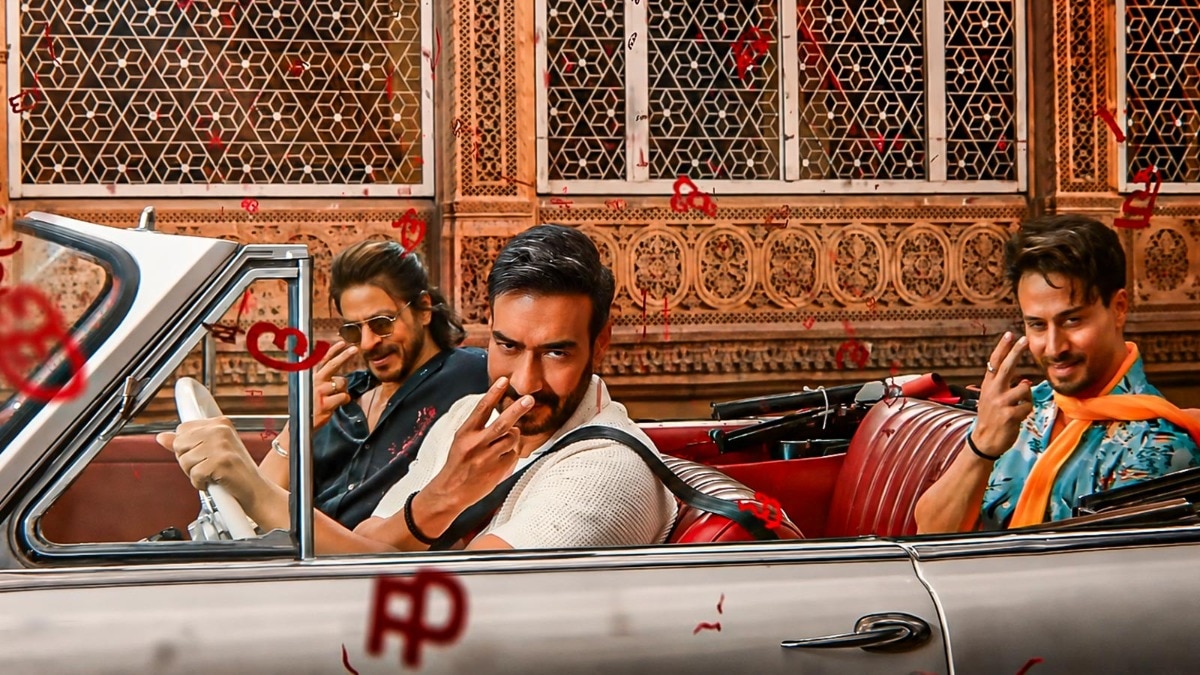
Are actors only actors? Is an endorsement simply a job, a cheque simply a cheque, and the responsibility that comes with being one of the most recognisable faces in the country someone else's problem? Because if that is the argument, then perhaps celebrities need to be a little more consistent.Actors regularly tell us that cinema influences society. They speak about the power of stories, the responsibility of representation, the impact their characters have on audiences. They ask people to spend their hard-earned money on their films. They urge fans to believe in their stories, their causes, their brands, sometimes even their lifestyles.But when the same influence becomes uncomfortable, the argument suddenly changes: "I am just an actor. I was only doing an advertisement." So where exactly does the responsibility begin, and where does it end?The question has resurfaced after the Maharashtra Food and Drug Administration issued show-cause notices to Shah Rukh Khan, Ajay Devgn and Tiger Shroff over their association with Vimal Elaichi advertisements. The FDA has alleged that the campaign amounts to surrogate promotion of a pan masala product prohibited in Maharashtra and has asked the actors to respond. And this is where the familiar defence comes back: If the product is legal, why blame the actor? If the government really believes it is harmful, why doesn't it ban it?It is a fair question. But it is not the end of the argument, because legality and morality are not the same thing. The government can decide what is legal to manufacture and sell. An individual can decide whether to consume it. But an actor has a third choice: whether to put their face, their credibility and their enormous cultural currency behind selling it. That distinction is important especially when the product being indirectly promoted is associated with something far more serious than a vague question of "personal choice".India does not have the luxury of treating tobacco and smokeless tobacco as just another category of consumer goods. In 2022, lip and oral cavity cancer was India's second most common cancer by number of new cases, according to IARC's GLOBOCAN data, with 143,759 cases - 10.2 per cent of all new cancer cases in the country.And the numbers become even harder to dismiss when you look specifically at smokeless tobacco and areca nut. An IARC analysis found that 120,200 of the 389,800 oral cancer cases diagnosed globally in 2022 were attributable to smokeless tobacco and areca nut use. India alone accounted for an estimated 83,400 of them.The WHO says nearly 3,600 people die in India every day due to tobacco use. Its research also shows how early the habit can begin: the 2019 Global Youth Tobacco Survey found that 8.4% of school-going children aged 13–15 used tobacco, while 24% of those who used smokeless tobacco said they had started before the age of seven.Which makes us ask if it's time to stop pretending that a pan masala advertisement is simply an advertisement?The industry knows exactly what it is doing when it puts a harmless-looking product such as elaichi in front of a superstar and attaches it to a brand strongly associated with pan masala. The entire point of surrogate advertising is to keep the brand, the recall and the celebrity association alive while avoiding a direct advertisement for the prohibited product. And surely the actors know that too.This is not about suggesting that Shah Rukh Khan, Ajay Devgn or Tiger Shroff are personally asking people to chew tobacco. It is about acknowledging something that is even more basic: a celebrity endorsement is designed to influence behaviour. That is why brands pay stars crores. Nobody spends that kind of money because an actor's face has no influence.Which is why the "I am only doing my job" defence looks particularly convenient.In 2022, when Akshay Kumar joined Shah Rukh Khan and Ajay Devgn in a Vimal campaign, the backlash was swift. Akshay eventually apologised, stepped away from the association and said he would be more mindful about his future choices.That apology was important, not because Akshay suddenly became morally superior to everyone else, but because he acknowledged something the others have repeatedly resisted acknowledging: sometimes a professional choice can also be a personal responsibility.Ajay, meanwhile, defended his association by calling it a "personal choice" and saying that he was endorsing elaichi, not tobacco. He also argued that if certain products were so harmful, they should not be sold in the first place."It is a personal choice. When you do something, you also see how harmful it would be. Some things are harmful, some are not. I would say it without naming it because I don’t want to promote it; I was doing elaichi. What I feel is that, more than advertisements, if certain things are so wrong, then they should not be sold," he told The Indian Express earlier.SRK has made a similar argument in the past, albeit while discussing soft drinks. His position was essentially that if a product is harmful, the government should stop manufacturing and selling it; if the government allows it to exist because it generates revenue, it should not object to an actor earning from advertising it."I would appeal to any authority to ban it; don’t let it be sold in our country. If smoking is bad, stop the production of cigarettes. If you think soft drinks are bad, don’t allow them to be made. My logic is you’re not stopping them because they bring in revenue. You’re not stopping certain products because they’re revenue sources for the government. Then don’t stop my revenue. I’m an actor. I’m supposed to do a job and earn from it. And very clearly, if you think something is wrong, stop it. Stop making it," said SRK during an interview with CNN-IBN.There is logic in that argument. The state cannot simultaneously collect revenue from something and pretend it has no responsibility for the consequences. But why must the argument end there?Why does the state's failure to ban something automatically become a celebrity's permission to promote it? If the government says, 'You are an adult, you can choose to consume this', does that necessarily mean an actor should say, 'And I will use my face to make it look desirable?' Those are two very different things.The state may leave consumption to personal choice. Advertising is not just about allowing a choice to exist. It is about nudging that choice and celebrity advertising is not ordinary advertising.A superstar does not enter a room as a neutral salesperson. They enter it carrying decades of public affection, aspirational value and trust. Shah Rukh Khan is not just selling a packet. Ajay Devgn is not just delivering a line. Tiger Shroff is not just appearing on a billboard. Their faces have meaning. They are relevant. Which is why they cannot suddenly claim that their influence disappears when the product becomes morally inconvenient.There is another uncomfortable question here: what kind of audience are we talking about?The impact of celebrity advertising is not necessarily the same on a wealthy urban consumer who sees an ad and moves on and on a teenager in a Tier-II or Tier-III city who has grown up seeing a superstar represent everything aspirational - success, masculinity, glamour, popularity, confidence.The tobacco industry itself understands the power of this kind of aspiration. WHO has warned that the industry uses attractive marketing and seemingly harmless products to appeal to young people and create new users.So when a superstar appears in an ad and says, in effect, 'this is the brand', why should we suddenly pretend that the audience is incapable of connecting the dots? This is where the "personal choice" argument also falls apart a little.Yes, consuming a harmful product can be a personal choice. But making that harmful product more attractive to millions of other people is not quite the same personal choice.And if actors are comfortable using their influence when it benefits them, why should they disown that influence when it comes with responsibility? There is something almost absurd about the contradiction.On screen, these same men routinely play national heroes. They fight terrorists, save cities, protect the country, perform impossible stunts, leap from helicopters, climb mountains and take bullets for the greater good. But ask them to exercise a tiny amount of responsibility over a commercial endorsement, and suddenly they are merely professionals doing a job.The heroism apparently ends where the endorsement cheque begins. That cannot be the standard.Nobody is asking actors to become saints. Nobody is asking them to stop advertising cars, phones, clothes, watches or even products that may be unhealthy in excess. The question is whether they can acknowledge and draw a line for themselves. And if they can't, who can? The government? The courts? Advertising regulators? Or must we wait for another controversy, another notice, another apology after another backlash?We have to understand this: the point of having a conscience is that we don't need a government notice to tell you where the line is. We can't conveniently absolve these stars of responsibility for having an influence. We have made them powerful enough to influence what we watch, wear, buy, eat and aspire to be. But when that influence is questioned, they suddenly reduce the same influence to merely being employees: "I am just an actor."No, you are not just an actor. You are an actor and an influencer - a brand in yourself. You are an actor and a public figure whose face has commercial value - because millions of people recognise, admire and trust you.If you know something is harmful, why put your face behind making it desirable? The idea is to be able to simply exercise your judgement as legit stars.Akshay Kumar did, eventually. Amitabh Bachchan also did the same once. They apologised, stepped away and accepted that some endorsements are not worth the money or the association. Maybe that is the standard worth debating. With all the money, fame and influence they have accumulated, can't they just occasionally look at an endorsement and say: 'I don't need to do this?'They consider the same caution while declining a major role in a Rs 200 crore film. Why not do the same for a 30-second commercial?- EndsViews expressed in this opinion piece are those of the author.Published By: Vineeta KumarPublished On: Aug 17, 2026 15:18 IST
Actors know their influence. So why pretend elaichi ads are 'just a job'?
Full Article
Original Source
Read the full article at Indiatoday →KhanList aggregates and links to publicly available news content. We do not host full articles from third-party sources. Always verify important information with original sources.