
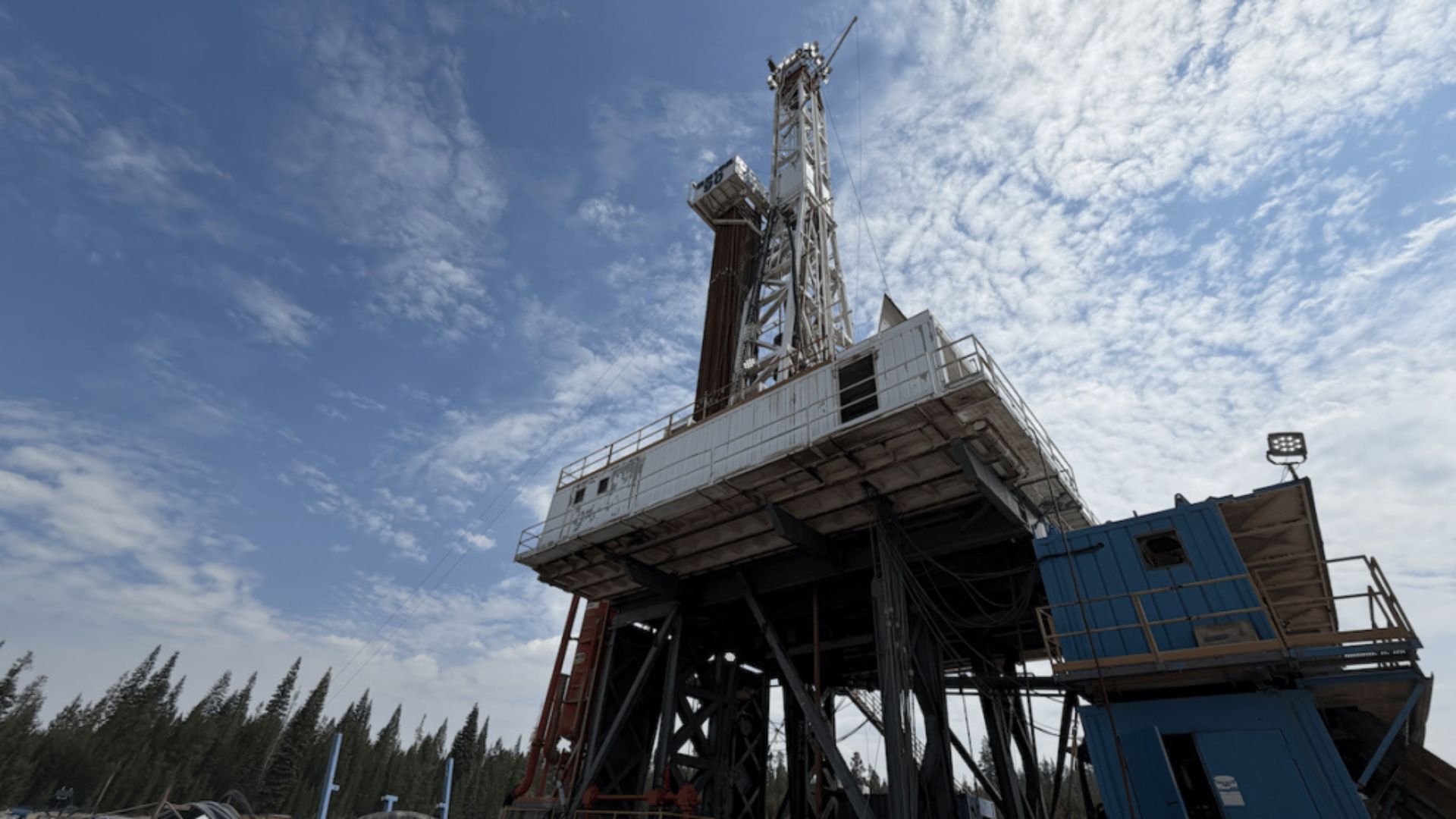
Drilling miles into the Earth to tap energy hot enough to melt lead usually breaks equipment before it breaks records. Texas-based Mazama Energy has announced a drilling performance milestone at its Athena geothermal well in Newberry, Oregon. It is a key step toward commercializing superhot rock geothermal energy. The energy company said its latest geothermal well, Athena, reached a depth of 10,350 feet in a swift 15 days. Interestingly, it is roughly an 80 percent reduction in drilling time compared to a landmark well drilled at the same site just last year. The development will help move the clean energy sector a step closer to tapping “superhot rock.” These subsurface formations are hotter than 750°F (399°C) and hold enough energy to transform green grid economics. “Our goal was to demonstrate that we could drill faster and be cost-effective as we move toward increasingly hotter and deeper conditions,” said Pat Brand, Project Athena Director and Mazama’s Drilling SME. “We still have work ahead as we drill toward 750+°F temperatures, but the performance we are already seeing gives us confidence.” Faster, deeper, hotter Far from just surviving the harsh conditions, the drill bit achieved remarkable speeds. Athena logged peak penetration rates exceeding 350 feet per hour and sustained over 130 feet per hour through long intervals. A single drill bit churned through 3,578 feet of solid rock without a single downhole motor or directional tool failure. The job isn’t finished. Crews are now pushing Athena deeper, targeting a final depth of 15,500 feet. The aim is to tap into superhot geothermal resources with temperatures exceeding 750°F (399°C). Exceptional equipment reliability drove the effort, yielding zero downhole motor or directional system failures and enabling a single 3,578-foot bit run to operate uninterrupted until reaching its planned casing point. The technical rewards are massive. Superhot fluids carry vastly more energy than standard geothermal steam, producing up to ten times more power per well. The Newberry field alone holds an estimated thermally recoverable capacity exceeding 10 gigawatts of electricity. That could mean reliable, 24/7 carbon-free power. More energy stored in deep rocks Going above 700°F (371.1°C) is transformative because, under intense subsurface pressure, water enters a supercritical state — behaving as a high-density hybrid between a liquid and a gas. In this state, the fluid gains extraordinary heat capacity and flow properties, carrying more thermal energy to the surface with minimal flow resistance. As a result, a single supercritical well can produce 5 to 10 times more electricity than a conventional geothermal well. According to Mazama Energy CEO Sriram Vasantharajan, early development costs for the Newberry project are expected to be between $4,500 and $4,950 per kilowatt. As the technology matures, costs could fall to $3,200 per kilowatt. At that price point, superhot geothermal directly challenges the economics of natural gas The success of Athena will lay the groundwork for Project Ceres, backed by the U.S. Department of Energy. Scheduled for late 2026, Ceres will drill the world’s first commercial-scale superhot horizontal wells, bringing subterranean power one step closer to the grid. Mazama Energy’s demonstrated superhot rock platform optimizes well construction, drilling, and stimulation to boost power capacity while minimizing water use, land footprint, and well counts. Get the latest in engineering, tech, space & science - delivered daily to your inbox.Mrigakshi is a science journalist who enjoys writing about space exploration, biology, and technological innovations. Her work has been featured in well-known publications including Nature India, Supercluster, The Weather Channel and Astronomy magazine. If you have pitches in mind, please do not hesitate to email her.
Accessing superhot rocks: Drilling hits 10,350 feet in 15 days at US geothermal site
Full Article
Original Source
Read the full article at Interestingengineering →KhanList aggregates and links to publicly available news content. We do not host full articles from third-party sources. Always verify important information with original sources.