
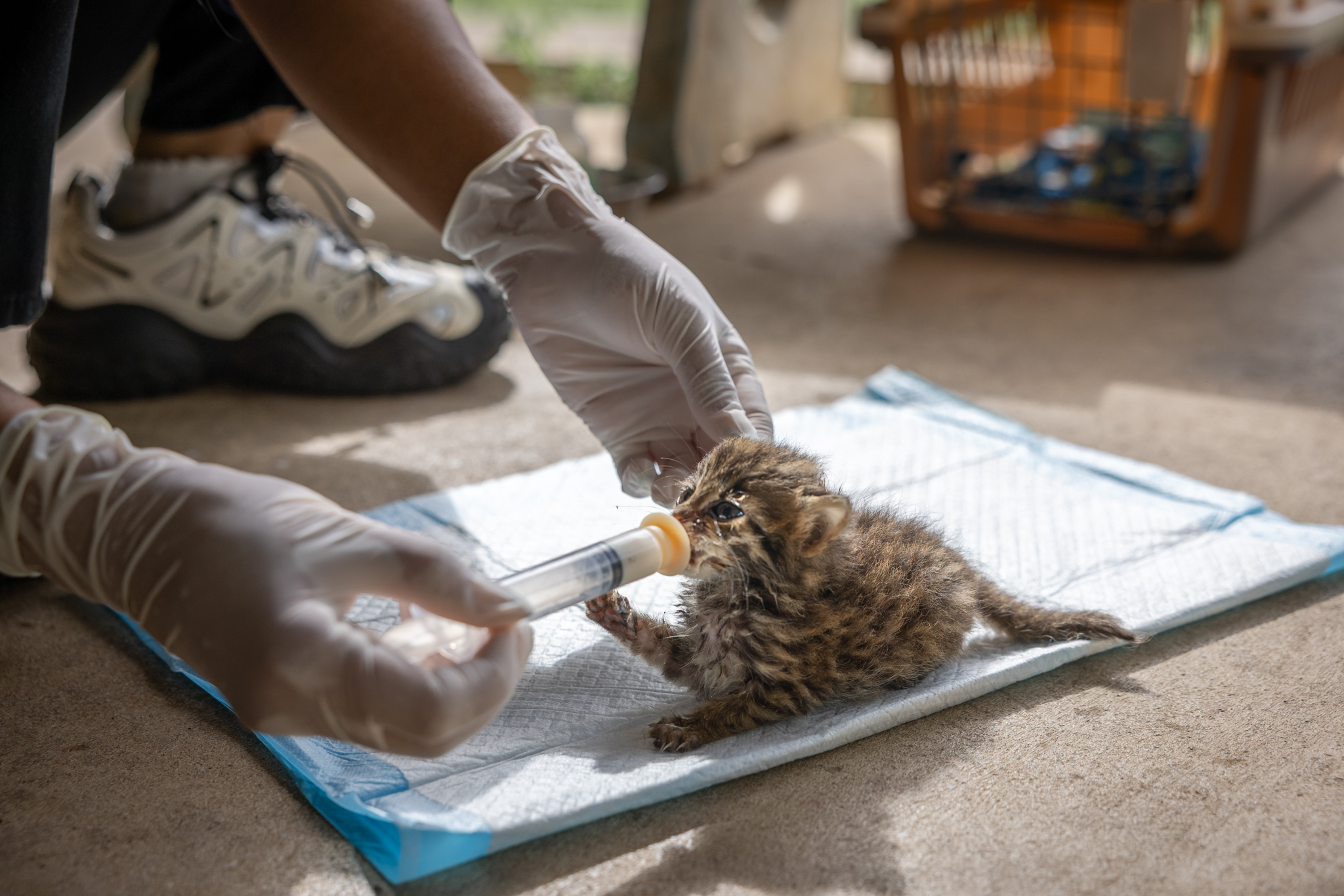
At a government wildlife rescue center in Thailand, dozens of lost and injured baby leopard cats are receiving a second chance at life in the wild. Annual admission of leopard cats (Prionailurus bengalensis) at the Department of National Parks, Wildlife and Plant Conservation rescue center in Khon Kaen, in northeastern Thailand, have surged from an average of about 10 cats per year before to 2023 to as many as 65 now. The cats are being displaced by worsening habitat fragmentation, agricultural burning in sugarcane fields, and increased public use of a government wildlife hotline, reports contributor Ana Norman Bermudez for Mongabay. Between January and August this year, the facility admitted more than 60 kittens, more than half of them recovered from charred fields with burn injuries. Staff focus on stabilizing new arrivals by treating burns, infections, and nutritional deficiencies before moving them into specialized 24-square-meter (258-square-foot) rehabilitation enclosures. Mortality rates at the facility dropped to around 33% in 2026, from 60% in previous years, according to center officials. “Many of the cubs that didn’t survive were brought by people who tried to take care of them at home,” said Warisara Thomas, a researcher and veterinarian at the center, adding that keeping the wild cats at home is illegal. Being in homes also deprives the cubs of specialized care while exposing them to domestic animals that can transmit diseases. Before putting the cubs into behavioral rehabilitation, veterinarians conduct comprehensive health checks, testing the cats for feline immunodeficiency virus, parvovirus, and canine distemper virus. “We are being very careful as we really want to avoid introducing new diseases into the wild population,” Warisara said. The cats also receive a microchip so they can be identified. During their two-month rehabilitation, the young cats practice climbing and hunting live prey like mice and chicks to build muscle and survival instincts while learning to distrust humans. “At the beginning, some are really good at hunting, but there’s a few that are afraid of the chicks,” Warisara said. This gradual training functions as a soft release: the cats know where to find food but are also free to hunt, said Jim Sanderson, founder and director of the Small Wild Cat Conservation Foundation and member of the Cat Specialist Group at the IUCN, the global wildlife conservation authority. He said a soft release is “absolutely vital” for rehabilitated small cats, warning that without it, “their chances of survival are slim.” Once cleared, the cats are released into nearby Phu Pha Man National Park. However, local protected forests are nearing capacity. “This area can hold just a few more releases,” said Nuntita Ruksachat, head veterinarian at the center. “We are studying the suitability of other areas.” Read the full story by Ana Norman Bermudez here. Banner image: A wildlife officer feeds formula milk to a leopard cat cub rescued just days earlier in August 2026. Image by Ana Norman Bermúdez for Mongabay. Credits Topics
A Thai rescue center gives injured leopard cat cubs a second chance
Full Article
Original Source
Read the full article at News →KhanList aggregates and links to publicly available news content. We do not host full articles from third-party sources. Always verify important information with original sources.