
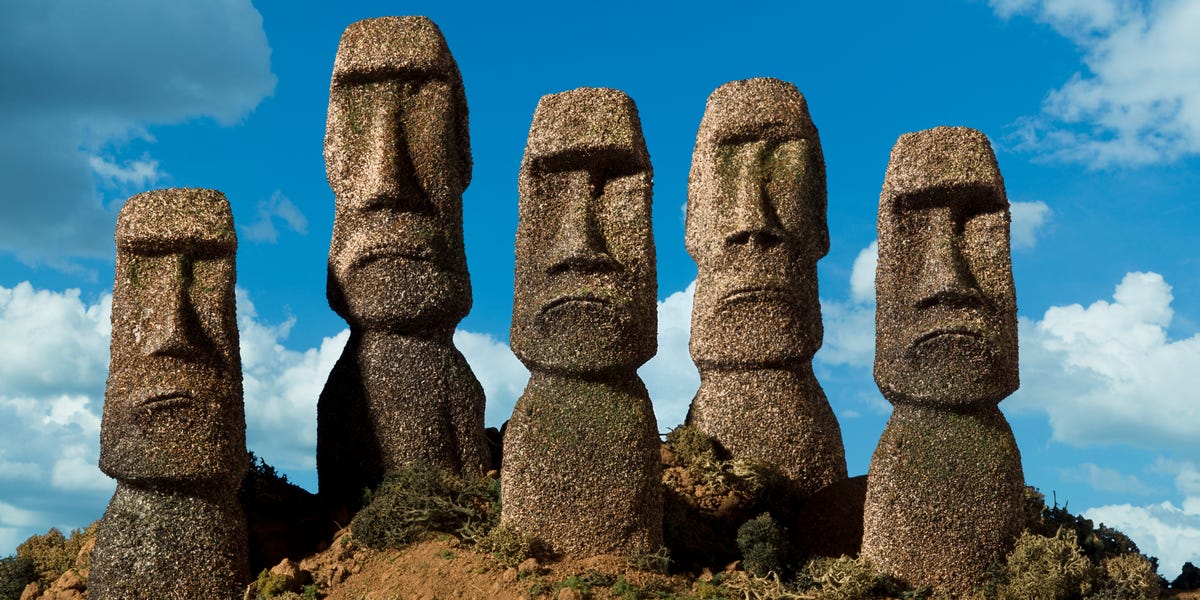
3 min readIn February 2023, a moai was found lying face-up among reeds in a dried lakebed on Rapa Nui, also known as Easter Island. The roughly five-foot statue was small by the island’s standards, but its location surprised archaeologists. It was the first moai reported in the lakebed inside Rano Raraku, the volcanic crater where islanders carved many of their statues.“The statue was a completed one meant for an ahu platform,” Terry Hunt, an archaeologist and professor of anthropology at the University of Arizona, tells Popular Mechanics. An ahu is a ceremonial platform where moai are displayed. Hunt says this one was carved from the bedrock on the nearby crater walls, then brought to the place where it was discovered.As reported in our earlier coverage, Hunt described the surprise to Good Morning America. “There have been no moai found in the dry bed or in what was previously a lake, so this is a first.”The location wasn’t the only surprise. The statue’s small size led Hunt to suggest, in a 2023 University of Arizona account, that it was probably carved early in the period between Polynesian settlement around 1200 and European arrival in 1722—small moai could have been made later, he allowed, but the largest ones likely came after those first years. That possibility is what gives the find its weight: if other early, small statues lie beneath the lakebed, archaeologists could compare them with later moai and trace how the island’s carvers progressed from modest figures to giants. Yet more than three years after the discovery, no one knows how old this moai is or whether it has company. Hunt says there’s been no further investigation.The small statue could tell a bigger storyIn 2023, Hunt was considering ground-penetrating radar to look for buried moai or architecture, particularly in the lakebed. Today, he’s more confident about finding statues buried in quarry rubble than beneath the lakebed. “There are almost certainly statues buried in the rubble and back dirt from quarrying activities in Rano Raraku,” he says. “Perhaps there are others buried in the lakebed sediments.”A group of statues beneath the lakebed would give researchers more than another addition to the inventory. If they turned out to be early, their appearance and locations could offer clues to how the islanders carved moai and what they were doing around the lake. “Buried statues could be associated with new radiocarbon dates and give us a better idea of the early quarrying activities,” Hunt says. He adds that the statues could reveal stylistic differences that developed over time.The dates have changed the argument beforeHunt and his colleagues have already shown how much a date can change the story of Rapa Nui. Their research challenged the claim that islanders stopped building monuments after their society collapsed, before Europeans ever arrived.A 2020 study in the Journal of Archaeological Science examined the chronology of ahu construction at eleven sites. The researchers pieced together radiocarbon dates and evidence from the platforms themselves, alongside accounts from European visitors. They found that islanders kept building and using the monuments for at least 150 years after 1600, when their society was supposedly already in collapse.The 2020 research changed the account of how long monument-building continued. Early lakebed statues could help fill in the other end of that history, showing what people were carving as the tradition developed.The evidence may stay buriedFinding those statues and studying them are two different problems. “However, excavations in the quarry would be highly unlikely given conservation issues and the islanders’ sentiments about the site,” Hunt says. A geophysical survey could map buried moai without disturbing the ground, but it can’t date them or reveal the carving details that would show how the tradition developed. For that, archaeologists would need to see the stone itself. Conservation pressures cut the other way, too: the Easter Island Statue Project’s discovery report called for stabilizing the newfound moai and protecting its fragile surface, and Hunt notes the soft volcanic tuff continues to erode. The result is a strange bind. A survey could show exactly where Rapa Nui's early history lies, while the most revealing evidence stays underground.Eric Spitznagel is a frequent contributor to magazines like Playboy, Esquire, and the New York Times, and was employed for over two decades by the Second City comedy theater, where Stephen Colbert was his Secret Santa _twice.
A Mysterious Statue Emerged on Easter Island. More Could Be Hiding Right Beneath It.
Full Article
Original Source
Read the full article at Popularmechanics →KhanList aggregates and links to publicly available news content. We do not host full articles from third-party sources. Always verify important information with original sources.