
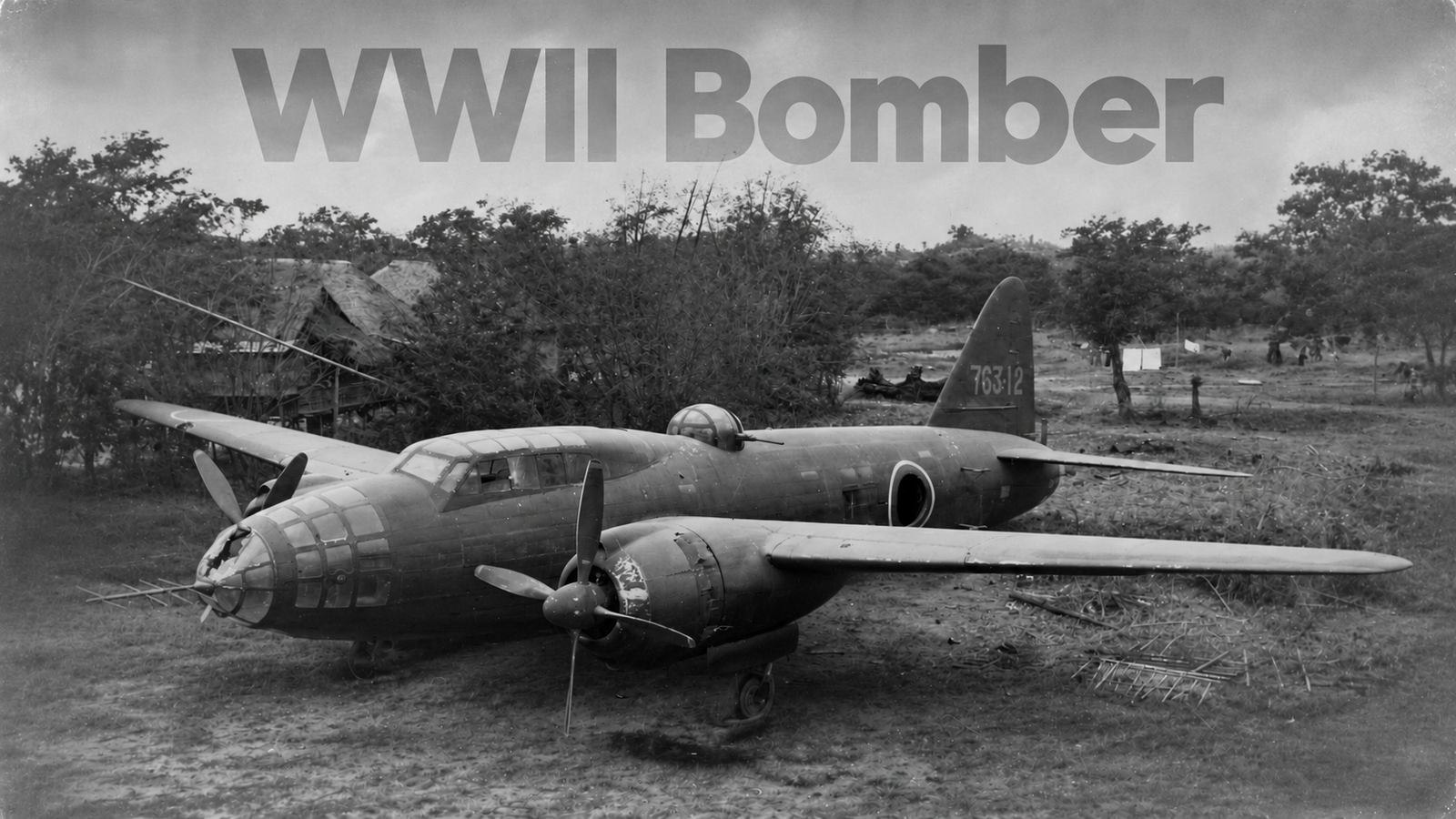
Published Nov 24, 2026, 1:00 AM EST Sumit has more than 10 years of experience as a professional journalist. Having written for The Independent, Evening Standard, and others, his role here allows him to explore his enthusiasm for aviation and travel. Having built strong relationships with United Airlines, Singapore Airlines, Iberia, Icelandair, and more. Sumit excels in both travel history and market analysis. Based in London, UK. In October and November 2026, I visited the island of Yap in the eastern Pacific. There, I explored an old Japanese Second World War airfield that had been bombed by the United States during the Second World War. Following the war, the jungle regrew and claimed the various abandoned Japanese aircraft wrecks. Just next to the old, overgrown Japanese airfield is the functioning Yap International Airport. In 1980, Continental Airlines (Air Micronesia) Boeing 727 operating as Flight 614 crashed while landing. The wreck burned out, although all passengers survived. It came to rest just next to a Mitsubishi G4M 'Betty' bomber at the old Japanese airfield. Since then, the forest has regrown, and visitors can see what remains of a Japanese Second World War bomber and a Continental Boeing 727 lying side-by-side in the jungle as strange bedfellows. The local volunteer pilot, Amos Collins, showed me the two wrecks that I had failed to find by myself. Yap: Neutralized & Bypassed By The US Navy Credit: Aaron Spray Today, Yap is one of the islands that make up the independent nation of the Federated States of Micronesia. During the Second World War, it was controlled by Japan under the League of Nations South Seas Mandate. These were islands that Japan had wrestled control of from Germany in the First World War. The island of Chuuk (Truk) became a major Japanese naval base, while others were heavily defended as strong points to protect the Japanese home islands. Yap was only lightly defended, being far behind the island chains deeper into the Pacific, and it wasn't until later in the Pacific War that Japan hurriedly moved to fortify the island. Credit: Aaron Spray The ruins of Japanese Second World War aircraft, guns, and bunkers can be found across the island. I spent days seeking out and exploring them. According to a modern report by the United States Navy, in May 1944, the Japanese commander of the 22nd Air Flotilla at Chuuk issued orders for the 2nd Attack Force and other air groups to be stationed on Yap. Credit: Aaron Spray US military sorties later reported 24 Japanese fighter aircraft, six dive bombers, two medium bombers, and six night fighters on Yap. These later took part in counterattacking US efforts to bombard the Mariana Islands (such as Guam). The US Navy drew up a plan to invade the island as it did with others. However, it soon abandoned the idea in favor of bombing, neutralizing, and bypassing it. The Japanese Mitsubishi G4M 'Betty' Bomber Today, visitors can see the remains of many Japanese military aircraft destroyed on the ground at the airfield next to large bomb craters. Some of these wrecks are marked, others are not marked, or the signs have since disappeared. You should note that this is private property and visitors are expected to ask residents permission to explore them. Credit: Aaron Spray I found around seven Japanese aircraft, or what remained of them. Here and there on the island, visitors can see the remains of US Vought F4U Corsair fighter planes and propellers of B-24 bombers that came down on the island. I mostly found the Corsair engines and B-24 propellers. However, one of the most eye-catching wrecks is that of a Mitsubishi G4M medium bomber/torpedo bomber. Japan built a total of 2,435 of these twin-engined, seven-crew bombers. Presumably, this wreck is one of the two medium bombers US reconnaissance identified. The wreck is located here on Google Maps, around a third of the way down the airstrip (now functioning as a potholed village road). It was the only Japanese wreck I found on the island that has its own dedicated information plaque. The plaque is so overgrown by algae that it's hard to make anything out. Most information plaques are for US military remains on the island. The Crashed Continental Boeing 727 Airliner Credit: Thanhliemnguyen l Shutterstock Continental Airlines established much of the infrastructure to provide scheduled air services to the Micronesian islands, which were then managed by the United States under the Trust Territory of the Pacific Islands. Essentially, the US took over the Japanese South Seas Mandate by another name. Continental set up its Air Micronesia brand to serve the islands. Eventually, this was all inherited by United Airlines following the merger. In November 1980, an Air Micronesia Boeing 727-92C (registered N18479) departed Saipan bound for Palau with island hopping stopovers in Guam and Yap. At 9:52 AM the aircraft touched down at Yap 13 feet short of runway 07. The Aviation Safety Network writes that: "The right main landing gear immediately separated from the aircraft. The aircraft gradually veered off the runway and came to rest in the jungle about 1,700 feet beyond the initial touchdown." The probable cause is given as the captain prematurely reducing thrust in combination with flying a shallow approach slope angle to an improper touchdown aim point. All 73 occupants were evacuated within around a minute of the aircraft coming to rest. Today, the heavily forested nature of the landscape makes it difficult to understand how the aircraft could have skidded without breaking up. The Burnt Out Boeing 727 Wreck I was shown the Boeing 727 and its neighboring Japanese Betty bomber wreck by the volunteer pilot, Amos Collins, who flies for Pacific Missionary Aviation. Having made friends with Amos and being an aviation journalist, he invited me on the flight and then showed me the wrecks. PMA is a hybrid charity airline operating in Micronesia. When we visited the bomber and 727, we had just gotten back from a supply flight to the outer Yap island of Ulithi on a Super King Air 200. The Boeing 727 caught fire after coming to a rest. Collins told me that the fire truck from neighboring Yap International Airport responded, only to find on site that the truck lacked any water. The stricken 727 subsequently burned down completely. He said that the incident remains a joke among the Yap Airport fire crews today. The main section of the aircraft remaining is the tail, including one of its air intakes for the tail-mounted engine. Collins is the father of five, and he said his children enjoy crawling through and using the air intake as a playground slide. I thought of climbing through it myself but decided against the idea. While it is difficult to make out in the photographs I took, the Boeing 727 and Betty bomber are literally a stone's throw from each other. A few feet (meters) more of skidding the 727 would have destroyed the Betty wreck. What Remains Of The Bomber & Airliner Credit: Aaron Spray Only a minority of both aircraft exist today. The Mitsubishi G4M's cockpit is perhaps the best preserved. It still has the two pilots' seats and what is left of the controls. The control panel remains well-preserved, as does the aluminum frame. All rubber or other materials have since disappeared. The tail section is also relatively well-preserved, as is at least one propeller. It would seem that propellers have been removed from a number of sites over the years by the locals. Some sites do retain their propellers, but there are also very clearly some propellers on display at residents' homes, and two are on display at PMA's hangar. Regarding PMA's propellers, Collins told me they were from a B-24 and B-29 bomber. I don't know where they came from. Wrecks I found on Yap Island Number Note Air Micronesia (Continental) Boeing 727 1 Mostly tail Mitsubishi G4M 1 Much of it in pieces Mitsubishi Zeros 4 Sometimes just tails, sometimes relatively complete Nakajima B5N Torpedo Bomber 1+ Relatively well preserved Vought F4U Corsair 2+ Mostly engines F6-F-5 Hellcat 1 Minimal, wings TBM-3 Grumman Avenger 1 Minimal B-24 Liberator 1 Propellers As stated, only the Boeing 727's tail remains in place today. This is well-preserved, although the rest of the aircraft appears to have been destroyed or removed. Some salvageable components and materials were stripped over the decades, but the first consumed much of the forward and mid-fuselage. Various bits of debris can be found scattered throughout the surrounding jungle, but the tail is the main attraction. The Specter Of War Returns To Yap Credit: Aaron Spray The story of warplanes on Yap is not over, and a new chapter may yet be written. The United States retains responsibility for defending the islands; in practice, this also means the US has exclusive military basing rights. In a period of Great Power Competition with China, the US is moving to expand the airport infrastructure and defenses of the islands as part of the Second Island Chain. Congress has approved funds to significantly expand Yap International Airport as part of the Air Force's Agile Combat Employment doctrine to disperse aircraft from Guam's Andersen Air Force Base in the event of a high-end conflict. When I was there, ground on the project was not yet broken, and heavy machinery had yet to arrive. Work on Palau's Peleliu Airfield is in full swing. This raises the prospect that in a future high-end conflict, F-35 fighter jets, KC-46A tankers, and other modern US military aircraft could find themselves destroyed on the ground next to Japanese bombers and fighters long-lost in the jungle. I asked Collins if he was concerned about the US preparing his remote island for war; he answered no. I asked if that was because he wasn't concerned, or if it was because he was committed to the island and there was nothing he could do with great power politics happening around them. If it's better to accept and get on with life. He said the latter.
A Japanese WWII Bomber & A Crashed Continental Boeing 727: The Unlikely Wrecks Hidden In A Pacific Jungle
Full Article
Original Source
Read the full article at Simpleflying →KhanList aggregates and links to publicly available news content. We do not host full articles from third-party sources. Always verify important information with original sources.