
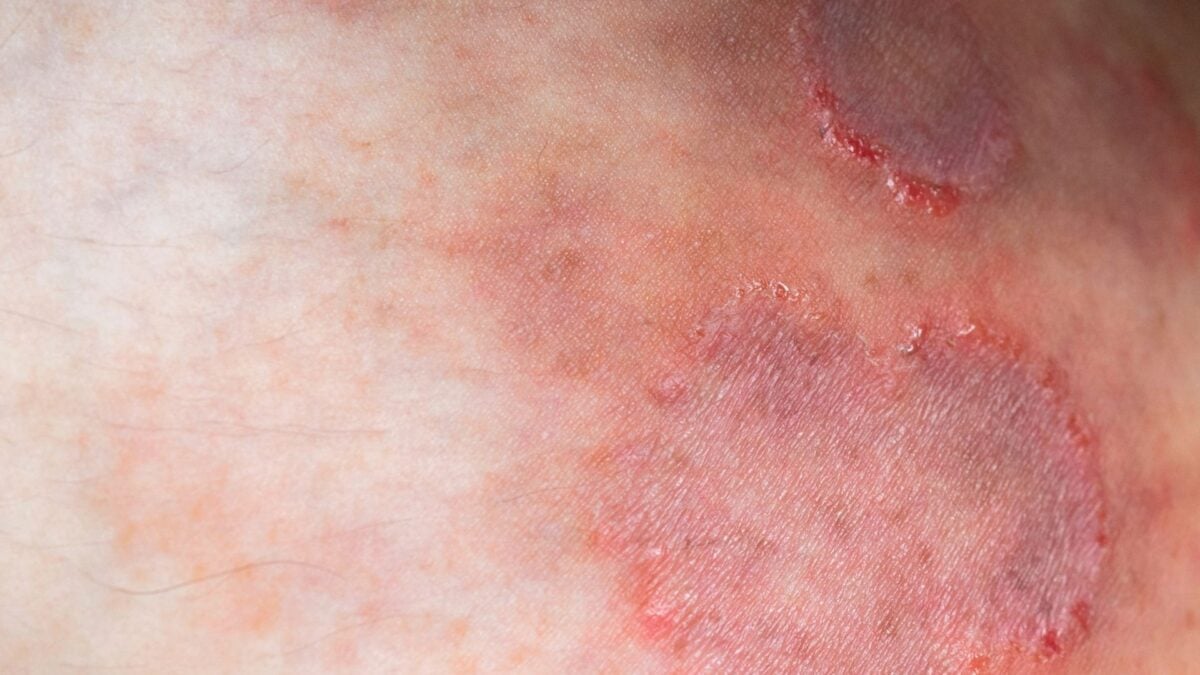
An emerging fungus that can cause hard-to-treat ringworm is extending its tendrils around the globe, recent research shows. Scientists in Europe studied data from laboratories across dozens of countries. Since 2022, identifications of the fungus Trichophyton indotineae have dramatically increased worldwide, they found. The fungal pathogen is known for causing more serious cases of ringworm that are often resistant to common medications. “Our results reveal a marked global increase in T. indotineae isolation,” the authors wrote in their paper, published last month in the journal Emerging Infectious Diseases. A different kind of ringworm Ringworm has nothing to do with worms; it’s a catch-all term for fungal infections that leave a circular rash on the skin (the titular ring). There are different names for ringworm depending on the infected site, such as “jock itch” when it’s around the genitals and the well-known “athlete’s foot.” Ringworm typically spreads through direct skin contact or contact with contaminated surfaces like a damp shower floor or shared items like towels. Around 40 different species of fungi can cause ringworm, but the recently discovered T. indotineae has lately become one of the most worrying culprits. Compared to other types, it tends to cause severe and drug-resistant infections. It also seems to be spreading at an alarming pace, at least in some parts of the world like India. According to the study authors, however, the evidence of T. indotineae‘s growing spread has largely relied on reports of individual cases or from people treated at the same health care facility. To get a better sense of where the fungus is showing up, the researchers turned to data from the Mass Spectrometry Identification project, or MSI. Mass spectrometry measures the mass-to-charge ratio of specific molecules present in a sample to help pinpoint its identity. A specific type of this technique, called matrix-assisted laser desorption/ionization time-of-flight mass spectrometry, has emerged as a highly effective and speedier way of identifying fungal germs based on their mass spectra compared to older methods. A map showing the global distribution of Trichophyton indotineae spectra tracked by the Mass Spectrometry Identification (MSI) Network from 2022–2025. © Jabet. et al/Emerging Infectious Diseases The MSI project is hosted by the Pitié-Salpêtrière University Hospital’s Parasitology-Mycology Laboratory in France. It allows diagnostic labs to submit samples collected from patients with suspected fungal infections to a single database. The database comes with a large reference library, covering around 1,700 different fungi, which can help labs identify rare species. In 2022, the project was upgraded to quickly and accurately identify T. indotineae from such samples. The researchers looked at submissions from over 500 MSI users in 54 countries that tested positive for fungi between 2022 and 2025. During that period, T. indotineae was identified in 29 countries. This list includes the U.S., but the largest share of reports came from European countries. The number of identifications also continued to rise year after year, increasing three-fold between 2022 and 2025. The percentage of T. indotineae spectra identified within the larger genus of Trichophyton fungi also increased from 1.2% to 3.6% by 2025. What does this mean? This research can’t tell us how many people globally are contracting T. indotineae, only that labs contributing to the MSI project are spotting it more often. Mass spectrometers are also not commonly available in some parts of the world, like Africa, and relatively few MSI users are located in other regions where T. indotineae has been documented, like Southeast Asia; this means we’re largely in the dark about how the fungus is spreading in these areas. Still, these findings do seem to confirm that T. indotineae is on the move far and wide globally. It further illustrates the usefulness of the MSI project to track emerging fungal germs, the researchers say. Notably, some doctors have already used MSI to verify the recent arrival of T. indotineae to new countries like Hungary and Brazil. “In conclusion, we encourage microbiology laboratories to use MSI to identify dermatophytes for both individual and public health benefit. Health authorities should address this rapidly evolving international issue, which is associated with therapeutic challenges,” the authors wrote. Unfortunately, T. indotineae isn’t the only growing problem we have when it comes to ringworm. Scientists are also sounding the alarm about a different but related fungus that predominantly spreads through sexual contact and can cause painful infections. If that’s not bad enough, T. indotineae can also be transmitted sexually.
A Drug-Resistant Ringworm Fungus is Surging Across the Globe, Scientists Warn
Full Article
Original Source
Read the full article at Gizmodo →KhanList aggregates and links to publicly available news content. We do not host full articles from third-party sources. Always verify important information with original sources.