
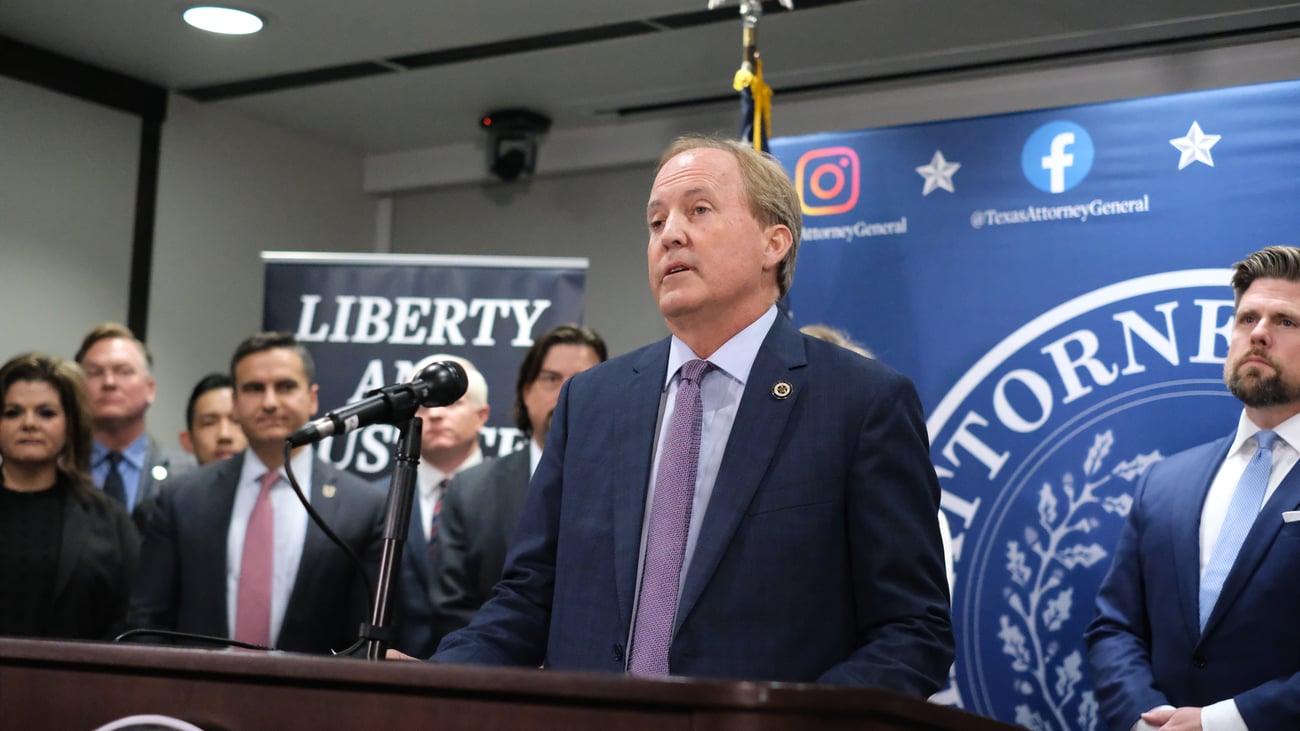
Texas Attorney General Ken Paxton is seeking to revive his lawsuit claiming Pfizer lied to the public about the efficacy of its Covid-19 vaccine — and Fifth Circuit judges' jurisdictional concerns could give him a boost.(CN) — Texas Attorney General Ken Paxton might get another bite at the apple in his fraud lawsuit against Pfizer over the Covid-19 vaccine, as multiple Fifth Circuit judges suggested Tuesday that the federal judge who dismissed the case may have lacked jurisdiction.The case centers around the Republican attorney general’s claims that Pfizer violated the Texas Deceptive Trade Practices Act by misleading the public about the efficacy of its Covid-19 vaccine and making efforts to suppress critics. Paxton is challenging Senior U.S. District Judge Sam Cummings’ decision to dismiss the case in late 2024 due to Pfizer’s immunity under the federal Public Readiness and Emergency Preparedness Act.If the judges find the case was improperly removed, that would mean Cummings lacked jurisdiction to dismiss the lawsuit, and thus the case would be revived and sent back to state court.“We have seen it as an issue,” U.S. Circuit Judge Leslie Southwick said. “You can’t concede jurisdiction.”Pfizer brought the suit to federal court based on federal officer removal — which allows federal officials and contractors to move lawsuits against them to federal court — due to Pfizer’s contract with the federal government to produce the vaccine. Pfizer’s attorney, Kannon Shanmugam, told the panel the company’s removal of the case on that ground is supported by the U.S. Supreme Court’s ruling earlier this year in Chevron USA Inc. v. Plaquemines Parish.In that case, the Supreme Court ruled Chevron had properly removed a lawsuit against it by a Louisiana parish over coastline damage from decades of oil production to federal court under federal officer removal. The court found Chevron’s World War II-era contracts with the federal government to refine aviation fuel were sufficiently related to its oil production during that time period to support federal officer removal.U.S. Circuit Judge Edith Jones pointed out the Supreme Court differentiated that case from cases where courts had found contracts with the federal government don’t support oil companies’ removal of lawsuits claiming they misled the public about the impact of fossil fuels on climate change.But Shanmugam said the difference is that in those cases, the purported misrepresentations were “distinct in time” from the companies’ work for the federal government, whereas in this case, “the two are wrapped together.”“Texas’ claims are targeting Pfizer’s statements about the results of a study that was necessary in order to obtain FDA emergency use authorization, and without that authorization, it would have been impossible for Pfizer to fulfill the terms of its federal contract,” he said. “In our view, that is more than sufficient in the wake of the Chevron decision.”U.S. Circuit Judge Don Willett, a Donald Trump appointee, joined Southwick, a George W. Bush appointee, and Jones, a Ronald Reagan appointee, on the panel.The hearing also focused on whether Cummings, a Reagan appointee, was correct in finding the PREP Act gives Pfizer immunity from Paxton’s lawsuit.In order to encourage the production of vaccines and other medical countermeasures during public health emergencies, the PREP Act allows the Department of Health and Human Services secretary to issue declarations giving the manufacturers of those products immunity from any lawsuit “for loss caused by, arising out of, relating to, or resulting from the administration to or the use by an individual of a covered countermeasure.” In 2020, the HHS secretary made such a declaration for Covid-19 countermeasures.Attorney Johnathan Stone, representing the state of Texas, argued the state’s lawsuit against Pfizer is not covered under the PREP Act, as it is not a suit “for loss,” which he said refers to injury to the plaintiff.“This is an enforcement action, and we’re seeking civil penalties,” he said. “The purpose of civil penalties is not compensation. They’re meant to punish Pfizer for violating the DTPA, and to deter Pfizer from engaging in future violations of the DTPA.”But Shanmugam argued the state’s case is indeed a suit for loss. Texas is not just suing based on purported misrepresentations “in a vacuum,” he said. Rather, he argued, the state is claiming Pfizer deprived Texas consumers of the information needed to make an accurate cost-benefit analysis on whether to get the vaccine, thereby exposing them to health risks.“I think that that qualifies as a loss by any measure,” Shanmugam said.Subscribe to our free newslettersOur weekly newsletter Closing Arguments offers the latest about ongoing trials, major litigation and rulings in courthouses around the U.S. and the world, while the monthly Under the Lights dishes the legal dirt from Hollywood, sports, Big Tech and the arts.Additional Reads
Fifth Circuit might inject new life into Texas’ Covid-19 vaccine lawsuit
Full Article
Original Source
Read the full article at Courthousenews →KhanList aggregates and links to publicly available news content. We do not host full articles from third-party sources. Always verify important information with original sources.