
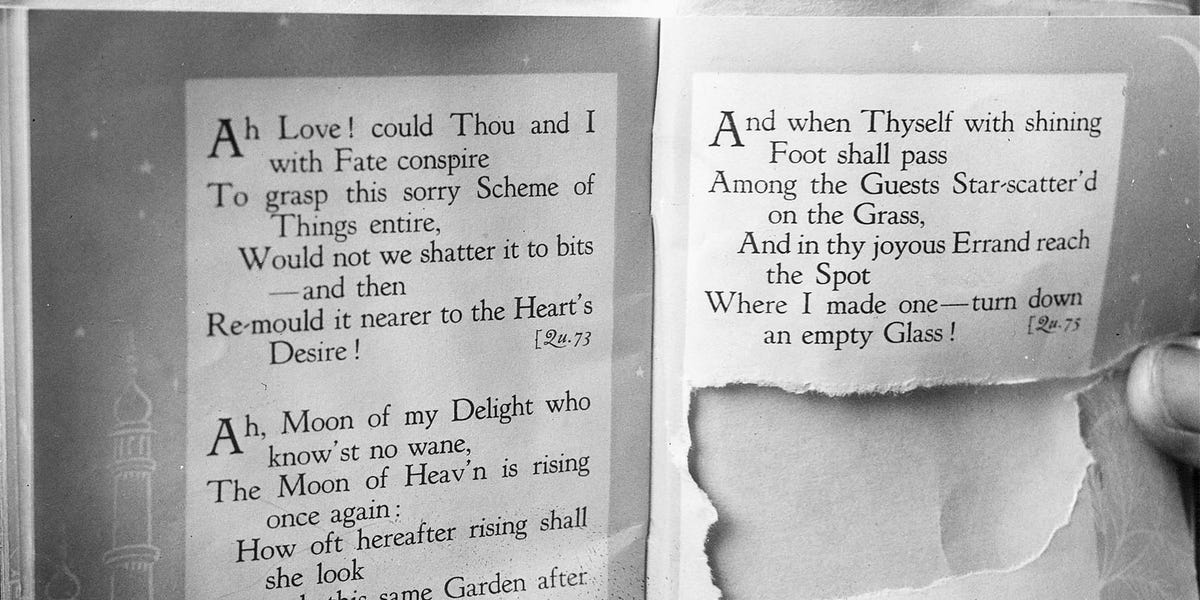
3 min readHere’s what you’ll learn when you read this story:In late 1948, a couple discovered the body of the man resting against a sea wall at Somerton Park in Adelaide, Australia. With no known identification, no clear cause of death, and surrounded by strange clues, the unknown man became an enduring mystery known simply as the “Somerton Man.”In 2021, local police exhumed the body, genealogical studies found his name—Carl Webb—and South Australia police will soon submit their report to the coroner’s office, officially ending the 80-year-long mystery.On December 1, 1948, at around 6:30 a.m., a couple walking the Somerton Park beach in a suburb of Adelaide, Australia, came across a grisly sight. A dead man lay against a sea wall with his legs crossed. Other witnesses said that they saw the man moving his limbs the night before, but in the morning, he was no longer among the living. This, while tragic, hardly has the makings of a gripping mystery, but the ensuing investigation uncovered oddities that, even 80 years later, remain pieces of one of the most fascinating cold cases in Australian history.One part of the mystery is that in the days, weeks, and decades following the man’s death, no one ever claimed to know who he was. All the tags in his clothes—both the ones he was wearing and others found in a suitcase at a nearby train station six weeks later—were removed. To add even more spice to this mystery jambalaya, toxicologists and coroners never determined what exactly caused his death, only that he’d possessed the fitness of an athlete “in top physical condition.” The investigators’ best guess was poison, but they found no evidence of a foreign substance in his body. He was, to put it simply, just dead.But one piece of evidence transformed this perplexing John Doe—who eventually came to be known simply as the “Somerton Man”—into a legend. Deep in the fob pocket (that tiny pocket inside the normal pocket) of his pants was a piece of paper bearing the words “Tamam Shud,” a phrase from the Rubáiyát of Omar Khayyám. It translates as “the end.”Strangely, the scrap of writing hadn’t been cut or copied—it had been torn from the final page of an actual copy of the Rubáiyát. Police eventually found the book in question, and in the back were indentations containing five lines of what was presumed to be a code. In 2014, a computational linguist attempted to decipher the code, but failed. He eventually theorized that the letters were likely a sort of shorthand “readable only by the person while they had those words fresh in their memory.”Like the legacy of other famous disappearances or unsolved mysteries, such as the daring escape of D.B. Cooper, the disappearance of Jimmy Hoffa, or the meaning of the word “CROATOAN,” it appeared that investigators would never get a satisfying conclusion. That is until 2021, when police in South Australia exhumed the body of the Somerton Man to allow University of Adelaide biomedical engineer Derek Abbott to utilize modern technology to attempt to identify him. Abbott, along with genealogist Colleen Fitzpatrick and the California-based company Astrea Forensics, used the genealogical research site GEDmatch, which had helped identify the Golden State Killer in 2018. And eventually, they found a match.“You find out who some of them are, you play with their details — it’s like Sudoku,” Fitzpatrick said in an interview at the time. “You try and find the top match.”The answer that came back was Carl “Charles” Webb, an electrical engineer and instrument maker who enjoyed poetry and horse betting (it’s possible those random letters were a reference to the names of certain race horses). Abbott said in a recent interview with the Australian Broadcast Company (ABC) that he’s “99.99 percent” sure the body found on Somerton Park beach in 1948 is Carl Webb, but he’s still waiting for the South Australian police to officially submit its report to the coroner. He added: “my understanding is it’s going to happen very soon.”Finally, after nearly 80 years, the case of the Somerton Man will finally be put to rest.Darren lives in Portland, has a cat, and writes/edits about sci-fi and how our world works. You can find his previous stuff at Gizmodo and Paste if you look hard enough.
A Couple Discovered a Dead Man’s Body on a Beach. 80 Years Later, the Mystery Is Almost Over.
Full Article
Original Source
Read the full article at Popularmechanics →KhanList aggregates and links to publicly available news content. We do not host full articles from third-party sources. Always verify important information with original sources.