
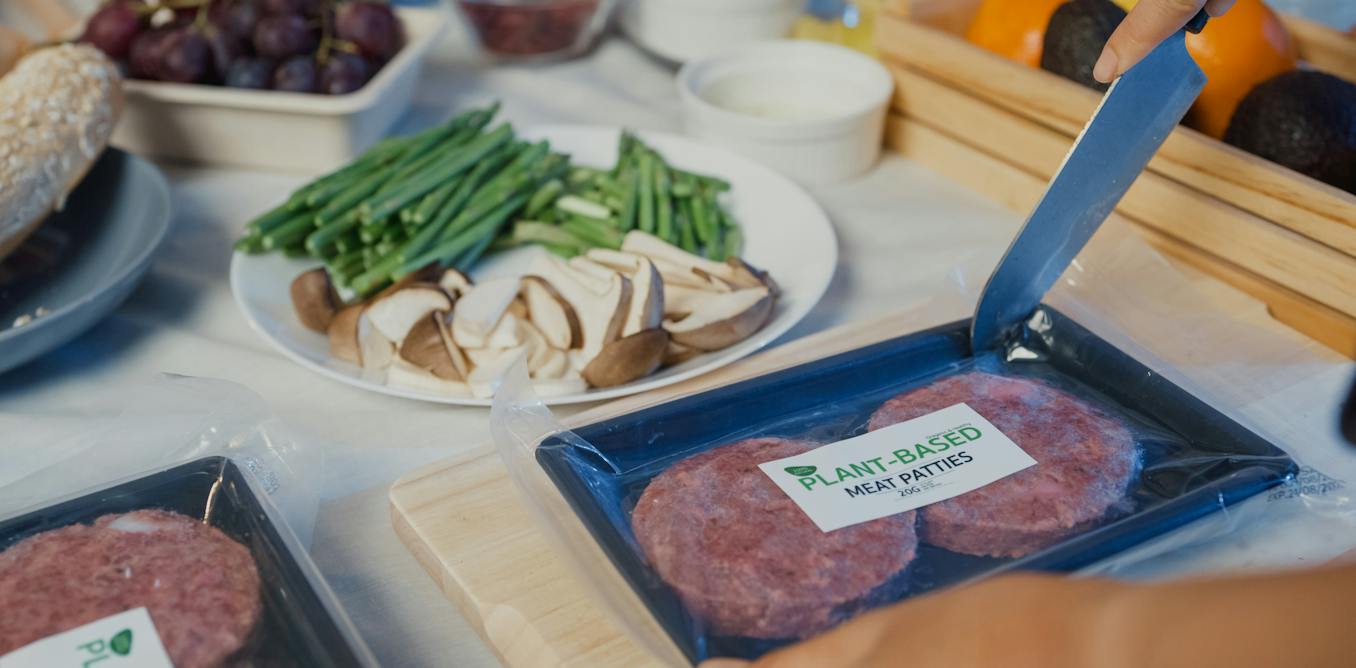
This Thanksgiving, you may sit down to a table laden with mashed potatoes, cranberry sauce, vegetables and a golden-brown turkey. And, if you have any vegetarians or vegans in your family, you may even see a plant-based meat alternative. But how do food scientists make something taste and look similar to turkey entirely from plants? Plant-based meat alternatives have become an increasingly prominent part of the food industry, driven partly by concerns about the sustainability of conventional meat production and the search for additional protein sources. One life-cycle assessment found that plant-based patties had a 77% lower climate impact than the Brazilian beef patties examined, although the results varied depending on the production systems and environmental measures considered. But making a convincing meat alternative is not as simple as replacing animal protein with plant protein. How do you turn ingredients from peas, soybeans or wheat into something that looks, tastes and feels like meat? Plants have protein, too When people think about protein, foods such as chicken, beef, eggs and milk often come to mind. However, plants are also important sources of protein. Soybeans, peas, wheat, lentils and other legumes contain proteins that can be extracted and used in food products. Soy and pea proteins are widely used in plant-based meat alternatives. Wheat protein, or gluten, can also contribute to their structure and chewy texture. Researchers are also exploring other sources, including fava beans and mung beans, to expand the range of ingredients available. But plant proteins behave differently. Some absorb more water, while others bind fat or form structures that hold ingredients together. These properties influence how a food feels when you bite into it. Choosing a protein therefore involves understanding how it behaves during processing, not just its nutritional value. Tofurky is a common vegan turkey alternative many people serve at Thanksgiving. JasonOndreicka/iStock via Getty Images Why is making meat from plants so difficult? Think about biting into a piece of roasted turkey breast. Its texture comes from the arrangement of muscle fibers, along with connective tissue, water and fat. Together, these components create firmness, juiciness and the chewing experience you associate with meat. Plant proteins have structures that are different from animal muscle proteins. Mixing pea or soy protein with water does not automatically create meatlike fibers. Food scientists use processing methods that organize these proteins into structures that more closely resemble muscle. Flavor matters, too. Fat adds juiciness and carries flavor compounds, while heating creates familiar roasted and savory aromas. A convincing meat alternative must bring together the right ingredients and processing conditions to reproduce these qualities. Turning plant proteins into meatlike foods One widely used method is extrusion. Protein-rich ingredients are mixed with water and pushed through a machine that applies heat and pressure while mixing the material. These forces unfold the proteins and help them interact. As the mixture cools, the proteins form aligned, fibrous structures that resemble some features of meat. High-moisture extrusion uses more water during processing, which produces fibrous products with a more meatlike texture. The final structure depends on factors such as the protein source, moisture content, temperature and processing conditions. These factors influence how proteins interact and form the fibrous structures found in plant-based meat alternatives. Manufacturers can also add fats, starches, flavorings and other ingredients to improve the eating experience. Small changes in formulation or processing can make a considerable difference, affecting whether a product is firmer, softer, chewier or better at retaining moisture. A potential future for meat alternatives Another emerging approach is 3D food printing. Like a conventional 3D printer, a food printer builds an object layer by layer, depositing edible materials according to a digital design. Researchers and food companies are exploring 3D printing to create new textures and structures in meat alternatives. Emmanuele Contini/NurPhoto via Getty Images Our research explores protein-based food inks: mixtures designed to flow through a printer nozzle and hold their shape once deposited. Developing the right formulation is challenging because the material must be fluid enough to print but still firm enough to retain its shape. Researchers are applying similar principles to explore printing plant-based meat alternatives. Instead of relying only on conventional manufacturing methods, 3D printing could allow researchers to control how different ingredients are arranged. For example, you could potentially deposit protein-rich materials and fat-containing ingredients in specific patterns to create different structures and textures. Recent research on the 3D-printing of plant-protein-based meat analogs highlights how the formulation of the food ink and printing conditions influence how accurately a product can be printed and whether it holds its shape. However, a printed product that looks like meat must still deliver the expected texture, flavor and eating experience. Plant-based meat alternatives are not necessarily intended to replace traditional meat. They offer consumers additional choices, but making them appealing, affordable and consistent remains a challenge. Scientists continue to study how proteins, ingredients and processing work together to create the textures and flavors people enjoy. The next time you see a plant-based burger or turkey alternative, remember that making it involves much more than replacing animal protein with plant protein. Technologies such as extrusion and 3D food printing are helping scientists explore new ways to turn plant ingredients into meatlike foods.
A convincing vegan meat alternative needs both taste and texture – here’s how food scientists manufacture them
Full Article
Original Source
Read the full article at Theconversation →KhanList aggregates and links to publicly available news content. We do not host full articles from third-party sources. Always verify important information with original sources.