
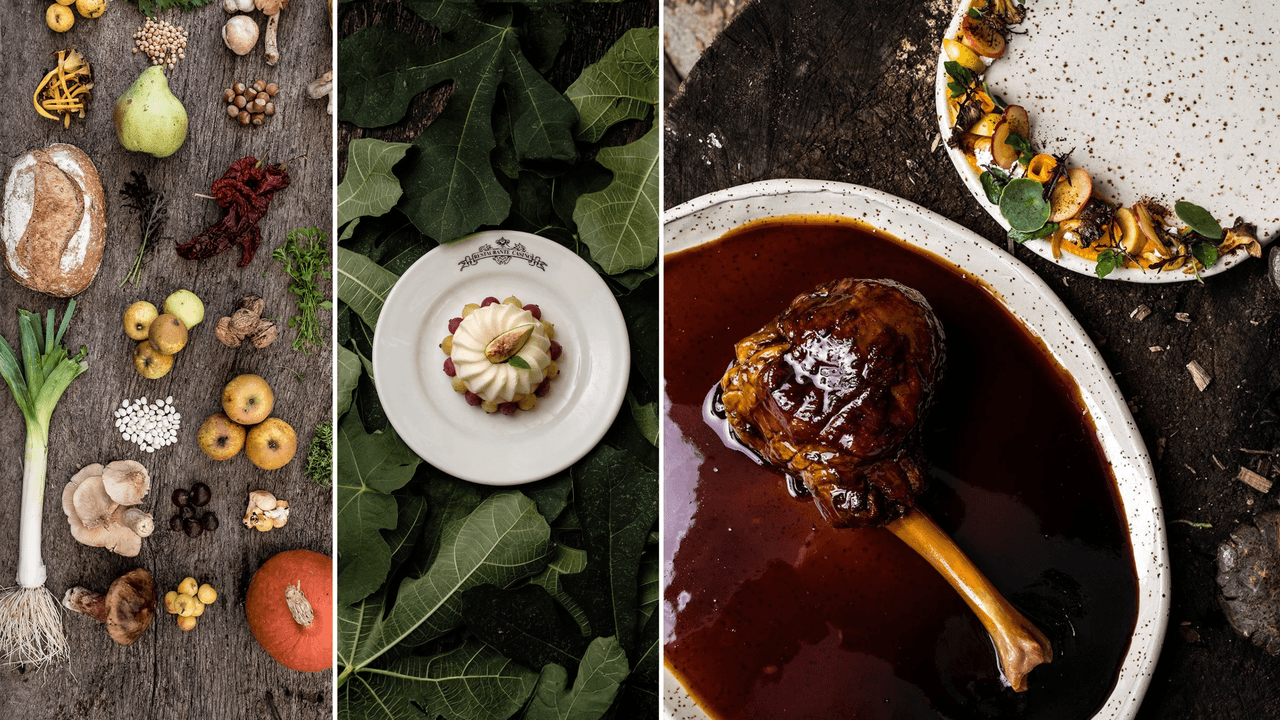
We asked some of our favorite women chefs to share their global must-eats in the coming year.ARREA!Any professional chef can confirm that while menu development, staffing, interior design, and operations are all part of running a restaurant or kitchen, finding the time to travel in search of different flavors often feels like a rare luxury. But spending time in a different city or region is key to staying inspired. Even a quick weekend getaway can lead to incorporating new ingredients in familiar dishes, serve as an opportunity to learn a new culinary technique, help forge a connection with one’s own heritage, or connect with peers who are pushing the industry forward.As the end of the calendar year draws near, we spoke with some of our favorite women chefs about where they’re most excited to visit in 2027—from a sushi counter in Tokyo to the oldest restaurant in Beirut—and what they’re hoping to eat and learn from those travels.A table at ARREA!, Almuerzo Otoño's restaurant in Álava, Spain ARREA!Foraged foods in the Basque Country, Spain“I went [to the Basque Country] for the first time in 2013, but it was such a quick, rushed trip that I left feeling like I’d barely scratched the surface. I’ve been wanting to go back and really do it right ever since. At the top of my list of spots is Arrea!, Edorta Lamo’s restaurant in Kanpezu, a small village in the mountains of Álava. I’ve heard such wonderful things about it. What excites me is that it’s not the Basque Country most people think of first—as in, San Sebastián with its coastline and all of its pintxo bars. It’s inland cooking, built on what’s hunted, foraged, and grown right there in the mountains. And I'll be eating my way through plenty of pintxo bars too, of course. — Katie Button, chef/co-founder of Cúrate Bar de Tapas in Asheville, and author of Spanish Accent cookbookSoft polenta at The Lost Kitchen in Freedom, Maine“I’m in love with Erin French’s new cookbook [Seize the Supper], and wildly enough, Maine is one of the few states I've never been to. So, I'm plotting something for next summer. I love that it's a mostly female crew, a standout (unfortunately) in our industry. Erin’s focus on local produce and connecting to the earth speaks to my own regenerative cooking and inspires me constantly to dig deeper and deeper. I also admire her ethos of humble simplicity, distilling dishes to their core, filled with soul and properly honoring ingredients, with a nod to her family's heritage. I dream of her play on sweet and savory—like the soft polenta with honey and ricotta.” — Camilla Marcus, chef and founder of WestbourneThe seafood platter at the new Casa Juani in Boulder Casey WilsonCasa Juani's Spain-inspired sea urchin dish Casey WilsonSpanish cooking in Boulder, Colorado“I am most looking forward to traveling to Boulder to visit my friends Kelly Jeun and Eduardo Vallelobo at their restaurant Casa Juani. Both are accomplished chefs who are experts in Italian and Spanish cuisines, and they recently made Bon Appétit's Best New Restaurants list. I am most excited to try everything on their menu, which is entirely Spanish. Eduardo is very proud of—and from!—Madrid, and the menu celebrates Spanish cuisine and culture.” —Melissa Rodriguez, Chef & Partner at Crane Club & Bar CC in New York CityFor cookbook author Rebekah Peppler, edomae-style sushi is a must-eat in 2027. Getty ImagesEdomae-style sushi in Tokyo“[Sushi Meino], a six-seat counter in Tokyo’s Azabujuban neighborhood by Chef Mei Kougo, one of only a few female sushi masters in Japan, has been high on my list since it opened in 2023 and I haven’t yet had the luck of securing a very-difficult-to-get reservation. I'm heading back to Tokyo in the spring and hoping 2027 will be my year! If I don’t get in, I’ll still be heading to Makimaki, her takeout-only hosomaki shop that opened nearby earlier this year.” — Rebekah Peppler, recipe developer and authorBaekyangsa Temple, where Buddhist nun and chef Jeong Kwan hosts meals Diane Sooyeon KangFreshly foraged ingredients, including mushrooms, herbs, and greens, used by chef Jeong Kwan Diane Sooyeon KangTemple food in Jangseong County, South Korea“Eating at venerable Jeong Kwan’s table has been high on my list for years, and I was devastated to be out of town when she and Chef Esu Lee were cooking together at his excellent restaurant Orson in Paris recently. It lit a fire in me to finally prioritize booking a trip to Baekyangsa Temple [where she cooks] to attend one of her demonstrations in 2027.” — R.P.Street bread Ka'ak is the reason chef Mary Attea will be headed to Lebanon in 2027. GettyKa'ak and fattet hummus in Lebanon“I'm dying to try manakish and shawarma straight from the source. Plus ka'ak, the ring-shaped street bread with sesame, along with all the spreads from the market. And [I want to pay a] visit to El Soussi, one of Beirut's oldest restaurants, famous for its Lebanese breakfast, especially msabbaha, the warm mashed chickpeas with lemon and tahini. I'd be sure to get an order of beid ghanam as well, which is lambs testicles cooked in lemon and olive oil, served with fattet hummus. Growing up in the US with Lebanese heritage, we often ate many Lebanese meals as a family. But the dishes we prepared and enjoyed were such a small sliver of everything Lebanon has to offer. I've been wanting to go for such a long time so I could experience the vastness of this incredible cuisine and the country's beauty. I was meant to travel there this past March, which was postponed, so it's top of my list for 2027!” —Chef Mary Attea, executive chef of Musket Room and Raf’s in New York CityA ceviche dish at Lima restaurant Al Toke Pez Raul Garcia PereiraCeviche in Peru“I’m especially excited to explore Nikkei cuisine and experience Peruvian ceviche firsthand. In Mexico, we make wonderful ceviches, but I believe Peruvians have truly mastered the art of preparing this dish. I want to experience their approach to seafood, acidity, and flavor in its place of origin, while exploring the broader culinary traditions of Peru. I believe there are many shared histories and points of connection between Latin American cultures that we don’t always recognize, and I want to explore those connections through food. I’m also drawn to the opportunity to experience traditional Mesoamérican markets that are still operating throughout Peru, not only in Lima but in other regions as well. Markets reveal so much about a place: its ingredients, its people, its traditions, and the ways food connects communities. I’d also love to experience Inca culture firsthand and better understand the country’s rich cultural and culinary heritage.” —Norma Listman, chef and co-founder, Masala y Maíz in Mexico CityTraditional Assamese food items on sale at the annual Bhogali Bihu Festival in Assam GettyAssam cuisine in India“I’m particularly interested in Assam’s distinctive use of black sesame and wild greens. During a trip to Mumbai, I had the opportunity to taste Assamese food prepared by two sisters who cook and preserve traditional Assamese foodways. Their food completely blew my mind. I would love to travel to Assam to learn more about the region’s culinary traditions and experience its food culture firsthand. As a chef who cooks both Indian and Mexican cuisine, I feel a responsibility to keep learning and exploring the vastness and richness of India’s food traditions. India is incredibly diverse, and there is still so much for me to discover. Now, as the mother of a mixed child with Indian heritage, I feel an even greater responsibility to expose him to his culture. Traveling to Assam would be an opportunity to continue learning for myself while creating a meaningful connection between my son and his cultural roots.” — N.L.Inside Nepalese restaurant ADI in Tokyo Nicolas Yuthanan ChalmeauADI restaurant in Tokyo“I hosted a pop-up at ADI last year, and was able to witness firsthand the ways in which chef Kanchan [Adhikari] is doing the most incredibly inventive things with food within the South Asian diaspora while also marrying it with a Japanese omakase-style sentiment. One of my favorite restaurants of the past year and I am counting down the days until I can eat a meal in that gorgeous dining room again!"” —Samah Dada, chef and creator of recipe platform DADA EatsA bowl of pollock soup, a dish local to Inje in South Korea GettyHwangtae jungsik in Inje, South Korea“Inje is the smallest county in South Korea and is most famous for hwangtae guk (dried pollock) soup. You can find many restaurants clustered together there that serve this regional specialty, but my absolute favorite is a place called Song-yi Sikdang. The brief menu basically comes down to the hwangtae jungsik—a set that includes pollock soup, a whole grilled pollock, an assortment of 12 perfectly seasoned namul banchans, and a warm bowl of rice. Inje is located in the Taebaek mountains alongside rivers and basins, so when you get there, you’re surrounded by stunning landscape and flora, which is absolutely gorgeous year round—ranging from verdant mountains, to golden and crimson foliage, to snowy tree tops. Inje is a short and tranquil two-hour drive from Seoul and feels similar to that of driving upstate on the Taconic from Manhattan. The geography and climate makes it the perfect environment for preparing dried pollock and also foraging for diverse wild greens and herbs (namuls), rare ones that you can only find there and are seasonally available at local farmers markets. —Clara Lee, co-author of Korean Soups and co-founder of food company QueensFreshly-made orecchiette in Italy GettyFresh fish and handmade pasta in Puglia, ItalyI have been wanting to travel to Italy for many years, and Puglia has been top of mind. It feels like a place where food is still very much connected to the culture and deeply rooted in the abundance of the land. Since the provenance of things is our ethos, this feels particularly aligned for me. Anytime I travel (but specifically Europe). “I am really drawn to the simplicity of the cuisine. A beautiful local grilled fish with olive oil, handmade pasta, regional cheeses—these are all things that truly excite me as a chef because their beauty is in how uncomplicated they are. Local, fresh bounty, cooked well: to me this is what makes food memorable.” —Abigail Dahan-Kramer, pastry chef at Provenance in Philadelphia
9 Chefs on the Meals They're Traveling For in 2027—From Korean Soups to Peruvian Ceviche
Full Article
Original Source
Read the full article at Cntraveler →KhanList aggregates and links to publicly available news content. We do not host full articles from third-party sources. Always verify important information with original sources.