
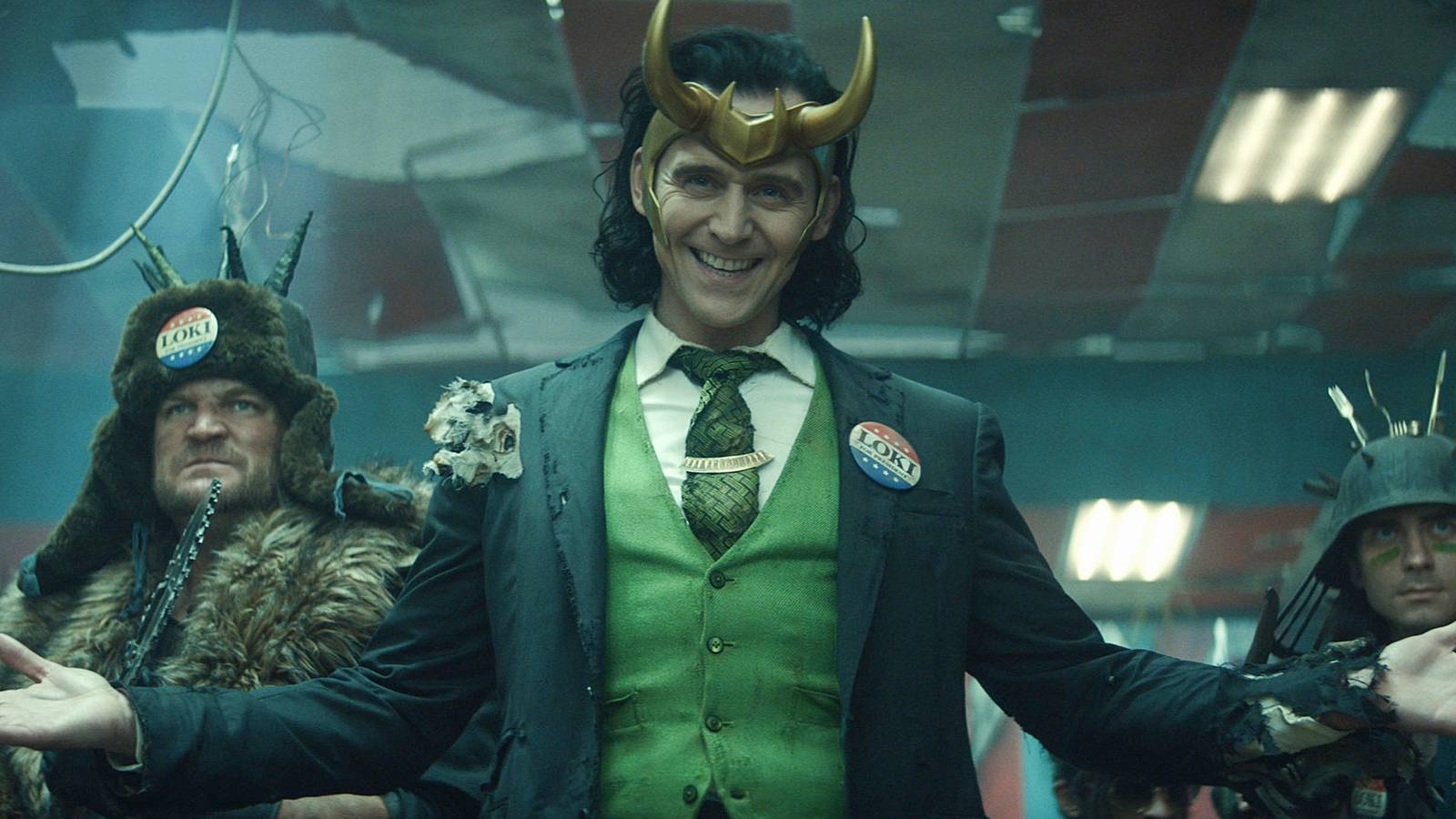
Image via Disney+ / Marvel Studios / Courtesy Everett Collection Published Sep 25, 2026, 6:48 AM EDT Lisa Nordin is an actress, writer, and fan of all things performing arts. Her favorite genres are Sci-Fi and Fantasy. She is a self-published author and enjoys exploring how fictional stories help define and qualify the human experience. Sign in to your Collider account Spoiler Alert: This list contains spoilers for multiple shows.Parallel universes are an enduring theme woven throughout decades of science fiction lore. By exploring alternate dimensions and different versions of reality, the concept holds a mirror up to present circumstances. In examining other representations of life, sci-fi TV shows can plumb the depths of what makes existence on this mortal plane tick. While some parallel universes are entirely different to the presented one, like having an alligator version of the main character in Loki, others come with more subtle changes. Either way, these TV series get to explore unlimited possibilities. When it comes to various versions of reality, these TV shows have the best, and they make for a fascinating watch, no matter what universe you’re in. 'Sliders' (1995–2000) Image via FOX Sliders follows a group of people who travel via wormholes to different dimensions, all the while trying to get back to their own version of Earth. In an experimental trip that was only supposed to be a brief one, the intrepid travelers soon realize that getting home is going to be far more complicated than they had originally predicted. Sliders is a terrific sci-fi series that uses the parallel universe setting to great advantage. The alternate realities visited in Sliders are still remarkably applicable today. From universes practicing forced population control to a pointed critique of consumerism and a chilling twist on widespread pharmaceuticals, Sliders tackled it all decades ahead of its time. Fortunately, Sliders has finally arrived on a free streaming platform, and all five seasons were released on Tubi in July 2026. Now is an ideal time to see why this show was so groundbreaking and remains one of the best multiverse TV shows of all time. 'The Flash' (2014–2023) Image via The CW Based on the DC Comics character, The Flash follows a young man named Barry Allen (Grant Gustin) who gains the ability to move at tremendous speed after he is struck by lightning. The Flash is a clever and interesting series that is part of the larger CW Arrowverse, and it features some thrilling crossovers and complex storylines. All the cast are brilliant in their roles, and the series explores themes about family, identity, and moral ethics. The Flash has several episodes that feature time travel and alternate versions of their home universe. An evil version of the hero, a manipulative version of a friend, and much more wreak havoc on the main characters and force them to face difficult circumstances and crises of self. What makes the parallel universes in The Flash so compelling is that they aren’t too far off from the original. It begs to ask: if one person were different, would it change the entire world? This interconnected web of personalities and how individuals rely on each other to survive is compelling and well done. 'Loki' (2021–2023) While some Marvel and Disney+ series have been hit or miss, Loki is a triumph. It blends sci-fi, fantasy, time travel, and parallel timelines in a way that is engaging to follow. Tom Hiddleston reprises his role as the tempestuous antihero/villain who is pressed into service for a time protection agency called the Time Variance Authority, or TVA. As Loki works with a TVA agent named Mobius (Owen Wilson), he experiences several realities and gets to encounter multiple iterations of himself, including those of different ages, genders, and species. Loki does an excellent job of taking a complex theory and making it accessible for mass audiences. It revealed several layers of a fan-favorite character and gave Hiddleston and viewers many angles to explore. Loki's parallel universes become even more precious as the TVA attempts to eradicate any variant that doesn't mesh with their "Sacred Timeline." This ends-justify-the-means argument is put to the audience, and the series gets as cerebral as it needs to without losing its way. Loki ponders what makes one version of existence any more important than others, and it is a provocative concept within the larger paradigm. 'Stranger Things' (2016–2025) Image via Netflix If you say the words "The Upside Down," most TV fans will know that you are referring to the parallel dimension in Netflix's Stranger Things. The massively successful sci-fi series that became a global phenomenon tackled juxtaposed dimensions with terrifying flair. Blending 1980s nostalgia with thrilling suspense, Stranger Things put Netflix on the map for original content and continues to inspire projects being made today. The Upside Down is an unsettling version of a parallel universe because it is so similar to the one the main characters know. They can see familiar streets, local landmarks, even their own houses, but they are all haunted, overtaken, and unnatural. This mirror-world quality makes The Upside Down even more disturbing. If it were simply a creepy world with spooky monsters, that would be one thing, but it is clearly their beloved Hawkins, one that has been mutated and infected. Keeping the corruption close to home adds natural urgency and intensity to the action. The Upside Down serves as a major focal point for the series and reveals the evil intentions of Vecna (Jamie Campbell Bower) to take over their world and remake it to his warped desires. Collider Exclusive · Sci-Fi Survival Quiz Which Sci-Fi World Would You Survive? The Matrix · Mad Max · Blade Runner · Dune · Star Wars Five universes. Five completely different ways the future went wrong — or sideways, or up in flames. Only one of them is the world your instincts were built for. Eight questions will figure out which dystopia, galaxy, or desert wasteland you'd actually make it out of alive. 💊The Matrix 🔥Mad Max 🌧️Blade Runner 🏜️Dune 🚀Star Wars TEST YOUR SURVIVAL → 01 You sense something is deeply wrong with the world around you. What do you do? The first instinct is often the truest one. APull on every thread until I understand the system — then figure out how to break it. BStop asking questions and start stockpiling — food, fuel, weapons. Questions don't keep you alive. CKeep my head down, observe carefully, and trust no one until I know who's pulling the strings. DStudy the patterns. Every system has a rhythm — learn it, and you learn how to survive it. EFind the people fighting back and join them. You can't fix a broken galaxy alone. NEXT QUESTION → 02 In a world of scarcity, what resource do you guard most fiercely? What we protect reveals what we believe survival actually requires. AKnowledge. If you understand the system, you don't need resources — you can generate them. BFuel. Everything else — movement, power, escape — runs on it. CTrust. In a world of fakes and informants, a truly reliable ally is rarer than any commodity. DWater. And after water, information — the two things empires are truly built on. EShips and credits. The galaxy is big — you survive it by being able to move through it freely. NEXT QUESTION → 03 What kind of threat keeps you up at night? Fear is useful data — if you're honest about what you're actually afraid of. AThat reality itself is a lie — that everything I experience has been constructed to keep me compliant. BA raid. No warning, no mercy — just the roar of engines and then nothing left. CBeing identified. Once someone with power decides you're a problem, you're already out of time. DBeing outmanoeuvred — losing a political game I didn't even know I was playing. EThe Empire tightening its grip until there's nowhere left to run. NEXT QUESTION → 04 How do you deal with authority you don't trust? Every dystopia has a power structure. Your approach to it determines everything. ASubvert it from the inside — learn its rules well enough to weaponise them against it. BIgnore it and stay out of its reach. The further from any power structure, the better. CAppear to comply while doing exactly what I need to do. Visibility is the enemy. DManoeuvre within it carefully. You can't beat a system you refuse to understand. EResist openly when I have to. Some things are worth the risk of being seen. NEXT QUESTION → 05 Which environment could you actually endure long-term? Survival isn't just tactical — it's physical, psychological, and very much about where you are. AUnderground bunkers and server rooms — cramped, artificial, but with access to everything that matters. BOpen wasteland — brutal sun, no shelter, constant movement. At least the threat is honest. CA dense, rain-soaked city where you can disappear into the crowd and nobody asks questions. DMerciless desert — extreme heat, no water, and something enormous living beneath the sand. EThe fringe — backwater planets and busy spaceports where the Empire's attention rarely reaches. NEXT QUESTION → 06 Who do you want in your corner when things fall apart? The company you keep is the clearest signal of who you actually are. AA tight crew of believers who've seen behind the curtain and have nothing left to lose. BOne or two people I'd trust with my life. Any more than that and someone talks. CNobody, ideally. Alliances are liabilities. I work alone unless I have no choice. DA community bound by shared hardship and mutual survival — people who need each other to last. EA ragtag team with wildly different skills and total commitment when it counts. NEXT QUESTION → 07 Where do you draw the line — if you draw one at all? Every survivor eventually faces a moment that tests what they're actually made of. AI won't harm the innocent — even the ones who'd report me without hesitation. BI do what I have to to protect the people I've chosen. Everything else is negotiable. CThe line shifts depending on who's asking and what's at stake. DI draw a long-term line — nothing that compromises my people's future, even if it'd help now. ESome lines, once crossed, can't be uncrossed. I know which ones they are. NEXT QUESTION → 08 What would actually make survival worth it? Staying alive is one thing. Having a reason to is another. AWaking others up — dismantling the illusion so no one else has to live inside it. BFinding somewhere — or someone — worth protecting. A reason to keep moving. CAnswers. Understanding what I am, what any of this means, before time runs out. DLegacy — shaping the future in a way that outlasts me by generations. EFreedom — for myself, for others, for every world still living under someone else's boot. REVEAL MY WORLD → Your Fate Has Been Calculated You'd Survive In…Your answers point to the world your instincts were built for. This is the universe your temperament, your survival instincts, and your particular brand of stubbornness were made for. The MatrixYou took the red pill a long time ago — probably before anyone offered it to you. You're a systems thinker who can't help but notice the seams in things. You're drawn to understanding how the system works before figuring out how to break it. You'd find the Resistance, or it would find you — your instinct for spotting constructed realities is the machines' worst nightmare. You function best when you have access to information and the freedom to act on it. The Matrix built an airtight prison. You'd be the one probing the walls for the door. Mad MaxThe wasteland doesn't reward the clever or the well-connected — it rewards those who are hard to kill and harder to break. That's you. You don't need comfort, community, or a cause larger than the next horizon. You need a vehicle, a clear threat, and enough fuel to outrun it — and you're good at all three. You are unsentimental enough to survive that world, and decent enough — just barely — to be something more than another raider. In the wasteland, that distinction is everything. Blade RunnerYou'd survive here because you know how to exist in moral grey areas without losing yourself completely. You read people accurately, keep your circle small, and ask the questions others prefer not to answer. In a city where humanity is a legal designation rather than a feeling, you hold onto something that keeps you functional. You're not a hero. But you're not lost, either. In Blade Runner's world, that distinction is everything. DuneArrakis is the most hostile environment in the known universe — and you are precisely the kind of person it rewards. Patience, discipline, and political awareness are your core strengths — and on Arrakis, they're survival tools. You understand that the long game matters more than any single victory. Others come to Dune and are consumed by it. You'd learn its logic and earn its respect. In time, you wouldn't just survive Arrakis — you'd begin to reshape it. Star WarsThe galaxy far, far away is vast, loud, and in a constant state of violent political upheaval — and you wouldn't have it any other way. You find meaning in being part of something larger than yourself — a cause, a crew, a rebellion. You'd gravitate toward the Rebellion, or the fringes, or whatever pocket of the galaxy still believes the Empire's grip can be broken. You fight — not because you have to, but because standing aside isn't something you're capable of. In Star Wars, that willingness is what makes all the difference. ↻ RETAKE THE QUIZ 'Doctor Who' (1963–2025) Image via BBC Spanning over six decades, Doctor Who is the longest-running sci-fi TV show of all time. Over its lengthy tenure, the series has seen writers, actors, and many plotlines come and go. However, it never fails to generate thought-provoking scenarios and wildly imaginative alien worlds and dimensions. Although Doctor Who explores many parallel dimensions that relate to other species or humanity in general, some of the more memorable have been the ones that involve The Doctor and their companions. John Hurt's spectacular performance as The War Doctor captured a markedly different version of the protagonist that was forever altered by years of conflict. In the episode "Amy's Choice," the companions must choose between two realities. And the examples go on and on. From parallel universes to parallel versions of the same character, Doctor Who delivers on all fronts. 'The Man in the High Castle' (2015–2019) Image via Prime Video Perhaps the most chilling parallel universe on this list takes place in The Man in the High Castle. It is so visceral and unnerving because it nearly could have happened. The Prime Video series is set in a world where the Nazi forces won World War II instead of the Allies. A haunting question faced continually is "what if?" In The Man in the High Castle, this question reaches new levels of gravitas, pondering an alternate outcome to a defining period in human history. The writing is gripping and will keep you hooked from the beginning. The cast is exemplary in their performances, and The Man in the High Castle still feels extremely relevant, as its warnings about authoritarian governments can still be heeded. 'Fringe' (2008–2013) Image via FOX Grief and love are two very powerful motivators, and both collide in Fringe. On the surface, FBI agent Olivia Dunham (Anna Torv) attempts to understand various unexplainable phenomena as she works with Dr. Walter Bishop (John Noble), his assistant Astrid Farnsworth (Jasika Nicole), and his son Peter (Joshua Jackson). On a much deeper level, Fringe reveals a devastating truth about Walter and Peter’s relationship. After the death of his son from an illness in his universe, Walter attempts to save a parallel universe's version of Peter, who has the same ailment, but it means bringing him back to his world. Although Walter saved the alternate Peter's life, he essentially stole a version of his son. This bombshell is a big one for everyone to come to terms with, and it is hard not to empathize with Walter. Peter must also decide what to do with this information and how it affects his future, living in a universe he wasn't meant to. This is a bittersweet and intriguing premise: a cure for a deadly disease could exist in one reality but not in another, and how far someone would go to cure their loved one. Fringe is packed with fascinating episodes, but the core relationship that centers it is the bond between a father and son. Walter and Peter's dynamic is the nucleus of the series, and it gives the show far more depth, emotion, and pathos than many others. 'Star Trek: The Next Generation' (1987–1994) Image via Paramount Television One of the best sci-fi TV shows of all time, Star Trek: The Next Generation followed a new captain and crew aboard the starship Enterprise as they boldly went into unknown regions of space to encounter new lifeforms and civilizations. The series tackled topics like racism, civil liberties, AI, and gender roles years ahead of their time. Some of the best intellectual debates have occurred on TNG when the cast encounters parallel dimensions or alternate realities. In the episode "Yesterday's Enterprise," the crew meets alternate versions of themselves, and Captain Picard (Patrick Stewart) must make a terrible decision and choose between both of their fates. In another episode entitled "Remember Me," Doctor Beverly Crusher (Gates McFadden) is the only person who remembers crew members as they start to vanish from existence and memory. As she questions her own sanity, she asks the ship's interface, "Computer, what is the nature of the universe?" In "The Inner Light," Picard lives an entire other lifetime in his own mind as a way to preserve a civilization's culture. And there are many, many more. Star Trek: The Next Generation never failed to explore parallel universes with great intentionality and absorbing premises, and all of them are masterpieces. Star Trek: The Next Generation Release Date 1987 - 1994-00-00 Network Syndication Cast Commander William T. Riker Showrunner Gene Roddenberry Directors Cliff Bole, Les Landau, Winrich Kolbe, Rob Bowman, Robert Scheerer, Jonathan Frakes, Robert Wiemer, Gabrielle Beaumont, Alexander Singer, David Carson, Paul Lynch, Corey Allen, Patrick Stewart, Chip Chalmers, Joseph L. Scanlan, James L. Conway, Robert Lederman, Tom Benko, Timothy Bond, Robert Legato, Adam Nimoy, Robert Becker, David Livingston, LeVar Burton Writers René Echevarria, Maurice Hurley, Richard Manning, Melinda M. Snodgrass, Tracy Tormé, Hannah Louise Shearer, Stuart Charno, Ira Steven Behr, Sara B. Cooper, Peter Allan Fields, Herbert Wright, Frank Abatemarco, Burton Armus, Hilary Bader, Morgan Gendel, David Kemper, Michael I. Wagner, Philip LaZebnik, Robert McCullough, Susan Sackett, Nick Sagan, Fred Bronson, Robert Hewitt Wolfe, Sam Rolfe Franchise(s) Star Trek Main Genre Sci-Fi Seasons 7 Producers Brannon Braga, D.C. Fontana, Gene Roddenberry, Jeri Taylor, Joe Menosky, Merri D. Howard, Rick Berman, Robert H. Justman, Robert Lewin, Ronald D. Moore, Wendy Neuss, Peter Lauritson, Michael Piller Creator(s) Gene Roddenberry Story By Gene Roddenberry Streaming Service(s) Amazon Prime Video Where To Watch Paramount Plus
8 Sci-Fi Shows With Parallel Universes That Are 10/10 Masterpieces
Full Article
Original Source
Read the full article at Collider →KhanList aggregates and links to publicly available news content. We do not host full articles from third-party sources. Always verify important information with original sources.