
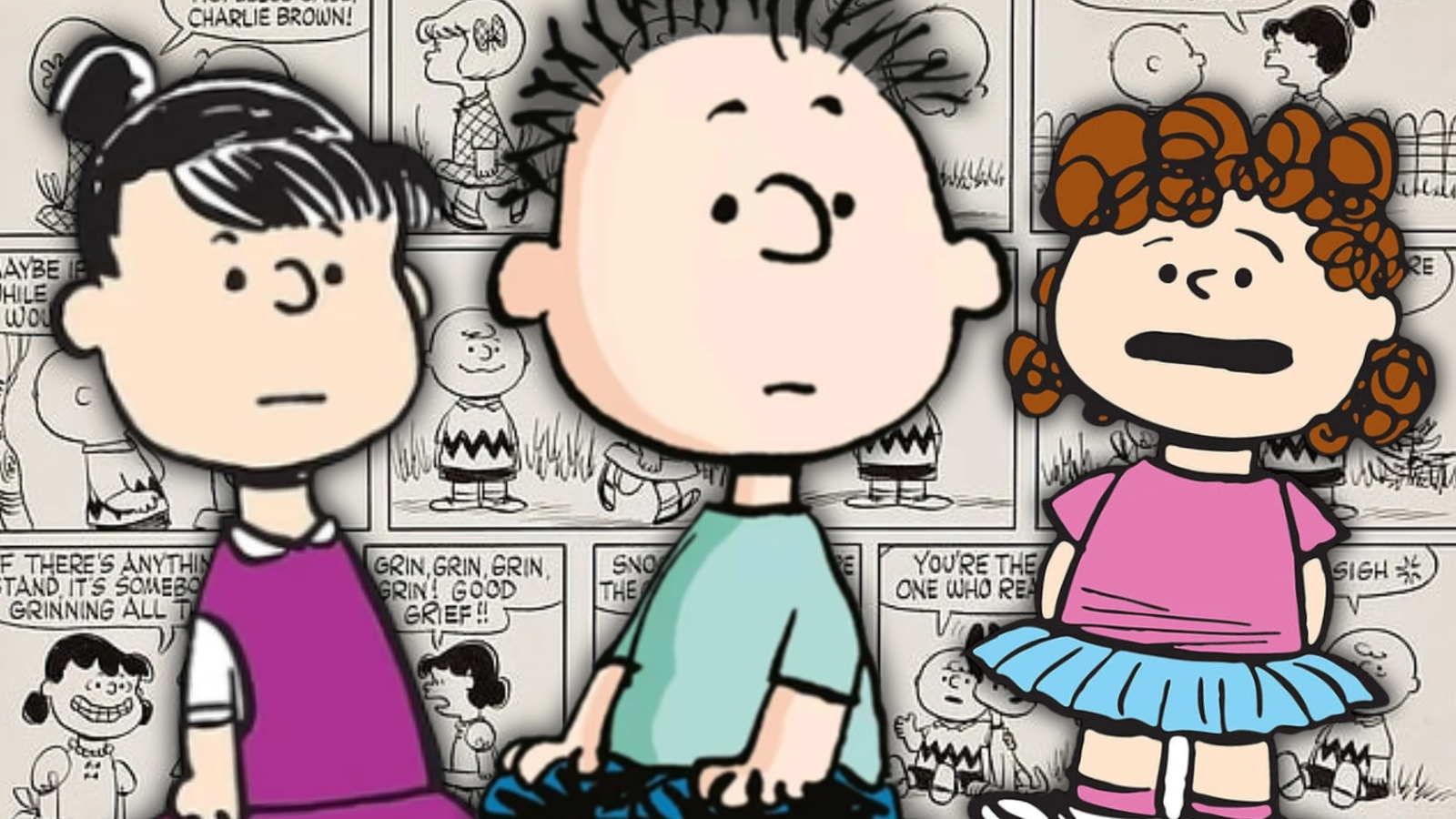
Custom Image by Hannah Diffey Published Oct 24, 2026, 1:30 PM EDT Hannah is a senior writer and self-publisher at ScreenRant. There, she focuses on writing news, features, and list-style articles about all things comics, books, anime, and manga. She works as a freelance writer in the entertainment industry, focusing on video games, anime, and literature. Her published works can be found on Screen Rant, FinanceBuzz, She Reads, and She Writes. Sign in to your ScreenRant account When Peanuts debuted on October 2, 1950, Charles M. Schulz introduced readers to Charlie Brown, Patty, and Shermy, with Snoopy arriving two days later. Over the strip’s 50-year run, Schulz kept reshaping that ensemble. Some new characters became permanent fixtures, while others gradually stopped appearing until their names and personalities were effectively forgotten. In several cases, the replacement was obvious, as a newer child could carry a similar story function, while the older character simply stopped being necessary to Schulz’s evolving ensemble. That history makes “erased” a useful description for a particular group, because these characters who stopped being active, recurring members of the original comic strip. The evidence is unusually concrete. Their biographies can be traced through first appearances, final strip dates, and, in several cases, Schulz’s own comments about why he abandoned a character. 8 Shermy Shermy is possibly the clearest example because he was there on day one. He appeared in the October 2, 1950, debut strip beside Charlie Brown and Patty, even delivering part of the opening exchange. The official Peanuts site still identifies him as one of Charlie Brown’s oldest friends, but his importance to the newspaper strip did not survive the early decades. His appearances dwindled dramatically after the 1950s. The commonly documented final appearance is June 15, 1969, nearly 19 years after the strip began. Shermy was mentioned by name later, including a March 13, 1977, baseball discussion, but he was no longer drawn as an active character. Schulz later explained that Shermy had effectively become an “extra little boy” he used when a scene needed someone with little personality, which helps explain his disappearance. 7 Patty The original Patty should not be confused with Patricia “Peppermint Patty” Reichardt, who debuted in 1966. Patty was one of the three characters in the very first Peanuts strip and initially had a much larger role, often appearing alongside Shermy and Violet. Her early prominence makes her eventual disappearance particularly striking. By the mid-1960s, Patty had been reduced largely to occasional background appearances. A Peanuts FAQ that catalogs these “missing faces” places her disappearance from regular sight on April 11, 1976, while later possible sightings remain uncertain. That ambiguity is itself proof of how thoroughly her identity faded from the strip. She was not given a dramatic departure, relocation, or final farewell; instead, she became one of those familiar faces readers could no longer reliably identify. 6 Violet Gray Violet began in the February 7, 1951, strip and was once a familiar part of Charlie Brown’s school and neighborhood life. She was closely associated with Patty, had a reputation for boasting about her affluent family, and frequently joined the children in excluding or teasing Charlie Brown. The official Peanuts biography still preserves those defining traits, even though the strip eventually stopped using her that way. Her decline followed a pattern similar to Patty’s. By the 1960s, Violet’s appearances were becoming less frequent, and the Peanuts FAQ records November 16, 1984 as the point when she dropped from the regular roster. There were later possible background cameos, including appearances alongside a girl who may be Patty, so calling 1984 her absolute final drawing would be misleading. What is clear is that her named, character-driven role had already been erased. 5 Charlotte Braun Charlotte Braun has one of the shortest lifespans of any recognizable Peanuts child. She debuted on November 30, 1954, as an intentionally loud, abrasive counterpart to Charlie Brown. Unlike Charlie Brown’s indecision, Charlotte was aggressively outspoken, giving Schulz a deliberately exaggerated comic personality to test against his existing cast. October 2, 1950 – February 13, 2000 · 17,897 Strips How Well Do You Know Peanuts? “Good grief!” ⚾Charlie BrownGood Ol’ Chuck 🐕SnoopyThe Flying Ace 🧣LinusSecurity Blanket 🏈LucyPsychiatric Help 🐥WoodstockBest Friend PLAY BALL → 01 Before Peanuts launched in 1950, Charles M. Schulz drew a weekly cartoon panel for the St. Paul Pioneer Press. What was it called? ALi’l Folks BSmall Fry CThe Sandlot DJust Kids ✓ Correct! Li’l Folks ran from 1947 to 1950. When the syndicate renamed the new strip “Peanuts,” Schulz hated the title for the rest of his life. ✗ Not quite! It was Li’l Folks — and Schulz never forgave United Feature for rechristening his strip “Peanuts.” NEXT → 02 Which member of the gang is almost never seen without his security blanket — and waits every year in the pumpkin patch for the Great Pumpkin? ASchroeder BLinus van Pelt CPig-Pen DShermy ✓ Correct! Linus — Lucy’s little brother, the strip’s resident theologian, and the reason “security blanket” entered the dictionary. ✗ Not quite! It’s Linus van Pelt, whose blanket gave the English language the term “security blanket.” NEXT → 03 Schroeder hammers away at his toy piano in devotion to a single composer — whose bust sits on top of it. Who? AJohann Sebastian Bach BWolfgang Amadeus Mozart CLudwig van Beethoven DFrédéric Chopin ✓ Correct! Beethoven. Schroeder even observes Beethoven’s birthday every December 16 — while ignoring Lucy entirely. ✗ Not quite! It’s Beethoven — the one thing in the world Schroeder loves more than tuning out Lucy. NEXT → 04 When Snoopy climbs onto his doghouse in goggles and a scarf, he becomes the World War I Flying Ace — forever hunting which nemesis? AThe Cat Next Door BThe Head Beagle CThe Great Pumpkin DThe Red Baron ✓ Correct! The Red Baron — and the Sopwith Camel doghouse always goes down in flames, sending the Ace off to curse him in a French café. ✗ Not quite! It’s the Red Baron. Snoopy’s doghouse is a Sopwith Camel, and it never once wins the dogfight. NEXT → 05 Lucy runs a curbside psychiatric help booth out of a lemonade stand. What does she charge per session? A1¢ B5¢ C10¢ D25¢ ✓ Correct! Five cents, please. The nickel never went up in 50 years — and the advice was never once worth it. ✗ Not quite! It’s 5¢ — “The doctor is in.” Lucy held that price for half a century. NEXT → 06 Snoopy’s tiny yellow best friend went unnamed for years before Schulz finally christened him. What was he named after? AA brand of birdseed BSchulz’s hometown in Minnesota CThe 1969 Woodstock music festival DA character from a Beethoven opera ✓ Correct! Woodstock got his name in 1970, borrowed straight from the music festival held the summer before. ✗ Not quite! He’s named for the 1969 Woodstock festival — Schulz gave the bird the name in 1970, years after he first appeared. NEXT → 07 The jazz score for A Charlie Brown Christmas — including the immortal “Linus and Lucy” — was written by which musician? AVince Guaraldi BDave Brubeck CHenry Mancini DDuke Ellington ✓ Correct! Pianist Vince Guaraldi scored the 1965 special, and network executives were sure the jazz soundtrack would sink it. It became a permanent holiday fixture. ✗ Not quite! It’s Vince Guaraldi, whose trio gave Peanuts its unmistakable sound. NEXT → 08 Schulz drew every Peanuts strip himself for nearly 50 years. What made the final original Sunday strip — February 13, 2000 — so haunting? ACharlie Brown finally kicked the football BThe Little Red-Haired Girl was shown at last CIt was the only strip Schulz left unfinished DIt ran the morning after Schulz died ✓ Correct! Schulz died the evening of February 12, 2000 — and his farewell strip, signed off with “Charlie Brown, Snoopy, Linus, Lucy... how can I ever forget them,” appeared in papers the very next morning. ✗ Not quite! Schulz died on February 12, 2000 — hours before his own farewell strip ran in the Sunday papers. SEE YOUR SCORE → The Doctor Is In · Five Cents, Please Your Peanuts Report Card ⚾ / 8 Good grief — or good ol’ Charlie Brown? Either way, the football is still there. Wanna try again? ⤴ ONE MORE KICK The experiment lasted only 10 appearances. Her final strip was published on February 1, 1955, barely two months after her debut. Her rapid disappearance is particularly well documented, and later Peanuts histories connect her fate to Schulz’s decision to abandon the character. The official Peanuts website confirms her November 30 debut, while character records identify February 1, 1955, as her last appearance, making Charlotte one of the most definitive cases of a character being removed from the strip. There was no later gradual return to the neighborhood, either; her existence effectively ends with that tiny 1955 window. 4 Faron Faron, Frieda’s strangely motionless cat, was never given much time to establish himself. He first appeared in May 1961 as part of a recurring attempt by Frieda to make Snoopy chase rabbits. Faron was notable precisely because he was so passive: Frieda would carry him around while trying to use him to provoke Snoopy into acting like a conventional dog. Charles M. Schulz later gave an unusually direct explanation for the character’s disappearance. On the official Peanuts site, Schulz said he could not draw cats well enough and believed Faron pushed Snoopy toward behavior that made the strip feel too much like a simple cat-and-dog comic. Faron’s final strip appearance came on November 20, 1961. After that, Frieda remained, but Faron was gone for good. The distinction matters because Snoopy later developed another memorable cat rivalry, but Faron himself was never restored to the cast. 3 555 95472 “5” The boy known simply as “5” was introduced on September 30, 1963, after Schulz created a family whose members were all given numbers. His father’s surname, 95472, came from the ZIP code associated with Sebastopol, California, where Schulz lived. 5 played baseball with Charlie Brown’s team and initially had a stronger presence than his unusual name might suggest. That presence steadily shrank. Later character records place 5’s final comic-strip appearance on May 22, 1983, after which he disappeared from the ongoing strip. His twin sisters, 3 and 4, also faded away years earlier. Unlike major Peanuts children, 5 never developed a durable storyline or relationship that kept him in circulation, leaving his numerical family as one of the strip’s most conspicuous abandoned ideas. The official Peanuts site still preserves the 95472 family as part of franchise history, but that is very different from remaining an active newspaper-strip character. 2 José Peterson José Peterson arrived on March 20, 1967, as a member of Peppermint Patty’s baseball team. His background was unusual for Peanuts: character references describe him as half-Mexican and half-Swedish, while the strip presented him primarily through his strong baseball ability. He was part of the expanding world around Peppermint Patty rather than Charlie Brown’s original neighborhood group. That expansion did not last. The Peanuts' timeline records September 24, 1969, as José’s final appearance, giving him a run of only about two and a half years. After that date, he ceased to function as a recognizable member of the strip’s baseball circle. His disappearance is especially notable because Franklin and Marcie would soon become much more durable additions to the ensemble, making José part of a transitional generation that Schulz ultimately left behind. 1 Thibault Thibault appeared on June 4, 1970 and quickly became one of the more combative children associated with Peppermint Patty’s baseball team. He famously borrowed Charlie Brown’s baseball glove and refused to return it, creating a storyline built around his stubbornness and eagerness to fight. He later provoked Marcie, setting up one of his most memorable appearances. That storyline also effectively became his exit. The documented final appearance of Thibault is August 4, 1973. The official Peanuts biography notes that Marcie eventually punches him after his taunting goes too far, and character records identify the August 4 strip as his final appearance. The storyline was later adapted into the 1983 television program The Charlie Brown and Snoopy Show, but Thibault did not return to the original comic strip as a continuing character. TV Show(s) Peanuts, Peanuts, The Snoopy Show First Film A Boy Named Charlie Brown Cast Christopher Shea, Kathy Steinberg, Bill Melendez, Sally Dryer, Peter Robbins, Noah Schnapp, Hadley Belle Miller, Mariel Sheets, Lisa DeFaria, Venus Omega Schultheis Created by Charles M. Schulz Movie(s) A Boy Named Charlie Brown, Snoopy, Come Home, Race for Your Life, Charlie Brown, Bon Voyage, Charlie Brown (and Don't Come Back!), The Peanuts Movie Comic Peanuts
8 Peanuts Characters Who Were Completely Erased From The Series
Full Article
Original Source
Read the full article at Screenrant →KhanList aggregates and links to publicly available news content. We do not host full articles from third-party sources. Always verify important information with original sources.