
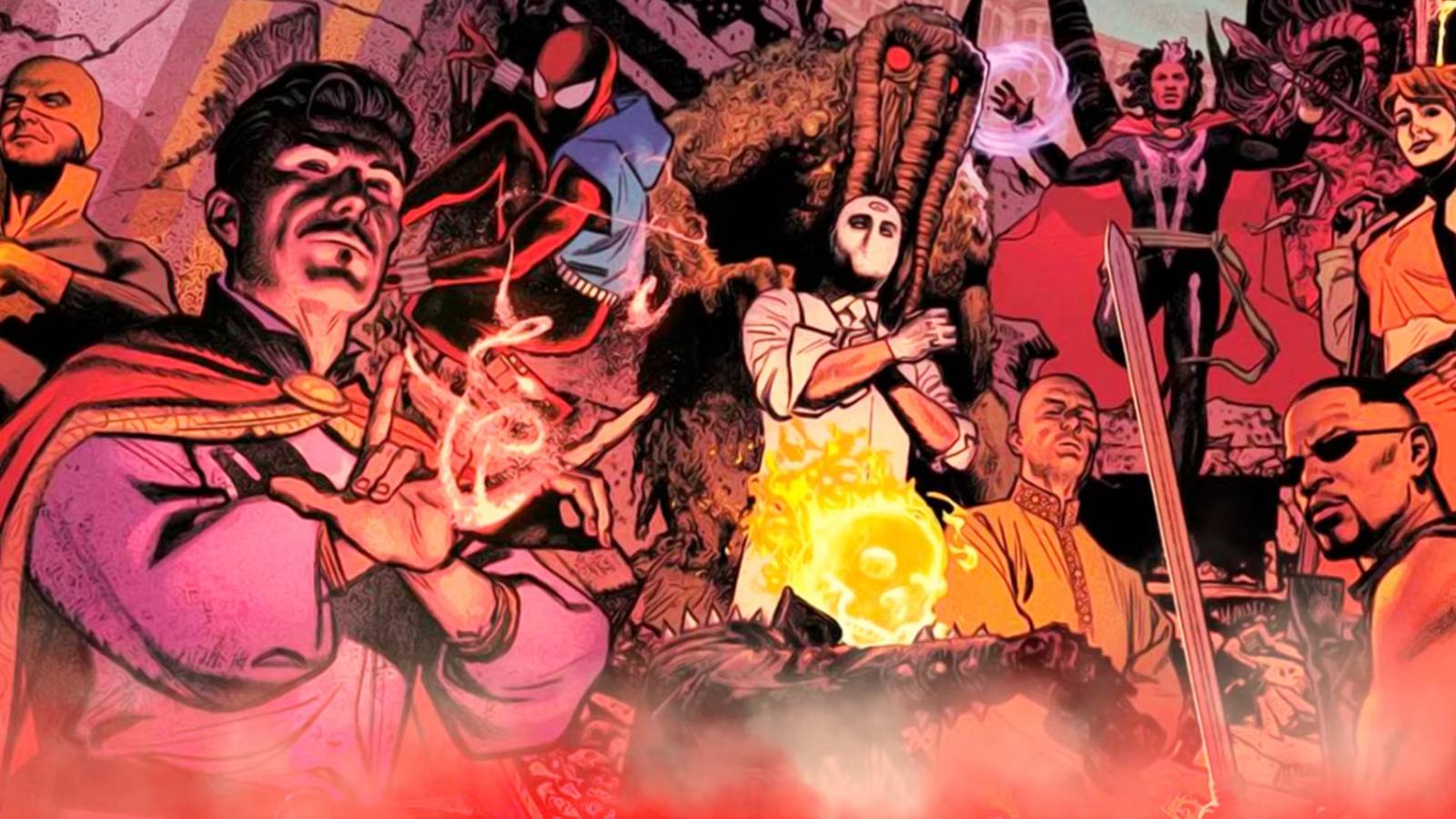
For the generation raised on MCU blockbusters, it may seem like Earth’s mightiest heroes have always held the top spot in pop culture. However, long before Iron Man, Captain America, and Thor dominated the box office, the comic book landscape looked very different. For decades, the Avengers were a secondary team, often overshadowed by more popular superhero teams. At the height of comics’ boom, other superhero teams ruled the charts, shaped mainstream adaptations, and owned the cultural conversation. Marvel’s roster regularly featured teams that outsold and outshone the Avengers. When financial trouble hit in the 1990s, the company sold film rights to its biggest properties and left the Avengers behind, because studios saw them as a B-list gamble. Looking back at the pre-MCU era gives a fascinating view of how public perception and industry dominance changed over time. This article spotlights eight Marvel teams that were more popular than the Avengers before the MCU became a cultural phenomenon. These teams helped shape what Marvel has become today. 8 Midnight Sons- Marvel’s Supernatural Superteam Before the MCU The Midnight Sons were Marvel's premier Supernatural powerhouse in the '90s. Introduced in 1992 through the multi-title "Rise of the Midnight Sons" crossover, this occult coalition brought together dark-fantasy heavyweights like Ghost Rider, Blade, Morbius, and the Nightstalkers. The Midnight Sons tapped into the era's demand for more anti-heroes. During their peak, they offered fans what the Avengers couldn't: horror aesthetics and dark storytelling. Characters like Ghost Rider (Danny Ketch) and Blade were legitimate culture drivers of the period, securing high solo sales, video game appearances, and eventually Blade’s groundbreaking 1998 feature film that revolutionised the medium. The legacy of the Midnight Sons highlights a unique time when horror and supernatural heroism held a far firmer grip on mainstream comic fandom than Earth's Mightiest Heroes. Before the MCU came around and reintroduced the heroes into the mainstream, the Midnight Sons had a firm grip on readers' attention. 7 Alpha Flight — Marvel's Superhero Team That Put Canada on the Map Alpha Flight is a team of Canadian superheroes who have routinely fought everything from world nations to aliens and ancient gods. Led by James MacDonald Hudson, aka Guardian, one of the greatest heroes without superpowers, the team eventually broke up due to government interference, later evolving into a space-based organisation focused on fighting galactic threats, and domestic ones, occassionally. The team has a diverse cast of characters whose interpersonal drama captured fans' hearts. It also made history by featuring the first openly gay superhero, Northstar. Moreover, the team's connection to Marvel’s fan-favourite hero Wolverine made for an interesting dynamic that didn’t go unnoticed by fans, giving them a special place in pop culture. 6 The Inhumans — Marvel's Forgotten Contenders for Superhero Stardom Before Marvel Studios tried to turn them into a mainstream tentpole in the 2010s, the Inhumans occupied a unique, insular corner of the Marvel Universe. This hidden race is an offshoot of humanity that the alien Kree experimented on in ancient times, and they gained powerful abilities after exposure to the sacred Terrigen, which alters their genetics during adolescence. They are ruled by a royal family that includes the silent Black Bolt, Medusa, Crystal, Karnak, Gordon, and Maximus. Throughout the 1980s and ’90s, the Inhumans routinely outpaced the Avengers in critical prestige and high-concept storytelling. The Inhumans offered readers complex explorations of caste systems, genetic destiny, and royal politics. 5 The Guardians of the Galaxy — Marvel’s Cosmic Team Before the MCU Made Them Famous Introduced in 1969 as 31st-century freedom fighters, the original Guardians of the Galaxy bore little resemblance to the version fans know today. The modern lineup emerged after an intergalactic war, when Peter Quill, aka Star-Lord, gathered a ragtag crew of space crusaders including Drax, Gamora, Groot, and Rocket Raccoon. Together, they have repeatedly faced universe-level threats like Thanos and Annihilus. Long before the MCU, the Guardians helped lay the groundwork for Marvel’s cosmic hierarchy. Their comics introduced the political machinery of the Kree and the Nova Corps, expanding the Marvel Universe. They’ve more than earned their name, repelling the Cancerverse’s invasion through the extra-dimensional Fault and holding their own against aggressive powers like the Skrulls, Kree, Shi’ar, and Spartax. 4 The New Mutants — The X-Men’s Most Successful Successor Team The X-Men trained the New Mutants before Decimation and afterwards, usually operating independently. The team consists of mutant recruits whose mission is to help mutants survive the aftermath of House of M. The team is marked by tragedy, with some of the most devastating moments in Marvel Comics, and sometimes members don’t even survive to tell the tale. What makes the New Mutants most compelling is how quickly the tone shifts from team drama to deadly war zones. They have fun, diverse power sets, but what keeps fans hooked is watching the characters grow and adapt to their ever-changing situations and perspectives. Their dynamic differs greatly from the Avengers, to their benefit. 3 The Defenders — Marvel’s Unconventional Answer to the Avengers The Defenders have appeared in several different versions over the years and have been linked to several loosely affiliated alliances across the Marvel Universe. However, few teams are as unusual as the first lineup, which consisted of Doctor Strange, Namor, Silver Surfer, and Hulk. More recently, Daredevil, Iron Fist, Jessica Jones, and Luke Cage adopted the sobriquet. The team formed after Roy Thomas’s Dr Strange was cancelled with #123 in the middle of his run, he continued the story in Sub-Mariner #22 and The Incredible Hulk #126. Regardless of their lineup, they have always offered fun character interactions and explosive team-up action. 2 The Fantastic Four — The Team That Started Marvel's Superhero Revolution The Fantastic Four is Marvel’s first team and functions more like a family than any other superhero team. The team comprises Reed Richards, aka Mr Fantastic, his wife Sue, aka the Invisible Woman, her brother Johnny Storm, “The Human Torch and their friend Ben Grimm, better known as the Thing. They gained their powers when mysterious cosmic rays hit them during a space expedition. Led by Mister Fantastic, the Fantastic Four are as much explorers as they are heroes. They regularly face cosmic threats like Galactus and have explored places from the Negative Zone to the Microverse. The team has occasionally changed members, with She-Hulk as a well-known substitute. For a brief time, the entire team was also replaced by Spider-Man, Wolverine, Ghost Rider, and Hulk. With Reed and Sue’s children, Franklin and Valeria, joining their parents on adventures, the Fantastic Four are always a lively bunch. 1 The X-Men — Marvel's Biggest Superhero Team Before the MCU Before the advent of the MCU, the X-Men were Marvel’s biggest superhero team and held this position for decades. This position was well deserved because the X-Men have a colourful array of personalities and abilities among their members, making them a gold mine for creative and compelling storytelling in the comic book industry. Professor Charles Xavier founded his school for gifted students, and the X-Men with it, to build peace between mutants and humanity. Over the years, the team has matured from teenage students into adult freedom fighters. Yet, it has never abandoned its mission: carrying forward its mentor's dream of racial equality while protecting a world that often fears and rejects them. Writer Chris Claremont forged the franchise’s golden age during a 16-year run that began in 1975. He treated the team like a complex soap opera, centring stories on grief, romance, and systemic prejudice. That character-driven approach fueled historic commercial success, peaking with 1991’s X-Men #1, which sold 8.1 million copies and set a Guinness World Record.
8 Marvel Teams More Popular Than the Avengers Before the MCU
Full Article
Original Source
Read the full article at Screenrant →KhanList aggregates and links to publicly available news content. We do not host full articles from third-party sources. Always verify important information with original sources.