
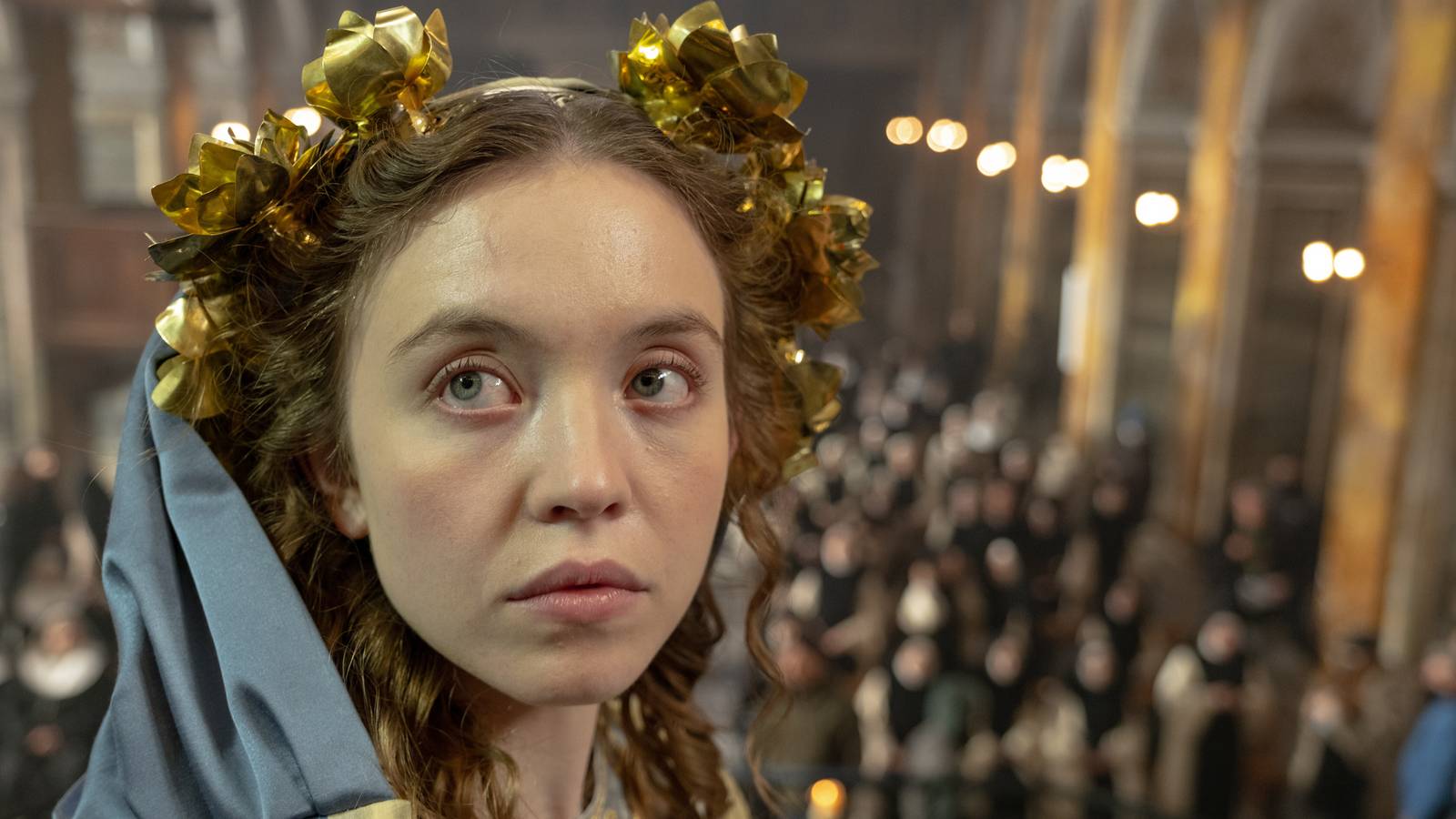
Published Aug 30, 2026, 8:30 AM EDT Richard Craig is a Senior Author at Screen Rant covering film and TV. Richard has also written extensively about horror and film soundtracks, contributing a chapter to the first major academic collection on the folk horror genre, The Routledge Companion to Folk Horror. Richard is also a performing musician and holds an MA in Music and Sound Art. Horror movies and the Bible have had a surprisingly long relationship. While many horror films draw inspiration from folklore, urban legends, or classic Gothic literature, some of the genre's most memorable stories have their roots in Scripture. The Bible is filled with apocalyptic prophecies, miraculous births, demonic forces, divine judgment, and cosmic battles between good and evil – essentially a ready-made horror anthology if you focus on the scarier passages. Filmmakers have repeatedly turned to biblical stories and imagery to create some of cinema's most unsettling experiences. Sometimes the connection is obvious, with movies directly adapting concepts like the Antichrist or the Book of Revelation. Other times, the inspiration is more subtle, borrowing specific theological ideas and placing them in modern settings. Either way, these films often tap into fears that feel larger than life because they're connected to centuries-old religious traditions. The best examples build entire narratives around biblical concepts, whether it's the plagues of Egypt, the opening of Revelation's seals, or the idea of a miraculous conception. The result is horror that feels cosmic in scale, where the fate of humanity can hinge on a single child, a prophetic vision, or a seemingly impossible event. From demonic children to end-of-the-world prophecies, these eight horror movies all take direct inspiration from the Bible and transform familiar religious ideas into unforgettable nightmares. Immaculate (2024) Sydney Sweeney's Immaculate wears its biblical inspiration right in the title. Sweeney plays Cecilia, a young nun who arrives at an Italian convent and discovers she is mysteriously pregnant despite remaining a virgin. The premise intentionally evokes the concept of the Immaculate Conception and, more broadly, the miraculous birth of Jesus Christ. Of course, Immaculate quickly twists that holy premise into something horrifying. Rather than presenting a divine miracle, it gradually reveals a disturbing conspiracy hidden within the convent's walls. Immaculate draws much of its tension from the notion of the Immaculate Conception going wrong. The contrast between sacred imagery and graphic body horror gives Immaculate much of its power. Nuns, relics, prayers, and discussions of faith are placed alongside increasingly grotesque revelations. It's a clever modern example of biblical horror, taking one of Christianity's most famous concepts and asking audiences to view it through a far darker lens. The Reaping (2007) The Reaping is essentially built around one of the Bible's most famous stories: the Ten Plagues of Egypt from the Book of Exodus. Hilary Swank plays Katherine Winter, a former Christian missionary turned skeptic who investigates alleged miracles. She arrives in a small Louisiana town where a series of increasingly bizarre events appear to mirror the plagues inflicted upon Egypt before Moses led the Israelites to freedom. The river turns red like blood. Swarms of insects descend on the town. Livestock die mysteriously. Other disasters follow in a pattern that becomes impossible to ignore. The Reaping deliberately recreates several of Exodus' divine punishments while placing them in a contemporary setting. The Reaping is particularly interesting because Katherine spends much of the movie trying to find scientific explanations for events that seem ripped directly from Scripture. As the evidence mounts, however, the story gradually shifts toward apocalyptic horror and questions of faith, prophecy, and divine judgment. Frailty (2001) Bill Paxton's Frailty is one of the most disturbing religious horror films ever made. The story centers on a father who claims God has given him a mission to hunt and destroy demons disguised as ordinary people. He believes he receives instructions through divine visions, and he expects his two young sons to help him carry out this terrifying work. Frailty's biblical connections are rooted in the Old Testament concept of prophets receiving direct instructions from God. Throughout Scripture, figures like Abraham, Moses, and Samuel are called upon to perform difficult tasks based solely on faith. Frailty takes that idea and asks what such a command would look like in modern America. Frailty is especially effective because of its ambiguity. It's never clear whether father is experiencing genuine divine revelations, or if he’s dangerously delusional. The narrative continually references sin, judgment, and God's will while forcing viewers to wrestle with the possibility that biblical-style prophecy may not look comforting in the real world. The Omen (1976) Few horror movies have used biblical prophecy as effectively as The Omen. It revolves around Damien Thorn, a young boy who gradually appears to be the Antichrist foretold in the Book of Revelation. His adoptive father begins uncovering clues that suggest Damien's birth fulfills ancient prophecies concerning Satan's son and the coming end times. The Omen directly references Revelation's famous "Number of the Beast," 666, which appears as a birthmark hidden on Damien's scalp. Biblical passages and prophecies are repeatedly cited as characters attempt to understand the child's true nature. Damien rarely behaves like a traditional movie monster, which only makes The Omen even more chilling. Instead, terror comes from the growing realization that an innocent-looking child may be destined to bring about the apocalypse. The Prophecy (1995) While many religious horror movies focus on demons, The Prophecy turns its attention toward angels. Christopher Walken delivers an unforgettable performance as the archangel Gabriel, who becomes embroiled in a second war in Heaven. The Prophecy imagines a conflict among God's angels that spills into the mortal world. It draws heavily from biblical angelology, particularly the roles of Gabriel and Lucifer. However, it also expands on ideas that are only briefly mentioned in the Bible, creating an unsettling supernatural thriller about celestial beings who are far more dangerous than their traditional depictions suggest. Walken's Gabriel is especially memorable because he isn't portrayed as a benevolent messenger. Instead, he's jealous, ruthless, and willing to manipulate humanity in pursuit of victory. As a result, The Prophecy transforms heavenly beings into terrifying antagonists. End Of Days (1999) Arnold Schwarzenegger and biblical apocalypse horror may sound like an unusual combination, but End of Days fully commits to the concept. It follows a former police officer who becomes humanity's last line of defense when Satan arrives on Earth searching for a woman destined to bear the Antichrist. If successful, the Devil will usher in a new era of darkness and fulfill apocalyptic prophecies. End of Days borrows heavily from Revelation's end-time imagery, including the final battle between good and evil. Additional references to Satan, the Antichrist, and Armageddon are woven throughout the story. While End of Days embraces blockbuster action more than some entries on this list, its core narrative remains rooted in biblical prophecy. The idea that the fate of humanity hinges on preventing Satan's plans feels like something lifted directly from an especially intense interpretation of Revelation. The Seventh Sign (1988) No movie on this list may be more directly tied to a specific biblical text than The Seventh Sign. The title itself refers to the seven seals described in the Book of Revelation. It depicts a pregnant woman who discovers that a series of global catastrophes correspond to signs heralding the apocalypse. The story specifically revolves around the opening of Revelation's seals and the approach of Judgment Day. Throughout The Seventh Sign, oceans die, strange weather devastates regions of the world, and prophetic events unfold in sequence. The narrative repeatedly references Revelation's apocalyptic imagery, including the seals and the final reckoning. The Seventh Sign is unique because its entire plot is structured around interpreting Revelation's prophecies and determining whether humanity's fate can still be changed. For a horror movie, that's a fairly ambitious theological assignment. Seven (1995) David Fincher's Seven may not feature demons or apocalyptic prophecies, but it's absolutely rooted in biblical ideas. The serial killer structures his murders around the Seven Deadly Sins: gluttony, greed, sloth, wrath, pride, lust, and envy. While the Seven Deadly Sins are not listed together in a single biblical passage, they emerged from centuries of Christian theology based on biblical teachings about sin and morality. Each murder is designed as a grotesque punishment reflecting one specific sin. The killer sees himself as carrying out a twisted form of divine judgment, forcing society to confront what he views as moral decay. The brilliance of Seven is that it treats sin itself as the monster. Rather than relying on supernatural forces, the film explores how religious concepts can become terrifying when filtered through fanaticism and obsession. By the time the infamous final box arrives, Fincher has transformed theological ideas into one of the bleakest horror-thrillers ever made. Release Date April 1, 1988 Runtime 97 minutes Director Carl Schultz Writers Clifford Green Producers Paul R. Gurian, Robert W. Cort Cast Michael Biehn Russell Quinn Jürgen Prochnow David Bannon Peter Friedman Father Lucci
8 Horror Movies Inspired By The Bible
Full Article
Original Source
Read the full article at Screenrant →KhanList aggregates and links to publicly available news content. We do not host full articles from third-party sources. Always verify important information with original sources.