
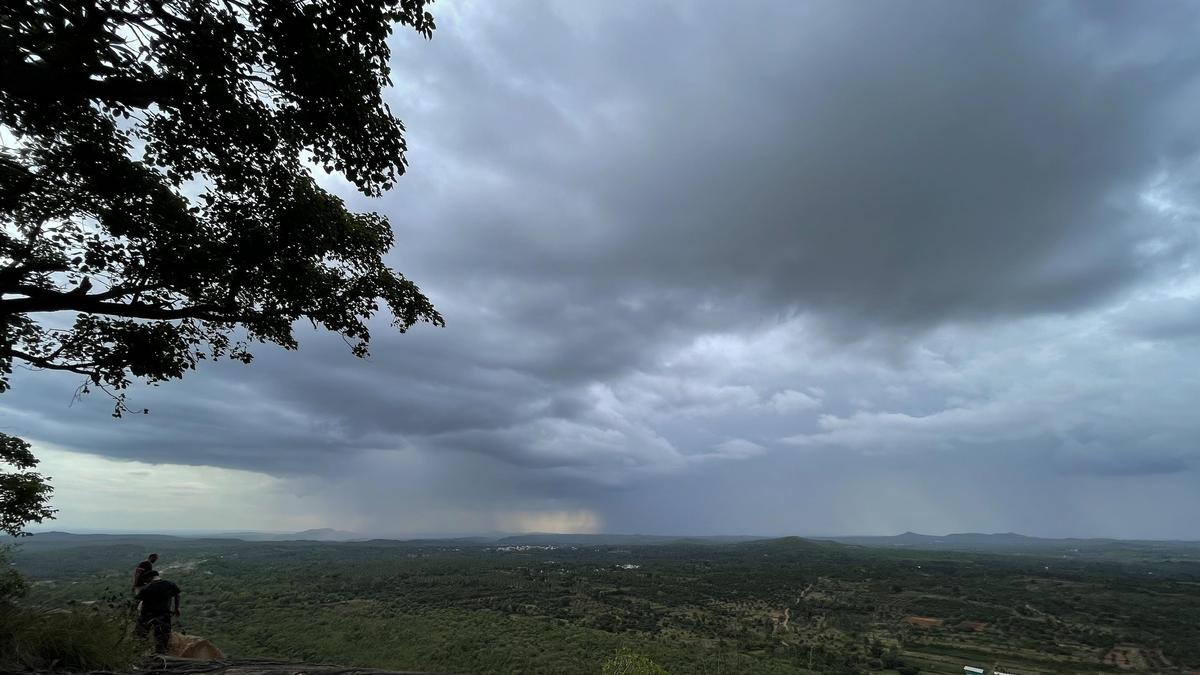
The monsoon period that spans from June 1 to September 30, covering 122 days, is crucial for Karnataka as it accounts for about 74% of the State’s calendar year rainfall. | Photo Credit: K. MURALI KUMAR The recently concluded southwest monsoon (SWM) in Karnataka was marked by not just a rainfall deficit, but also by uneven spatial distribution of rain and prolonged dry spells during critical stages of crop growth.The monsoon period that spans from June 1 to September 30, covering 122 days, is crucial for Karnataka as it accounts for about 74% of the State’s calendar year rainfall.But data with the State Revenue Department shows that of these 122 days, Karnataka experienced either nil/near nil or deficit rainfall for 79 days. While 31 days recorded normal rainfall, only 12 saw rainfall beyond normal figures. The monsoon period that spans from June 1 to September 30, covering 122 days, is crucial for Karnataka as it accounts for about 74% of the State’s calendar year rainfall. | Photo Credit: K. MURALI KUMAR This means 65% of the crucial SWM period went almost dry. Experts observe that such uneven distribution and prolonged dryness hit agriculture and allied activities very hard resulting in huge crop losses.“What is important for agriculture and crop growth is not just the total quantum of rainfall during the entire monsoon period, but rainfall at regular intervals during different phases of crop growth,” said M.B. Raje Gowda, Agro Meteorologist and Visiting Professor at University of Agricultural Sciences-Bengaluru.“Crops start wilting if the dry spell continues beyond 10 days,” he pointed out. He said that good rainfall for 50 to 52 days during SWM is a must for the healthy growth of crops.According to him, poor rainfall along with uneven distribution is the main reason for massive crop losses this time. Karnataka has estimated the crop losses owing to drought in the kharif season at ₹46,323 crore. This includes not just agricultural crops, but even horticulture/spice crops.Low temperatures and high pressureProf. Gowda explained that drop in temperatures during July created high pressure weather systems that dispelled the monsoon clouds away from the south and the north interior parts of Karnataka, resulting in dry spells/highly inadequate rainfall. The monsoon period that spans from June 1 to September 30, covering 122 days, is crucial for Karnataka as it accounts for about 74% of the State’s calendar year rainfall. | Photo Credit: K. MURALI KUMAR Prof. Gowda, who has conducted various studies on monsoon patterns in Karnataka, said the authorities should include factors like “distribution of rains” in the crop insurance scheme so that the impact of uneven distribution of rains on crops could be compensated.Karnataka received 551 mm of rainfall as against the normal of 852 mm during SWM, accounting for a Statewide deficit of 35%. The poor and uneven rainfall has adversely affected sowing, crop establishment, and crop development across vulnerable areas. Published - October 10, 2026 07:00 am IST
79 out of 122 southwest monsoon days went almost dry in Karnataka
Full Article
Original Source
Read the full article at Thehindu →KhanList aggregates and links to publicly available news content. We do not host full articles from third-party sources. Always verify important information with original sources.