
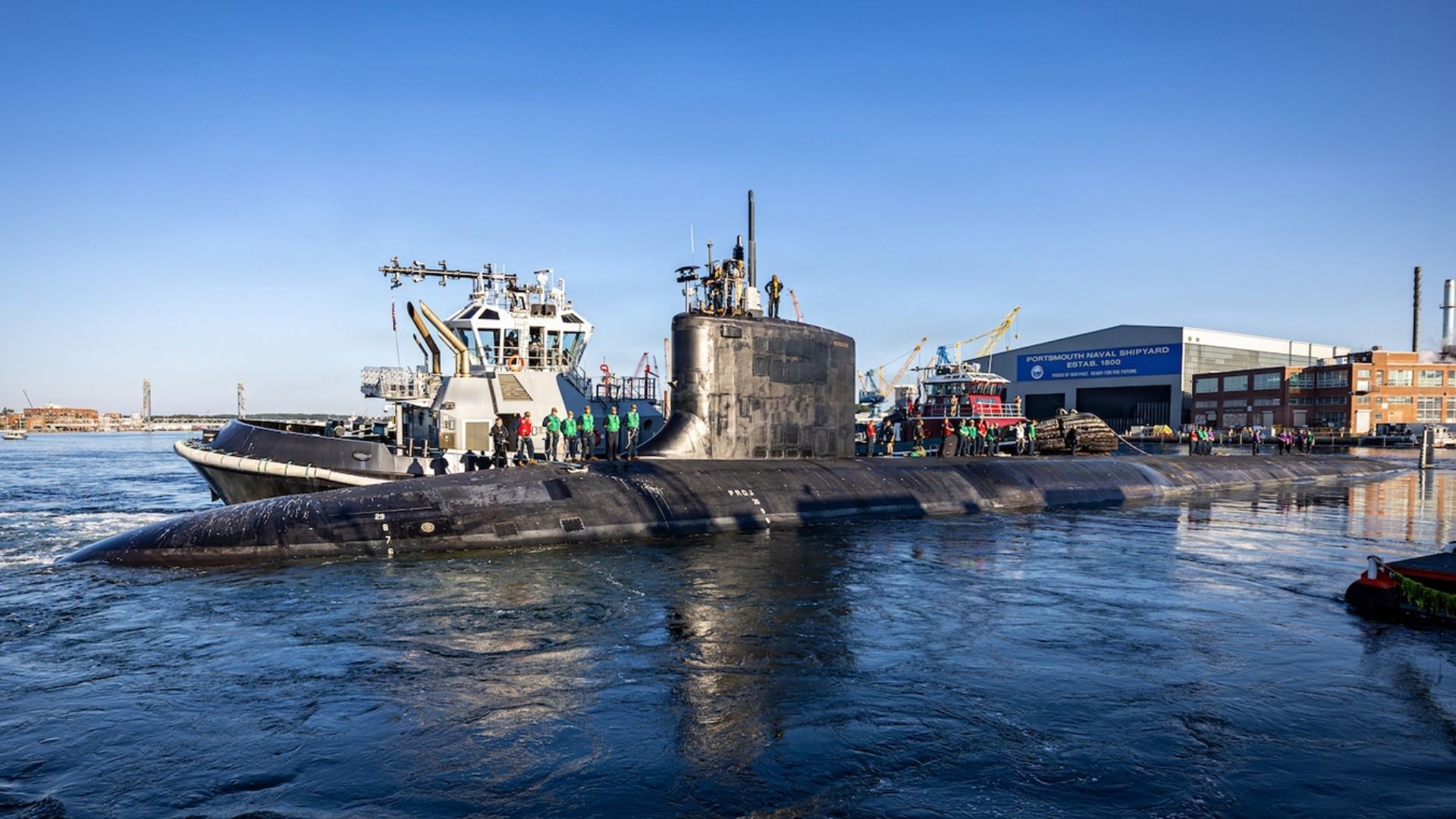
The U.S. Navy has returned the Virginia-class attack submarine USS North Dakota (SSN 784) to the fleet after a major maintenance and modernization period at Portsmouth Naval Shipyard in Kittery, Maine. The submarine was delivered back to the fleet battle-ready on August 20, 2026, marking Portsmouth’s first completed maintenance availability involving a Virginia-class Block III submarine. The work included repairs, structural inspections, and replacement of mechanical and electrical systems, while also giving the shipyard experience maintaining the substantially modified Block III configuration. The return comes as the Navy faces continuing pressure to keep its attack submarine fleet operational amid lengthy maintenance periods and limited shipyard capacity. A first for Portsmouth’s Virginia-class work According to US Navy, the project involved months of coordination between North Dakota’s crew and Portsmouth’s civilian workforce. The shipyard described the work as its first Chief of Naval Operations availability on a submarine from the third Virginia-class production block. Shipyard personnel also integrated new maritime technologies and completed technical modifications for the first time as part of the project. “The shipyard’s experience with this first Block III submarine will inform future Portsmouth maintenance projects,” the Navy said. Capt. Jesse Nice, Portsmouth Naval Shipyard’s commander, said the team completed the complex work while establishing a path for future Virginia-class maintenance. The submarine’s return also followed an intensive testing and certification process. The Navy said the project moved through its testing program, including its most demanding phase, at a historically rapid pace. Why Block III matters USS North Dakota is the first submarine of the Virginia class’s Block III configuration. The design introduced major changes to the forward section of the submarine, including a Large Aperture Bow sonar array and two Virginia Payload Tubes replacing the 12 individual vertical-launch tubes used on earlier boats. The Virginia Payload Tubes can each accommodate six Tomahawk cruise missiles, retaining a 12-missile capacity while using a different launcher arrangement. The Block III configuration also introduced changes intended to reduce acquisition and lifecycle costs while providing greater flexibility for future payloads. That makes Portsmouth’s experience with North Dakota particularly relevant as additional Block III submarines move through the fleet’s maintenance cycle. A timely return for the submarine force The achievement comes against a difficult backdrop for the U.S. Navy’s attack submarine fleet. A Government Accountability Office assessment found that submarine maintenance delays have resulted in thousands of lost operational days and billions of dollars in sustainment costs. The Navy operates a limited number of nuclear-powered attack submarines, making the time each boat spends unavailable for operations particularly important. Long maintenance periods can reduce the number of submarines available for deployments even when the vessels remain counted in the fleet’s overall inventory. “Everyone involved was bought in, stayed the course and executed the fastest, most aggressive end game in recent history on a major availability at PNSY,” said Andrew Stark, the submarine’s project superintendent. The Navy says the modernization provides North Dakota with updated capabilities for future operations, while Portsmouth’s experience establishes a foundation for maintaining the remaining Block III boats. The submarine’s return therefore is about both an operational gain for the fleet and an important test of the industrial infrastructure responsible for keeping America’s nuclear-powered attack submarines at sea.Get the latest in engineering, tech, space & science - delivered daily to your inbox.Kaif Shaikh is a journalist and writer passionate about turning complex information into clear, impactful stories. His writing covers technology, sustainability, geopolitics, and occasionally fiction. A graduate in Journalism and Mass Communication, his work has appeared in the Times of India and beyond. After a near-fatal experience, Kaif began seeing both stories and silences differently. Outside work, he juggles far too many projects and passions, but always makes time to read, reflect, and hold onto the thread of wonder.
7800-ton nuclear submarine returns to USN fleet after first ever Block III overhaul
Full Article
Original Source
Read the full article at Interestingengineering →KhanList aggregates and links to publicly available news content. We do not host full articles from third-party sources. Always verify important information with original sources.