
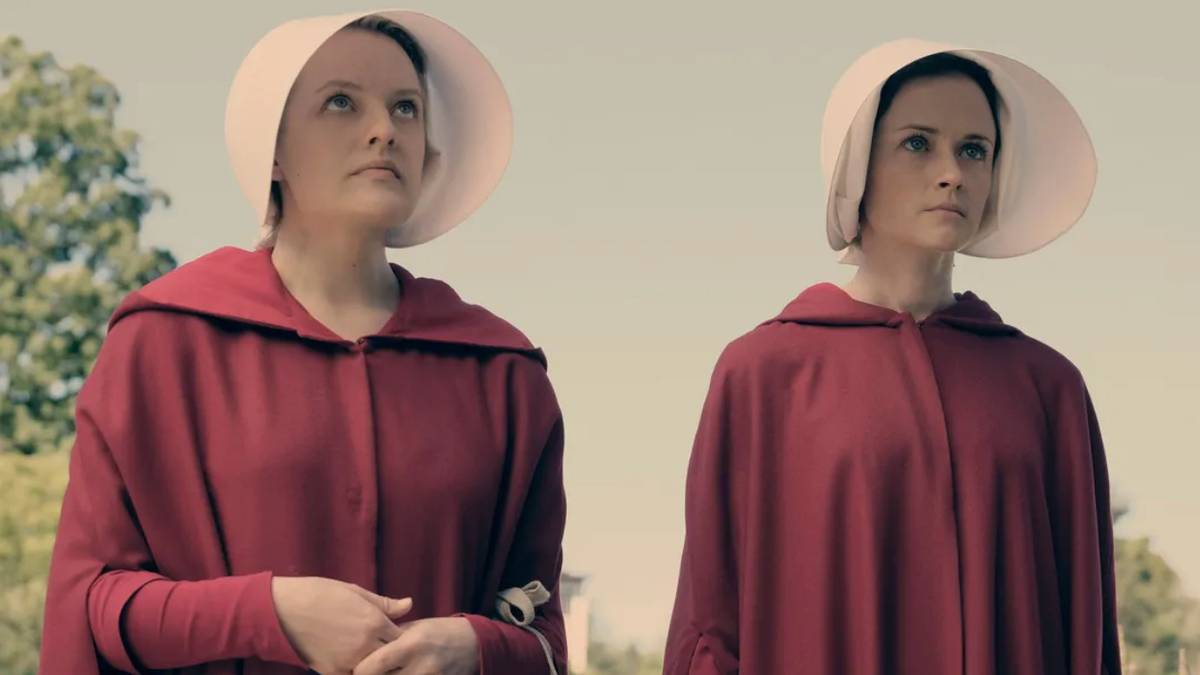
Image via Hulu Published Sep 6, 2026, 2:49 PM EDT Dyah (pronounced Dee-yah) is a Senior Author at Collider, responsible for both writing and transcription duties. She joined the website in 2022 as a Resource Writer before stepping into her current role in April 2023. As a Senior Author, she writes Features and Lists covering TV, music, and movies, making her a true Jill of all trades. In addition to her writing, Dyah also serves as an interview transcriber, primarily for events such as San Diego Comic-Con, the Toronto International Film Festival, and the Sundance Film Festival. Dyah graduated from Satya Wacana Christian University in October 2019 with a Bachelor's degree in English Literature, concentrating on Creative Writing. She is currently completing her Master's degree in English Literature Studies, with a thesis on intersectionality in postcolonial-feminist studies in Asian literary works, and is expected to graduate in 2026. Born and raised between Indonesia and Singapore, Dyah is no stranger to different cultures. She now resides in the small town of Kendal with her husband and four cats, where she spends her free time cooking or cycling. Sign in to your Collider account Determining the best sci-fi works is an arduous task in and of itself, but only a handful truly show how the genre can push creative boundaries. Although sci-fi is commonly associated with aliens, spaceships, and distant planets, the genre has also tackled everything from alternate realities to familiar concepts viewed in an entirely new light. Some stories use speculative technology to imagine where society could be headed, while others use strange worlds to explore questions about humanity, identity, and our future. From a novel that eerily predicted aspects of today’s smartphone culture to a beloved sci-fi story that has become the basis for a major 2026 movie hit, these are the seven sci-fi books that are 10/10 masterpieces. 1 'The Handmaid's Tale' (1985) Image via Anchor Books Set in the dystopian republic of Gilead, Margaret Atwood’s The Handmaid’s Tale follows Offred, a woman whose freedom is taken away after a religious authoritarian regime seizes control of the United States. As fertility rates decline and fertile women become increasingly scarce, women like Offred are forced to become “Handmaids,” whose sole purpose is to bear children for the country’s powerful officials. Separated from her husband and daughter, Offred must navigate a brutal society that treats women as property while holding onto the hope of getting her old life back. Despite being fiction, it's unsettlingly eerie how The Handmaid’s Tale correlates to real-world debates regarding female agency. Women are still scrutinized and shamed over reproductive choices, abortion, and bodily autonomy. Atwood takes these concerns to a terrifying extreme, imagining a society where women are valued almost entirely for their ability to have children. The novel also stresses how class shapes women’s experiences, as those closer to Gilead’s ruling elite enjoy privileges that Handmaids are denied. 2 'The Three-Body Problem' (2006) Image via Tor Books Liu Cixin’s The Three-Body Problem is a stellar combination of hard sci-fi, brutal history, and extraterrestrial mystery about humanity’s first contact with an alien civilization. The story begins during China’s Cultural Revolution, when astrophysicist Ye Wenjie is sent to a remote research facility and becomes involved in a project searching for extraterrestrial life. Decades later, scientists around the world begin dying under mysterious circumstances, while nanotechnology researcher Wang Miao starts seeing an unexplained countdown. For all of its outstanding ambition, The Three-Body Problem relies on real scientific concepts to back up its findings. All of it is rooted in the “three-body problem,” a real physics problem involving the difficulty of predicting how three celestial bodies will move around one another. The concept becomes the foundation for the Trisolarans, an alien civilization whose planet orbits three suns, creating unpredictable shifts in climate and gravity. From virtual reality and extraterrestrial communication to advanced particles and alien technology, it all comes back to what humanity might do when it realizes it isn't alone in the universe. 3 'Project Hail Mary' (2021) Image viaa Ballantine Books Now a 2026 cinematic blockbuster, Andy Weir’s Project Hail Mary centers on Ryland Grace, a former teacher who wakes up aboard a spaceship with absolutely no idea how he got there. It doesn’t take long for him to realize that he’s millions of miles from home and has been sent on a mission that could determine whether humanity survives. Earth’s Sun is losing energy because of a mysterious microorganism known as Astrophage, and Grace has to figure out a solution before it’s too late. For a novel filled with big scientific ideas, it is paired with a surprisingly warm story about friendship, making it a perfect entry point for those trying to get into sci-fi books. Weir has a knack for explaining complicated science without making readers feel like they need a degree to follow along. Beyond the science, the novel also shows how friendships can form without a common language, relying instead on trial and error, as Grace learns to connect with the world around him. Collider Exclusive · Sci-Fi Survival Quiz Which Sci-Fi World Would You Survive? The Matrix · Mad Max · Blade Runner · Dune · Star Wars Five universes. Five completely different ways the future went wrong — or sideways, or up in flames. Only one of them is the world your instincts were built for. Eight questions will figure out which dystopia, galaxy, or desert wasteland you'd actually make it out of alive. 💊The Matrix 🔥Mad Max 🌧️Blade Runner 🏜️Dune 🚀Star Wars TEST YOUR SURVIVAL → 01 You sense something is deeply wrong with the world around you. What do you do? The first instinct is often the truest one. APull on every thread until I understand the system — then figure out how to break it. BStop asking questions and start stockpiling — food, fuel, weapons. Questions don't keep you alive. CKeep my head down, observe carefully, and trust no one until I know who's pulling the strings. DStudy the patterns. Every system has a rhythm — learn it, and you learn how to survive it. EFind the people fighting back and join them. You can't fix a broken galaxy alone. NEXT QUESTION → 02 In a world of scarcity, what resource do you guard most fiercely? What we protect reveals what we believe survival actually requires. AKnowledge. If you understand the system, you don't need resources — you can generate them. BFuel. Everything else — movement, power, escape — runs on it. CTrust. In a world of fakes and informants, a truly reliable ally is rarer than any commodity. DWater. And after water, information — the two things empires are truly built on. EShips and credits. The galaxy is big — you survive it by being able to move through it freely. NEXT QUESTION → 03 What kind of threat keeps you up at night? Fear is useful data — if you're honest about what you're actually afraid of. AThat reality itself is a lie — that everything I experience has been constructed to keep me compliant. BA raid. No warning, no mercy — just the roar of engines and then nothing left. CBeing identified. Once someone with power decides you're a problem, you're already out of time. DBeing outmanoeuvred — losing a political game I didn't even know I was playing. EThe Empire tightening its grip until there's nowhere left to run. NEXT QUESTION → 04 How do you deal with authority you don't trust? Every dystopia has a power structure. Your approach to it determines everything. ASubvert it from the inside — learn its rules well enough to weaponise them against it. BIgnore it and stay out of its reach. The further from any power structure, the better. CAppear to comply while doing exactly what I need to do. Visibility is the enemy. DManoeuvre within it carefully. You can't beat a system you refuse to understand. EResist openly when I have to. Some things are worth the risk of being seen. NEXT QUESTION → 05 Which environment could you actually endure long-term? Survival isn't just tactical — it's physical, psychological, and very much about where you are. AUnderground bunkers and server rooms — cramped, artificial, but with access to everything that matters. BOpen wasteland — brutal sun, no shelter, constant movement. At least the threat is honest. CA dense, rain-soaked city where you can disappear into the crowd and nobody asks questions. DMerciless desert — extreme heat, no water, and something enormous living beneath the sand. EThe fringe — backwater planets and busy spaceports where the Empire's attention rarely reaches. NEXT QUESTION → 06 Who do you want in your corner when things fall apart? The company you keep is the clearest signal of who you actually are. AA tight crew of believers who've seen behind the curtain and have nothing left to lose. BOne or two people I'd trust with my life. Any more than that and someone talks. CNobody, ideally. Alliances are liabilities. I work alone unless I have no choice. DA community bound by shared hardship and mutual survival — people who need each other to last. EA ragtag team with wildly different skills and total commitment when it counts. NEXT QUESTION → 07 Where do you draw the line — if you draw one at all? Every survivor eventually faces a moment that tests what they're actually made of. AI won't harm the innocent — even the ones who'd report me without hesitation. BI do what I have to to protect the people I've chosen. Everything else is negotiable. CThe line shifts depending on who's asking and what's at stake. DI draw a long-term line — nothing that compromises my people's future, even if it'd help now. ESome lines, once crossed, can't be uncrossed. I know which ones they are. NEXT QUESTION → 08 What would actually make survival worth it? Staying alive is one thing. Having a reason to is another. AWaking others up — dismantling the illusion so no one else has to live inside it. BFinding somewhere — or someone — worth protecting. A reason to keep moving. CAnswers. Understanding what I am, what any of this means, before time runs out. DLegacy — shaping the future in a way that outlasts me by generations. EFreedom — for myself, for others, for every world still living under someone else's boot. REVEAL MY WORLD → Your Fate Has Been Calculated You'd Survive In…Your answers point to the world your instincts were built for. This is the universe your temperament, your survival instincts, and your particular brand of stubbornness were made for. The MatrixYou took the red pill a long time ago — probably before anyone offered it to you. You're a systems thinker who can't help but notice the seams in things. You're drawn to understanding how the system works before figuring out how to break it. You'd find the Resistance, or it would find you — your instinct for spotting constructed realities is the machines' worst nightmare. You function best when you have access to information and the freedom to act on it. The Matrix built an airtight prison. You'd be the one probing the walls for the door. Mad MaxThe wasteland doesn't reward the clever or the well-connected — it rewards those who are hard to kill and harder to break. That's you. You don't need comfort, community, or a cause larger than the next horizon. You need a vehicle, a clear threat, and enough fuel to outrun it — and you're good at all three. You are unsentimental enough to survive that world, and decent enough — just barely — to be something more than another raider. In the wasteland, that distinction is everything. Blade RunnerYou'd survive here because you know how to exist in moral grey areas without losing yourself completely. You read people accurately, keep your circle small, and ask the questions others prefer not to answer. In a city where humanity is a legal designation rather than a feeling, you hold onto something that keeps you functional. You're not a hero. But you're not lost, either. In Blade Runner's world, that distinction is everything. DuneArrakis is the most hostile environment in the known universe — and you are precisely the kind of person it rewards. Patience, discipline, and political awareness are your core strengths — and on Arrakis, they're survival tools. You understand that the long game matters more than any single victory. Others come to Dune and are consumed by it. You'd learn its logic and earn its respect. In time, you wouldn't just survive Arrakis — you'd begin to reshape it. Star WarsThe galaxy far, far away is vast, loud, and in a constant state of violent political upheaval — and you wouldn't have it any other way. You find meaning in being part of something larger than yourself — a cause, a crew, a rebellion. You'd gravitate toward the Rebellion, or the fringes, or whatever pocket of the galaxy still believes the Empire's grip can be broken. You fight — not because you have to, but because standing aside isn't something you're capable of. In Star Wars, that willingness is what makes all the difference. ↻ RETAKE THE QUIZ 4 'The Dark Tower' Series (1982–2012) Image via Grant Stephen King’s The Dark Tower may begin like a classic Western, but the series quickly reveals that it is something much more otherworldly. Often regarded as King's counterpart to The Lord of the Rings, the eight-part novel series follows Roland Deschain, a gunslinger traveling across Mid-World in search of the mysterious Dark Tower, a structure said to hold the multiverse together. Along the way, Roland crosses paths with Jake Chambers, a boy from modern-day Manhattan, opening the door to a story that jumps between different worlds, timelines, and realities. While fantasy and horror are major parts of the series, The Dark Tower also experiments with sci-fi elements. Time doesn’t work normally, entire worlds can disappear, and Roland encounters everything from mutants to strange technology and creatures that feel completely out of place in a traditional Western. King also plays with the idea of a connected multiverse, tying The Dark Tower to many of his other stories such as Salem's Lot and The Stand. 5 'Fahrenheit 451' (1953) Image via Ballantine Books Ray Bradbury’s Fahrenheit 451 imagines a future where books are banned. Instead of putting out flames, firemen are tasked with burning books. Guy Montag is one of them, seemingly content with his job until he meets his curious young neighbor, Clarisse. Her questions about the world around her make Montag rethink everything he has been taught, especially after witnessing a woman choose to die alongside her books rather than give them up. No other novel is more prophetic than Fahrenheit 451. The novel is a premonition for what happens when people pay more attention to screens instead of books. Just like real life, Bradbury imagines a society consumed by giant television screens, constant entertainment, and technology. Although it sounds innocent, what happens is that humans are dumbed down from actually using their cognitive abilities (in today's lingo, brainrot). Fahrenheit 451 shows how easily technology can be used to keep people from questioning the world around them. 6 'The Left Hand of Darkness' (1969) Image via Ace Books The Left Hand of Darkness by Ursula K. Le Guin follows Genly Ai, an envoy from Earth who travels to the frozen planet of Gethen with a mission to convince its people to join the interstellar Ekumen. But the biggest obstacle he faces isn’t alien technology or some distant space threat; it’s understanding a society whose people have an ambisexual biology, shifting between male and female. Praised for its progressive exploration of gender in the late 1960s, The Left Hand of Darkness takes a more thoughtful and grounded approach to sci-fi. In a genre often dominated by male perspectives, the book uses its alien setting to explore gender, politics, culture, and human connection. Through Genly’s relationship with Estraven, The Left Hand of Darkness shows how science fiction can use unfamiliar worlds not just to imagine the future, but also to question some of our most familiar ideas about identity and society. 7 'The Man in the High Castle' (1962) Image via Putnam Philip K. Dick’s The Man in the High Castle takes one of history’s biggest “what ifs” and turns it into an alternate reality one wouldn't wish upon anybody. Set in 1962, the novel recreates a world where Nazi Germany and Imperial Japan won World War II and divided the former United States between them. The East is controlled by the Nazis, the West belongs to Japan, and the middle of the country has become a shaky neutral zone. From a sci-fi perspective, The Man in the High Castle plays with alternate realities and the idea that history may not be as fixed as it seems. When mysterious artifacts, like a novel depicting a world where the Allies actually won the war, emerge, the characters are forced to question whether the world they are living in is the actual reality and which version of reality is the “real” one. The possibility of parallel worlds signifies hope, but in the wrong hands, it can be weaponized for multiverse domination, unlike anything we’ve seen before.
7 Sci-Fi Books That Are 10/10 Masterpieces
Full Article
Original Source
Read the full article at Collider →KhanList aggregates and links to publicly available news content. We do not host full articles from third-party sources. Always verify important information with original sources.