
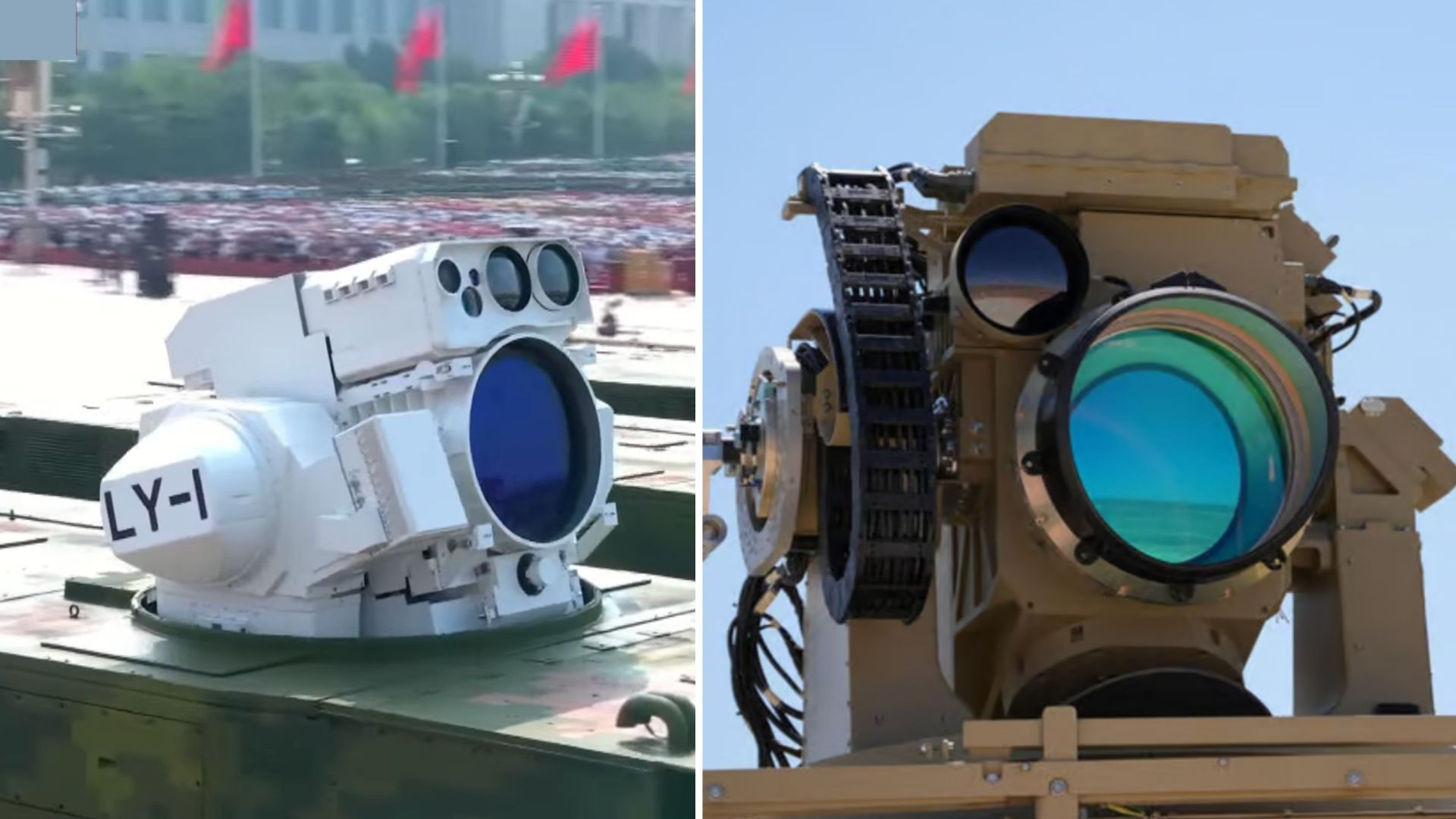
Laser weapons are moving beyond experimental laboratories and becoming practical tools for destroying drones, rockets, missiles, and other airborne threats. Unlike conventional interceptors, these systems concentrate energy on a target until critical components overheat, deform, or fail. Their effectiveness depends on power output, beam quality, tracking accuracy, atmospheric conditions, and the time a laser can remain focused. The following seven systems rank among the most powerful military lasers ever tested, deployed, or placed under development. 1. YAL-1 Airborne Laser Wikimedia Commons The US YAL-1 remains the most powerful military laser ever tested aboard an aircraft, despite the program’s cancellation in 2011. Installed inside a modified Boeing 747-400F, its megawatt-class Chemical Oxygen Iodine Laser was designed to destroy ballistic missiles during their boost phase. The system generated an infrared beam with a wavelength of 1.315 micrometers and directed it through a steerable nose-mounted turret. During trials in 2010, the aircraft successfully destroyed separate liquid-fueled and solid-fueled ballistic missile targets, demonstrating the concept under controlled test conditions. 2. Lockheed Martin’s 500 kW JLWS Lockheed Martin is developing a 500-kilowatt Joint Laser Weapon System intended to defeat unmanned aircraft and cruise missiles. Announced in July 2026, the tactical system packages the laser in a transportable container that can be deployed on different military platforms. The design uses spectral beam combining, which merges several fiber-laser beams into a single high-power output. According to Lockheed Martin, the weapon will contribute to America’s next-generation defense architecture by providing a scalable, electrically powered interception capability. 3. China’s LY-1 Wikimedia Commons China’s LY-1 is a large directed-energy weapon developed primarily for close-range protection against drones and incoming missiles. Publicly unveiled during China’s September 2025 military parade, the system has appeared in both truck-mounted and shipborne configurations. A unit believed to be the LY-1 was observed aboard the Type 071 amphibious ship Qilianshan during drills near Scarborough Shoal in August 2026. Its output remains classified, meaning published estimates of 180 to 300 kilowatts cannot be independently confirmed, although its substantial turret indicates considerable power and cooling requirements. 4. Iron Beam Wikimedia Commons Israel’s Iron Beam is a 100-kilowatt-class air-defense laser developed by Rafael Advanced Defense Systems, working with Elbit Systems on key technologies. It is designed to engage rockets, mortar rounds, unmanned aircraft, and other short-range aerial threats within a multilayered defensive network. The system directs concentrated energy at a vulnerable part of an incoming object until the target is disabled or destroyed. Rafael says Iron Beam can operate across distances ranging from hundreds of meters to several miles, although fog, dust, clouds, and rain can reduce laser performance. 5. HELIOS The US Navy’s HELIOS combines a high-energy laser, long-range surveillance equipment, and an optical dazzler within one shipboard system. Lockheed Martin installed it aboard the Arleigh Burke-class destroyer USS Preble, making the vessel the first US destroyer equipped with a high-energy laser. Commonly reported at approximately 60 kilowatts, HELIOS can damage unmanned aircraft or interfere with electro-optical sensors without firing a missile. The US Navy confirmed in 2026 that Preble remained equipped with the system as it expanded training for sailors operating directed-energy weapons. 6. DragonFire Wikimedia Commons DragonFire is a British laser-directed energy weapon created by a consortium led by MBDA UK and supported by Leonardo UK and QinetiQ. The system combines several laser sources and uses advanced targeting technology to maintain an intense beam on fast-moving airborne targets. The British government says DragonFire can hit an object comparable in size to a coin from approximately 0.62 miles away. A £316 million ($ 410.8 million) production contract will support its installation aboard a Royal Navy Type 45 destroyer from 2027, with each shot estimated to cost about £10 ($13.00). Rheinmetall and MBDA Germany have developed a naval laser demonstrator intended to defeat drones and other small, rapidly moving targets. The system completed a year of testing aboard the German frigate Sachsen, during which its tracking, command, and engagement technologies were evaluated under maritime conditions. The companies have also worked on technologies needed for a future 100-kilowatt laser, although that power level does not describe the deployed demonstrator. Rheinmetall says an operational German naval system could become available from 2029 after further land-based testing. Conclusion Laser weapons offer rapid engagement, deep magazines, and significantly lower firing costs than many conventional defensive missiles. However, sustained operation still demands substantial electrical power, cooling capacity, stable tracking, and favorable atmospheric conditions. The YAL-1 demonstrated the extraordinary power possible with chemical lasers, while newer systems favor compact, electrically powered architectures suitable for ships and ground forces. Together, these weapons show how directed energy is developing into an additional layer of modern air and missile defense. Get the latest in engineering, tech, space & science - delivered daily to your inbox.Atharva is a full-time content writer with a post-graduate degree in media & amp; entertainment and a graduate degree in electronics & telecommunications. He has written in the sports and technology domains respectively. In his leisure time, Atharva loves learning about digital marketing and watching soccer matches. His main goal behind joining Interesting Engineering is to learn more about how the recent technological advancements are helping human beings on both societal and individual levels in their daily lives.
7 Deadliest laser weapons built for modern combat
Full Article
Original Source
Read the full article at Interestingengineering →KhanList aggregates and links to publicly available news content. We do not host full articles from third-party sources. Always verify important information with original sources.