
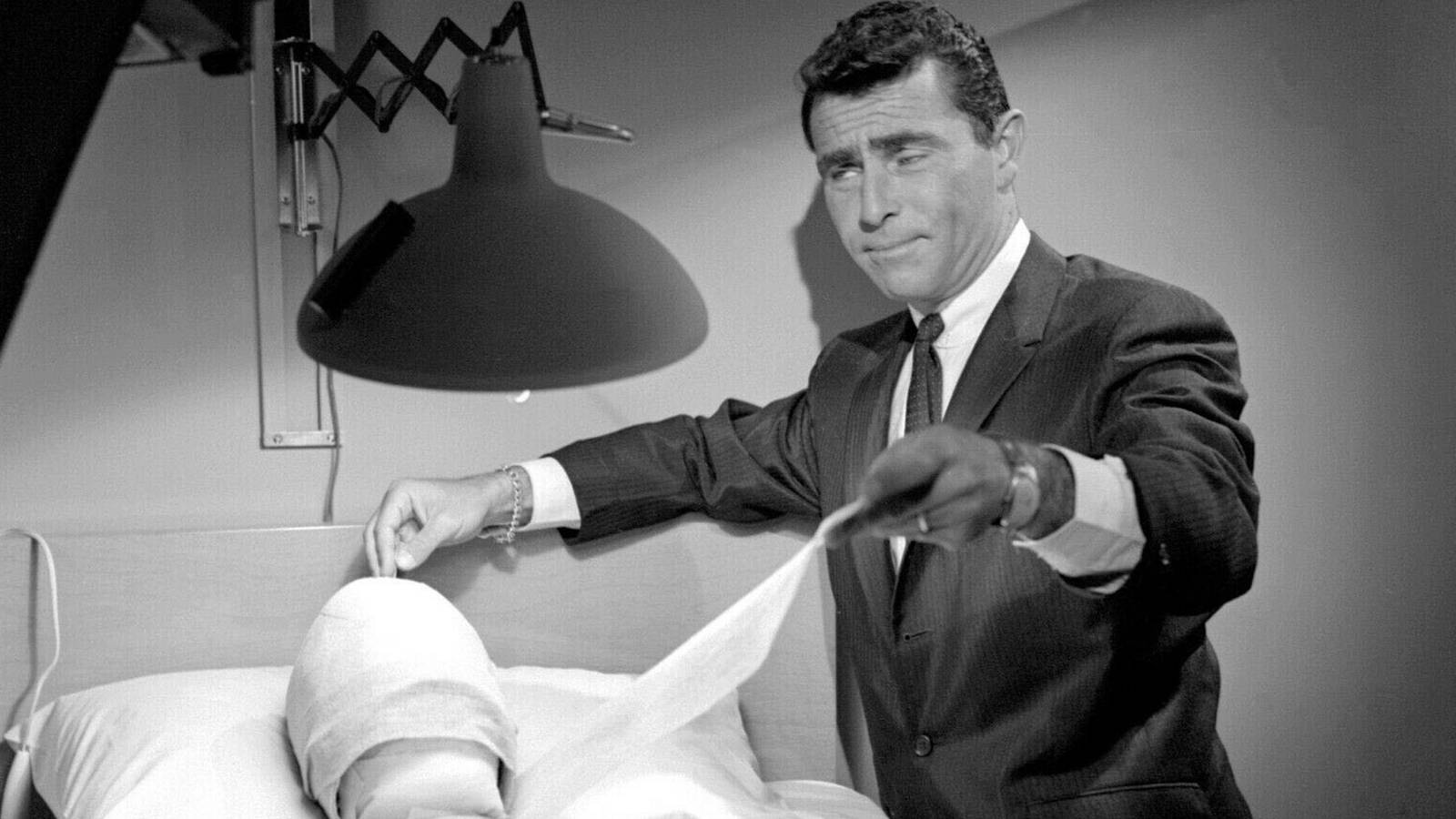
Image courtesy of MovieStillsDb Published Sep 1, 2026, 11:29 AM EDT Cathal Gunning has been writing about movies, television, culture, and politics online and in print since 2017. He worked as a Senior Editor in Adbusters Media Foundation from 2018-2019 and wrote for WhatCulture in early 2020. He has been a Senior Features Writer for ScreenRant since 2020. Sign in to your ScreenRant account Although there are plenty of iconic sci-fi TV shows on streaming, cable, and network TV right now, The Twilight Zone puts them all to shame. If it weren’t for creator Rod Serling’s iconic series The Twilight Zone, viewers would never have gotten iconic, boundary-pushing later horror anthology shows like Tales from the Crypt and Masters of Horror. These critical hits, by extension, paved the way for American Horror Story, Creepshow, and Shudder’s underrated Slasher, the most brutal horror series to date. However, while it is fair to credit Serling’s series with kickstarting the long history of horror anthology shows, that is a disservice to the sheer breadth of The Twilight Zone’s influence on small screen history. While Serling’s later Lovecraftian follow-up Night Gallery was a straightforward horror anthology, The Twilight Zone was less easily categorized. The show was a sci-fi series, a thriller, a mystery, a period piece, a horror show, a comedy, and sometimes even a romantic drama. Viewers truly never knew what they were going to get with each new episode of The Twilight Zone, and it is this quality that allows the show to stand out even now amid the many incredible sci-fi shows on the airwaves in 2026. To be clear, fans of the genre are living through a new golden age of sci-fi TV. On Apple TV alone, there is the phenomenal Asimov adaptation Foundation, the Monsterverse spinoff Monarch: Legacy of Monsters, the multiverse thriller Dark Matter, the dystopian adaptation Silo, and the upcoming cyberpunk thriller Neuromancer. The Twilight Zone's Legacy Will Never Be Topped In The World Of Sci-Fi TV Hulu has Paradise and The Handmaid’s Tale, with Paramount+ boasts the many recent Star Trek shows such as Discovery, Picard, and Strange New Worlds. Netflix has The Twilight Zone-influenced anthology Black Mirror as well as the underrated cyberpunk thriller Altered Carbon, and this is without even getting into the shows that feel like they could be feature-length expansions of modern Twilight Zone episodes, such as Apple TV’s dark corporate satire Severance. Since these shows aren’t constricted by the same censorship norms or mainstream viewership as The Twilight Zone, it would be fair for readers to assume that Serling’s series now feel outdated. Despite its innovations, The Twilight Zone aired in an era where TV had to be relatively family-friendly, and the show couldn’t get anywhere near as complex in its sci-fi jargon as the likes of Lost or Westworld. As such, it stands to reason that Serling’s anthology would now feel simplistic and quaint. However, this assumption underestimates the astounding staying power of The Twilight Zone. When viewers rewatch season 1, episode 18, “A Nice Place to Visit,” some 66 years after the outing originally aired, they’re apt to discover that its creepy ending is no less unsettling despite being parodied by Futurama and borrowed by The Good Place in the intervening decades. Should they watch season 5, episode 22, “An Occurrence at Owl Creek Bridge,” they are likely to soon realize that no amount of later movies and shows borrowing the episode’s climactic twist can deprive it of its gut-punch efficacy. Modern Sci-Fi Shows Wouldn't Exist Without The Twilight Zone Image via MovieStillsDB Ironically, considering how pointedly politically informed much of the author’s work was, Serling’s writing has a timeless quality that ensures The Twilight Zone still holds up to this day, and humbles a lot of more recent sci-fi shows. The special effects of Humans and Westworld might be more impressive, but the twists of The Twilight Zone’s best episodes are still truly effective, and the show’s satire remains as prescient as ever. Moreover, almost every show in the sci-fi genre owes a creative debt to the iconic anthology series. While Black Mirror, Love, Death & Robots, and other anthology shows like Philip K. Dick’s Electric Dreams share self-evident similarities with The Twilight Zone, the mainstream embrace of sci-fi concepts like parallel universes, time travel, doppelgängers, alien invasions, mind control, and many, many more tropes can be traced back to this iconic series. Release Date 1959 - 1964-00-00 Network CBS Showrunner Rod Serling Directors John Brahm, Buzz Kulik, Douglas Heyes, Lamont Johnson, Richard L. Bare, James Sheldon, Richard Donner, Don Medford, Montgomery Pittman, Abner Biberman, Alan Crosland, Jr., Alvin Ganzer, Elliot Silverstein, Jack Smight, Joseph M. Newman, Ted Post, William Claxton, Jus Addiss, Mitchell Leisen, Perry Lafferty, Robert Florey, Robert Parrish, Ron Winston, Stuart Rosenberg Writers Charles Beaumont, Richard Matheson, Earl Hamner, Jr., George Clayton Johnson, Jerry Sohl, Henry Slesar, Martin Goldsmith, Anthony Wilson, Bernard C. Schoenfeld, Bill Idelson, E. Jack Neuman, Jerome Bixby, Jerry McNeely, John Collier, John Furia, Jr., John Tomerlin, Lucille Fletcher, Ray Bradbury, Reginald Rose, Sam Rolfe, Adele T. Strassfield Creator(s) Rod Serling
67 Years Later, CBS's The Twilight Zone Still Humbles Every Modern Sci-Fi Show
Full Article
Original Source
Read the full article at Screenrant →KhanList aggregates and links to publicly available news content. We do not host full articles from third-party sources. Always verify important information with original sources.