
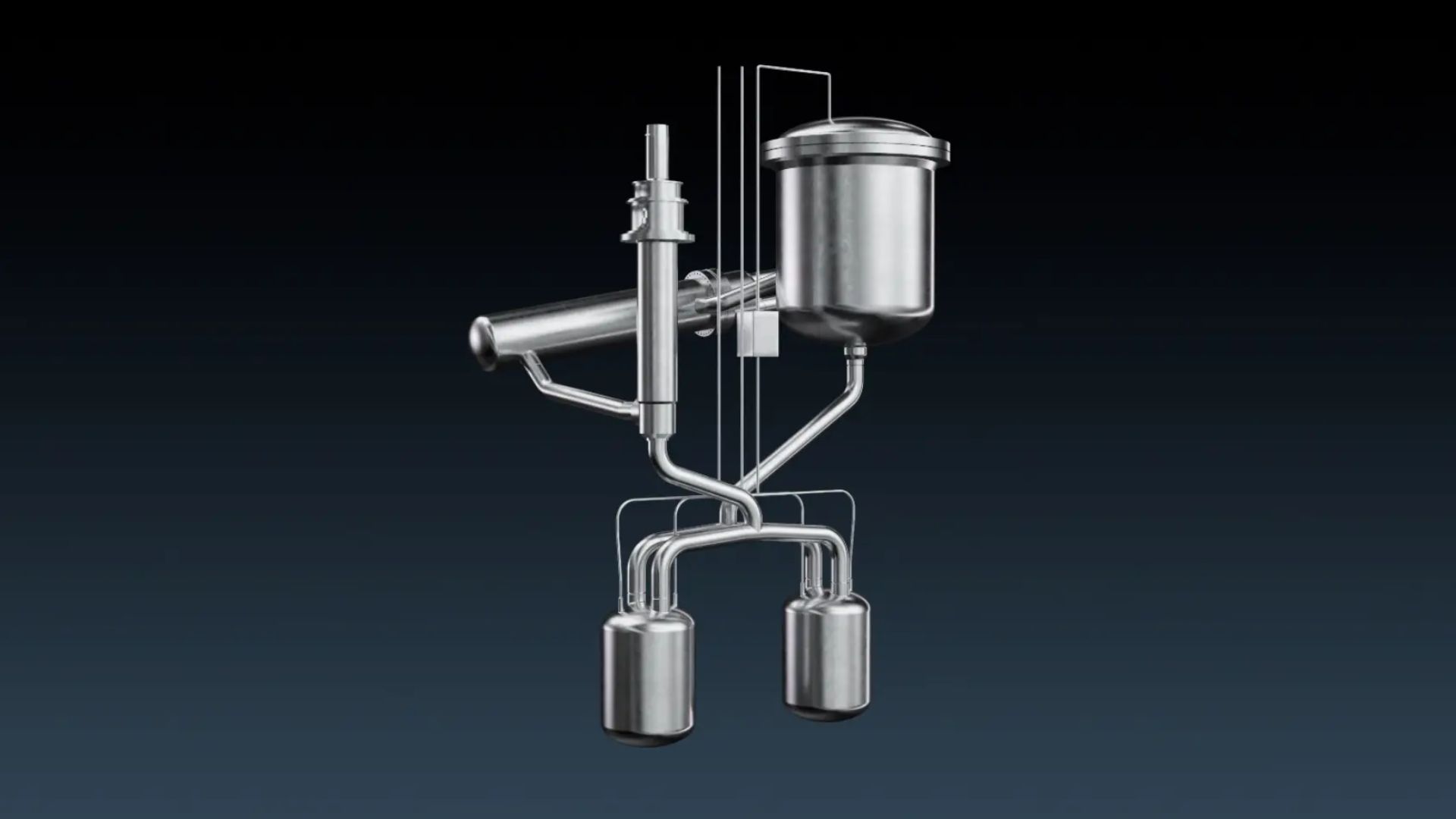
A Danish nuclear developer wants to bring floating atomic power to American shores. Saltfoss has sent a letter of intent to the US Nuclear Regulatory Commission (NRC). The firm wants to start early regulatory talks for its offshore power barge and seaMSR-100 reactor. If approved, the project will mark the world’s first licensed maritime advanced small modular reactor (SMR). The timing is interesting. In March 2026, the NRC introduced 10 CFR Part 53. This modern regulatory rulebook has been designed specifically for advanced reactors. Saltfoss aims to become the first developer to secure a license under this new framework. Instead of building a conventional plant inland from the ground up, Saltfoss plans to split production between two allied industrial hubs. Samsung Heavy Industries will build the standardized steel barges in South Korea, using the country’s high-volume shipbuilding yards. Once the hulls are complete, teams in the United States will handle reactor assembly, fuel loading, and final integration. “As part of its US expansion, Saltfoss will significantly increase its activities in the United States, including reactor assembly, fuel loading and final power plant integration at US facilities,” said the company in a press release. International regulatory alignment The company is also coordinating reviews across the Pacific. Saltfoss is working with South Korea’s Nuclear Safety and Security Commission under the nation’s SMR Special Act. South Korea is expected to host some of the earliest commercial deployments. Meanwhile, maritime safety evaluations are already under way. The American Bureau of Shipping is qualifying the barge design through its formal new technology review. “We are combining a US reactor design heritage proven at Oak Ridge National Laboratory with the world-class shipbuilding and nuclear supply chain of South Korea,” said Saltfoss Chief Executive Klaus Nyengaard. The underlying technology relies on a loop-type molten salt design refined over six years. Each standardized seaMSR-100 unit yields 100 megawatts of electricity (MWe). Multiple modules can sit aboard a single barge to deliver up to 600 MWe of constant electricity and high-temperature industrial heat. This capacity can power remote coastal industries, municipal grids, or power-hungry hyperscale data centers. Atmospheric-pressure physics Traditional reactors operate under massive steam pressure. On the contrary, the seaMSR-100 operates near atmospheric pressure at temperatures between 600°C (1,112°F) and 700°C (1,292°F). It is fueled by conventional low-enriched uranium, avoiding rare or specialized fuel grades. Safety relies on plain physics rather than emergency backup generators. If power fails or core temperatures rise, the system shuts down and the liquid fuel salt drains by gravity into passive dump tanks without operator action. “Its fuel salt solidifies below approximately 500°C, trapping radioactive material and rendering a large release physically implausible; the reactor shuts down and drains by gravity alone, without operator action or external power,” concluded Saltfoss. Saltfoss finalized its conceptual design in 2025 alongside the Idaho National Laboratory and Danish researchers. The company plans to submit its formal Regulatory Engagement Plan to Washington in early 2027. Get the latest in engineering, tech, space & science - delivered daily to your inbox.An active and versatile journalist and news editor. He has covered regular and breaking news for several leading publications and news media, including The Hindu, Economic Times, Tomorrow Makers, and many more. Aman holds expertise in politics, travel, and tech news, especially in AI, advanced algorithms, and blockchain, with a strong curiosity about all things that fall under science and tech.
600 MW floating nuclear power barge targets US in world-first offshore advanced SMR bid
Full Article
Original Source
Read the full article at Interestingengineering →KhanList aggregates and links to publicly available news content. We do not host full articles from third-party sources. Always verify important information with original sources.