
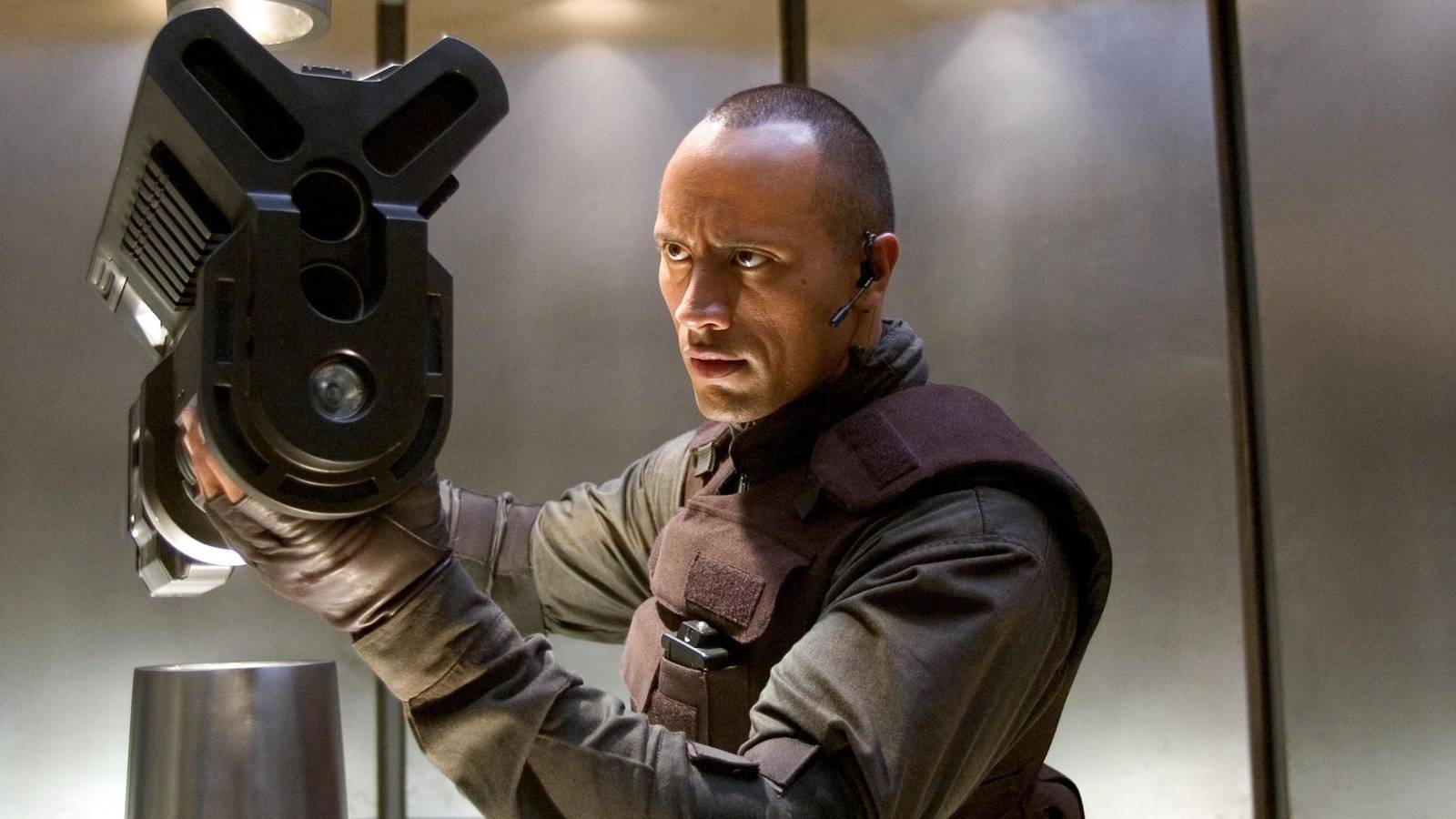
Image via Universal Pictures Published Jul 20, 2026, 7:04 AM EDT Sign in to your Collider account The 2000s were a wild time for sci-fi. CGI was taking over, franchises desperately wanted to look edgy, and movies used an R-rating just to hide terrible writing behind the cheap gore and a few jump scares. When it works, R-rated sci-fi is brilliant. When it doesn't? It's an absolute trainwreck. Instead of cool futuristic adventures, the decade gave us massive studio budgets wasted on confusing plots and ruined even the video game storylines. Some of these films are so completely broken and aggressively boring that they easily earn a 0/10. So, grab your hazmat suit. Here are the 6 worst R-rated 2000s sci-fi movies that are truly beyond saving. 6 ‘Doom’ (2005) Image via Universal Pictures Honestly, Doom is just boring. One would think that a wonderful idea about video games, lasting demons from Hell, etc would make a great movie, but it is wrong. If you look at it, the film has all the ingredients to be great though, for instance, dark chore about mad scientists and extra chromosomes, still it couldn’t reach its full potential. The story follows John "Reaper" Grimm (Karl Urban) and a squad of Marines sent to a research facility on Mars after a distress signal is received. Naturally, they discover that something has gone horribly wrong. Sarge (Dwayne Johnson) spends most of the film looking increasingly angry while everyone else waits for the plot to catch up. You cannot help but constantly think that the movie seems embarrassed by its own source material. Instead of leaning into the gloriously absurd, heavy-metal chaos of fighting literal demons, the filmmakers tried to bury it in generic, mid-2000s sci-fi tropes. We didn't get a portal to the underworld; we got an endless lecture on genetics, that too a boring one. Ironically, the only scene people still talk about is the first-person action sequence near the end because, for about five minutes, the film finally remembers what it is based on. Unfortunately, by then, you've already spent over an hour wishing it had figured that out sooner. 5 ‘Doomsday’ (2008) Image via Universal Pictures The first twenty minutes of Doomsday genuinely fooled me into thinking I was about to discover an underrated cult classic. A deadly virus devastates Scotland, the government seals off the entire country, and decades later, special operative Eden Sinclair (Rhona Mitra) is sent inside to investigate reports of survivors. It's an incredible premise because it immediately raises dozens of questions about what kind of society could emerge after being abandoned for so long. The problem is that Doomsday appears to lose interest in its own idea almost immediately. One moment it's a post-apocalyptic survival film, the next it's a medieval fantasy, and somehow nothing is properly stitched together. Honestly, it looks like a playlist of scenes from better films. None of these individual ideas are necessarily terrible, which somehow makes the experience even more frustrating. 4 'Aliens vs. Predator: Requiem' (2007) Image via 20th Century Fox I don't think I've ever watched another alien movie after , since it already committed a very serious crime to the alien franchise. The film begins after the events of the first one when a Predalien hybrid crashes into a small Colorado town, forcing a lone Predator to clean up the outbreak. That sounds exactly like the kind of ridiculous, B-movie premise this franchise should not have embraced. Major action sequences are buried under darkness so extreme you'll spend the runtime squinting, unable to tell if characters are fighting, running, or just standing around. The worst part is that there are moments where the film almost becomes entertaining. The Predator, often referred to by fans as Wolf (Ian Whyte), is actually a fairly cool character. Unfortunately, every time he does something interesting, the lighting immediately conspires to hide it. Few movies have made me work so hard just to understand what I was supposed to be watching. 3 'Ghosts of Mars' (2001) Image via Sony Pictures Releasing John Carpenter has directed some of the greatest horror and science-fiction films ever made, which makes Ghosts of Mars one of the strangest experiences of his career. The film follows police lieutenant Melanie Ballard (Natasha Henstridge) as she transports criminal James "Desolation" Williams (Ice Cube) across a Martian colony that has been overtaken by possessed miners. The structural disaster of this film isn't that it's "bad sci-fi" but it functions mainly as a heavy metal music video that accidentally wandered onto a movie set. Whenever you feel something important is going to happen, an aggressive Anthrax guitar riff suddenly blasts over the audio track. On the other hand, Ice Cube spends much of the film behaving as though he is the coolest person in the solar system, which honestly becomes one of the few entertaining parts. Collider Exclusive · Sci-Fi Survival Quiz Which Sci-Fi World Would You Survive? The Matrix · Mad Max · Blade Runner · Dune · Star Wars Five universes. Five completely different ways the future went wrong — or sideways, or up in flames. Only one of them is the world your instincts were built for. Eight questions will figure out which dystopia, galaxy, or desert wasteland you'd actually make it out of alive. 💊The Matrix 🔥Mad Max 🌧️Blade Runner 🏜️Dune 🚀Star Wars TEST YOUR SURVIVAL → 01 You sense something is deeply wrong with the world around you. What do you do? The first instinct is often the truest one. APull on every thread until I understand the system — then figure out how to break it. BStop asking questions and start stockpiling — food, fuel, weapons. Questions don't keep you alive. CKeep my head down, observe carefully, and trust no one until I know who's pulling the strings. DStudy the patterns. Every system has a rhythm — learn it, and you learn how to survive it. EFind the people fighting back and join them. You can't fix a broken galaxy alone. NEXT QUESTION → 02 In a world of scarcity, what resource do you guard most fiercely? What we protect reveals what we believe survival actually requires. AKnowledge. If you understand the system, you don't need resources — you can generate them. BFuel. Everything else — movement, power, escape — runs on it. CTrust. In a world of fakes and informants, a truly reliable ally is rarer than any commodity. DWater. And after water, information — the two things empires are truly built on. EShips and credits. The galaxy is big — you survive it by being able to move through it freely. NEXT QUESTION → 03 What kind of threat keeps you up at night? Fear is useful data — if you're honest about what you're actually afraid of. AThat reality itself is a lie — that everything I experience has been constructed to keep me compliant. BA raid. No warning, no mercy — just the roar of engines and then nothing left. CBeing identified. Once someone with power decides you're a problem, you're already out of time. DBeing outmanoeuvred — losing a political game I didn't even know I was playing. EThe Empire tightening its grip until there's nowhere left to run. NEXT QUESTION → 04 How do you deal with authority you don't trust? Every dystopia has a power structure. Your approach to it determines everything. ASubvert it from the inside — learn its rules well enough to weaponise them against it. BIgnore it and stay out of its reach. The further from any power structure, the better. CAppear to comply while doing exactly what I need to do. Visibility is the enemy. DManoeuvre within it carefully. You can't beat a system you refuse to understand. EResist openly when I have to. Some things are worth the risk of being seen. NEXT QUESTION → 05 Which environment could you actually endure long-term? Survival isn't just tactical — it's physical, psychological, and very much about where you are. AUnderground bunkers and server rooms — cramped, artificial, but with access to everything that matters. BOpen wasteland — brutal sun, no shelter, constant movement. At least the threat is honest. CA dense, rain-soaked city where you can disappear into the crowd and nobody asks questions. DMerciless desert — extreme heat, no water, and something enormous living beneath the sand. EThe fringe — backwater planets and busy spaceports where the Empire's attention rarely reaches. NEXT QUESTION → 06 Who do you want in your corner when things fall apart? The company you keep is the clearest signal of who you actually are. AA tight crew of believers who've seen behind the curtain and have nothing left to lose. BOne or two people I'd trust with my life. Any more than that and someone talks. CNobody, ideally. Alliances are liabilities. I work alone unless I have no choice. DA community bound by shared hardship and mutual survival — people who need each other to last. EA ragtag team with wildly different skills and total commitment when it counts. NEXT QUESTION → 07 Where do you draw the line — if you draw one at all? Every survivor eventually faces a moment that tests what they're actually made of. AI won't harm the innocent — even the ones who'd report me without hesitation. BI do what I have to to protect the people I've chosen. Everything else is negotiable. CThe line shifts depending on who's asking and what's at stake. DI draw a long-term line — nothing that compromises my people's future, even if it'd help now. ESome lines, once crossed, can't be uncrossed. I know which ones they are. NEXT QUESTION → 08 What would actually make survival worth it? Staying alive is one thing. Having a reason to is another. AWaking others up — dismantling the illusion so no one else has to live inside it. BFinding somewhere — or someone — worth protecting. A reason to keep moving. CAnswers. Understanding what I am, what any of this means, before time runs out. DLegacy — shaping the future in a way that outlasts me by generations. EFreedom — for myself, for others, for every world still living under someone else's boot. REVEAL MY WORLD → Your Fate Has Been Calculated You'd Survive In…Your answers point to the world your instincts were built for. This is the universe your temperament, your survival instincts, and your particular brand of stubbornness were made for. The MatrixYou took the red pill a long time ago — probably before anyone offered it to you. You're a systems thinker who can't help but notice the seams in things. You're drawn to understanding how the system works before figuring out how to break it. You'd find the Resistance, or it would find you — your instinct for spotting constructed realities is the machines' worst nightmare. You function best when you have access to information and the freedom to act on it. The Matrix built an airtight prison. You'd be the one probing the walls for the door. Mad MaxThe wasteland doesn't reward the clever or the well-connected — it rewards those who are hard to kill and harder to break. That's you. You don't need comfort, community, or a cause larger than the next horizon. You need a vehicle, a clear threat, and enough fuel to outrun it — and you're good at all three. You are unsentimental enough to survive that world, and decent enough — just barely — to be something more than another raider. In the wasteland, that distinction is everything. Blade RunnerYou'd survive here because you know how to exist in moral grey areas without losing yourself completely. You read people accurately, keep your circle small, and ask the questions others prefer not to answer. In a city where humanity is a legal designation rather than a feeling, you hold onto something that keeps you functional. You're not a hero. But you're not lost, either. In Blade Runner's world, that distinction is everything. DuneArrakis is the most hostile environment in the known universe — and you are precisely the kind of person it rewards. Patience, discipline, and political awareness are your core strengths — and on Arrakis, they're survival tools. You understand that the long game matters more than any single victory. Others come to Dune and are consumed by it. You'd learn its logic and earn its respect. In time, you wouldn't just survive Arrakis — you'd begin to reshape it. Star WarsThe galaxy far, far away is vast, loud, and in a constant state of violent political upheaval — and you wouldn't have it any other way. You find meaning in being part of something larger than yourself — a cause, a crew, a rebellion. You'd gravitate toward the Rebellion, or the fringes, or whatever pocket of the galaxy still believes the Empire's grip can be broken. You fight — not because you have to, but because standing aside isn't something you're capable of. In Star Wars, that willingness is what makes all the difference. ↻ RETAKE THE QUIZ 2 'Dreamcatcher' (2003) Image via Warner Bros. Stephen King's strangest stories can either become masterpieces or complete disasters. Dreamcatcher unfortunately belongs in the second category. The film follows four childhood friends, Jonesy (Damian Lewis), Beaver (Jason Lee), Pete (Timothy Olyphant), and Henry (Thomas Jane) who share psychic abilities and become involved in an alien invasion during a hunting trip. Trying to explain the plot of Dreamcatcher to somebody who hasn't seen it makes the movie sound like a fever dream. Alien parasites. Psychic powers. Military conspiracies. Telepathic warehouses. Morgan Freeman plays an increasingly unstable military officer with bizarre eyebrows. The film throws so many ideas at the audience that eventually none of them matter anymore. Every time I thought I had figured out what kind of movie I was watching, Dreamcatcher introduced another plot development that felt as though it belonged to an entirely different screenplay. 1 ‘Alone in the Dark’ (2005) Image via Lions Gate Films There are bad movies, and then there is Alone in the Dark. It stars Edward Carnby (Christian Slater), a paranormal investigator investigating mysterious creatures connected to an ancient civilization. Alongside archaeologist Aline Cedrac (Tara Reid), he uncovers a conspiracy involving supernatural dimensions, secret organizations, and monsters that rarely appear long enough for anyone to understand what they are. The movie features action sequences that seem to violate the laws of time and space. A character will shoot at a monster in a brightly lit hallway, cut to a completely different angle where it’s pitch black, and then cut back to a different room entirely with no transitional logic. The movie kicks off by punishing you with a massive, minutes-long text scroll to explain its complex lore only for the characters to immediately ignore everything you just read.
6 Worst R-Rated Sci-Fi Movies of the 2000s
Full Article
Original Source
Read the full article at Collider →KhanList aggregates and links to publicly available news content. We do not host full articles from third-party sources. Always verify important information with original sources.