
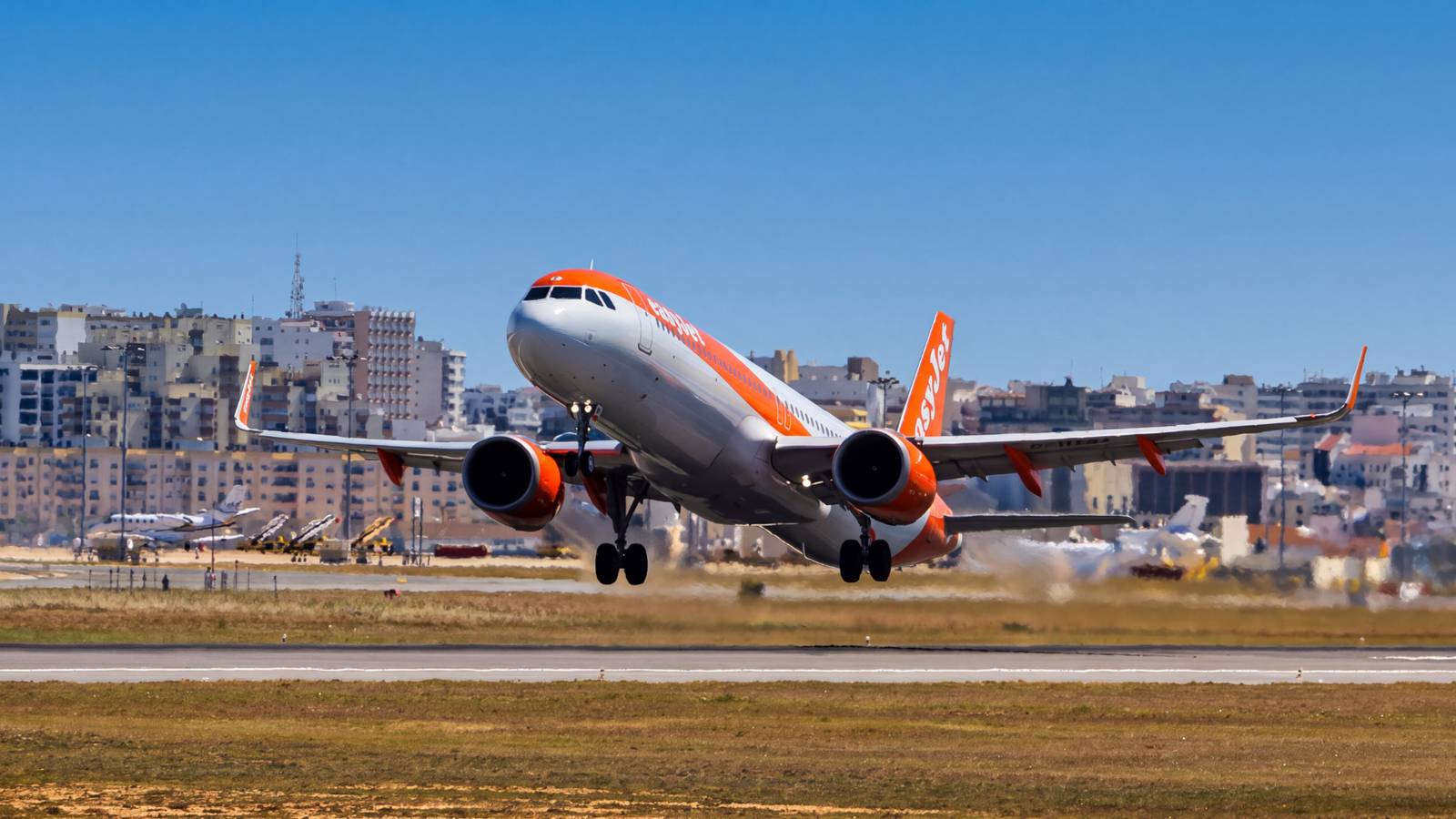
Published Nov 27, 2026, 10:12 AM EST A graduate in German, Jake has a passion for history and regional aviation, and enjoys sampling new carriers and aircraft. He has visited OEM facilities as far and wide as Bristol, Toulouse, and Seattle, and recently enjoyed the milestone of flying his 150th sector as a passenger. Based in Norfolk, UK. Edinburgh Airport (EDI) to London Gatwick Airport (LGW) is one of easyJet's top UK domestic routes, with the orange-clad budget carrier typically operating five flights a day on this Anglo-Scottish corridor. On Thursday evening, the last of these had to return to Edinburgh shortly after takeoff in dramatic fashion following an engine shutdown, with witnesses reporting a loud bang and streaks of flame. The aircraft involved in the incident, an Airbus A321neo with the registration G-UZMC, had taken off punctually, but the need for it to return to Edinburgh ended up delaying its passengers considerably. With the plane subsequently having to be taken out of service, easyJet had to dispatch a replacement up from London Gatwick. As such, the flight's passengers only reached England early on Friday morning. easyJet's Dramatic Departure Credit: Simple Flying easyJet flight U2-816 is usually scheduled to leave Edinburgh at 8:45 PM, and flight tracking data shows that it did so punctually on Thursday night, taking to the skies at 8:46 PM. However, having lifted off from runway 24, things took a dramatic turn when, as reported by the Aviation Safety Network citing ACARS data, the number one engine suffered a stall just two minutes after the aircraft's departure. easyJet Flight U2-816, November 26 Departure from Edinburgh Arrival Planned 8:45 PM 10:15 PM in London Actual 8:46 PM 9:29 PM in Edinburgh This, the Aviation Herald notes, prompted the crew to level off the climb at an altitude of 5,000 feet and shut down the affected engine. They then entered a holding pattern, as seen above, and circled for a short while before touching back down on runway 06 at 9:29 PM. As detailed above, the flight to London normally takes 1.5 hours. easyJet spokesperson reported a "technical issue" to Simple Flying, adding: "The flight landed normally and was met by emergency services in line with procedures and as a precautionary measure only. A replacement aircraft was arranged to operate the flight to London Gatwick later that evening." A Lengthy Delay Credit: Minh K Tran | Shutterstock Along with the stall, excessively high exhaust gas temperatures are also said to have been a contributing factor in the decision to shut down the engine and return to Edinburgh. Local residents in and around the Scottish capital city reported a loud bang at around the time of the incident, although, according to The Independent, Edinburgh Airport later confirmed that "there was no impact on airport operations." With the aircraft safely back on the ground, easyJet was able to take it out of service and assess its next steps. At the time of writing on Friday afternoon, it has yet to leave Edinburgh. However, the airline also had a plane-load of passengers requiring onward travel to London, and no spare aircraft to hand in the Scottish capital city. As such, it had to fly one up from London Gatwick later that night. This, the Aviation Herald notes, ended up being a 17-year-old Airbus A320-200 that bears the registration G-EZTH. It departed LGW at 12:51 AM on Friday under the ferry flight number U2-9006, reaching EDI 61 minutes later at 1:52 AM. Its turnaround took just over an hour, and U2-816 left at 2:56 AM. It touched down an hour later, representing a five-hour and 41-minute delay vs the planned 10:15 PM arrival. The Aircraft Involved Credit: SimoneAmi | Shutterstock As previously noted, the aircraft involved in Thursday's incident was an Airbus A321neo that bore the registration G-UZMC. Current fleet data from ch-aviation shows that this modern narrowbody twinjet is 8.16 years old, having first flown and been delivered to easyJet back in October 2018. The carrier ordered it three years prior. It is fitted with two wing-mounted LEAP-1A32 engines from CFM International. All in all, easyJet has a grand total of 22 A321neos in its fleet, with another 151 examples of the type on order. Its existing units are 3.8 years old on average, compared to a fleet-wide mean figure of 10.5 years old. As such, G-UZMC is one of the older examples, with just two A321neos having been delivered to easyJet before it. The stretched single-aisle jet has space for 235 economy passengers on board.
6-Hour Delay: easyJet Airbus A321neo Diverts After Engine Stall 2 Minutes Into Flight
Full Article
Original Source
Read the full article at Simpleflying →KhanList aggregates and links to publicly available news content. We do not host full articles from third-party sources. Always verify important information with original sources.