
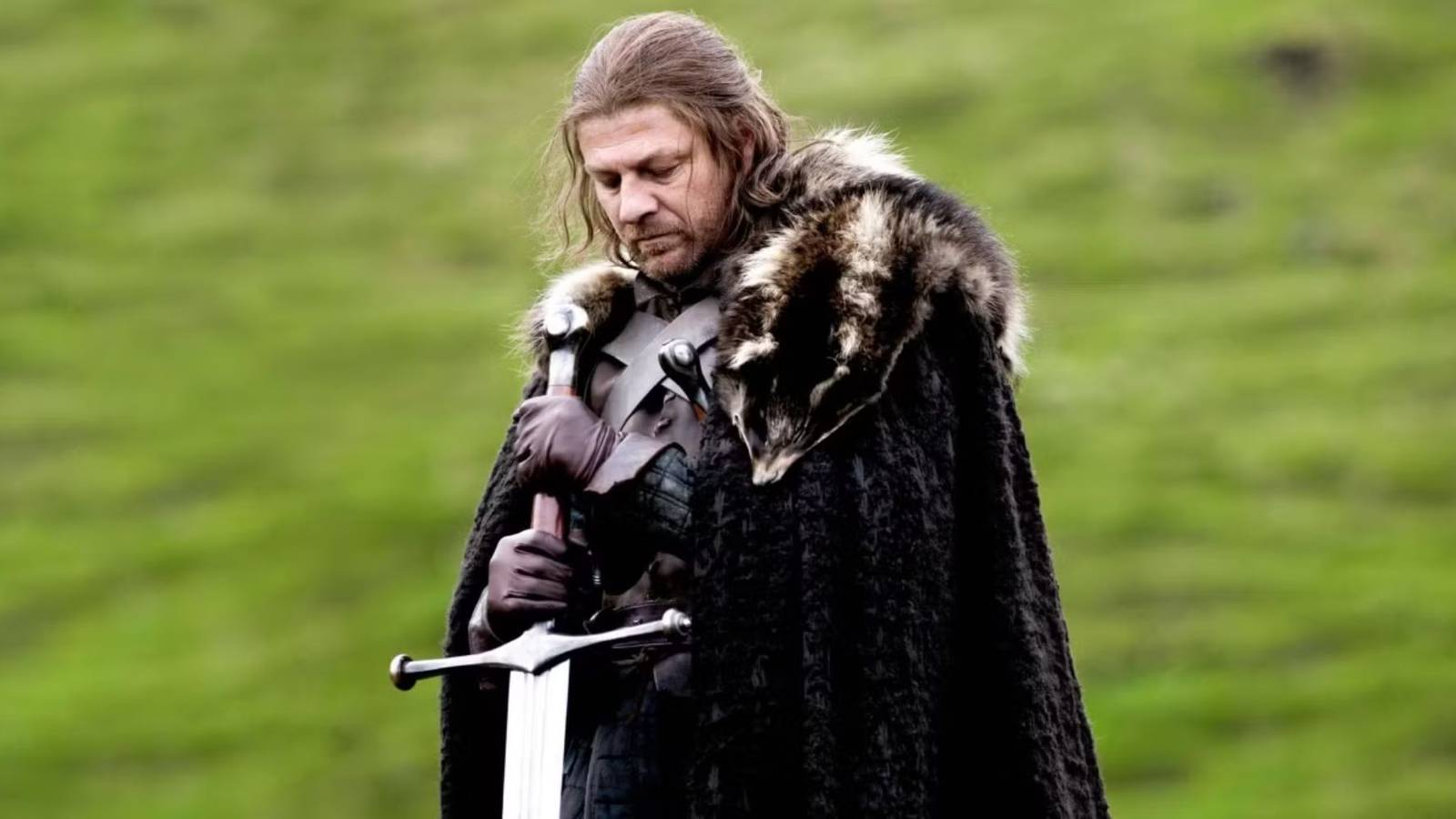
Image via HBO Published Aug 26, 2026, 7:11 PM EDT Sign in to your Collider account The fantasy genre has a reputation for being whimsical and ending in happily ever afters. There’s no denying that fantasy stories have plenty to offer to younger audiences, but they can also take the same themes and push them into much darker territories for older readers. The fantastical elements give these stories scale, but the best dark fantasy is still grounded in painfully human things like grief, obsession, power, and revenge. Instead of using magic as an escape from reality, these shows use it to make reality feel even uglier. This is a list of six dark fantasy TV shows made for adults who can appreciate the genre at its most twisted and bleak. 1 ‘Penny Dreadful’ (2014–2016) Image via Showtime Penny Dreadful is classic gothic horror come to life. The series, set in 19th-century London, follows Vanessa Ives (Eva Green), a deeply troubled woman with supernatural abilities who becomes involved with explorer Sir Malcolm Murray (Timothy Dalton) in the search for his missing daughter. On their journey, they cross paths with American gunslinger Ethan Chandler (Josh Hartnett) and brilliant surgeon Victor Frankenstein (Harry Treadaway), while familiar literary figures like Dorian Gray, Frankenstein’s Creature, and Dracula gradually become part of the same story. The series never treats these iconic characters like gimmicks, though. Instead, Penny Dreadful gives genuine emotional weight to their familiar stories. The fantasy elements of the show never feel childish because it ultimately explores themes of grief, desire, and identity. The violence and gore make perfect sense within this context. The series takes iconic horror mythology and makes it feel as real as it gets. It gives the audience enough humanity to sympathize with all these monsters before reminding everyone exactly why they should still be afraid. It’s like a bedtime story for adults who know that real fear comes from the things people carry within themselves. 2 ‘Game of Thrones’ (2011–2019) Image via HBO Game of Thrones redefined prestige fantasy TV forever. The HBO series adapts George R.R. Martin’s A Song of Ice and Fire and is set in the sprawling fictional Kingdom of Westeros. The story begins with King Robert Baratheon (Mark Addy) asking his old friend Ned Stark (Sean Bean) to leave Winterfell and become Hand of the King. Ned reluctantly agrees and quickly realizes that things in King’s Landing aren’t as peaceful as they might seem. That’s not all, though, because the show also follows Ned’s children, each pulled into conflicts of their own. At the same time, across the Narrow Sea, Daenerys Targaryen (Emilia Clarke) is married off to Khal Drogo (Jason Momoa) as part of her brother’s plan to reclaim the Iron Throne. There’s no denying that Game of Thrones has its fair share of violence, but that’s not what makes it a dark fantasy. The most interesting thing about the series is that it has no clear heroes or villains because everyone here is acting out of fear, loyalty, ambition, or pure survival. The character arcs are complex, and the audience is constantly torn between which side to pick. The fantastical and supernatural elements of the story are set up alongside this massive power struggle and feel like a natural extension of this world. Dragons, White Walkers, blood magic, and ancient prophecies are all important to the narrative, but ultimately, Game of Thrones is about the political maneuvering between people who believe they deserve the throne. Plenty of dark fantasy shows have followed the show’s blueprint, but very few have matched its scale and ambition. Collider Exclusive · Game of Thrones Personality Quiz Which Game of Thrones House Do You Belong To? Stark · Lannister · Targaryen · Baratheon · Tyrell Five great houses. Five completely different answers to the same question: how do you hold power in a world that will take it from you the moment you stop paying attention? Eight questions will determine where your loyalties — and your nature — truly lie. 🐺Stark 🦁Lannister 🐉Targaryen 🦌Baratheon 🌹Tyrell FIND YOUR HOUSE → 01 Someone powerful is acting dishonourably and everyone knows it. What do you do? In Westeros, the answer to this question has ended more than one great house. ACall it out, openly and on the record. If honour means anything, it has to mean something when it's costly. BUse it. Information about someone else's dishonour is leverage — and leverage is power. CAct decisively to correct it — with or without the approval of those around me. DChallenge them directly. Strength settles disputes more honestly than courtroom manoeuvring. ENavigate carefully — build alliances, apply quiet pressure, and create a situation where the right outcome becomes inevitable. NEXT QUESTION → 02 What is the source of your power? Every house endures because of something. What is it for yours? AThe loyalty of people who trust me — earned over generations, not bought with gold. BWealth, intelligence, and the willingness to use both without sentiment. CA legacy so fearsome and a vision so total that opposition becomes unthinkable. DPhysical strength, military force, and the respect that comes from being the kind of person nobody wants to fight. ECharm, connection, and the ability to make powerful people feel that my success is also theirs. NEXT QUESTION → 03 Who do you truly fight for? Strip away the banners and the words. The honest answer tells you everything. AMy family and my people — those who depend on me and have kept faith with me through everything. BMy family — the ones who share my blood, even when they exhaust me, even when they disappoint me. CMy cause — a vision larger than any single person, including me. DMyself, and those few who've proven themselves worth fighting beside. EMy house — its name, its future, the position I intend to leave it in when I'm gone. NEXT QUESTION → 04 How do you deal with your enemies? A house's method reveals its character as clearly as its words ever could. AHonestly — I face them directly, and I give quarter when it's warranted. BThoroughly — I don't leave loose ends, and I don't make the same enemy twice. CDecisively — fire answers questions that diplomacy only delays. DHead-on — I'd rather meet a threat on the battlefield than behind closed doors. EElegantly — I prefer to make former enemies into allies, or at least into people who owe me something. NEXT QUESTION → 05 What kind of ruler do you believe in? Westeros is full of answers to this question. Most of them end badly. AA just one — someone who serves the realm rather than using it, who leads by example rather than fear. BA capable one — someone smart enough to navigate the game, ruthless enough to win it, and realistic about what winning costs. CA transformative one — someone who doesn't just rule what exists but reshapes what's possible. DA strong one — someone whose authority is beyond question because the alternative is obviously worse. EA wise one — someone who understands that the realm is fed by more than armies, and that a full stomach keeps more peace than a sharp sword. NEXT QUESTION → 06 You suffer a devastating loss. How does your house respond? How a house handles defeat tells you more about it than how it handles victory. AWe grieve, properly and together — and then we endure, because endurance is what we do. BWe adapt. We reassess. And we ensure that whoever caused this loss comes to regret it completely. CWe burn hotter. Setbacks don't soften us — they clarify what needs to happen next. DWe hit back. Grief and revenge are the same motion in our house. EWe regroup quietly, rebuild our position, and return when we're ready — on our terms, not theirs. NEXT QUESTION → 07 Which of these truths about Westeros do you most believe? Every house has a philosophy. This is yours. AThe lone wolf dies, but the pack survives. Nothing matters more than the people you protect. BA Lannister always pays their debts — in gold or in kind. Reputation is built on consistency. CI am the blood of the dragon. Some destinies are written before the person who carries them is born. DOurs is the fury. When we move, we move completely — and we don't stop until it's done. EGrowing strong means knowing when to bloom and when to wait. Patience is its own kind of power. NEXT QUESTION → 08 The Iron Throne is within reach. What do you do? The answer reveals not just your ambition — but your character. AClaim it only if the realm needs me to — and rule in a way that makes it worth having. BEnsure someone who owes us sits in it. The power behind the throne is safer than the throne itself. CTake it. It was always meant to be mine — I feel that in my bones and in my blood. DSeize it — with both hands, without hesitation. Opportunity in Westeros does not wait to be asked. EPosition my house to be indispensable to whoever sits there — influence outlasts any single reign. REVEAL MY HOUSE → The Maester Has Spoken Your House Is…Your answers point to the great house whose words, values, and way of surviving in Westeros match your own. Bend the knee — or don't. That's very much up to you. 🐺 House StarkWinter is Coming — and you have always known it. You prepare not out of fear but out of duty, because the people who depend on you deserve someone who takes the long view. You lead with honour even when it costs you, because you understand that a reputation built on integrity is the only one worth having. Your loyalty to family and people runs deep — not as sentiment but as a code that doesn't bend when things get difficult. The North endures because Starks endure — not by being the cleverest players in the game, but by being the kind of people others are willing to follow into the cold. You are that kind of person. The pack survives. The lone wolf dies. You already know which one you are. 🦁 House LannisterYou understand the game — its rules, its exceptions, and exactly when the rules become the exception. You play it without illusions and without apology. You are sharper than most people realise, and you have learned to use that gap to your advantage. A Lannister always pays their debts — and you always keep your word, because your word is an instrument of power, and instruments must be kept in working order. You love your family with a ferocity that sometimes blinds you, and you know it, and you do it anyway. The lion doesn't concern itself with the opinion of sheep. Neither, in the end, do you. 🐉 House TargaryenYou carry a sense of destiny that is difficult to explain and impossible to ignore — the feeling that you are not simply participating in the world but meant to reshape it. You are capable of extraordinary things, and you know it, and that knowledge is both your greatest strength and your most dangerous quality. Fire and blood are not just words to you — they are a philosophy about what change requires and what it costs. The Targaryens at their best were transformative rulers who broke chains and defied the limits of what anyone thought possible. At your best, so are you. The dragon has three heads. You are one of them. 🦌 House BaratheonYou are a force — direct, powerful, and difficult to ignore when you enter a room or a conflict. You do not negotiate with challenges. You meet them. Ours is the fury — and yours is a kind of intensity that commands attention, respect, and occasionally fear from those who underestimate what's behind it. You value strength and straight dealing. You'd rather know where you stand in a fight than navigate a web of courtly whispers. The Baratheons built their house on the back of one of the greatest military victories in Westerosi history — and then struggled with what came after. The lesson of your house is that winning is not the end of the story. Governing is. You are learning that too. 🌹 House TyrellYou understand that power does not always announce itself — that sometimes it arrives with flowers, good wine, and a smile that doesn't quite reach the eyes. Growing strong is your house's motto, and you live it: patiently, strategically, always investing in the relationships and resources that will matter most when it counts. You are charming by choice and calculating by nature — a combination that makes you one of the most effective players in any room you enter. The Tyrells fed King's Landing and shaped its politics without ever sitting on the Iron Throne — and they were arguably more powerful for it. You know that the person who controls the food controls the kingdom. And you always know where the food is. ↻ RETAKE THE QUIZ 3 ‘The Witcher’ (2019–Present) Image via Netflix Netflix’s The Witcher has been through its ups and downs, but the behind-the-scenes drama can’t overshadow the power of this brilliant story. The series follows Geralt of Rivia, played by Henry Cavill through the first three seasons and Liam Hemsworth beginning with Season 4, a mutated monster hunter who travels the Continent, taking on contracts. Geralt wants to remain neutral and collect his coin, but morality in his world is never that convenient. Along the way, Geralt becomes bound by destiny to Princess Ciri (Freya Allan), whose Elder Blood makes her enormously important to competing kingdoms and supernatural forces. Soon enough, sorceress Yennefer (Anya Chalotra) enters the picture, and these three characters gradually become one very unconventional family. Now, monster hunting is actually one of the least complicated parts of Geralt’s life. He repeatedly finds himself caught between warring kingdoms, powerful sorcerers, and people who want to use Ciri for their own political ambitions. The protagonist might spend much of the series insisting that he wants nothing to do with any of it, but protecting Ciri makes it impossible for him to remain neutral. This transforms The Witcher from a simple monster-hunting show into a far more complex story about prejudice. The show can get tangled in its own mythology, but when it focuses on its characters, The Witcher has a way of making even the biggest fantasy conflicts feel personal. 4 ‘The Sandman’ (2022–2025) Image via Netflix The Sandman is the stuff of nightmares — literally. The show is based on the acclaimed DC comic series and follows Morpheus, or Dream (Tom Sturridge), an immortal being known as the Endless. He spends his years cut off from his realm after being imprisoned by occultist Roderick Burgess (Charles Dance). When Dream finally escapes, he discovers that his symbols of power have been stolen and scattered across the waking world. He is then forced to rebuild both himself and the place where humanity’s dreams and nightmares come from. The premise sounds enormous, but The Sandman balances its stakes with its engaging structure. The show is interesting, particularly because Dream doesn’t need to dominate every story. Some episodes push him almost completely into the background and focus on other people whose lives briefly intersect with dreams, death, or the supernatural. It makes the series feel less like a traditional fantasy adventure and more like a collection of dark myths that slowly build one much larger world. That unpredictability is a huge part of what makes the show so compelling. It’s a shame that the show had to end after just two seasons, because The Sandman had the potential to become a fantasy epic for the ages. 5 ‘American Gods’ (2017–2021) Image via Starz American Gods takes one of fantasy’s oldest ideas and places it in modern America. The series takes place in a world where Gods only survive as long as people still believe in them. American Gods follows ex-con Shadow Moon (Ricky Whittle), who is released from prison early after learning that his wife has died. He accepts a job working for the mysterious con man Mr. Wednesday (Ian McShane), who eventually turns out to be Odin, the Norse god who has survived into modern America under a new identity. From there, the story expands into a huge conflict between the Old Gods, brought to America through generations of immigrants, and the New Gods created by modern obsessions with technology, media, fame, and consumption. That clever premise immediately gives the show a unique identity. The show turns smartphones and celebrity culture into forms of faith, which makes its fantasy feel a lot more accessible instead of being purely rooted in ancient folklore. Episodes regularly break away from Shadow and Wednesday to tell smaller stories about how different gods arrived in America or what became of them once their believers disappeared. This ensures that the show never gets boring, but every little detour is gradually building toward the larger conflict the story revolves around. 6 ‘Lovecraft Country’ (2020) Image via HBO Lovecraft Country deserved so much more than one season, and any true fantasy enthusiast will agree. The HBO series follows Korean War veteran Atticus Freeman (Jonathan Majors), who travels across 1950s Jim Crow America with his childhood friend Letitia Lewis (Jurnee Smollett) and uncle George (Courtney B. Vance) in search of his missing father. Things take a turn when Atticus discovers that his family is connected to a secret society obsessed with magic and immortality. He then finds himself dealing with ancient rituals, monsters, curses, ghosts, and supernatural abilities, all while navigating a country where simply entering the wrong town can put their lives in danger. The show ties its supernatural horror directly to the Black experience in America. The story brilliantly uses supernatural horror to amplify the very real history its characters are living through. That idea reaches its emotional peak when the show travels back to the 1921 Tulsa Race Massacre and turns a real historical tragedy into one of the most devastating parts of the entire season. The show can be messy because it is trying to do an absurd amount in only 10 episodes, but very few dark fantasy series have ever swung this hard or had this much to say while doing it. This combination of the real and the fantastical makes Lovecraft Country one of the most ambitious TV shows of all time. That’s why its cancellation still stings.
6 Greatest Dark Fantasy Series Made for Adults
Full Article
Original Source
Read the full article at Collider →KhanList aggregates and links to publicly available news content. We do not host full articles from third-party sources. Always verify important information with original sources.