
Image via Vintage Books Published Nov 6, 2026, 2:02 PM EST At any given moment, Scott Simone has at least three books jockeying for his attention. He’ll never turn down a campus novel with a literary bent, nor will he hesitate to add yet another mystery to his Leaning Tower of Pisa-inspired to-be-read pile — which is built upon the bedrocks of too many short story collections, how-are-these-real true crime books, and classics waiting to be cracked open again. Topics that have him ripping through pages the fastest include closed-circle murders, unhappy professors, life-questioning philosophical deep dives, so long as they feature sharp sentences, a dark sense of humor, and at least a little malice. He’s spent so much time in book shops over the years he is, to his wife’s chagrin, continuing to build a library that doesn’t quite respect the dimensions of the apartment meant to contain it. Sign in to your Collider account A man walks into a liquor store with a gun. We know what he is. There are also preconceived notions. We think we know who he is as well. But, just imagine, you know about his past-due bills; you know about the family for which he's struggling to provide; you know the desperate lengths that never quite measured up. You understand what guided the path that led to him walking into that store. What he's doing is still wrong, sure, but it’s a little more understandable. That's exactly the empathetic journey the best crime books take you on. There are no imaginary worlds; no magical adventures. In fact, they're often the opposite — creating characters so real you know their faces, environments you could walk through with your eyes closed, and situations you've struggled through yourself. But they also have us shoulder-to-shoulder with thieves, con men, and killers. They have us following them into situations we'd never dare find ourselves in. The longer we spend with them, the harder it becomes to condemn. The best crime fiction offers a different kind of escapism — the chance to walk in the shoes of society’s most condemned. 'Harlem Shuffle' (2021) Image via Doubleday There's no such thing as a halfway crook. Ray Carney would beg to differ. That's the heart of the story Colson Whitehead is telling in Harlem Shuffle. Carney is a furniture salesman in 1960s Harlem who's convinced himself he's only slightly bent. Sure, he occasionally fences stolen jewelry for his cousin Freddie. He isn't the one stealing it, though. He's just trying to build a successful business, move his family into a nicer apartment, and earn a little respect. Hardly unreasonable ambitions. However, when Freddie gets tangled up in a robbery at the Hotel Theresa, Ray finds himself among gangsters, crooked cops, and wealthy businessmen whose dealings aren't much cleaner than his own. Whitehead makes it awfully easy to sympathize with him. Ray keeps moving the line between an honest living and a dishonest one, and before long, we find ourselves moving it right along with him. 'Get Shorty' (1990) Image via Mariner Books There's something satisfying about watching someone who's good at their job. Even when that job happens to be collecting debts for the mob. Elmore Leonard plays on that contradiction in Get Shorty. Chili Palmer, a Miami loan shark, embodies the great-at-his job ethos. We watch as he's able to pinpoint a liar on the spot and apply just the right amount of pressure to get what he needs. Not exactly admirable talents. When a collection job takes him to Hollywood, we discover they're surprisingly transferable to the movie business. And Leonard has a field day with the comparison. Producer Harry Zimm is forever chasing his big break, promising more than he can deliver, and talking himself into trouble. Chili sees through the bluster, often with nothing more than a few well-placed questions. He's a crook, sure, but he's also the smartest man in most rooms he enters. Half the fun is watching people underestimate him, then realize their mistake. And his growing enthusiasm for filmmaking gives us another reason to root for him. Perhaps there's a legitimate future for Chili after all, though Hollywood might have other ideas. 'The Hunter' (1962) Image via University of Chicago Press Richard Stark doesn't give us many reasons to like Parker in The Hunter. No hungry children to feed, no noble cause, no real conscience. Parker's wife and an accomplice double-cross him, leave him for dead, and steal his share of a robbery. Parker survives — and he wants his $45,000 back. That's about the extent of his moral argument. There's no speech about betrayal, no demand for an apology. But Stark does something more unsettling. He gets us thinking like Parker. When the mob refuses to return his money, Parker simply works his way up the criminal hierarchy, dispensing with anyone who stands in his path. Stark's stripped-down prose gives his brutality an almost businesslike efficiency. There's little room for sentiment when every problem presents another practical solution. And before long, we're no longer questioning whether Parker should get his money back; we’re wondering how he'll manage it. Horror/Quizzes/Survival Odds ▶ PlaySP 00:00:00 Survival TestSP · Do Not Rewind Collider QuizWhich Horror VillainCould You Survive?8 Questions · 5 VillainsFive villains. Five completely different ways this ends badly if you are not smart enough, fast enough, or self-aware enough to avoid it. Only one of them is the villain your particular set of instincts gives you a fighting chance against. Eight questions will figure out which one.The Lineup Jason Voorhees Michael Myers Freddy Krueger Pennywise Chucky Test Your Survival Question 01INSTINCT 01Something feels wrong. You can't explain it, you just know. What do you do?First instincts are the difference between the survivor and the first act exit. ALeave immediately. I don't need to understand a threat to respect it.BStay quiet and observe. If I can see it, I can understand it. If I can understand it, I can avoid it.CStay awake. Whatever this is, I am not going to sleep until I feel safe again.DConfront it directly. Fear grows in the dark, and I'd rather know what I'm dealing with.ECheck everything, trust nothing. The threat might be closer than I think, and smaller. ← BackPick one, then Next Next Question Question 02ENVIRONMENT 02Where are you most likely to find yourself when things go wrong?Setting is everything in horror. Where you are determines which rules apply. ASomewhere remote: a cabin, a campsite, off the grid and away from people.BA quiet suburban neighborhood where nothing ever happens. Except tonight.CIn my own head, the most dangerous place of all, depending on what's already in there.DWherever children are, because something about this place attracts the worst things.ESomewhere ordinary: a house, a toy store, a place where the last thing you'd expect is a threat. ← BackPick one, then Next Next Question Question 03STRENGTH 03What is your most reliable survival asset?Every survivor has a quality the villain didn't account for. What's yours? APhysical fitness. I can run, I can swim, I can outlast something that relies on brute persistence.BSpatial awareness. I always know the exits, the hiding spots, the fastest route out.CPsychological resilience. I've faced my worst fears before. They don't have the same power over me.DEmotional steadiness. I don't panic. Panic is what gets you caught.ESkepticism. I don't underestimate threats because of how they look. Size is irrelevant. ← BackPick one, then Next Next Question Question 04FEAR 04What kind of fear is hardest for you to fight through?Knowing your weakness is the first step to not being undone by it. AThe unstoppable. Something that will not stop, cannot be reasoned with, and is always getting closer.BThe invisible. A threat I can feel but can't locate, watching from somewhere I can't see.CThe psychological. Something that uses my own mind and memories against me.DThe unknowable. Something ancient and shapeless that feeds on the fear itself.EThe mundane. A threat so ordinary-looking that no one will believe me until it's too late. ← BackPick one, then Next Next Question Question 05GROUP 05You're with a group when things start going wrong. What's your role?Horror movies are unsentimental about who survives group situations and who doesn't. AThe one who says "we need to leave" first, and means it, even when no one listens.BThe one who stays quiet, watches the others, and figures out the pattern before anyone else does.CThe one who holds the group together when panic sets in, because someone has to.DThe one who asks the questions nobody wants to ask, because ignoring them never ends well.EThe one who takes the threat seriously when everyone else is laughing it off. ← BackPick one, then Next Next Question Question 06MISTAKE 06What's the horror movie mistake you're most likely to make?Honest self-assessment is a survival skill. Denial is not. AGoing back for someone. I know I shouldn't, but I can't leave them behind.BAssuming I'm safe once I've found a hiding spot. That's when it finds me.CFalling asleep when I absolutely cannot afford to. Exhaustion is its own enemy.DLetting my curiosity override my instincts. I always need to understand what I'm dealing with.EDismissing the threat because of how it looks. That's exactly what it wants. ← BackPick one, then Next Next Question Question 07ADVANTAGE 07What's your best defense against something that can't be stopped by conventional means?Every horror villain has a weakness. The survivors are always the ones who find it. AThe environment itself. I use the terrain, the water, the geography against it.BPatience. I wait, I watch, and I move at the one moment it doesn't expect.CLucidity. If I can stay in control of my own mind, it loses its biggest advantage.DCourage. Facing it directly, refusing to run, taking away the fear it feeds on.EImprovisation. I use whatever's at hand, however unconventional. Creativity over brute force. ← BackPick one, then Next Next Question Question 08FINAL SCENE 08It's the final scene. You're the last one standing. How did you make it?The final survivor always has a reason. What's yours? AI kept moving. I never stopped, never hid for too long, never let it corner me.BI figured out the pattern before anyone else did, and I used it against the thing following it.CI stayed awake, stayed lucid, and refused to give it the one thing it needed most.DI stopped being afraid of it. And the moment I did, everything changed.EI took it seriously from the start, and I never once made the mistake of underestimating it. ← BackPick one, then Next Reveal My Villain Survival Odds CalculatedYour Best Chance Is Against Your instincts, your strengths, and your particular way of thinking under pressure point to one villain you have a real fighting chance against. Everyone else: good luck. Friday the 13thJason VoorheesCamp Crystal Lake · Friday the 13th, 1980Relentless, but he never once changes the plan. Jason is relentless, but he is also predictable, and that is the gap you would exploit.Why You Last Longer He moves in straight lines toward his target. He doesn't strategize, doesn't adapt, doesn't outsmart. He simply pursues. Your ability to keep moving, use the environment, and resist the panic that freezes most people gives you a genuine edge. The Crystal Lake survivors were always the ones who stopped running in circles and started thinking about terrain, water, and distance. You think like that. Which means Jason, for all his indestructibility, would face someone who simply refused to be where he expected. From The Collider File Crystal Lake, the Peacock prequel series, dropped all eight episodes on October 15, 2026. It ended a 17-year gap, the longest the franchise has ever gone without a new entry. Keeps MovingReads TerrainCrystal Lake HalloweenMichael MyersHaddonfield, Illinois · Halloween, 1978He is already in the frame. You just have to look. Michael watches before he moves. He is patient, methodical, and almost impossible to detect, until it's too late for anyone who isn't paying close enough attention.Why You Last Longer But you are paying attention. You notice the shape in the window, the car parked slightly wrong, the silence where there should be sound. Michael's power lies in the invisibility of ordinary suburbia, the fact that nothing ever looks wrong until it already is. Your spatial awareness and instinct to map every room, every exit, and every shadow before you need them is precisely the quality Laurie Strode had. You are not a target waiting to happen. You are someone who already suspects something is wrong, and acts on it. From The Collider File John Carpenter is producing a new Halloween film with Blumhouse and Miramax. The 1978 mask was a store-bought Captain Kirk mask, widened at the eyes and painted white. Checks ExitsNotices FirstHaddonfield A Nightmare on Elm StreetFreddy KruegerElm Street · A Nightmare on Elm Street, 1984He needs you rattled. You are hard to rattle. Freddy wins by getting inside your head, using your own fears, your own memories, your own subconscious against you. That strategy requires a target who can be destabilized.Why You Last Longer You are harder to destabilize than most. You've faced uncomfortable truths about yourself and you haven't looked away. The survivors on Elm Street were always the ones who understood what was happening and chose to face it rather than flee from it. Freddy's greatest weakness is that his power evaporates in the presence of someone who refuses to give him the fear he feeds on. Your psychological resilience, the ability to stay grounded when reality itself becomes unreliable, is exactly the quality that keeps you alive here. From The Collider File Paramount set a new A Nightmare on Elm Street in motion in July 2026, with the Wes Craven estate involved. Craven built the original on newspaper reports of people so afraid of their own nightmares that they refused to fall asleep. Stays LucidFaces ItElm Street ItPennywiseDerry, Maine · It, 1990It eats fear. You are not serving any. Pennywise is ancient, shapeshifting, and feeds on fear, but it has one critical vulnerability: it cannot function against someone who truly stops being afraid of it.Why You Last Longer The Losers Club didn't survive because they were braver than everyone else. They survived because they faced their fears together, and faced them honestly. You ask the questions others avoid. You look directly at what frightens you rather than turning away. That directness, the refusal to let fear fester in the dark, is Pennywise's worst nightmare. It chose the wrong target when it chose you. You are exactly the kind of person whose fear tastes like nothing at all. From The Collider File HBO renewed It: Welcome to Derry for a second season, with Bill Skarsgard back under the makeup. The showrunners have said season two reaches further back, to younger versions of the first season's characters. Asks Out LoudUnrattledDerry Child's PlayChuckyChicago · Child's Play, 1988Everybody laughs. You are not laughing. Chucky's greatest advantage is that nobody takes him seriously until it's already too late. He exploits the gap between how something looks and what it really is.Why You Last Longer You don't have that gap. You take threats seriously regardless of how they present, and you never make the mistake of underestimating something because of its size or appearance. Chucky relies on surprise, on the delay between recognition and response. You close that delay faster than almost anyone. Your instinct to treat every unfamiliar thing with appropriate skepticism, rather than dismissing it because it seems absurd, is the exact quality that keeps you breathing. Against Chucky, not laughing is already winning. You are very good at not laughing. From The Collider File Don Mancini is writing the next Chucky film and plans to direct it himself, aimed back at the scarier end. Brad Dourif has voiced the doll since 1988 and has said he has no plans to stop. Takes It SeriouslyFast ResponseChicago Survival Odds 1· · ·0% 2· · ·0% 3· · ·0% Retake The QuizCopied A Collider InteractiveCOLLIDERMore quizzes at collider.com 'Blacktop Wasteland' (2020) Image via Flatiron Books Doing the right thing doesn't always pay the bills. S. A. Cosby makes that the central struggle in Blacktop Wasteland. Beauregard "Bug" Montage has a wife and kids to support. But the auto-repair shop that he owns is barely keeping the lights on. The bills never seem to stop coming: back rent for the shop itself, glasses for his youngest. The pile of bills dwarfs that of the money coming in. Bug — at least the "old" Bug — knew exactly how to make a lot of it, though. You see he used to drive getaway cars, and was the best at doing so. Cosby backs Bug into a corner, and the reader, too, can feel the walls closing in. We know another robbery could land him in prison, leaving his family worse off than before. But turning down the job won't make those bills disappear, either. When Bug finally gets behind the wheel, Cosby makes the getaway so exhilarating that we find ourselves cheering him on. Never mind that he's helping robbers escape. By now, we've spent enough time with Bug and his family that we're desperate for him to make it home. 'Swag' (1976) Image via Mariner Books Armed robbery isn't exactly fertile ground for comedy. But Elmore Leonard finds plenty to laugh about in Swag. Frank Ryan's first rule for successful armed robbery? Be polite. Say please and thank you. He and his partner, Ernest "Stick" Stickley Jr., have even devised ten rules for their new enterprise, as though they're opening a respectable small business instead of pointing guns at cashiers. And the absurdity only grows from there. During one supermarket holdup, Frank somehow ends up working the register, where an elderly customer gives him grief over an expired coupon. So much for a straightforward robbery. But the money keeps coming, and soon Frank and Stick are buying fancy clothes, chasing women, and spending their afternoons lounging around the pool. Not a bad life, really. Leonard makes the whole business so funny that we nearly forget these two are making their living by pointing guns at innocent people. 'The Postman Always Rings Twice' (1934) Image via Orion Books Love makes people do stupid things. James M. Cain takes that old adage to an extreme in The Postman Always Rings Twice. That stupid thing here is murder. Frank Chambers, a drifter, falls for Cora, the wife of a roadside diner owner. She wants Frank, too. But she'd also like to keep the diner. And her husband is inconveniently attached to it. Running away would mean giving up the business, so the lovers begin entertaining another option. And Cain gives Frank the floor to explain how they arrived at such a dreadful idea. Trouble is, the man has an excuse for everything. His feverish narration rushes us from one bad decision to another, barely leaving time to consider the last. Frank sounds more irritated by the obstacles than frightened of the crime. Cain makes two extraordinarily selfish people sound like lovers who've simply run out of options. We know murder isn't the answer to an unhappy marriage. But spend enough time listening to Frank, and you begin to understand how he convinced himself otherwise. The Postman Always Rings Twice Release Date May 2, 1946 Runtime 113 minutes Cast John Garfield Frank Chambers Cecil Kellaway Nick Smith Director Tay Garnett Writers Harry Ruskin Producers Carey Wilson
6 Essential Crime Books for Beginners
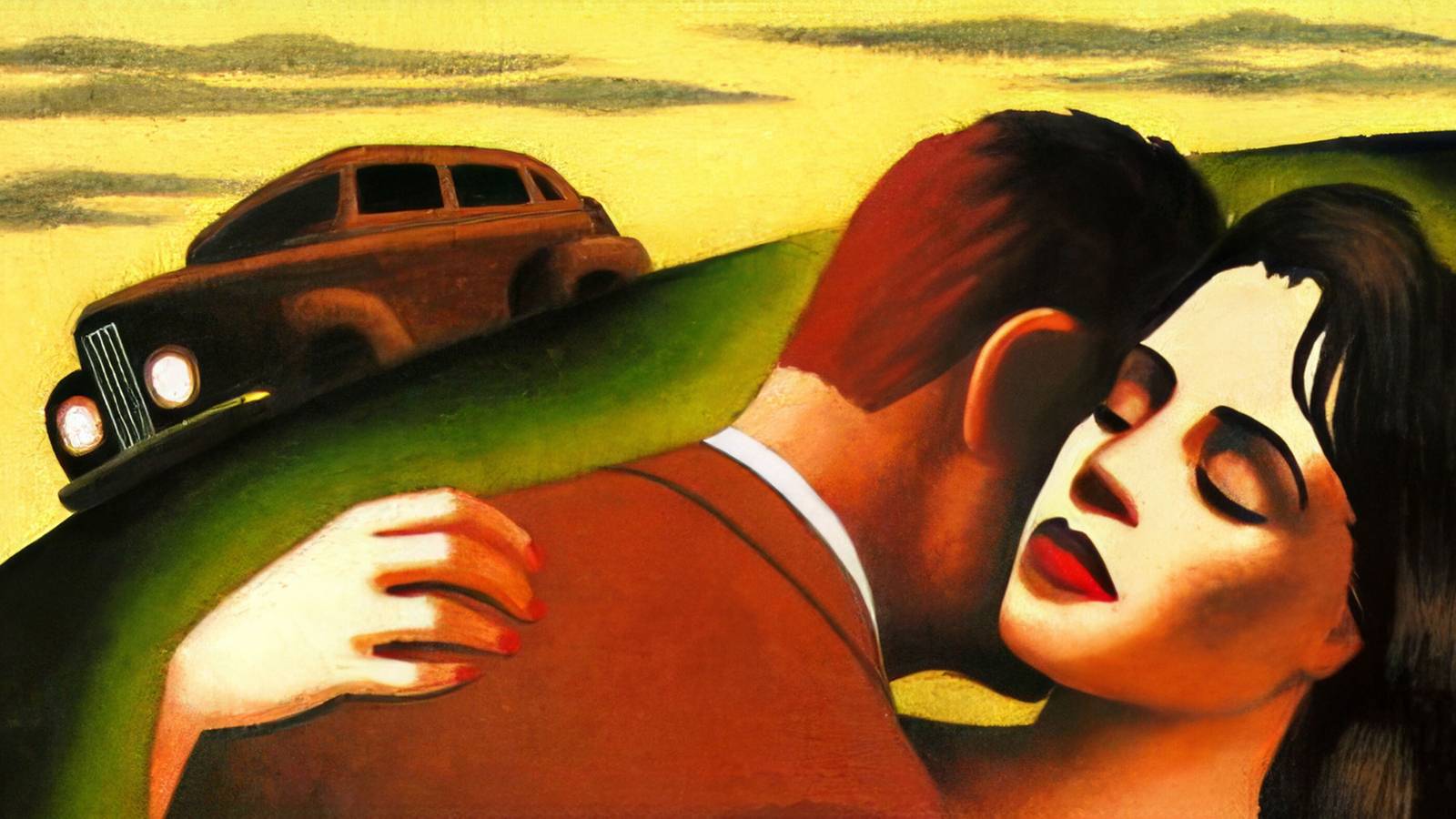
Full Article
Original Source
Read the full article at Collider →KhanList aggregates and links to publicly available news content. We do not host full articles from third-party sources. Always verify important information with original sources.