
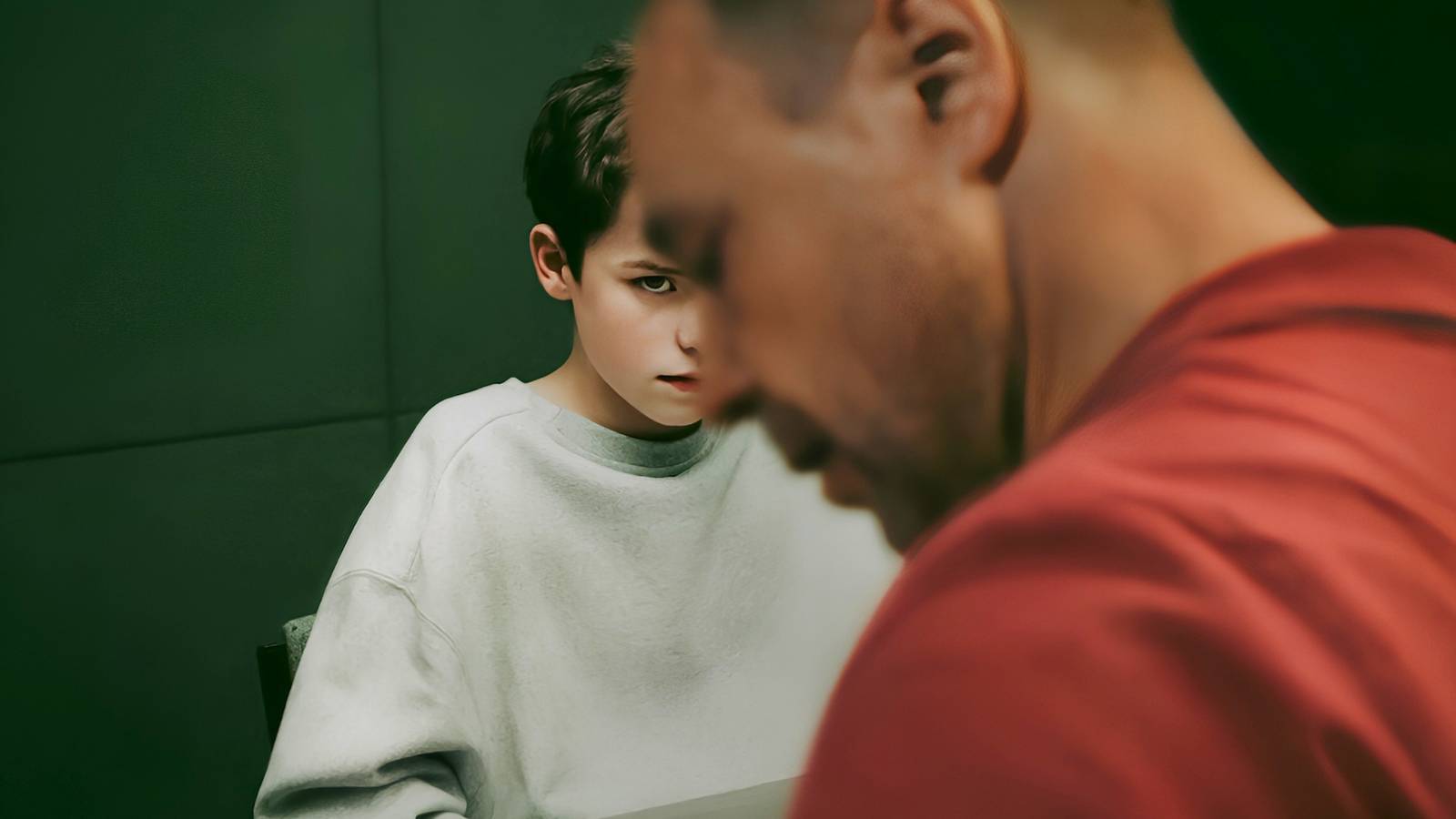
Image via Netflix Published Aug 31, 2026, 8:35 AM EDT Michael Block is a 14 time GLAM Award nominated writer, producer, and host of the podcast Block Talk. Throughout his time in the entertainment industry, he has worked on and off Broadway as a stage manager, written several produced plays, critiqued hundreds of theatrical performances, drag and cabaret shows, and has produced events randing from drag competitoons to variety concerts! On Block Talk, he interviews nightlife personalities, covers the wide world of entertainment through features, ranking episodes, and recaps ALL of Drag Race, as well as Dragula and Survivor. He has interviewed hundreds of RuGirls that span the globe at DragCon NYC, DragCon LA, and DragCon UK. In his free time, he makes one-of-a-kind jewelry and gift baskets with his mom. He is a proud member of the LGBTQ+ community. Sign in to your Collider account We all love a quick fix now and again. While long-running television shows sometimes require a longer commitment, the beauty of a miniseries is that it is built to satisfy audiences through a single storyline. The 20th century was filled with iconic miniseries, many of which aired on network television. Then, at the start of the 21st century, they shifted over to the premium cable channels. Now, we seem to be living in a golden age of miniseries thanks to the streamers. Since 2010, there have been an abundance of extraordinary miniseries. With more freedom on the streamers, the way stories can be told in miniseries has changed drastically. Darker, more complex narratives have come to the forefront. Daring and bold risks are taken. From dramatizations of shocking true stories to sensational adaptations of classic works, the six titles on this list represent some of the best miniseries since 2010. Though there are certainly many others that could have slipped in, these six are at the tippy top of the list. 1 'Adolescence' (2025) Image via Netflix By no means is Adolescence an easy series to watch, but it sure is a fascinating product! The enthralling Netflix psychological drama tells the story of Janie Miller (Owen Cooper), a 13-year-old schoolboy who becomes the center of a scandal after he is arrested for murdering a girl in his school, Katie Leonard (Emilia Holliday). The series then follows Jamie's parents, Eddie and Manda (Stephen Graham and Christine Tremarco), as they navigate the police and legal system as they handle the great shock of the event and the revelations about their own son. Adolescence tackles the real themes of toxic internet culture, peer pressure, male rage and the distorted ideals of modern masculinity. A truly harrowing film, Adolescence is built on pure, raw emotion. The one-shot wonder took the streaming world by storm with its pristine four-episode series. Each tightly plotted episode is filmed in a single continuous take. By doing so, it captures the range of emotions, pure chaos, and dark intimacy of the situations. From the initial arrest to the series-defining psychologist session between Jamie and Briony Ariston (Erin Doherty), the series feels terrifyingly immersive. Created by Jack Thorne and Graham and directed by Philip Barantini, Adolescence became a transcendent piece that, on the surface, may have seemed like an extraordinarily extensive crime that was still rooted in reality. It was essentially presented without flaw. The series catapulted Cooper to great heights, sweeping the awards with win after win. Adolescence was not a whodunnit, but rather a masterful why-dunnit. 2 'Chernobyl' (2019) Image via HBO The thought of telling the story of a horrible human tragedy may not be the biggest seller for a series, but Chernobyl was executed perfectly. Written by Craig Mazin and directed by Johan Renck, Chernobyl used only five tightly curated episodes to explore the catastrophic nuclear accident in Ukraine. The series dramatizes the explosion, the immediate chaos, the massive cleanup efforts, and the intense political cover-up and systemic lies by the Soviet government. Brought to life through an exceptional ensemble, featuring Jared Harris, Stellan Skarsgård, Emily Watson, Jessie Buckley, and Paul Ritter, Chernobyl doesn't rewrite or sanitize history but captures the devastation through meticulous historical accuracy and visceral horror. Rather than playing it like a documentary, Chernobyl treats its story as a human-driven dramatization. The series doesn’t attempt to soften the reality, instead providing a stark, grim reality. Viewers are dropped straight into the apocalyptic nightmare and the horrendous aftermath that dissected how bureaucratic lies, cover-ups, and systemic arrogance caused and worsened the catastrophe. Renck's direction features a bleak color story that gives the series a lived-in, real-time atmosphere. Chernobyl pushes beyond a retelling to use the overarching theme of the cost of truth to serve as a harrowing reminder of what happens when a government decides to suppress scientific fact. 3 'The Haunting of Hill House' (2018) Image via Netflix The Netflix and Mike Flanagan collaboration served as one of the very best in streaming history. Launching a craving for short-form horror storytelling, The Haunting of Hill House, the first series in a string of hits, revitalized the genre for the small screen. Taking inspiration from Shirley Jackson’s novel, the series splits across two timelines. In 1992, Hugh and Olivia Crain (Henry Thomas and Carla Gugino) and their five kids move into a massive mansion to fix it up and sell it. The house slowly drives the family mad with terrifying visions. One tragic night, they flee the house, leaving Olivia dead inside. Twenty-six years later, a new family tragedy forces the grown-up siblings and their father to reunite and face the dark ghosts of their past. The Haunting of Hill House masters a ghost story with an exploration of grief, trauma, guilt, and pain and how it stays with an individual through time. By maintaining a human-centric narrative, Flanagan ensures a genuine blend of terror with profound heartbreak of a family experiencing trauma. Through its core supernatural elements, The Haunting of Hill House uses the scares as a unique metaphor for how each family handles sorrow, depression, and loss. Trauma is established as the true monster of the story, not the physical manifestation of a ghost haunting the home. Flanaghan's experience as a horror director allowed for a sublimely crafted thriller. He evokes a ghoulish atmosphere where dread lurks around every corner. The technical craftsmanship made The Haunting of Hill House better than some big screen frights. The Haunting of Hill House pushed horror to new storytelling directions. Without The Haunting of Hill House, we would never have experienced The Haunting of Bly Manor, Midnight Mass, or The Fall of the House of Usher. Collider Exclusive · Horror Survival Quiz Which Horror Villain Do You Have the Best Chance of Surviving? Jason Voorhees · Michael Myers · Freddy Krueger · Pennywise · Chucky Five killers. Five completely different ways to die — if you're not smart enough, fast enough, or self-aware enough to avoid it. Only one of them is the villain your particular set of instincts gives you a fighting chance against. Eight questions will figure out which one. 🏕️Jason 🔪Michael 💤Freddy 🎈Pennywise 🪆Chucky TEST YOUR SURVIVAL → 01 Something feels wrong. You can't explain it — you just know. What do you do? First instincts are the difference between the survivor and the first act casualty. ALeave immediately. I don't need to understand a threat to respect it. BStay quiet and observe. If I can see it, I can understand it. If I can understand it, I can avoid it. CStay awake. Whatever this is, I am not going to sleep until I feel safe again. DConfront it directly. Fear grows in the dark — I'd rather know what I'm dealing with. ECheck everything, trust nothing. The threat might be closer than I think — and smaller. NEXT QUESTION → 02 Where are you most likely to find yourself when things go wrong? Setting is everything in horror. Where you are determines which rules apply. ASomewhere remote — a cabin, a campsite, off the grid and away from people. BA quiet suburban neighbourhood where nothing ever happens. Except tonight. CIn my own head — the most dangerous place of all, depending on what's already in there. DWherever children are — because something about this place attracts the worst things. ESomewhere ordinary — a house, a toy store, a place where the last thing you'd expect is a threat. NEXT QUESTION → 03 What is your most reliable survival asset? Every survivor has a quality the villain didn't account for. What's yours? APhysical fitness — I can run, I can swim, I can outlast something that relies on brute persistence. BSpatial awareness — I always know the exits, the hiding spots, the fastest route out. CPsychological resilience — I've faced my worst fears before. They don't have the same power over me. DEmotional steadiness — I don't panic. Panic is what gets you caught. EScepticism — I don't underestimate threats because of how they look. Size is irrelevant. NEXT QUESTION → 04 What kind of fear is hardest for you to fight through? Knowing your weakness is the first step to not dying because of it. AThe unstoppable — something that will not stop, cannot be reasoned with, and is always getting closer. BThe invisible — a threat I can feel but can't locate, watching from somewhere I can't see. CThe psychological — something that uses my own mind and memories against me. DThe unknowable — something ancient, shapeless, that feeds on the fear itself. EThe mundane — a threat so ordinary-looking that no one will believe me until it's too late. NEXT QUESTION → 05 You're with a group when things start going wrong. What's your role? Horror movies are brutally clear about who survives group situations and who doesn't. AThe one who says "we need to leave" first — and means it, even when no one listens. BThe one who stays quiet, watches the others, and figures out the pattern before anyone else does. CThe one who holds the group together when panic sets in — because someone has to. DThe one who asks the questions nobody wants to ask — because ignoring them gets people killed. EThe one who takes the threat seriously when everyone else is laughing it off. NEXT QUESTION → 06 What's the horror movie mistake you're most likely to make? Honest self-assessment is a survival skill. Denial is not. AGoing back for someone — I know I shouldn't, but I can't leave them behind. BAssuming I'm safe once I've found a hiding spot. That's when it finds me. CFalling asleep when I absolutely cannot afford to. Exhaustion is its own enemy. DLetting my curiosity override my instincts — I always need to understand what I'm dealing with. EDismissing the threat because of how it looks. That's exactly what it wants. NEXT QUESTION → 07 What's your best weapon against something that can't be stopped by conventional means? Every horror villain has a weakness. The survivors are always the ones who find it. AThe environment itself — I use the terrain, the water, the geography against it. BPatience — I wait, I watch, and I strike at the one moment it doesn't expect. CLucidity — if I can stay in control of my own mind, it loses its primary weapon. DCourage — facing it directly, refusing to run, taking away the fear it feeds on. EImprovisation — I use whatever's at hand, however unconventional. Creativity over brute force. NEXT QUESTION → 08 It's the final scene. You're the last one standing. How did you make it? The final survivor always has a reason. What's yours? AI kept moving. I never stopped, never hid for too long, never let it corner me. BI figured out the pattern before anyone else did — and I used it against the thing following it. CI stayed awake, stayed lucid, and refused to give it the one thing it needed most. DI stopped being afraid of it. And the moment I did, everything changed. EI took it seriously from the start — and I never once made the mistake of underestimating it. REVEAL MY VILLAIN → Your Survival Odds Have Been Calculated Your Best Chance Is Against…Your instincts, your strengths, and your particular way of thinking under pressure point to one villain you actually have a fighting chance against. Everyone else — good luck. Jason VoorheesJason is relentless, but he is also predictable — and that is the gap you would exploit. He moves in straight lines toward his target. He doesn't strategise, doesn't adapt, doesn't outsmart. He simply pursues. Your ability to keep moving, use the environment, and resist the panic that freezes most victims gives you a genuine edge. The Crystal Lake survivors were always the ones who stopped running in circles and started thinking about terrain, water, and distance. You think like that. Which means Jason, for all his indestructibility, would face someone who simply refused to be where he expected. Michael MyersMichael watches before he moves. He is patient, methodical, and almost impossible to detect — until it's too late for anyone who isn't paying close enough attention. But you are paying attention. You notice the shape in the window, the car parked slightly wrong, the silence where there should be sound. Michael's power lies in the invisibility of ordinary suburbia — the fact that nothing ever looks wrong until it already is. Your spatial awareness and instinct to map every room, every exit, and every shadow before you need them is precisely the quality Laurie Strode had. You are not a victim waiting to happen. You are someone who already suspects something is wrong — and acts on it. Freddy KruegerFreddy wins by getting inside your head — using your own fears, your own memories, your own subconscious as weapons against you. That strategy requires a target who can be destabilised. You are harder to destabilise than most. You've faced uncomfortable truths about yourself and you haven't looked away. The survivors on Elm Street were always the ones who understood what was happening and chose to face it rather than flee from it. Freddy's greatest weakness is that his power evaporates in the presence of someone who refuses to give him the fear he feeds on. Your psychological resilience — the ability to stay grounded when reality itself becomes unreliable — is exactly the quality that keeps you alive here. PennywisePennywise is ancient, shapeshifting, and feeds on terror — but it has one critical vulnerability: it cannot function against someone who genuinely stops being afraid of it. The Losers Club didn't survive because they were braver than everyone else. They survived because they faced their fears together, and faced them honestly. You ask the questions others avoid. You look directly at what frightens you rather than turning away. That directness — the refusal to let fear fester in the dark — is Pennywise's worst nightmare. It chose the wrong target when it chose you. You are exactly the kind of person whose fear tastes like nothing at all. ChuckyChucky's greatest advantage is that nobody takes him seriously until it's already too late. He exploits the gap between how something looks and what it actually is. You don't have that gap. You take threats seriously regardless of how they present — and you never make the mistake of underestimating something because of its size or appearance. Chucky relies on surprise, on the delay between recognition and response. You close that delay faster than almost anyone. Your instinct to treat every unfamiliar thing with appropriate scepticism — rather than dismissing it because it seems absurd — is the exact quality that keeps you breathing. Against Chucky, not laughing is already winning. You are very good at not laughing. ↻ RETAKE THE QUIZ 4 'The Night Of' (2016) Image via HBO Crime thrillers have seen a rise over the last few decades. Moving beyond a typical police procedural, miniseries have the power to take a single narrative and allow it to unfold over the course of a couple of episodes. One of the very best at the beginning of the trend was the incomparable The Night Of. Based on the British series Criminal Justice, the eight-part crime drama centered around Pakistani-American college student Nasir "Naz" Khan (Riz Ahmed), who is accused of a brutal murder of Andrea Cornish (Sofia Black-D'Elia) after an eventful night out. Awaiting a trial at Riker's Island, Naz endures the treacherous prison environment while being reprsented by a determined lawyer, John Stone (John Turturro). The series examines the flaws, pressures, and broken American legal system through the police investigation and Naz's trial. The Night Of is a masterclass in tension-building and storytelling. Through eight episodes, The Night Of mixes a gripping murder mystery with an in-depth examination of how individuals can lose the potential of justice through predetermined opinions and biases. By putting the spotlight on intricacies and flaws, the justice system is put on trial itself, bringing forth the pressure and prejudice can trap the innocent. Through depictions of race, class discrepancy, and immigration, The Night Of continues to have a timelessness to it. Perhaps the most haunting part of the series is the moral ambiguity. The Night Of refuses to neatly resolve the story, making it feel raw and hauntingly authentic. Even if freedom is granted to the innocent, does it mean any institutional change will come? 5 'The Queen's Gambit' (2020) Image via Everett Collection What happens when you unite a period coming-of-age story with the game of chess? You get The Queen's Gambit. Based on Walter Tevis' novel, the series tells the story of Beth Harmon (Anya Taylor-Joy), a chess prodigy in the 1950s and 1960s who rises to the top of the game while dealing with drug and alcohol dependency. the series documents her journey as a young orphan who is taught the game of chess by Mr. Shaibel (Bill Camp), the orphanage's custodian. Beth develops her skills as a cash-earning tournament chess champion, her adoptive mother Alma (Marielle Heller) pushes her to continue her journey to the top while reaping the financial benefits. The Queen's Gambit depicts Beth's brilliance at the chessboard as she faces off against her greatest foe: her inner demons. Written and directed with precision by Scott Frank, The Queen's Gambit is storytelling at its finest. One of the most popular series in Netflix history, The Queen's Gambit was a captivating narrative with exceptional acting, breathtaking cinematography, and an overall vision that took Beth's story beyond the board game. It miraculously transforms a slow-moving game and turns it into a high-stakes thriller. Rather than extend the series in hopes of a multi-season run, The Queen's Gambit tells Beth's story in an effective seven episodes. Taylor-Joy rises to superstardom through her quiet power, intense focus, and emotional realness. With strong attention to detail in the production design, The Queen's Gambit immaculately brings the viewer into the action through the retro-set aesthetic. The Queen's Gambit made history as the first streaming series to win Outstanding Limited or Anthology Series. 6 'When They See Us' (2019) Image via Netflix One of the most important miniseries of all time is none other than When They See Us. Fearlessly brought to life by Ava DuVernay, the four episode drama tells the harrowing tale of the Central Park Five, now proudly known as the Exonerated Five. The gut-wrenching series follows five Black and Latino teenagers from Harlem— Kevin Richardson (Asante Blackk), Antron McCray (Caleel Harris), Yusef Salaam (Ethan Herisse), Korey Wise (Jharrel Jerome), and Raymond Santana (Marquis Rodriguez)—who were wrongfully accused and coerced into false confessions, and convicted of the 1989 assault and rape of a white female jogger in New York City. It chronicles their fight to clear their names, spanning 25 years from their initial questioning to their eventual exoneration in 2002. When They See Us is a tale of stolen innocence, the dehumanization of Black and Latino youth, the power of family resilience, and how media bias. Not always the easiest story to watch, When They See Us uses historical authenticity to ensure an accurate representation of the events. In doing so, DuVernay exposes the deep-seated systemic racism and police coercion of the ordeal. Instead of a mystery, the true-crime drama focuses on the emotional aftermath and how it altered the lives of the accused, their families, and the lasting trauma caused by the legal system. The series boasts a brilliant ensemble, also featuring Michael K. Williams, Aunjanue Ellis, Vera Farmiga, John Leguizamo, Felicity Huffman, and Niecy Nash. A vibrantly shot series that brought a raw depiction of trauma to the screen, When They See Us makes the uncomfortable truths hit home harder than before.
6 Best Miniseries Released Since 2010
Full Article
Original Source
Read the full article at Collider →KhanList aggregates and links to publicly available news content. We do not host full articles from third-party sources. Always verify important information with original sources.