
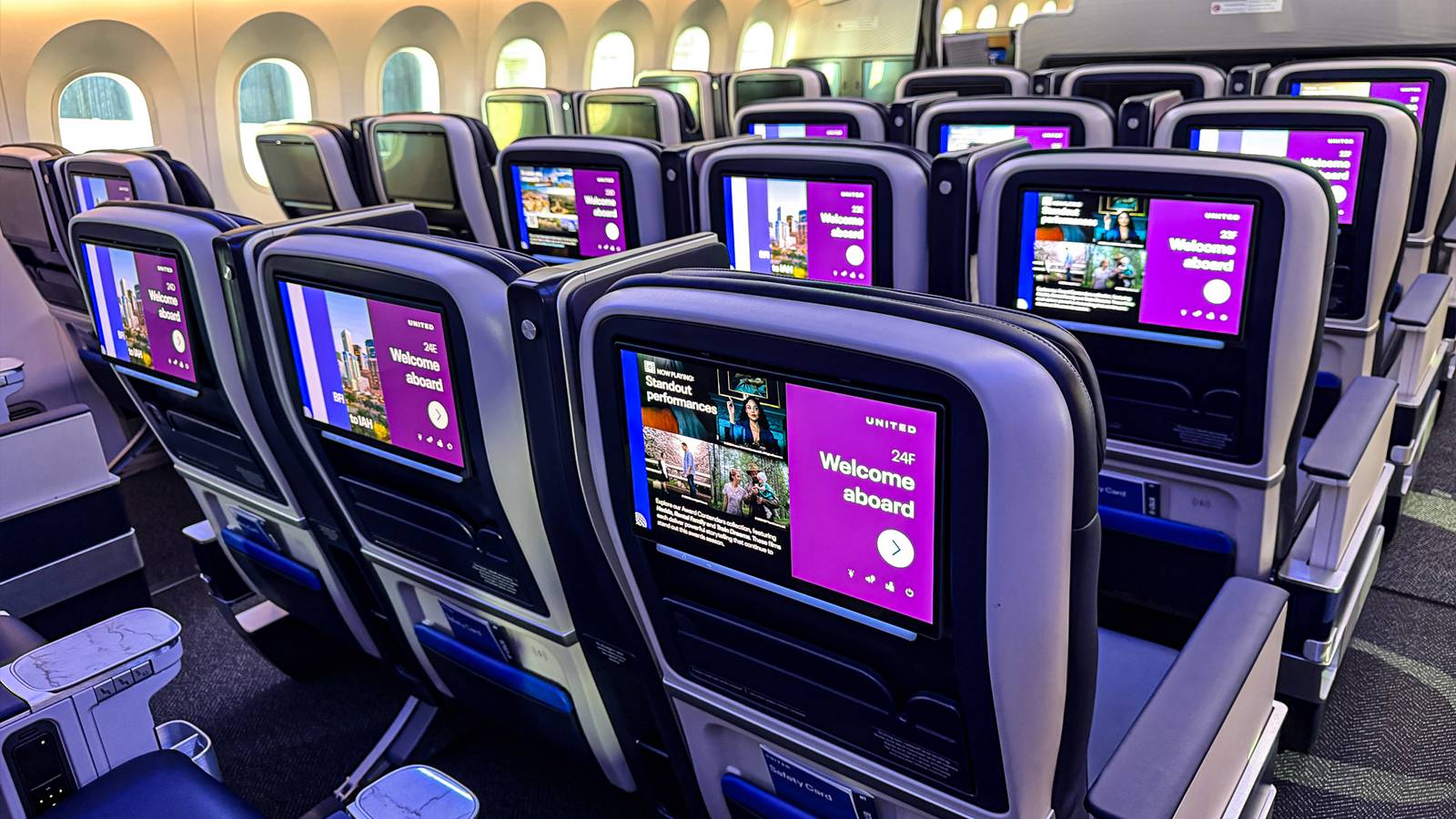
Published Nov 9, 2026, 7:00 PM EST Aaron is an aviation enthusiast and world traveler with a deep interest in aerospace history and technology. He has traveled around the world numerous times, often incorporating visits to aviation museums and historic aircraft collections into his journeys. A native of New Zealand, he is an expert in aviation and maintains a broad interest in a variety of other subjects. Ultimately, what is better value for money or 'worth it' is a matter of personal opinion and experience. No article can definitively inform readers that it's better to book one class of airfare over another. Travelers have dramatically different means, expectations, and need for sleep and rest. Some will view flying as a core part of their vacation and travel experience that has an enormous impact on their overall trip; others will view it as little more than a subway ride during which they will zone out and wait until it's over. That said, there are some reasons why it may be more prudent to purchase a premium economy fare over a business class fare. It can also be noted that airlines deliberately construct premium economy to avoid this choice. The choice airlines seek to impose is encouraging economy passengers to upgrade to premium economy. Premium economy is set up to avoid passengers downgrading from business. Here are some reasons why premium economy may be a better choice for some passengers. The Price Difference Between Premium & Business Business varies in cost from 100% to 350%+ Credit: Jean-Marc Pierard l Shutterstock The most obvious factor in choosing premium economy over business is that it is much more affordable, and the price gap can be huge. Realistically, this is the only factor stopping the vast majority of passengers from flying in higher-class cabins. As a general rule of thumb, premium economy costs around 50–120% more than economy, while business costs around 100–200% of that and 2.5-4 times that of economy. This is a very general rule of thumb, and there are massive variations throughout the industry. The price difference varies by airline, region, route, timing, demand, whether the airfare is one-way or return, and many other factors. Sometimes these factors can significantly narrow the price gap between premium and business, and at other times they open the gap massively. The jump from premium to business can be two to three and a half times. During the jet age, flying carried considerable prestige and was something wealthier people did. Low-income people struggled to afford to fly, and when they did, it was a big deal for them. Today, flying has lost much of its prestige as a status symbol, with travelers focusing more on the destination than the class. The trend in recent years has been towards premium economy, which is seen as 'good enough' for most passengers, including wealthier passengers. But this is an assessment that often changes with age. Older travelers can be set back days or even half their holiday if they miss a night's sleep. For them, fully reclining business seats can be the difference between a good holiday and not. For younger passengers, premium is often just fine. Daytime Flights Make Business Less Necessary Less than 8-hour flights are doable Credit: Steve Worner l Shutterstock As stated above, one of the main practical benefits of business class is the opportunity to get some sleep on a flat bed during overnight and longer-haul flights. This is generally more important for elderly passengers than younger passengers. It follows that some of the appeal of business class falls away for daytime and shorter flights. On a daytime flight, passengers do not need to worry about losing a night's sleep and so spending the next few days recovering. The 'eight-hour rule' holds that on daytime flights shorter than eight hours, premium economy can offer enough comfort to rest without paying several times more for business class. A passenger flying a daytime three-hour flight on Air New Zealand's widebody 787 fleet to Australia would typically not need business class to arrive feeling fresh. Air New Zealand's premium economy is well suited to these routes, without the need to upgrade. Yet another consideration is the direction of travel. Generally, the eastbound flight is more important to sleep on, particularly when traveling between Asia and Europe or North America and Europe. This is due to jet lag and the impact of travel on the circadian rhythm. As a rule, it's better to put more effort into sleeping on a flight bound from London to Singapore than from Singapore to London. Premium Is A Backdoor To Business 20-40% can be saved by upgrading from premium economy Credit: Photofex_AUT l Shutterstock One of the best arguments for purchasing premium economy for those who are willing to spend extra is that it can be a cheaper way to fly business class. This is a great way to get a discount on business class. Purchase an upgradable premium economy fare and then wait for promotions and special offers to upgrade to business. Some airlines allow passengers to place bids for upgrading to business. Often, the original premium fare plus the subsequent upgrade bid are considerably lower than purchasing the business class fare outright. As a benchmark, passengers often save 20–40% of the business fare, although the variance is large; sometimes there are no savings at all. Depending on the airline and passengers' loyalty status, upgrades can be paid in cash or in loyalty miles. This is a strategy mostly relevant to those who are willing to fly premium but will take the opportunity to upgrade given a sweet deal. It is not necessarily a good option for those committed to flying business. There is no guarantee offers will be forthcoming or that the airline will open a bidding window. Upgrading to business is only an option if there are empty seats that the airline wants to sell. If the airline's algorithm finds that there are empty business class seats and that there will not be enough new bookings before the flight to sell them, then the system may seek to sell them by offering upgrades to already booked passengers. If the algorithm estimates that the business cabin will fully book out with full-fare paying passengers, then no offers are likely to materialize. Put another way, booking premium to upgrade to business is a risk. The Quality Product Gap Can Narrow Business recliners are like premium economy Credit: Torben Knauer l Shutterstock On some routes, airlines, and configurations, the quality gap can noticeably narrow. This is especially true when the business seat is a recliner instead of a flat bed. These are often found on domestic and short-haul international routes. One example is Qantas's domestically-configured A321XLR on its Brisbane to Manila route. These have 20 recliner seats with no seatback screens. One of the big attractions of business class is a flat bed for some shut-eye; when the seat is instead of a recliner, it is less appealing. There are also routes where airlines offer exceptional premium economy options. Examples include Japan Airlines and EVA Air, both of which offer 42-inch (107 cm) seat pitch and 19-inch (48 cm) wide seats. These are found on specific aircraft, so it is always important to check the route, which aircraft it is, and what its configuration is. Japan Airlines also undercuts the appeal of business by offering Sakura Lounge access on eligible international premium economy itineraries (more below). Qantas Domestic Business Class Vs. JAL Premium Economy Qantas Airbus A321XLR Business Class JAL Boeing 777-300ER Premium Economy Seat type Leather recliner Fixed-shell recliner Seat pitch 37 inches (94 cm) 42 inches (107 cm) Advertised width 25 inches (63.5 cm) 19 inches (48 cm) Recline 5 inches (12.7 cm) 7 inches (18 cm) Comparing these two airlines, Qantas' Airbus A321XLR domestic business class recliner is much closer to a long-haul premium economy seat than it is to a conventional international business class seat, even though it is used on international trunk routes. In some respects, it can be argued that JAL's 777-300ER premium economy seat has the advantage. It offers a greater seat pitch, deeper recline, and a personal entertainment screen. The Qantas seats are wider and offer wireless charging. Privacy is roughly comparable, and neither is particularly good for sleeping. This doesn't mean that Qantas' business class offerings are bad; they aren't. Skytrax currently ranks Qantas' business class as the 14th best in the world (JAL 9th). But a medium-to-long-haul international flight doesn't mean the aircraft assigned is configured with those high-quality business class products. Some Airlines Offer Lounges With Premium Economy At least six airlines have some lounge access Credit: Yuan Mulyadi l Shutterstock Another factor that may tip the balance in or out of the favor of premium economy is lounge access. After all, benefits of higher classes are not restricted to the airplane; they are also experienced at the airport. Complimentary lounge access with a premium economy ticket is rare, but it does happen. Two of the most notable exceptions are Japan Airlines (again) and its rival, ANA. South America's LATAM also offers lounge access on international premium economy itineraries. LATAM states, "When traveling in the Premium Economy cabin, on international flights only, you will have access to the LATAM lounges located at Santiago, Bogotá, Guarulhos, Ezeiza, and Miami airports." SAS offers it with select premium flights within Scandinavia. Note that access, even in these cases, may depend on the sub-class of premium economy ticket purchased. Japan Airlines allows Sakura Lounge access with qualifying premium economy bookings, but passengers cannot bring along a complimentary guest, and it is not necessarily available on partner-operated codeshares. There are a few other airlines that may have some lounge access, such as Air Canada Rouge and Air Astana. There may be others, but it is uncommon. Always check the terms and conditions of the lounge access in advance, as it may not be available on some routes.
5 Reasons Premium Economy Can Beat Business Class On Value
Full Article
Original Source
Read the full article at Simpleflying →KhanList aggregates and links to publicly available news content. We do not host full articles from third-party sources. Always verify important information with original sources.