
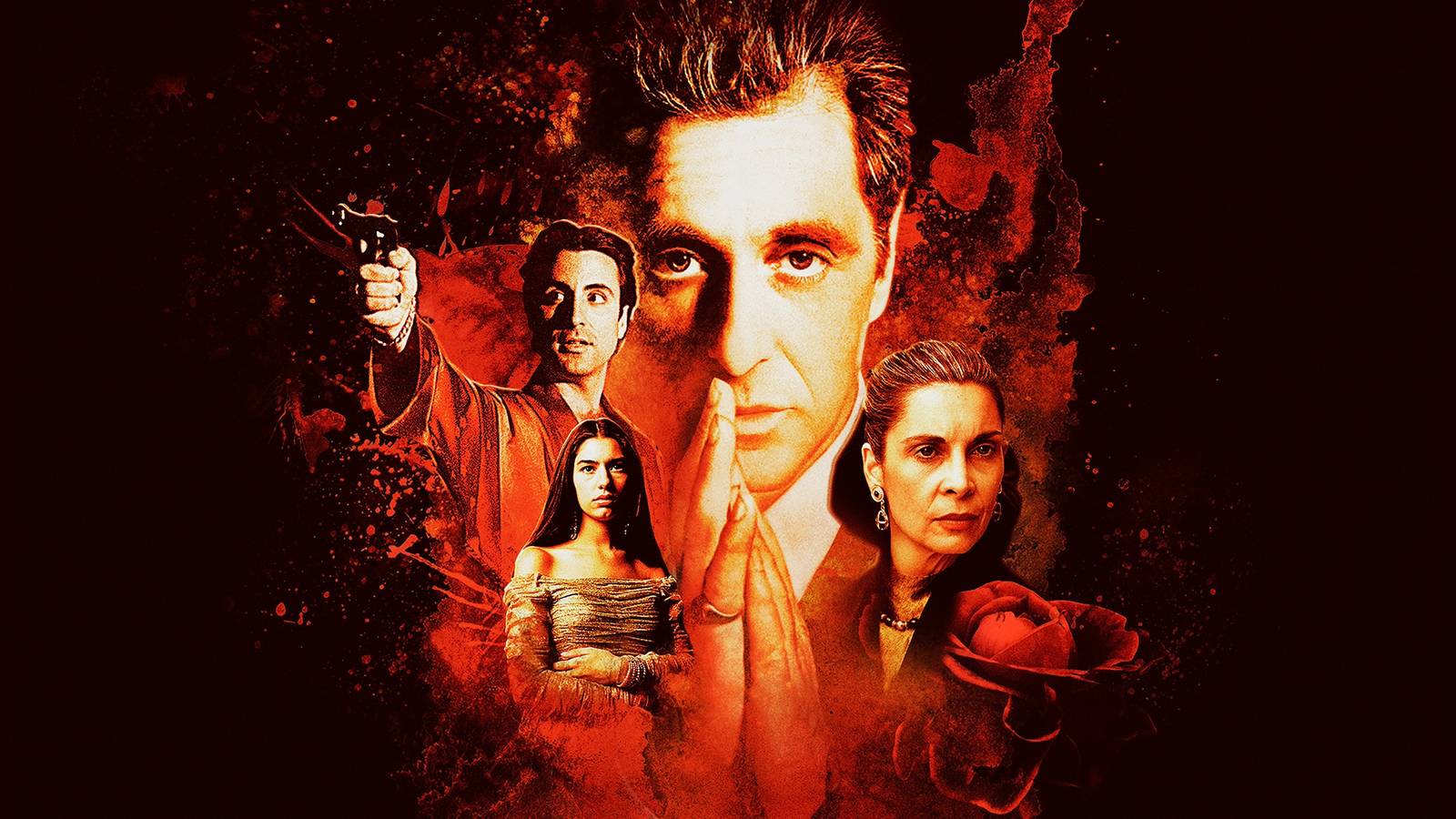
Published Aug 31, 2026, 5:42 PM EDT Liam Gaughan is a film and TV writer at Collider. He has been writing film reviews and news coverage for ten years. Between relentlessly adding new titles to his watchlist and attending as many screenings as he can, Liam is always watching new movies and television shows. In addition to reviewing, writing, and commentating on both new and old releases, Liam has interviewed talent such as Mark Wahlberg, Jesse Plemons, Sam Mendes, Billy Eichner, Dylan O'Brien, Luke Wilson, and B.J. Novak. Liam aims to get his spec scripts produced and currently writes short films and stage plays. He lives in Allentown, PA. Trilogies are a highly coveted form of storytelling that have captured the interest of Hollywood for decades. While the Star Wars original trilogy is what is often thought of as the launch of the trend, it tracks back even further to Sanjitay Ray’s “Apu Trilogy” and Sergio Leone’s Spaghetti Western “The Man With No Name Trilogy.” A great film trilogy is defined by having three installments that are of relatively equal quality, which is surprisingly rare. The Lord of the Rings trilogy is perhaps the best example because all three films are masterpieces, and there is a case to be made that any of them is the best. There’s also instances in which there is a clear demarcation line of quality, even if the films are all at least “good.” An example of this is Back to the Future; the first film is the only one that could be reasonably listed among the greatest of all-time, but both sequels are still strong in their own right. It has been surprisingly rare to find solid examples of trilogies because of how many of them have been expanded to more than three entries, including Toy Story, The Matrix, Bourne, Mad Max, Indiana Jones, and Jurassic Park. There are nonetheless trilogies that managed to bounce back after a dip in quality, such as Iron Man; although Iron Man 2 was a disappointment, Iron Man 3 was closer in quality to the first film. However, there is nothing more disappointing than a series that already has two entries, yet ends in disappointment. 5 The X-Men Trilogy: ‘X-Men: The Last Stand’ (2006) Image via 20th Century Studios X-Men: The Last Stand is a complete mess that became the first time the franchise bungled the “Dark Phoenix” storyline, and concluded what was otherwise a great comic book franchise on a confusing note. Part of this was due to the change in creative direction; although Bryan Singer had helmed the first two films in the series, he exited the third installment to make Superman Returns for Warner Bros. and DC, leading 20th Century Fox to hire Brett Ratner instead. It was evident that Ratner had no reverence for the source material or interest in worldbuilding, as there are multiple out-of-character moments that don’t congeal with the continuity of the first two films. X-Men: The Last Stand wasted the potential of great comics and made disastrous decisions in killing off Cyclops (James Marsden), Jean Grey (Famke Janssen), and Professor X (Patrick Stewart), causing so much harm to the franchise that X-Men: Days of Future Past would specifically be aimed at rewriting it. 4 The Godfather Trilogy ‘The Godfather: Part III’ (1990) Image via Paramount Pictures The Godfather: Part III is perhaps the biggest letdown of all-time in terms of the gap of quality between expectations and reality, even though it is not a “terrible” film. It’s not the worst Francis Ford Coppola film or the most over-the-top Al Pacino performance, but anything less than a masterpiece would have been underwhelming. The Godfather and The Godfather: Part II aren’t just classics, but some of the most influential and celebrated films of all-time. They tell a complete story about how Michael Corleone follows down his father’s footsteps to sacrifice the American dream, and there was no source material that pointed to where a third chapter in the franchise should go. It ultimately felt like a cash grab, made at a time in which Coppola was recovering from a few notable box office bombs that ensured that he needed a hit. It’s impossible to talk about The Godfather: Part III without mentioning Sofia Coppola, who was controversially cast in the film after Winona Ryder dropped out. While there were problems with the character of Michael’s daughter to begin with, Coppola gives a terrible performance in the film that makes it hard to engage with. The deeper problem remains that The Godfather: Part III attempts to give a redemptive arc to Michael that is simply not earned, and feels like a contradiction to one of the most famous anti-heroes of all-time. Although Coppola’s director’s cut, The Godfather Coda: The Death of Michael Corleone, is a significant improvement over the version that was released in theaters, it fails to address this fundamental issue. 3 The Spider-Man Trilogy: ‘Spider-Man 3’ (2007) Imave via Sony Spider-Man 3 is an unforced error that was caused purely by the greed and arrogance of Sony Pictures, who forced Sam Raimi to add extra components to the story that he was not interested in. It’s not a “terrible” film, and even has some strong moments, but it's frustrating how poorly it follows up on the perfect setup at the end of Spider-Man 2. There isn’t a lot in Spider-Man 3 that is completely out of place, but the film has way too much going on at once. The natural arc of Harry Osborn (James Franco) becoming the new Green Goblin is botched as the result of a strange amnesia storyline, and the love triangle he has with Mary Jane Watson (Kirsten Dunst) and Peter (Tobey Maguire) is at its most obnoxious. There’s also a completely different love triangle involving Peter, Gwen Stacy (Bryce Dallas Howard), and Eddie Brock (Topher Grace) that is even more cringe-inducing. Three villains was far too much for one film, a lesson that would be learned again with The Amazing Spider-Man 2, and it’s unfortunate that Thomas Hayden Church was not given more to do as the Sandman, given that his performance is quite moving. Spider-Man 3 was the rare instance in which a creative failure was so significant that it forced the franchise to reboot, even though it had made money. 2 The Star Wars Sequel Trilogy: ‘Star Wars: The Rise of Skywalker’ (2019) Image via Lucasfilm Star Wars: The Rise of Skywalker is a creatively inept and cowardly disaster that sent the franchise on a downward spiral that it has not recovered from. Beyond the fact that it was a disappointing ending to the Star Wars sequel trilogy, The Rise of Skywalker failed to bring a satisfying ending to the Skywalker saga of nine films. There’s something off in the pacing that is immediately felt, given that the entire story is centered on a treasure hunt that doesn’t really matter and leads to nowhere. Perhaps the most embarrassing decision in the film, and perhaps the entire franchise, was to resurrect Emperor Palpatine (Ian McDiarmid) in a retcon so ridiculous that it has attracted the ire of the Internet ever since. It was obvious that Lucasfilm had caved to toxic fans by the diminishment of Rose Tico (Kelly Marie Tran), the new lineage for Rey (Daisy Ridley), and the uneven handling of Kylo Ren (Adam Driver). The film builds to a conclusion that involves the entire galaxy gathering together that never makes emotional sense, and the action scenes are too quick and uninvolving to hold any impact. It’s hard to think of another film that felt so deliberately mean-spirited, and it’s unclear who is entirely to blame. In trying to appease the worst people by adding in nostalgia that no one asked for, The Rise of Skywalker ended up being for no one. 1 The Mummy Trilogy: ‘The Mummy: Tomb of the Dragon Emperor’ (2008) Image via Universal Pictures The Mummy: Tomb of the Dragon Emperor is a film that came far too late, as it was released seven years after The Mummy Returns, and wasn’t able to bring back director Stephen Sommers or Rachel Weisz, who was replaced by Maria Bello. Although The Mummy Returns had already introduced one of the most obnoxious child characters in cinematic history, The Mummy: Tomb of the Dragon Emperor featured an aged-up version played by Luke Ford. It is somewhat ironic that the original The Mummy from 1999 was praised for essentially being a new spin on Indiana Jones, and that The Mummy: Tomb of the Dragon Emperor was released the same year as Indiana Jones and the Kingdom of the Crystal Skull; both films have the problem of trying to introduce the son of the main character, obviously intended to take over the franchise, but suffering from an actor who just isn’t compelling. The Mummy: Tomb of the Dragon Emperor doesn’t show any of the same interest in history or mythology as its predecessors did, and wastes the talents of Brendan Fraser, who against all odds still manages to give a very charismatic performance as Rick O’Connell. The shift from Ancient Egypt to China felt like a desperate move on the part of Universal Pictures to appease the international box office, and it doesn’t help that the film is packed with Asian stereotypes. It’s easy to look back and mock CGI that hasn’t aged well, but the lack of any practical elements in The Mummy: Tomb of the Dragon Emperor was notable, especially when compared to how well the first film holds up. Although The Mummy: Tomb of the Dragon Emperor has been better-regarded overtime because of how terrible the 2017 remake of The Mummy that launched the failed “Dark Universe” was, there is no scenario in which it can be viewed as anything but a massive letdown.
5 Movie Trilogies That Ended Poorly
Full Article
Original Source
Read the full article at Collider →KhanList aggregates and links to publicly available news content. We do not host full articles from third-party sources. Always verify important information with original sources.