
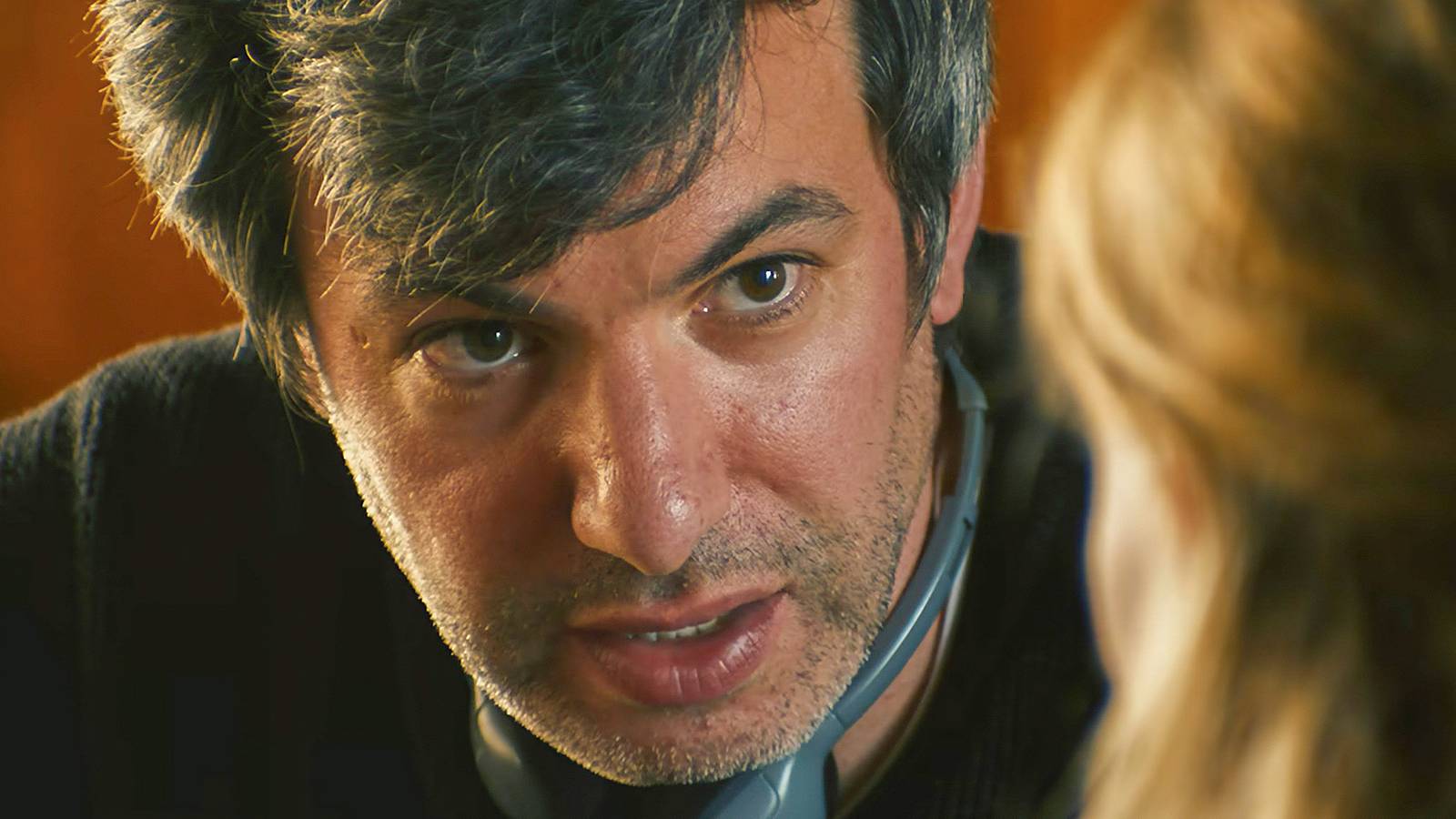
Image via A24 /Courtesy Everett Collection Published Oct 31, 2026, 4:11 PM EDT Beatriz (Bea) Valero de Urquia is a Books & Literature author at Collider, where she focuses on Lists surrounding recent bestsellers, classical novels, and everything in between. She is a historian by training and a bilingual reader, moving between English and Spanish literature. Beatriz began her career as a technology writer at a startup in the UK. Almost a decade later, journalism has taken her to five cities across three continents and into business reporting, cultural criticism, and live TV commentary. She joined Collider in 2026. Beatriz has a passion for travelling and loves keeping an eye on the books headed to the screen. One of her favorite pastimes is critiquing the historical accuracy of period movies. She also once volunteered for the Charles Dickens Museum. Beatriz also has a core belief that a book is always better than the movie, but she has been happy to have been proven wrong in a couple of occasions. When she isn’t reading, Beatriz is watching musicals, stage managing Shakespeare plays with a local theater group or doing historical research. She enjoys tracing family trees for her history and genealogy TikTok, creating databases for historical analysis and sifting through 17th-century stories for the novel she is currently in the process of writing. Sign in to your Collider account The whole world has become captivated by You Can See Everything, the A24 meta-documentary film directed by Nathan Fielder and Lance Oppenheim. The film follows Elizabeth Holmes, the founder of now-defunct biotech startup Theranos, and her partner, Billy Evans, during the weeks prior to the start of Holmes’ prison sentence. Holmes was convicted of wire fraud and conspiracy after lying about the capabilities of Theranos' blood-testing devices. But her story was not uncovered by Fielder and Oppenheim. Holmes was first exposed by a reporter working for The Wall Street Journal and a group of whistleblowers who dared to air her lies. Before it became the Hulu limited series The Dropout and the HBO documentary The Inventor: Out for Blood in Silicon Valley, the fall of Theranos was told in book form. Some readers might stay away from non-fiction for fear that it’d be dry or boring. Elizabeth Holmes’ story is anything but. And just like the writer who exposed her, other investigative journalists have also written books about real-life cases, either to understand a murderer, to catch a criminal, or to solve a decades-long mystery. These are stories that, like You Can See Everything, toe the line that separates reporter and subject. They uncover truths people have fought for years to keep hidden. From Kansas to Belfast and Silicon Valley, the books on this list transport the reader like a novel you cannot put down. In one case, the writer accidentally solved a murder case during the process of writing the book. 5 'Bad Blood: Secrets and Lies in a Silicon Valley Startup' (2018) Image via Alfred A. Knopf Reading Bad Blood by John Carreyrou should almost be a requirement for anyone going to watch You Can See Everything in the cinema. If Fielder and Oppenheim’s documentary aims to look at the woman behind the case, Carreyrou tells the story of how Elizabeth Holmes’ web of lies came crashing down, and the many people who suffered in the process. It was 2015 when John Carreyrou, then working for The Wall Street Journal, first received a tip that the ground-breaking blood-testing technology Theranos claimed to have developed did not work. The book takes the reader through Holmes’ upbringing, the creation of Theranos, and the stories of investors, employers and customers hurt by the company’s lies. The book widens the list of characters present in the documentary to include the stories of people like Britney Gould, who was diagnosed with a false miscarriage; Erin Tompkins, who received a false positive HIV test; or Tyler Shultz and Erika Cheung, who risked their careers to expose the fake technology. In the last section of the book, John Carreyrou inserts himself into the narrative, describing his long journey to uncovering the truth behind the Theranos technology, the months of intimidation and threats from Holmes’ team, and how his reporting led to the fall of a company with a $9 billion valuation. The Theranos case also inspired Hulu's series The Dropout, starring Amanda Seyfried as Elizabeth Holmes and Ebon Moss-Bachrach as John Carreyrou. For people more interested in audio formats, Carreyrou’s companion podcast is also an excellent discussion of the case, and a fantastic breakdown of Elizabeth Holmes’ trial, which took place after the publication of the book and concluded with the announcement of her 11-year federal prison sentence. 4 'She Said: Breaking the Sexual Harassment Story That Helped Ignite a Movement' (2019) Image via Universal Pictures How do you convince a person to come out against one of the most powerful people in the world? When the crime is an extremely personal one, fear breeds silence. Add to the mix decades of secrecy, non-disclosure agreements, legal threats, and the shine of Hollywood studios, and you get one of the most closely guarded secrets in the movie industry. She Said is the story of how all of this came apart, and the people who took down Harvey Weinstein. In October 2017, New York Times reporters Jodi Kantor and Megan Twohey published an article that broke the internet. It was the result of their investigation into nearly three decades of sexual misconduct allegations against Hollywood producer Harvey Weinstein. Journalists Kantor and Twohey documented the allegations through interviews with current and former employees, business documents, and legal records. The reporting was awarded the Pulitzer Prize for Public Service, along with Ronan Farrow's work at The New Yorker, and helped ignite the #MeToo movement. In 2022, the story was also adapted into a movie, directed by Maria Schrader and starring Carey Mulligan and Zoe Kazan. The book is not about the crimes committed. Instead, it tells the story of how the truth was uncovered. In She Said, Kantor and Twohey describe the many months of calls and conversations with terrified victims, the search through documents, paper trails, and nondisclosure agreements built to keep them quiet, and the fight against a campaign from Weinstein's camp to kill the story. At the heart of the book is the question of what makes a person decide to tell the truth on the record, how it feels when it comes to light, and the price silence-breakers are often forced to pay. 3 'All the President's Men' (1974) Image via Simon & Schuster Nowadays, everything is a conspiracy, and there are a hundred “-gate” examples. But this was not always the case. All the President's Men, written by Carl Bernstein and Bob Woodward in 1974, goes behind the scenes of the investigation that led to the greatest scandal in modern politics: Watergate. All the President's Men provides a look behind the curtain of one of the greatest journalistic investigations of the 20th century. Told as a political thriller, the non-fiction book begins with the seemingly minor 1972 break-in at the Democratic National Committee headquarters in the Watergate complex in Washington, D.C. Two young reporters are chosen by The Washington Post to cover the petty crime. The story then escalates, chapter by chapter, as Bernstein and Woodward follow the money to realize the burglars are connected to some of the highest-ranking officials in Richard Nixon’s re-election campaign. It reads like a procedural thriller, and it was shortly after turned into the 1976 movie of the same name, directed by Alan J. Pakula and with Robert Redford and Dustin Hoffman in the lead roles. Described by TIME as “the work that brought down a presidency”, All the President’s Men was published only two months before President Nixon’s resignation. The book by Bernstein and Woodward tells a masterful story of how a massive conspiracy of political espionage was uncovered against all odds. In what is perhaps the most gripping part of the story, the reporters are guided anonymously by a high-ranking secret informant known as Deep Throat. It was not until 2005 that the identity of this informant was revealed to be FBI associate director Mark Felt. 2 'In Cold Blood' (1966) Image via Columbia Pictures “I thought that Mr. Clutter was a very nice gentleman,” Perry Smith told Truman Capote during an interview. “I thought so right up to the moment that I cut his throat.” What began as a botched robbery — based on a false tip that there were thousands of dollars in a hidden home safe — turned into one of the most brutally senseless crimes of the 20th century. The worst type of crime is one without purpose. Perhaps that is precisely what fascinated Truman Capote when he first learned about the senseless murder of the four members of the Clutter family in their farmhouse in Holcomb, Kansas, in 1959. Accompanied by his childhood friend Harper Lee as his research partner, Capote set out for Kansas to find out more about the crime. He later spoke to its two authors, Richard Hickock and Perry Smith, before they were sentenced to death. The result, first serialized in The New Yorker and later turned into the book In Cold Blood, helped invent a genre: that of the "nonfiction novel”, reshaping the true-crime genre. It also inspired the 2005 movie Capote, which won Philip Seymour Hoffman an Oscar. In Cold Blood is the result of the years Capote spent talking to the two killers, portraying the complex and intense psychological bond that formed between the writer and Perry Smith. The book is a masterful account of empty violence and the people that perpetrate it. Stripped to the facts, the crime is chilling: four lives taken for about fifty dollars, a pair of binoculars and a portable radio set. 1 'Say Nothing: A True Story of Murder and Memory in Northern Ireland' (2018) What is a disappearance in the midst of a conflict with over 3,500 casualties? For the ten children of Jean McConville, it was the moment that changed the course of their lives. Patrick Radden Keefe, a staff writer at The New Yorker, begins Say Nothing with what seems like a simple concept. He uses the story of a woman taken from her Belfast home in 1972, accused of being an informer by members of the IRA, and whose body was found in 2003, as a frame for the larger history of the Troubles. The resulting book becomes much more than an explanation of the almost 30-year-long conflict between Irish Catholics and UK Protestants in Northern Ireland. It is a murder investigation in which Radden Keefe ends up accidentally unmasking the person who he believes fatally shot Jean McConville. The book, adapted by FX as a limited series in 2024, is based on years of research and a series of recorded interviews with former IRA and Loyalist paramilitaries. Interviewees agreed to speak on their experiences under the promise that the testimonies would remain sealed in a time capsule at Boston College until their deaths. That promise has since been broken, as subpoenas led to the release of select tapes for criminal investigations. The book weaves together the lives of both key figures of the Troubles, such as Dolours and Marian Price, Brendan Hughes, or Gerry Adams, with those of its victims, including Jean McConville's children. Their lives reveal a complicated story about the challenges of growing up surrounded by violence, and how to make sense of an imperfect peace. Say Nothing is a masterful book. It is journalism, history, and psychology all combined into one. At its heart, it explores how ordinary young people are drawn into political extremism, the codes of silence that bind members of these groups, and what happens when the cause you have killed — and died for — is gone. Release Date October 16, 2026 Runtime 174 minutes Director Nathan Fielder, Lance Oppenheim Producers Tatiana Bears, Maggie Ambrose, Jack Davis, Nathan Fielder, Lance Oppenheim Cast Nathan Fielder Self / Elizabeth Holmes
5 Investigative Journalism Books To Read if You Love 'You Can See Everything'
Full Article
Original Source
Read the full article at Collider →KhanList aggregates and links to publicly available news content. We do not host full articles from third-party sources. Always verify important information with original sources.