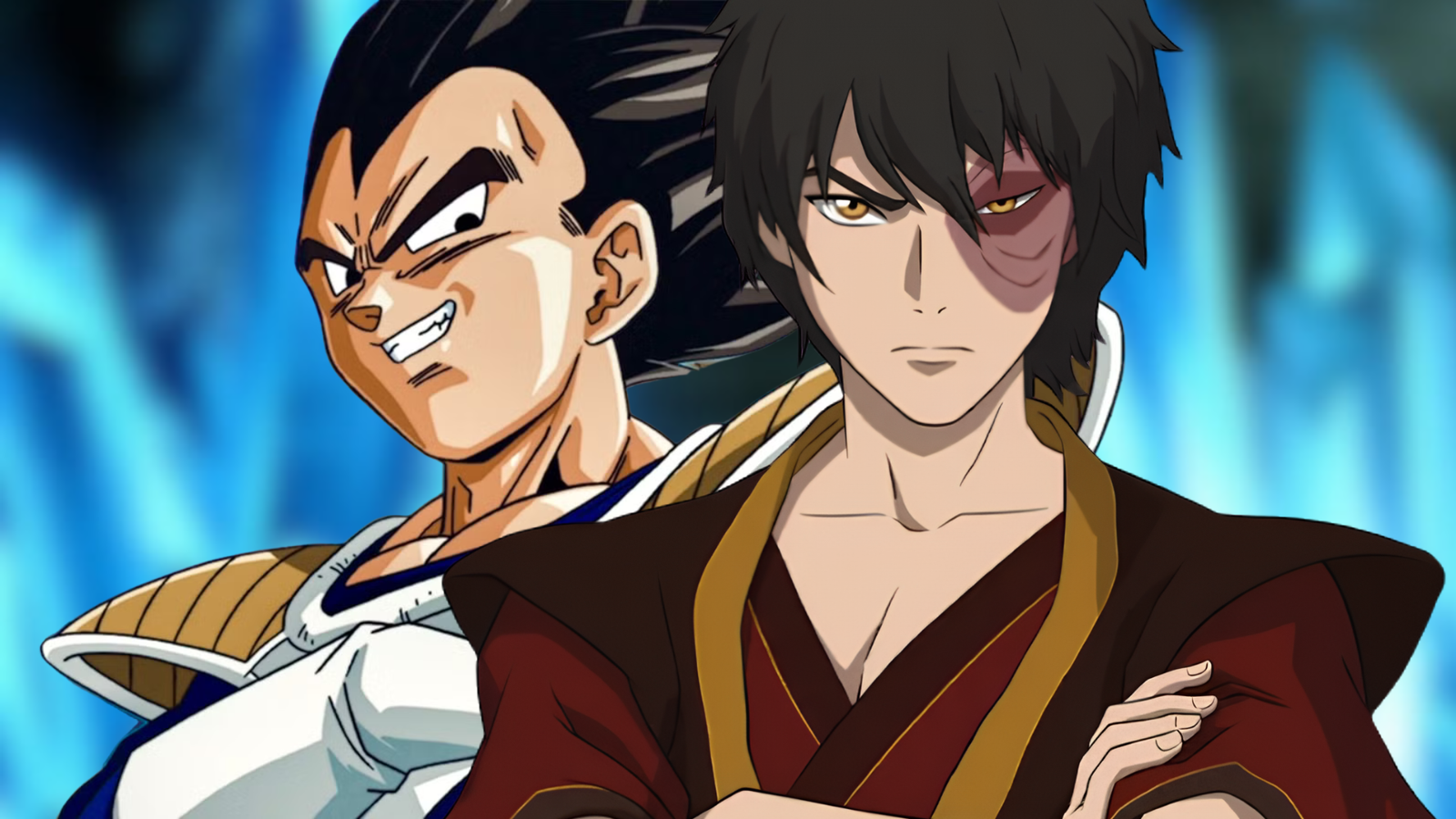
Published Aug 2, 2026, 10:00 PM EDT Casandra Ronning is a staff writer for Screen Rant's anime section. Since mid-2024, she has dedicated herself to expanding her knowledge and experience in the entertainment industry. She is most proud of conducting an exclusive interview with popular voice actor Stephanie Nadolny. One of the best things about animation is its limitless potential to tell stories and share unique characters in ways that live-action can’t always replicate. From imaginative worlds to complex hierarchies, animation tells stories through characters that resonate with audiences just as powerfully, if not more so, than any actor’s performance. Among some of the most unforgettable are those who fight to change and overcome their past mistakes, ultimately proving that redemption is possible. These characters confront the consequences of their own actions head-on, accepting responsibility for the damage they’ve caused while finding ways to atone and build a better future. While every redemption arc is unique, the greatest examples include meaningful growth and lasting personal changes that don’t always lead to instant or universal forgiveness. The greatest redemption arcs are those that are complex and hard-earned, often becoming some of the best journeys told in animation history. Thorfinn (Vinland Saga) Vinland Saga centers around Thorfinn, who experiences an unimaginable tragedy in his early life after witnessing the death of his father, Thors, at the hands of a mercenary leader known as Askeladd. Consumed by his grief and a desire for vengeance, he dedicates his life to killing the man responsible, leading to years spent on the battlefield, turning him into a ruthless warrior. Nearly his entire youth was spent surrounded by violence and consumed by obsessive, single-minded revenge. Unfortunately, that obsession ultimately leaves him with nothing. After Askeladd dies before Thorfinn can exact his revenge, he loses all sense of purpose. His entire life until that point had been driven by that singular pursuit that disappeared in an instant, leaving him with nothing to fight for. Years later, during his enslavement, viewers see a different side of Thorfinn after he’s been forced to face the consequences of his actions and the person he became. Yet, rather than finding another enemy to pin the blame, he gradually embraces his father’s old teachings and resolves to reject violence altogether. Thorfinn’s past actions are never diminished or justified, and his path to peace and redemption is full of hardship that he must overcome. By hitting rock bottom and facing his demons, Thorfinn gains a deeper understanding of himself and the world around him, allowing him to fully embrace a new understanding of strength and peace. Endeavor (My Hero Academia) Endeavor is one of the most polarizing characters in anime, not just in My Hero Academia. While in the series he’s publicly celebrated as Japan’s Number 2 and eventually Number 1 Pro Hero, Enji Todoroki hid massive flaws and cruelty in his personal life. His relentless ambition to surpass All Might came at the expense of his own family as he abused his wife Rei as well as his children, inflicting unthinkable trauma that fractured each member of his family in different ways. While All Might’s retirement eventually grants Endeavor the position he spent decades vying for, he realizes that achieving his lifelong ambition was nothing like he imagined it would be. He acknowledges the effects of his abuse and takes active steps to right his wrongs and become a hero worthy of the number one spot. Even knowing that he can’t erase years of suffering, he makes it clear through his actions that he is committed to accountability and respectful of his family’s boundaries. Later, when Dabi televises his every wrongdoing to the entire nation, Endeavor does not hide from blame or attempt to deflect it in any way. Instead, he openly owns up to everything and further dedicates himself to atonement without the expectation of forgiveness. By actively taking responsibility and respecting his family’s boundaries while continuing to do what he can to do right by them, Endeavor’s redemption arc stands out as one of the most realistic and complex in all of anime, especially given that it shows redemption doesn’t always lead to forgiveness. Catra (She-Ra and the Princesses of Power) In She-Ra and the Princesses of Power, Catra stands out as a character who is shaped by years of abuse and her complex relationship with Adora. Raised together under Shadow Weaver, Catra was constantly compared to Adora and often faced punishments that internalized a sense of worthlessness and drove her to constantly seek out validation, leading to unhealthy relationship dynamics. By the time Adora leaves the Horde, Catra feels a deep sense of abandonment and betrayal that drives her toward increasingly destructive decisions. Catra becomes obsessed with defeating Adora, essentially becoming consumed with the need to not only prove herself but also to regain Adora’s attention. Yet, this drive only leaves her more isolated than she’s ever been. It’s only when she hits rock bottom that she realizes that most of her suffering is a result of her own actions. Rather than continuing to push others away and repeat a cycle of hate, Catra makes the decision to take accountability and sacrifice herself to save others. Most of Catra’s redemption is internal as she unlearns the toxic beliefs that were instilled in her and actively chooses to do right by others in what could have very well been some of her final moments. By accepting responsibility and the reality that she loves Adora, Catra is able to break the cycle she found herself trapped in, allowing her to move forward and fully accept the damage she’s caused as she works to rebuild new relationships. Vegeta (Dragon Ball) When Vegeta was introduced in Dragon Ball Z, he stood out as a menacing, ruthless villain who was willing to go as far as killing his own ally. Vegeta saw Earth as nothing more than another world to take control of and saw the heroes as unworthy, expendable obstacles. However, his defeat at the hands of Goku kicked off a long, gradual evolution for his character that ultimately results in him standing as one of Earth’s greatest defenders. Vegeta’s development through the series is slow and filled with setbacks that challenge his identity. However, as years pass, Vegeta forms new attachments, including his human wife Bulma as well as their children, and grows to find comfort and enjoy his life on Earth. Yet, even then, Vegeta struggles with his pride and long-held belief that strength determines worth and superiority, leading to damaging consequences as he dedicates himself to surpassing Goku. It isn’t until the Buu Saga that Vegeta finally lets go of this obsession, allowing him to leave behind the version of himself that he long since outgrew. That said, he never loses sight of himself or abandons the traits that make him who he is. Instead, he learns to channel those traits toward protecting others and opens himself up to a life beyond anger, resentment, and a need to prove himself. Vegeta’s redemption is gradual, and he had to face his past demons to become the man he grew into, effectively making his journey one of the greatest arcs in anime. Zuko (Avatar: The Last Airbender) At the beginning of Avatar: The Last Airbender, Zuko is a major enemy, driven by a desperate desire to capture the Avatar and reclaim his honor. Banished from the Fire Nation and scarred by his father, Fire Lord Ozai, he genuinely believed that capturing Aang was the only way to restore his rightful place. However, beneath all his anger and aggression, Zuko is still a teenager seeking approval and validation from a family that hurt him and offered little in exchange. His redemption is one of animation’s greatest because it shows how difficult, complex, and imperfect change can be. Throughout his exile, Zuko is forced to confront the reality behind the beliefs he was raised with and question whether he is truly on the right path. As he’s guided by his Uncle Iroh and bears witness to the suffering caused by his nation, he slowly begins to see the cracks in his own ideology. What makes his redemption stand out is that Zuko makes wrong choices, even choosing to side with Azula and his father before rejecting their ideals and resolving to join Team Avatar. His redemption is one of animation’s greatest because it shows how difficult, complex, and imperfect change can be. His journey is filled with mistakes and setbacks, but in the end, he still musters up the courage to openly admit that he’s lost his way and desires to change and earn trust. Zuko proves that redemption is hardly ever a linear process and often comes with painful lessons and realizations, but also that change is possible for anyone who is willing to put in the effort. 9/10
5 Greatest Redemption Arcs In Animation History
Full Article
Original Source
Read the full article at Screenrant →KhanList aggregates and links to publicly available news content. We do not host full articles from third-party sources. Always verify important information with original sources.