
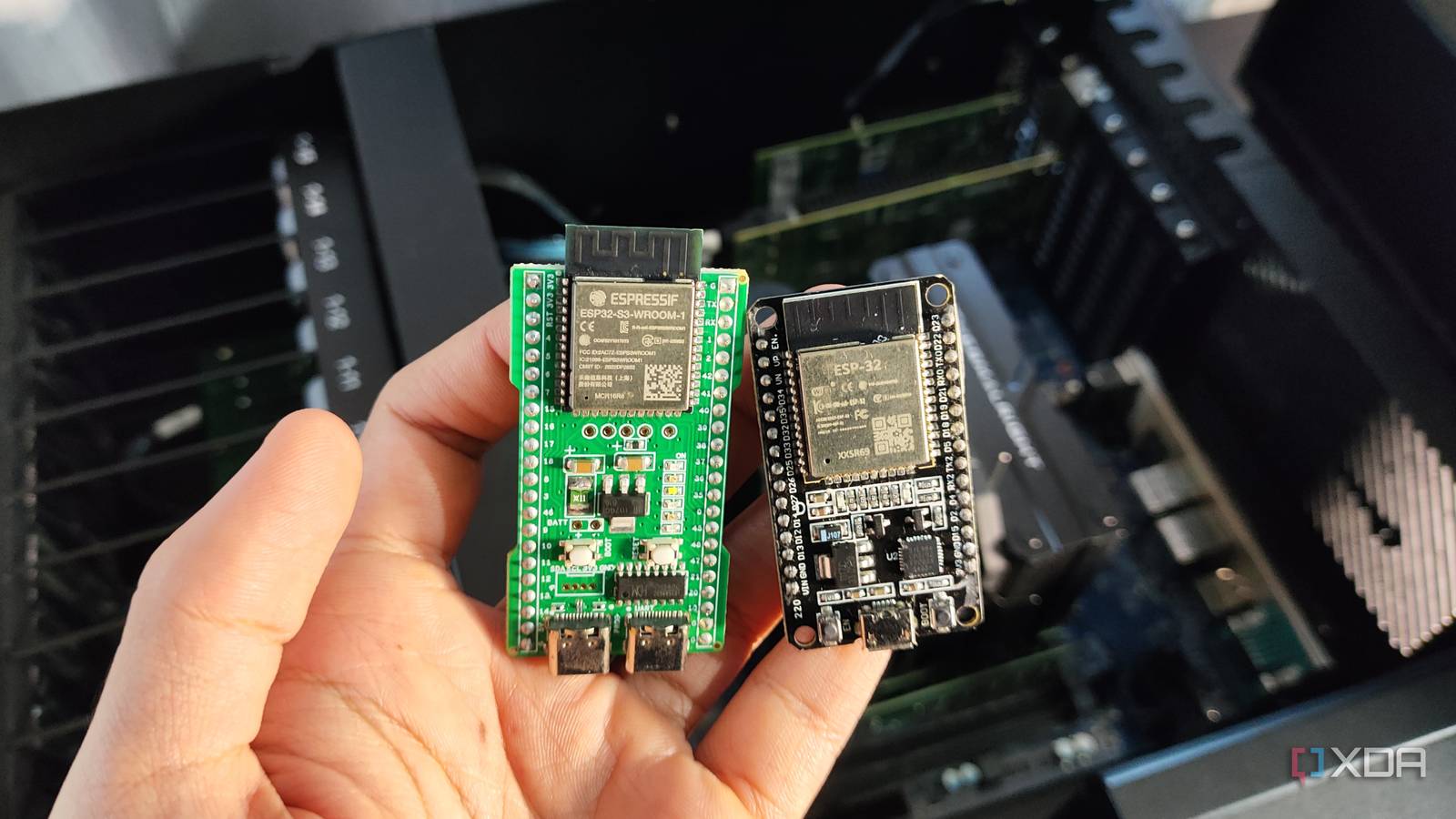
Published Oct 30, 2026, 3:31 PM EDT Ayush Pande is a PC hardware and gaming writer. When he's not working on a new article, you can find him with his head stuck inside a PC or tinkering with a server operating system. Besides computing, his interests include spending hours in long RPGs, yelling at his friends in co-op games, and practicing guitar. I’ve been using ESP32 boards for my tinkering (mis)adventures for a while now, and their versatile nature and cheap price tags are by far my favorite aspects of these pint-sized boards. In fact, the ESP32 modules and their sensor units are so cost-effective that I could build several projects for well under $100, which is about the cost of a premium pre-built smart home device. So, if you’re looking for cool projects that can replace subscription-heavy (and privacy-intrusive) smart gadgets, here’s a list of cheap IoT products you can put together with just some ESP32 units, sensors, and a little bit of messing around with ESPHome and Arduino IDE. Room occupancy sensor Combine it with motion detection, and you can get rid of ghost inputs If you’re as deep into the automation rabbit hole as I am, a room occupancy sensor can serve as the trigger condition for different lighting, HVAC systems, and speakers in your smart home. However, most of the off-the-shelf options tend to phone back to the company’s cloud just to detect presence, and you’d have to shell out quite a lot of bucks if you want premium sensors that aren’t prone to false positives. Switching an ESP32 and arming it with an mmWave sensor can bring full-on local control for your room occupancy setup. ESPHome makes the entire calibration process significantly easier, and you can even toss cheap motion sensors into your mmWave pipeline to ensure your automations only get triggered when multiple conditions are met – thereby getting rid of false positives. Weather station Just don’t go with the cheaper temperature sensors If you’re a Home Assistant user, there are a couple of ways to get temperature readings besides relying on aftermarket solutions. Weather APIs, for example, can let you import temperature, humidity, and rainfall metrics into your smart home, but you might have to pay regular subscription fees to access these statistics. And for folks who live in the middle of nowhere like I do, you might find the metrics pulled by weather APIs rather inaccurate, which can be a deal-breaker for HVAC automations. An ESP32 equipped with the right environmental sensor can be a solid replacement for weather APIs and paid weather stations. Personally, I tend to gravitate towards the BME280 sensor, as it’s fairly accurate and can handle multiple requests per second, but it does cost about the same as an ESP32 board. But if you’re looking for a sub-$10 setup, the DHT22 is a decent alternative, too. That said, the DHT11 is something I’d avoid when automating smart home setups, as its inaccurate metrics can mess up trigger-action rules. Local voice assistant Pair it with locally-hosted models, and you’ve got a completely private smart home assistant Alexa, Google Home, and other smart voice assistants can make managing multiple IoT products a cakewalk, but between their privacy-intrusive design and compatibility issues with certain smart gizmos, it’s hard to justify spending a premium on them. Fortunately, you can rely on local text-to-speech, chatbots, and speech-to-text models to serve as the brain of your custom assistant on HASS, but there’s still the problem of wake word detection, voice inputs, and the audio output. An ESP32 can tackle all these issues, provided you arm it with the right sensors. Unless you opt for smart speaker variants of certain ESP32 boards, an INMP441 microphone can handle the audio inputs, with the ESP32-S3 providing enough processing capabilities to tackle wake word detection. Then, you can connect a MAX98357A module to serve as the speaker for the responses from your local LLMs. I’ll admit that it’s a bit of a hassle to put together, especially with Home Assistant adding the voice satellite functionality to its smartphone companion app. However, the DIY ESP32 route gives you the ability to use custom wake words, so you can trigger your voice assistant pipeline using personalized wakeup phrases. Smart home control panel You’ll need a somewhat capable ESP32 model for this one Smart home panels featuring detailed metrics and toggles for your IoT gadgets can be a useful addition to your living space, but they can cost a pretty penny, especially when you want something that supports different smart home frameworks. But on the DIY front, the ESP32 and Home Assistant combo can save you quite a lot of money, all while offering limitless customization via cards and custom dashboards. That said, a simple ESP32 lacks the sheer firepower or connectivity options to handle a large touchscreen interface. Instead, I’d recommend grabbing something like the ESP32-P4 display board, as its faster processor and built-in PSRAM can handle graphically-rich dashboards. Depending on your specific model, you can also have it built into a neat capacitive touchscreen, which makes this smart home panel a lot easier to build than a full-on DIY setup requiring additional breakout boards and IO shields for the display module. Makeshift security camera One that respects your privacy Cloud-based security cameras can be a privacy nightmare, especially with most manufacturers tacking “AI features” onto their surveillance products. Combine that with their upfront costs, and a DIY surveillance setup is both cheaper and less privacy-intrusive than relying on dedicated security cameras. Now, let me make this absolutely clear – an ESP32-CAM module isn’t very high resolution or fast refresh rates, and it’s always a better idea to go for local-only cameras and pair them with an NVR utility. But for folks looking for doorbell cameras or even cheap surveillance setups for often-forgotten areas such as attics and pantries, an ESP32-CAM module can easily pull its own weight. Name a better duo than ESP32 and smart home projects If you’re still not satisfied by these ideas, I’ve got a couple more ways you can turn your tinkering companion into reliable IoT devices. With Home Assistant recently adding IR support, you can equip your ESP32 with a KY-005 infrared transmitter and a KY-022 IR receiver to build a DIY controller for your TVs, soundbars, and other dumb devices. Likewise, ESP32-powered water leak sensors are a godsend for kitchen sinks, drip trays, and basements, as they can detect continuous dripping and leakage before they snowball into expensive problems. And if you’re fond of gardening, combining a soil sensor with an ESP32 and Home Assistant can help you automate your sprinkler system and ensure your green companions get enough water to thrive. Brand AITRIP Connectivity Features UART, USB
5 ESP32 projects that replace smart home gadgets you'd otherwise pay a subscription for
Full Article
Original Source
Read the full article at Xda-developers →KhanList aggregates and links to publicly available news content. We do not host full articles from third-party sources. Always verify important information with original sources.