
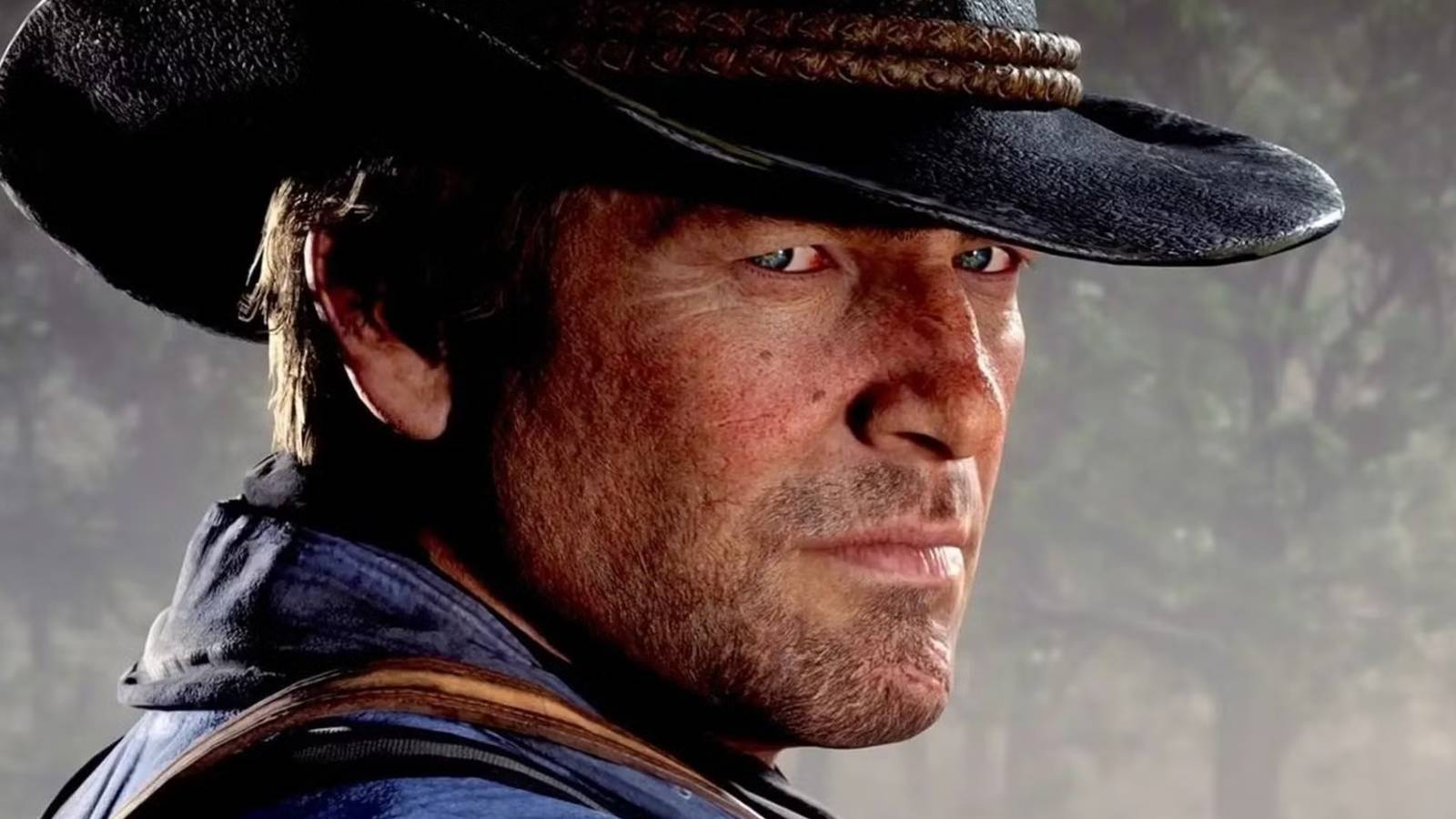
Rockstar Games Published Sep 25, 2026, 3:01 PM EDT Ben Brosofsky has been writing for Screen Rant since 2022 and editing since 2024. He graduated from Vanderbilt University with a Bachelor's in Cinema & Media Arts. Writing serves as a much-needed distraction from tackling a backlog of Steam games that will never be surmounted. Sign in to your ScreenRant account From the simple joys of Super Mario to the grand journeys of Final Fantasy, there are plenty of fantastic video game franchises out there, but very few are entirely consistent. Once any series runs for long enough, it's likely that at least one installment will fail to meet the quality standard set by the other titles. Sometimes this is just a blip, but it's not uncommon for a once-great saga to never return to its former heights. What's truly special is when a series keeps managing to deliver hit after hit without missing a step. This rare achievement is one that's worth celebrating, and these five video game franchises have all managed to live up to those intense expectations over and over again. Professor Layton With Professor Layton and the New World of Steam just around the corner, it's very possible that this entry could age badly. As for the franchise so far, however, the Professor Layton series of puzzle games has managed to deliver best-in-class art, storytelling, and, of course, puzzles with every successive mainline entry. The first game, Professor Layton and the Curious Village, made its mark as an exemplary DS title with a compelling atmosphere and plenty of creative brainteasers. The sequel, Professor Layton and the Diabolical Box, is a bit weaker on the writing front, but it's still a good game overall. That minor blip wasn't a sign of declining quality, as Professor Layton and the Unwound Future delivered a fantastic conclusion, and the subsequent trilogy of prequel games lived up to the same standard. Layton's Mystery Journey: Katrielle and the Millionaire's Conspiracy is a bit of a downgrade, but it's more of a spin-off than a proper sequel, following Layton's daughter Katrielle on a journey of her own. The same can be said for Layton Brothers Mystery Room, a mobile title involving Layton's son. When it comes to the adventures of the original gentleman detective himself (including the crossover Professor Layton vs. Phoenix Wright: Ace Attorney), the reputation for quality has never slipped. Red Dead Rockstar's flagship Grand Theft Auto series has never had a bad game, but it still might have lost some things along the way. While Grand Theft Auto 5 represented new heights of chaotic possibilities, the story often struggled to recapture the strengths of Grand Theft Auto: San Andreas or GTA 4. Red Dead, on the other hand, started out good and has only gotten better. The first game, Red Dead Revolver, is a comparatively straightforward affair, delivering a mostly linear action experience in the Wild West. Compared to San Andreas, which released in the same year, this particular Rockstar game was nothing to write home about, even if it was a fun adventure. Red Dead Redemption took a bold step forward, embracing an ambitious open world and dialing up the storytelling to deliver a more mature, thoughtful story than either Revolver or any of the Grand Theft Auto games. Red Dead Redemption 2 continued that course, somehow wrangling even more emotional character work and pointed interrogation of the Wild West than its predecessor. On top of that, the graphics and gameplay mechanics of Red Dead Redemption 2 are still used as benchmarks for games today to match, proving its indelible status as a 10/10 series. Baldur's Gate When it released in 1998, Baldur's Gate set a new standard for Dungeons & Dragons games, managing to replicate the compelling world of the Forgotten Realms, interesting storytelling, and complex decision-making that defines a good tabletop campaign. Baldur's Gate 2 refines things even further, leaning into a particularly strong cast with a character-driven story and excellent party banter. After the series went dormant for decades, though, few would have expected a third Baldur's Gate game to not only materialize but also raise the bar once again. When Divinity: Original Sin developer Larian Studios landed the IP, however, things started to look promising, and Baldur's Gate 3 brought the series to new heights with a level of immersive presentation that wasn't possible when the first two games released. Larian has officially moved on to other things now, leaving the future of the Baldur's Gate franchise in question. If it never gets another game, though, it'll go down in history as a genre-defining trilogy that never missed a beat. Half-Life If the Half-Life series was only Half-Life and Half-Life 2, it would be hard to make any particular note of its consistency, as plenty of franchises can make it for two games without falling apart. Include the noteworthy Episode One and Episode Two expansions for Half-Life 2, though, and it starts to present a more compelling case. Throw in the VR title Half-Life: Alyx, and the reputation for quality becomes hard to deny. Not only has each Half-Life game been great, but the series has consistently felt like it's at the forefront of innovation and quality. The first two games pushed the possibilities of video game immersion forward, creating deeply reactive worlds with advanced physics where player interactions were rarely met with inadequate results. On its own, that would be enough to make them interesting, and they also boast much stronger stories and world design than most games can offer. Half-Life: Alyx essentially does the same for the VR medium, providing the type of full-fledged, AAA gaming experience that VR fans spent years clamoring for. Hopefully, Half-Life 3 will materialize someday to continue the legacy. Super Mario There's been a deluge of games starring Mario over the decades, and some are definitely a lot better than others. When it comes to the proper Super Mario series of 2D and 3D platformers, however, the quality has been consistent in a way that defines Nintendo's legacy as a legendary developer. The best Super Mario games, like Super Mario Bros. 3 and Super Mario 64, deliver pitch-perfect platforming that feels fundamentally timeless. The worst, like New Super Mario Bros. 2, are still better than most of the competition. If you pick up any Super Mario game, the odds are that you'll have a good time, and you might just have a life-changing one. Nintendo's reputation for quality extends to most of its core IPs, and you also won't find an outright bad game in franchises like Animal Crossing or The Legend of Zelda (depending on your tolerance for Zelda 2's punishing approach). When it comes to general mass appeal and sheer volume of entries, though, it's hard to think of any series that has done it better than Super Mario. Movie(s) Super Mario Bros., The Super Mario Bros. Movie, The Super Mario Galaxy Movie TV Show(s) The Super Mario Bros. Super Show!, Saturday Supercade, The Adventures of Super Mario Bros. 3 Video Game(s) Mario Bros., Super Mario Bros., Super Mario Bros. 2, Super Mario Bros. 3, Dr. Mario, Super Mario Land, Super Mario World , Super Mario Land 2: 6 Golden Coins, Super Mario 64, Mario Kart 64, Mario Party, Super Smash Bros, Luigi's Mansion, Super Mario Sunshine, Super Mario Galaxy, Super Mario Galaxy 2, New Super Mario Bros. U, Super Mario Odyssey, Super Mario RPG: Legend of the Seven Stars, Super Mario RPG, Paper Mario, Paper Mario: The Thousand-Year Door, Super Paper Mario, Paper Mario: Sticker Star, Paper Mario: Color Splash, Paper Mario: The Origami King First Film Super Mario Bros. First Game Mario Bros. Genres Platformer, Adventure, Fantasy
5 10/10 Video Game Series With No Bad Games
Full Article
Original Source
Read the full article at Screenrant →KhanList aggregates and links to publicly available news content. We do not host full articles from third-party sources. Always verify important information with original sources.