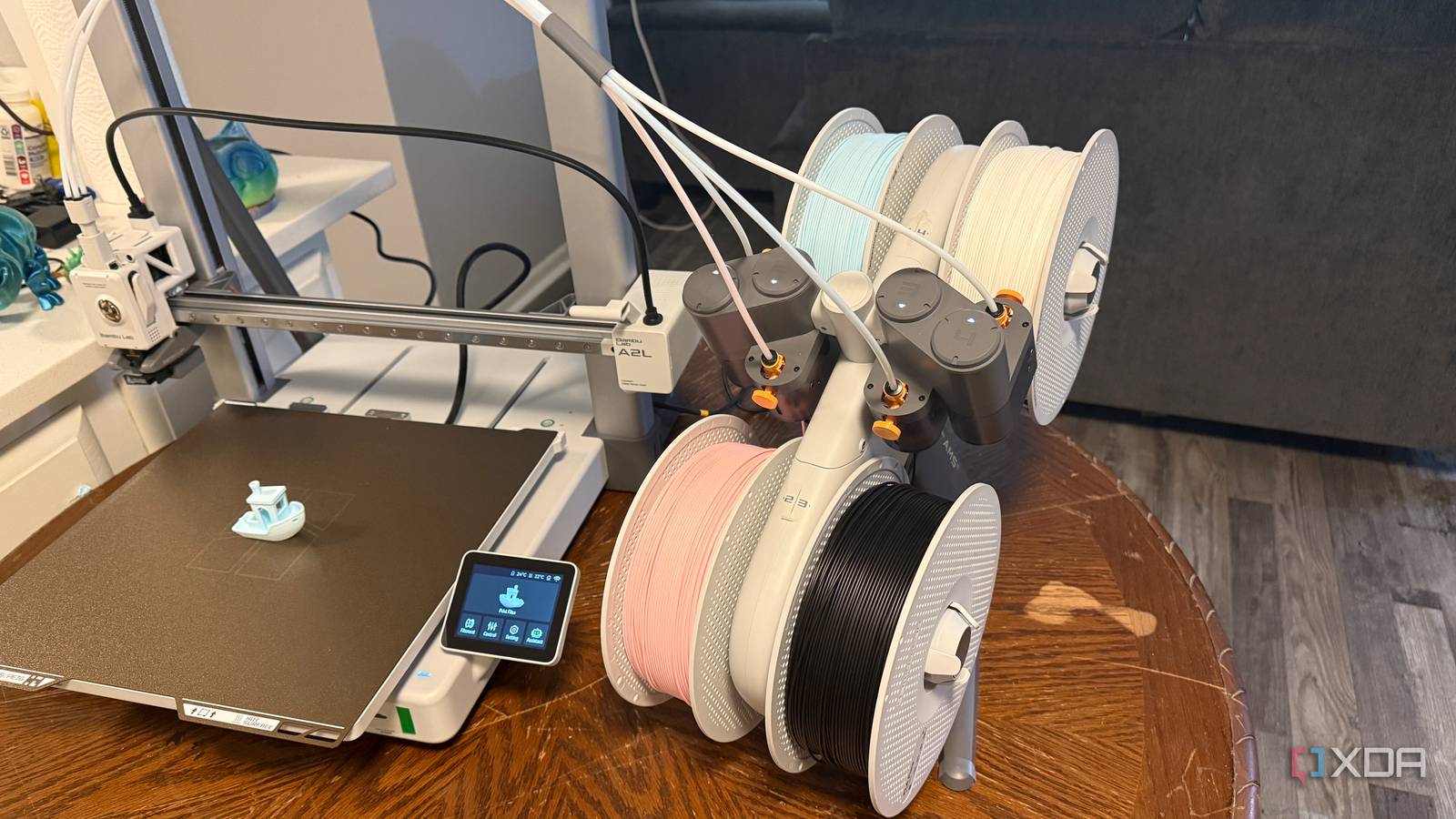
Published Aug 4, 2026, 11:00 AM EDT Jeff's been involved in the IT industry since before the Internet and spent more than 20 years working in technical support, system administration, network administration, and consulting roles. He holds an undergraduate degree in English, a Master's degree in English with a focus on professional writing and editing, and another Master's degree in Computing & Information Systems. After teaching university English and computer science for a few years, Jeff launched his writing career. He's written for Macworld, Tom's Hardware, groovyPost, The Mac Observer, and more before beginning here at XDA. One of the reasons I got into 3D printing was the idea that I could make useful things instead of constantly buying little plastic accessories. It took me longer than I'd like to admit to actually use my printers that way. For a while, I spent a lot of time printing upgrades, test pieces, and things that seemed interesting, only to have them sit on a shelf a week later. Eventually, I started paying more attention to the small things around the house that annoyed me enough to buy something for them. That's when 3D printing started becoming genuinely useful. None of the things on this list is especially ambitious, and I think that's part of why they've stuck around. They solve very ordinary problems, fit the spaces where I actually use them, and several have survived years without giving me much reason to think about them again. At this point, these are the kinds of objects I print almost automatically instead of opening Amazon and trying to find something close enough. Gridfinity drawer organizers keep winning I can make storage fit the drawer exactly Drawer organizers were among the first things that permanently changed how I shop for storage. I used to buy generic trays, put them in a drawer, and then live with the weird gaps around the edges because none of the dimensions quite matched. Gridfinity fixed that problem in a way I didn't fully appreciate until I started using it regularly. Instead of buying a tray and adapting the drawer around it, I can build the layout around the drawer I already have. The bins themselves aren't the exciting part. What matters is that I can change the size, shape, and arrangement whenever the stuff inside the drawer changes. I use them for tools, adapters, small electronics, and all the little bits of hardware that otherwise end up in one increasingly useless pile. If I need another compartment, I print one. If something moves somewhere else, I can rearrange the existing bins without replacing everything. Some of the bins have been shuffled around so many times that I couldn't tell you what I originally printed them to hold. That's probably why I barely think of them as 3D prints anymore. I open a drawer, grab the adapter, screw, or tool I'm looking for, and close it again without paying much attention to what it's sitting in. There's no little moment where I admire the layer lines or congratulate myself for making something useful. The organizers stopped feeling like projects and became part of how the drawer works, which is about as good an outcome as I could ask for. My HomePod mini shelf fits perfectly Designing it myself solved a very specific problem The headboard shelf I made for my HomePod mini is probably the cleanest example of why having a 3D printer is useful. I had a specific place in mind for the speaker, and the usual assortment of stands and little shelves didn't solve the problem the way I wanted. I could have bought something and made it work, but that would've meant compromising on placement for no good reason. Designing the shelf myself let me make something for that exact spot instead. The shelf isn't complicated, and that's part of what I like about it. It needed to sit where I wanted it, hold the HomePod mini securely, and stay out of the way, so I didn't try to turn it into a bigger project than necessary. I printed it, put the speaker on it, and that was basically the end of the story. It has stayed there for years without becoming one of those prints I keep meaning to redesign because version one was only barely acceptable. That shelf changed how I approach many small household annoyances. I don't immediately assume I need to go shopping just because I need a bracket, holder, shelf, or mount with oddly specific dimensions. Sometimes the right product already exists, and buying it is obviously easier, but sometimes it doesn't quite fit what I'm trying to do. In those cases, making the exact object I had in mind has become a much more natural first option than settling for whatever happens to be commercially available. My headphone hanger has real personality A hand-shaped hook still does its job My headphone hanger started with a simple problem. I needed somewhere to put my headphones, but I didn't want another generic hook hanging off the side of my desk. I ended up finding and printing one shaped like a hand, which solved the storage problem and made the hanger a little more interesting to look at. It still does the exact same job as the inexpensive headphone hangers I could have bought, but I like this one more. That's one of the things I enjoy about printing functional objects. They don't all have to look completely anonymous just because they're supposed to be useful, and the hand shape gives this one some personality without getting in the way of its job. More importantly, it has held up through years of regular use without snapping, sagging, or making me rethink the design. A headphone hanger isn't supporting a huge amount of weight, but constant use reveals whether something was actually built well enough. I also stopped judging projects like this purely by whether I saved money over the cheapest thing I could have bought. Sure, I could buy a basic headphone hanger without spending much at all, so this was never going to be the print that justified the cost of the printer by itself. What I got instead was something that fits the way I use my desk, looks the way I wanted it to, and has lasted long enough that I don't have to think about replacing it. That's more useful to me than winning a tiny argument over filament cost. Cable guides are endlessly worth printing Small custom holders keep cords under control Cable management is probably where my printers get used to make the most boring objects, and I mean that as a compliment. Cable guides, holders, clips, and combs aren't exciting projects, but I always seem to need one in a slightly different size or layout. Buying a bag of generic clips works until the cable is a little too thick, the spacing is wrong, or the holder doesn't sit where I actually need it. Printing one avoids most of that frustration. The need becomes more obvious around a desk or home lab, where cables go everywhere. Power cables, USB cables, Ethernet runs, charging cords, and random adapters all create their own particular annoyances, whether that means sliding off an edge, tangling together, or disappearing behind the desk the second I unplug them. A tiny printed guide can usually solve the specific problem without forcing everything into one generic organizer. If the first one is too tight, too loose, or awkwardly positioned, I can adjust it and print another without turning the whole thing into a shopping expedition. The right material still matters. A design that works perfectly indoors may not hold up as well in a hot car, near a window, or anywhere it’s exposed to prolonged heat. Match the filament to where the finished part will actually be used, especially for holders, brackets, and other prints you expect to leave in place for years. Most of those holders end up staying in place for years, too. There's very little to wear out, and once they're doing their job correctly, I mostly forget they're there. After buying enough little cable accessories that were almost right but not quite, printing the exact piece I need feels more natural now than scrolling through packs of plastic clips online. That's become a pattern with my favorite practical prints because the better they work, the less often I notice them. The best prints eventually become boring household objects After years of owning 3D printers, the projects I value most aren’t necessarily the biggest or most technically impressive. They’re the Gridfinity bins I reach into every day, the HomePod mini shelf I designed for a very specific place, the hand-shaped hanger holding my headphones, and the cable guides I mostly stopped noticing once they worked. When a print stays useful long enough that I stop thinking about how it was made, that’s usually when I know I got it right. Those objects have lasted because they solved real problems I actually had, rather than giving me another excuse to run the printer. When a print stays useful long enough that I stop thinking about how it was made, that’s usually when I know I got it right. Bambu Lab A2L Build Volume 330mm x 320mm x 325mm Printing Speed 500mm/sec Materials Used PLA, PETG, and other non-engineering filaments Brand Bambu Lab Max Hot End Temp 300C Max Bed Temp 80C This 3D printer will save you a lot of money if you use it to print everyday objects you'd otherwise have to buy.
4 everyday objects I 3D-printed instead of buying, and they've held up for years
Full Article
Original Source
Read the full article at Xda-developers →KhanList aggregates and links to publicly available news content. We do not host full articles from third-party sources. Always verify important information with original sources.