
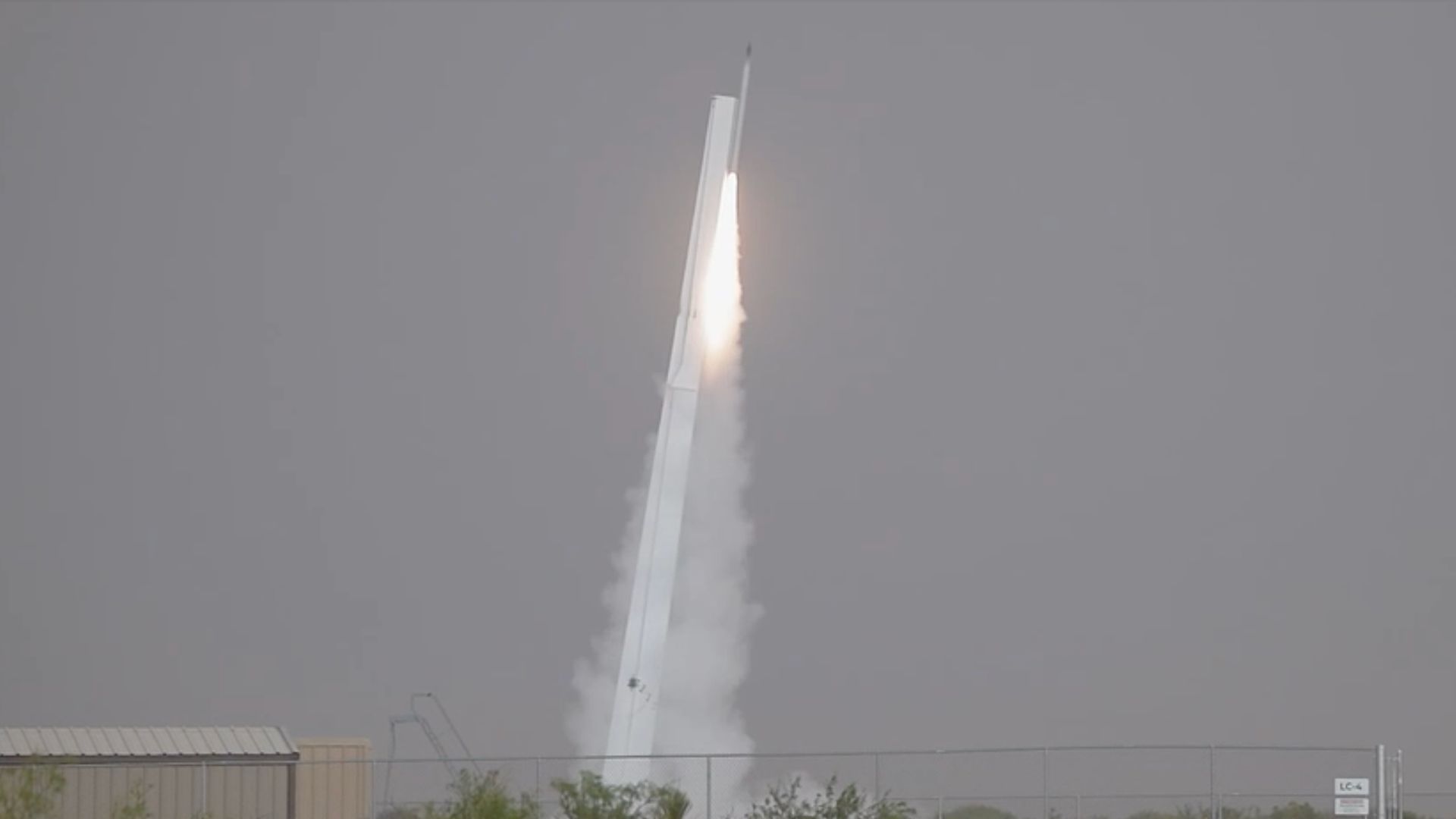
Boeing recently finished another round of tests for its Ultra Low-Cost Seeker (ULCS), as the company works to develop a cheaper radar sensor for precision weapons. The testing campaign, conducted earlier this summer, examined whether the seeker could find and follow targets while handling the tough conditions it would face in real use. The company is developing ULCS for potential use across its integrated air and missile defense, direct-attack, and cruise missile programs. Boeing says the technology could help make precision guidance more affordable across a wider range of weapons. Commercial parts adapted for weapons ULCS is built from commercial parts that Boeing has adapted for military use. Its modular design means the same sensor can be adjusted for different weapon programs. This approach is meant to make it easier to add the sensor to different weapons and to produce more units. Boeing is also using the Weapons Open Systems Architecture, which should help with future upgrades and changes. “We are developing ULCS with the goal of sharing a common sensor architecture across several of our programs. It is modular, producible and built with Weapons Open Systems Architecture to speed integration and future changes,” said Bob Ciesla, vice president, Boeing Precision Engagement Systems. Tests covered aircraft and rockets Boeing evaluated ULCS in several environments during the recent campaign. The seeker was first tested inside an anechoic chamber before being flown on a Beechcraft 1900 aircraft. It was also installed on a scaled-down rocket for additional testing. During captive-carry flights, the Beechcraft 1900 carried the sensor over both land and maritime areas. These flights allowed Boeing to check basic target detection and tracking capabilities. At Spaceport America in New Mexico, the seeker tracked an unmanned aerial vehicle from the ground. Boeing later mounted the sensor on a surrogate rocket, where it successfully tracked a reflector drone. The company said ULCS also survived the acceleration and vibration experienced during the tests, providing data on how the sensor performs under conditions closer to those encountered during weapon launches. Boeing’s Ultra Low-Cost Seeker sits mounted to a Beechcraft 1900 ahead of a captive carry test flight to evaluate baseline seeker target detection and tracking. (Image credit: Chris Bishop) More flight tests planned Boeing says ULCS is intended for precision weapons that must operate in different weather conditions and engage moving targets. The company is drawing on experience from existing seeker programs, including the PAC-3 MSE, while developing ULCS for lower-complexity threats. The recent campaign gives Boeing data that can be used to refine the seeker before more demanding demonstrations. The company is now reviewing the test results and applying them to the next phase of development. “We still have more work to do, but the rapid testing our teams have completed proves that this capability is real and will fundamentally change how we look at seeker affordability across our programs,” said Steve Wright, Boeing senior manager for weapon sensors and advanced guidance. 2027 tests will target real-world use Boeing plans to conduct multiple flight tests in 2027. Those tests will use configurations designed to represent the seeker’s intended operational applications more closely. The company sees ULCS as a common sensor architecture that could eventually be used across several weapons portfolios. If development progresses as planned, the design could give Boeing a way to add precision guidance to more weapons while keeping sensor costs under tighter control.Get the latest in engineering, tech, space & science - delivered daily to your inbox.A versatile writer, Sujita has worked with Mashable Middle East and News Daily 24. When she isn't writing, you can find her glued to the latest web series and movies.
Boeing’s new radar sensor for cruise missiles and air defense aces rapid tests
Full Article
Original Source
Read the full article at Interestingengineering →KhanList aggregates and links to publicly available news content. We do not host full articles from third-party sources. Always verify important information with original sources.