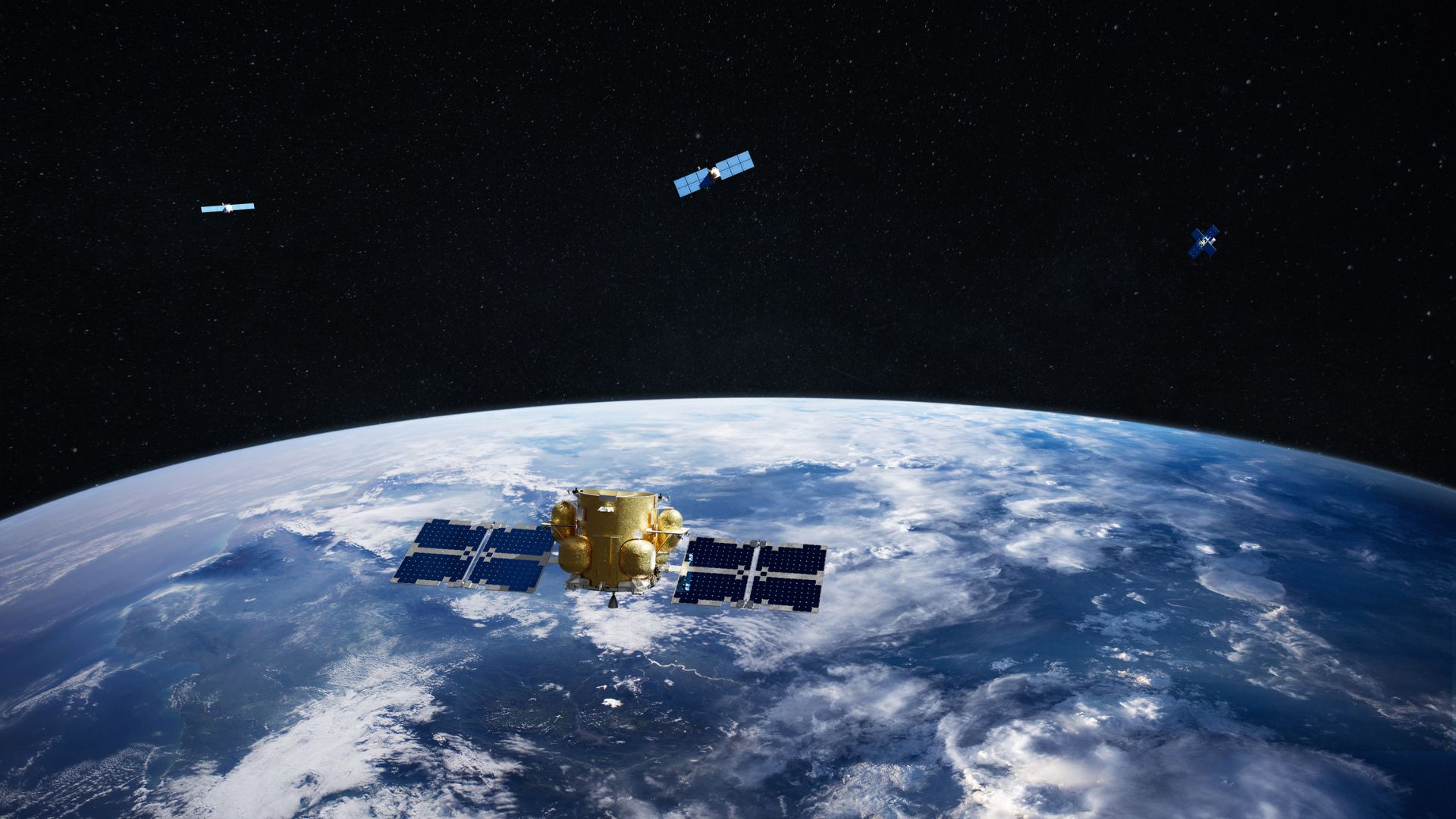
3-orbit spacecraft could help US remove satellites nearing end of lifeUS spacecraft could safely remove satellites nearing end of life. Firefly’s Elytra spacecraftFirefly Aerospace Dead satellites drifting around Earth could soon receive a controlled push out of orbit. Firefly Aerospace has secured a contract from the US Department of War’s Defense Innovation Unit (DIU) and Space Development Agency (SDA) to develop a preliminary design for a satellite deorbiting mission. Announced on August 13, the project will use Firefly’s Elytra orbital vehicle to approach, examine, and remove spacecraft nearing the end of their operational lives. The effort is intended to reduce the expanding debris population threatening satellites and future missions across multiple Earth orbits. Elytra will approach and inspect aging satellites Under the contract, Firefly will complete a preliminary design review, or PDR, covering its proposed mission architecture. Successfully finishing the review will make the Texas-based company eligible to compete for the mission’s next phase, which could include the launch, spacecraft operation, and deorbiting campaign. The proposed sequence begins with Elytra launching into low Earth orbit. The spacecraft would then maneuver toward the designated client object, conduct rendezvous and proximity operations, survey its condition, and perform the deorbiting service. “Firefly is known for performing some of the hardest missions in space, and this mission is no exception,” said Jason Kim, CEO of Firefly Aerospace. “In alignment with the White House order to prioritize orbital debris mitigation, our team designed a highly efficient, cost-effective solution for our Elytra vehicles to deorbit satellites nearing end of life,” he added. One system designed for three orbital regions Firefly says its proprietary deorbit system can support operations in low Earth orbit, medium Earth orbit, and geostationary Earth orbit. This flexibility could allow Elytra to work with satellites operating at vastly different altitudes and built with varying sizes and configurations. Elytra combines high-thrust maneuverability with substantial fuel reserves and payload capacity. Those capabilities are important for missions requiring the spacecraft to alter its trajectory, reach another object, match its movement, and operate near it safely before beginning the disposal procedure. The orbital vehicle incorporates flight-proven technology from Firefly’s existing launch vehicles and lunar landers. Its avionics, composite structures, and propulsion architecture draw partly from systems used by Blue Ghost, the company’s lunar lander that successfully reached the Moon. Firefly is separately preparing Elytra for a space domain awareness mission under another DIU contract. That flight is scheduled no earlier than 2027, and its core structures have been completed as the vehicle enters integration and testing. Up to 25 launches planned through 2031 Beyond satellite servicing, Firefly is expanding its dedicated launch business. The company recently extended its multi-launch agreement with Lockheed Martin by two years, potentially covering up to 25 Alpha rocket launches through 2031. Those missions will use the upgraded Alpha Block II configuration, designed to serve payloads in the 1,000-kilogram class while improving reliability and production rates. The rocket is also being developed for deployable launch operations supporting responsive national security missions, hypersonic tests, and commercial satellite deployments.Together, the programs position Firefly to handle both ends of a satellite’s life: delivering spacecraft to their chosen orbits and eventually helping remove them after their missions conclude.Presented by Atharva is a full-time content writer with a post-graduate degree in media & amp; entertainment and a graduate degree in electronics & telecommunications. He has written in the sports and technology domains respectively. In his leisure time, Atharva loves learning about digital marketing and watching soccer matches. His main goal behind joining Interesting Engineering is to learn more about how the recent technological advancements are helping human beings on both societal and individual levels in their daily lives.
3-orbit spacecraft could help US remove satellites nearing end of life
Full Article
Original Source
Read the full article at Interestingengineering →KhanList aggregates and links to publicly available news content. We do not host full articles from third-party sources. Always verify important information with original sources.