
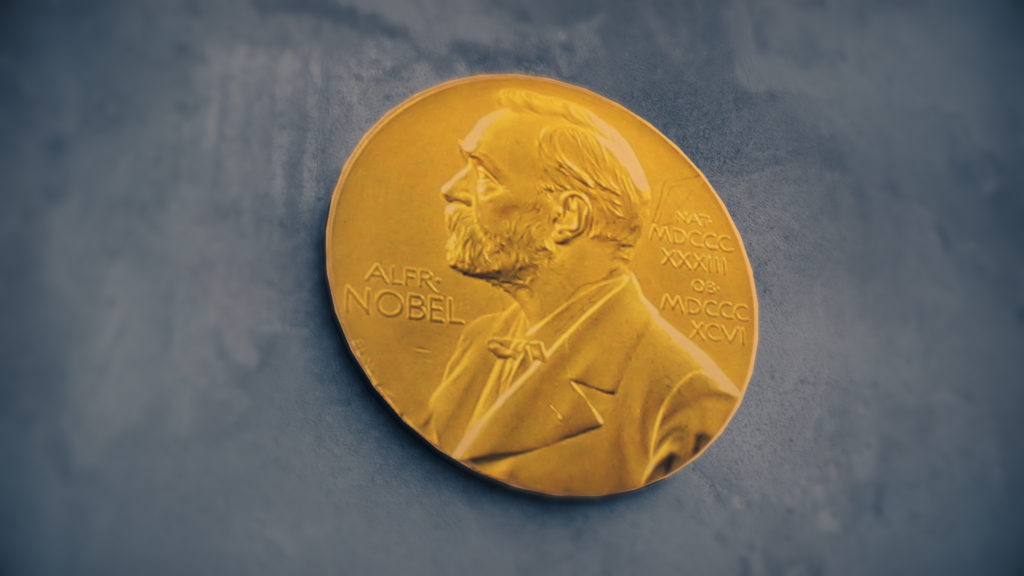
Karl Deisseroth, Peter Hegemann, and Georg Nagel are the joint recipients of the 2026 Nobel Prize in Physiology or Medicine “for their discoveries concerning light-gated ion channels and optogenetics,” the Karolinska Institutet in Stockholm, Sweden announced on Monday. Deisseroth, 55, a professor at the Howard Hughes Medical Institute and Stanford University; Hegemann, 72, a professor at Humboldt University in Berlin; and Nagel, 73, a professor at the University of Würzburg, Germany, developed a method that uses light, combined with genetic modifications of neurons, to switch on or off individual cells in a living brain. This makes it possible to show how nerve cells shape memories, feelings and behavior in the brain, and is being studied as a treatment for disease. The work started in the early 2000s, when Hegemann and Nagel discovered channelrhodopsin, a light-sensitive algal protein that allowed a single-cell alga to swim toward light. They found that this protein worked in any cell they injected it in. Deisseroth then introduced the gene for the protein into nerve cells from rats, becoming able to trigger a nerve signal in the living brain with blue light. “Optogenetics provides opportunities for mapping the brain in a way that we could once only dream of,” said Per Svenningsson, chair of the Nobel Committee for Physiology or Medicine. The committee was able to reach all three winners, starting with Deisseroth, who was “definitely asleep, but he woke up”, said Thomas Perlmann, the secretary for the Nobel Committee for Physiology or Medicine. “All three said the same thing, that they thought it was absolutely wonderful to receive the prize with the other two; they called them ‘my friends,’” he said. “I have followed Karl Deisseroth’s career since he received an NIH Director’s Pioneer Award as an assistant professor in 2005. He proposed a vision for optogenetics that was quite compelling and he has developed his ideas remarkably ever since. His work displays the power of engineering approaches with a deep knowledge of human physiology,” said Jeremy Berg, the former editor in chief of Science. “I am not at all surprised that his work has ended up with a Nobel Prize. That seemed plausible even during his Pioneer interview in 2005.” There have been 235 award winners since the first medicine prize was awarded in 1901, of which 14 have been women. The youngest recipient was 31, the oldest 87. The award has been given 117 times: 40 times to a single individual, and has been shared among two winners 36 times, and among three (the maximum allowed by the Nobel statute) 41 times. The winners will receive 12 million Swedish Kronor (SEK), or roughly $1.2 million.
2026 Nobel Prize in Medicine awarded for brain research tool called optogenetics
Full Article
Original Source
Read the full article at Statnews →KhanList aggregates and links to publicly available news content. We do not host full articles from third-party sources. Always verify important information with original sources.