
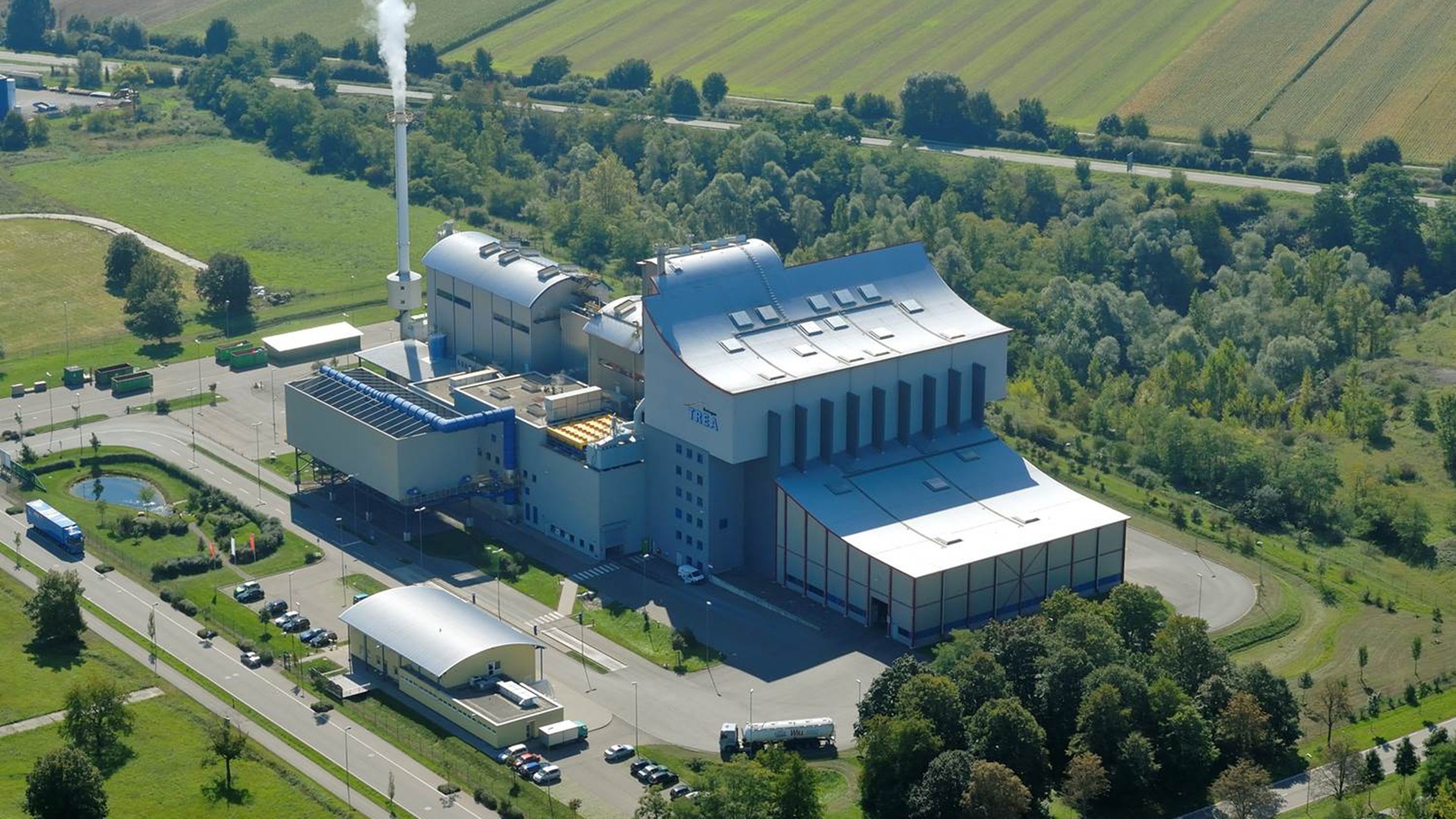
Key TakeawaysA waste plant in Eschbach, Germany, processes nearly 200,000 US tons of waste annually and could turn CO2 emissions into useful carbon.The NECOC 2.0 process uses hydrogen and liquid tin to convert captured CO2 into carbon powder for batteries and construction materials.Backed by over USD 5.8 million, the project aims to test the technology using CO2 captured directly from industrial exhaust gases. A waste treatment plant which processes nearly 200,000 US tons (175,000 metric tons) of residual waste a year could become a source of carbon for batteries and construction materials. Located in the area of Eschbach, Germany, the site could capture CO2 from waste incineration and convert it into solid carbon for industrial use. The effort is part of a project called NECOC 2.0, which brings together researchers from the Karlsruhe Institute of Technology (KIT), EEW Energy from Waste, and other partners. The team will use liquid metal to extract carbon from CO2. They are believe that the technology could not only slash emissions and produce carbon powder, but also provide an alternative to fossil-derived carbon in industrial applications. The project secured over USD 5.8 million (EUR 5 million) from Germany’s Federal Ministry for Economic Affairs and Energy. “With NECOC 2.0, we are bringing a solution developed at KIT a decisive step closer to practical implementation,” Thomas Hirth, PhD, a professor and VP for Transfer and International Affairs at KIT explained. From waste to carbon Waste incineration plants produce CO2 while burning residual waste in order to generate electricity. These emissions include carbon from fossil-based materials and biological sources. To address the issue, KIT’s NECOC process aims to capture the CO2 directly from the cleaned exhaust gases before it reaches the atmosphere. The captured CO2 first reacts with hydrogen to produce methane. This gas then passes through a reactor with liquid tin. There it breaks down into solid carbon and hydrogen. The hydrogen is recycled back into the first stage, while the carbon is collected as a fine powder. “We want to capture CO2 and convert it directly into a usable raw material,” Benjamin Dietrich, PhD, a researcher at the Institute of Thermal Process Engineering at KIT, who helped develop the technology, elaborated. According to the team, the recovered carbon could replace fossil-derived carbon in various industrial applications. The researchers will also investigate whether it is suitable for battery electrodes and building materials. “CO2 capture is an essential component of the future of thermal waste treatment for us,” Timo Poppe, CEO of EEW Energy from Waste, said. Testing the technology The technology has showed promise in earlier experiments. In 2020, KIT built an integrated experimental facility at its Karlsruhe Liquid Metal Laboratory (KALLA), where it combined methane production and decomposition into a single process. The system successfully converted CO2 into microgranular carbon, a fine-grained form of solid carbon. The results confirmed the process was feasible. However, as per the team, it has yet to be demonstrated as a whole system with CO2 captured from an actual industrial exhaust stream. EEW will evaluate and test CO2 capture at its Eschbach site. In turn, KIT will focus on methane production and decomposition. The Fraunhofer Institute for Ceramic Technologies and Systems will also investigate ways to bind CO2 in calcium and magnesium carbonates. Poppe highlighted the importance of investigating in research and development. “As the consortium coordinator, we are contributing our industrial experience to the NECOC 2.0 project and working with our partners to investigate how CO2 can be captured from flue gases and used as a raw material,” he concluded in a press statement.Get the latest in engineering, tech, space & science - delivered daily to your inbox.Based in Skopje, North Macedonia. Her work has appeared in Daily Mail, Mirror, Daily Star, Yahoo, NationalWorld, Newsweek, Press Gazette and others. She covers stories on batteries, wind energy, sustainable shipping and new discoveries. When she's not chasing the next big science story, she's traveling, exploring new cultures, or enjoying good food with even better wine.
200,000 tons of annual waste could help turn captured CO₂ into battery carbon
Full Article
Original Source
Read the full article at Interestingengineering →KhanList aggregates and links to publicly available news content. We do not host full articles from third-party sources. Always verify important information with original sources.