
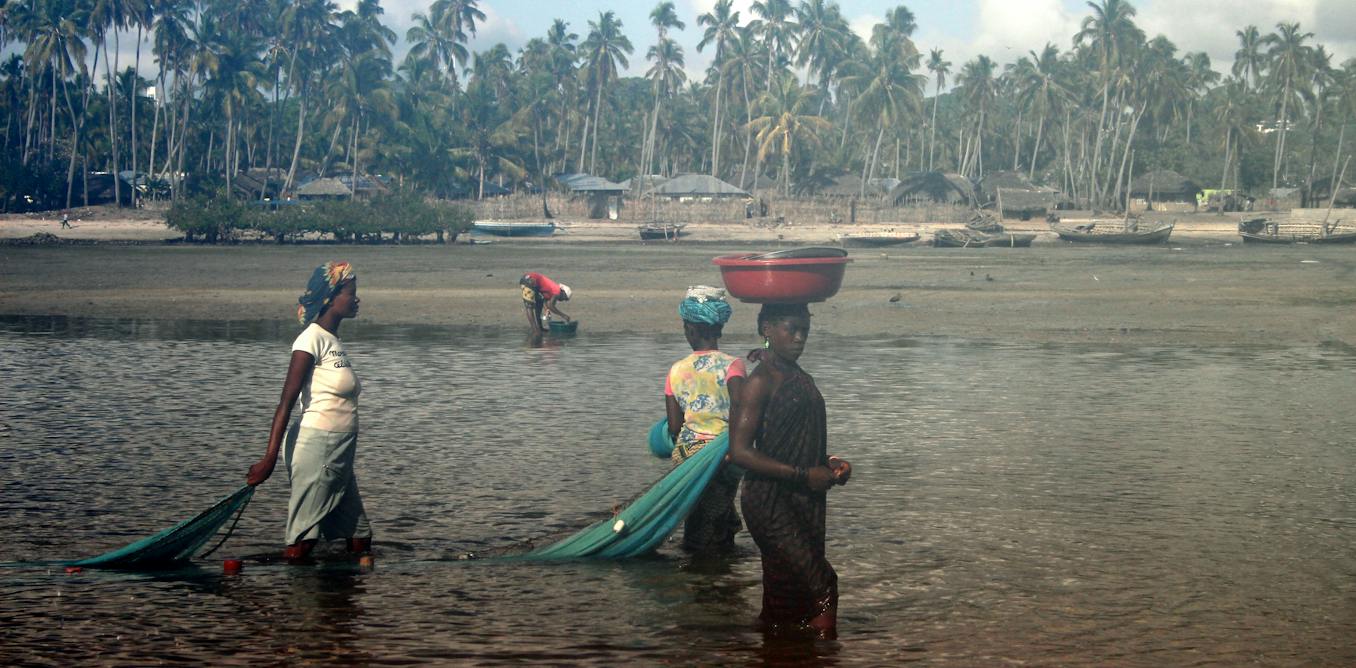
At least 18 million people living in poverty across the Indo-Pacific fish in seagrass meadows, while around 6.5 million rely on them as their only fishing grounds. For these communities, the underwater habitats are not simply part of the natural environment but a source of food and a means of earning a living. But these important fishing grounds face growing pressure from coastal development, changes in land use and poor water quality. When seagrass meadows are damaged or lost, the consequences can extend beyond wildlife. The fish and other marine life they support may also be affected, putting food supplies and household incomes at risk. Our latest research examines the scale of this dependence and how it relates to poverty. The findings highlight a question that conservation efforts need to address: what happens to people whose livelihoods depend on habitats that are under growing pressure? Seagrasses are flowering plants that grow in shallow coastal waters. They form underwater meadows that support fish and other marine life. People can fish in these habitats using simple nets, traps and lines, or collect shellfish and other marine animals by hand. Unlike some other fishing grounds, seagrass meadows can often be reached without a boat or expensive equipment. This level of accessibility can be particularly important for households with few resources or alternative ways to earn money. Yet seagrass conservation is often discussed in terms of protecting wildlife and storing carbon. We have known that these habitats support fisheries, but we have had much less understanding of how many people living in poverty rely on them. Communities across the Indo-Pacific often live adjacent to seagrass meadows. Benjamin Jones/Project Seagrass, CC BY To investigate this, we analysed data from nearly 2,000 households in more than 150 coastal communities across Cambodia, Indonesia, the Philippines, Sri Lanka and Tanzania. We looked at household incomes, fishing activities and the habitats people used to catch fish and collect other marine resources. We then compared the livelihoods of households using different fishing grounds, including those living in poverty. More than 80% of households in the communities we studied were involved in fishing, either to earn money, provide food or both. Households that relied entirely on seagrass fisheries earned around 23% less than those fishing in other habitats, even after we accounted for differences in household size. To put this in perspective, if a household earns £7.50 per day, a 23% difference amounts to roughly £52 a month. For a family already struggling to afford food, healthcare or education, this is a substantial amount of money. Women hunt in seagrass for invertebrates at low tide in Mozambique. Benjamin Jones/Project Seagrass, CC BY The dependence was especially striking among households living in extreme poverty. Almost half fished in seagrass as well as other habitats, while more than a 25% relied on seagrass alone. This does not mean that seagrass fishing causes poverty. Rather, accessible fishing grounds may be particularly important to people who cannot afford a boat or specialist equipment. We then combined our household data with estimates of how many people live near seagrass meadows. Across the five countries we studied, we estimate that 10.8 million people living in poverty use seagrass for fishing. Around 5.4 million may rely on it as their only fishing habitat. The stakes go beyond income. In separate research published earlier this year, we found that fish communities associated with seagrass could provide a wider range of essential nutrients than those associated with coral reefs. Although reefs supported more fish overall, seagrass fish communities had greater potential to supply several important nutrients together. These include iron, which helps prevent anaemia, zinc, which supports children’s growth and immune systems, calcium, which is essential for health bones, and omega-3 fatty acids which support brain development. For families that cannot afford a varied diet, fish, even as a soup or broth, can provide several of these nutrients in a single meal. Losing access to seagrass could therefore not only mean losing income, but also a vital source of nutrition, especially for children and vulnerable family members. These risks are important considerations because seagrass meadows face pressure globally. Research suggests that around 20% of surveyed seagrass meadow area in the Indo-Pacific has been lost over the past 70 to 90 years, with coastal development and declining water quality among the major threats identified. Elsewhere in the Indo-Pacific, researchers documented an 84% decline in fish abundance following substantial seagrass loss. For coastal families that depend on these habitats, this means fewer fish available to catch, fewer income opportunities and less food. Men collect shrimp and prawns by hand in shallow seagrass meadows in Puttalam Lagoon, Sri Lanka. Benjamin Jones/Project Seagrass, CC BY Protecting seagrass means protecting people Protecting these habitats, however, is not as simple as restricting fishing. Conservation measures that limit access to fishing grounds could harm communities if they depend on them for food or income and have few alternatives. At the same time, local fishers may have little control over other sources of damage, such as pollution from agriculture or development along the coast. Read more: Human connections to seagrass meadows date back 180,000 years, study reveals Conservation plans therefore need to consider both the health of seagrass meadows and the people who depend on them. Where restrictions on fishing are proposed, decision-makers should assess the probable effects on local incomes and food supplies. They should also consider whether realistic alternatives are available and address damage caused by pollution and coastal development, rather than placing the burden of conservation on fishing communities alone. In the Philippines, local fishing communities are already helping manage marine reserves that protect seagrass meadows. Some approaches allow fishing and shellfish collection to continue while restricting more damaging activities or protecting smaller areas where marine life can recover. In Indonesia, years of forest clearance had increased soil erosion, washing sediment into coastal waters and threatening seagrass meadows. In response, local governments, communities and organisations came together to plant more than 4,500 trees along riverbanks to reduce the amount of sediment entering the sea and protecting the seagrass fishing grounds that local families depend on. Protecting seagrass will not solve coastal poverty on its own, however. But our findings show why conservation policies need to recognise the people who depend on these habitats. Safeguarding seagrass means protecting not only marine life but also an important source of food and income for millions of people.
18 million people living in poverty depend on underwater meadows for food and income - but these vital habitats are under threat
Full Article
Original Source
Read the full article at Theconversation →KhanList aggregates and links to publicly available news content. We do not host full articles from third-party sources. Always verify important information with original sources.