
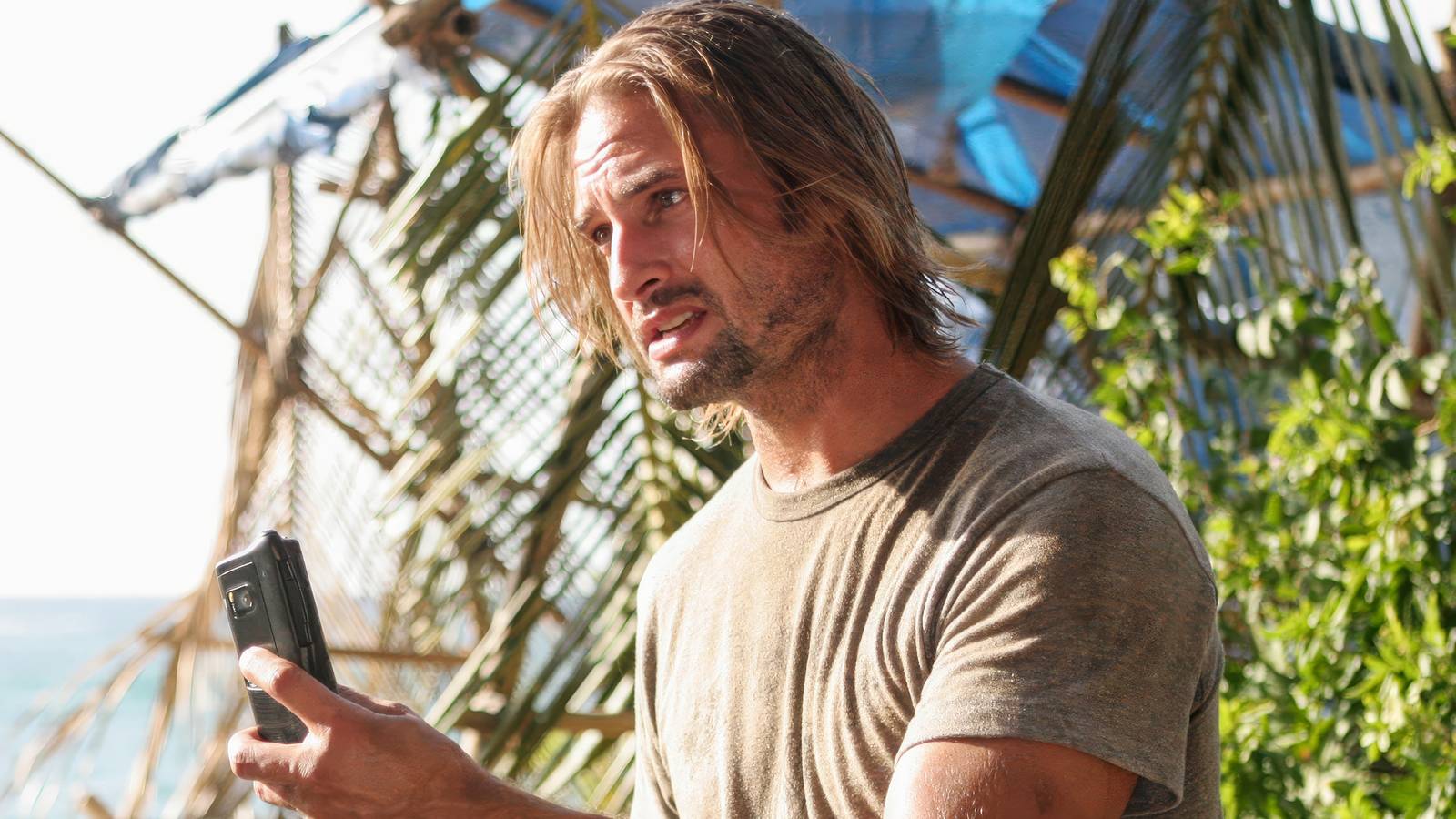
Image via Mario Perez / © ABC / Courtesy: Everett Collection Updated Sep 1, 2026, 6:27 AM EDT Jeremy has more than 2700 published articles on Collider to his name, and has been writing for the site since February 2022. He's an omnivore when it comes to his movie-watching diet, so will gladly watch and write about almost anything, from old Godzilla films to gangster flicks to samurai movies to classic musicals to the French New Wave to the MCU... well, maybe not the Disney+ shows. His favorite directors include Martin Scorsese, Sergio Leone, Akira Kurosawa, Quentin Tarantino, Werner Herzog, John Woo, Bob Fosse, Fritz Lang, Guillermo del Toro, and Yoji Yamada. He's also very proud of the fact that he's seen every single Nicolas Cage movie released before 2022, even though doing so often felt like a tremendous waste of time. He's plagued by the question of whether or not The Room is genuinely terrible or some kind of accidental masterpiece, and has been for more than 12 years (and a similar number of viewings). When he's not writing lists - and the occasional feature article - for Collider, he also likes to upload film reviews to his Letterboxd profile (username: Jeremy Urquhart) and Instagram account. He has achieved his 2025 goal of reading all 13,467 novels written by Stephen King, and plans to spend the next year or two getting through the author's 82,756 short stories and 105,433 novellas. Sign in to your Collider account The thing about Lost was that it was a little bit of everything, for better or worse. It began as a show about survivors of a plane crash trying to get by on a strange island, with things only getting stranger the longer they were stuck there. There was a ton of mystery and continually weird things that were uncovered and, as a result, Lost ended up being a combination of just about every genre under the sun. That makes it easy to compare other shows to it, given that there’s a lot to Lost, and so parts of the show can be pretty simply compared to other television shows out there. The following TV shows probably scratch the itch Lost scratched most thoroughly, since some are also focused on survival, some have strong mystery elements, and others work as thrilling blends of science-fiction, fantasy, and action/adventure genres. 15 'Jericho' (2006–2008) Image via CBS One of the top cult shows of the 2000s, Jericho is one of those great sci-fi shows typically overshadowed by Lost. It's an absolutely exceptional post-apocalyptic action drama, bolstered by a gripping story and deeply compelling world-building. CBS canceled it after only one season due to low ratings, and even though fan pressure got them to produce a second season, it was canceled again shortly after that aired. But even though the series was never allowed to reach its true full potential, it's still one of the most widely beloved American sci-fi series of its time. Its exploration of the complicated emotions that naturally come with human society gradually breaking down is engaging throughout, which is only one of the similarities that it shares with Lost. Even though Jericho's whole premise and structure was born out of a desire to replicate Lost's success, it's still a delectably original series. —Diego Pineda Pacheco 14 'Under the Dome' (2013–2015) Image via CBS Given there’s difficulty in adapting some of Stephen King’s longer novels to film or TV (look at The Stand and The Dark Tower series, for two examples), it’s understandable that Under the Dome mostly just took the basic premise of King’s mammoth novel of the same name and did its own thing. There are similarities beyond the set-up, sure, but it’s not intended to be a direct adaptation by any means. That premise involves the people of a small town getting cut off from the outside world after a large dome mysteriously appears overhead, completely trapping those unlucky enough to be in town at the time. It’s about trying to discover the origins of the dome, and is also focused on survival, and that puts Under the Dome kind of in step with Lost… or, at the very least, the earlier/more survival-focused seasons of Lost. 13 'Black Mirror' (2011–2025) Image via Netflix Because of how wild and unpredictable Black Mirror can get, it’s hard to say that the show as a whole is entirely reminiscent of anything else. The anthology format makes that inevitable, given just about every episode of Black Mirror is self-contained, but most of them are dark, focused on sci-fi concepts, and generally pessimistic in how they unpack the potential future of humanity. Perhaps the earlier seasons of Black Mirror were a little more unpredictable, but there remain continual attempts to surprise and unnerve throughout the less consistent later seasons, too. Anyone wanting a strong overarching storyline clearly won’t get that here, but if you like the heavier/more intense episodes of Lost that are also willing to explore strange sci-fi concepts, then perhaps you could do worse than giving Black Mirror a shot. 12 'Stranger Things' (2016–2025) Image via Netflix In some ways, Stranger Things is a milder show than Lost, given it (at least initially) focuses on younger characters, and serves mostly as a coming-of-age story that gets progressively darker and more gruesome as the seasons progress. Things kick off with the disappearance of a young boy and the discovery of a young girl with psychokinetic powers, with eventual revelations that link these two things together. There was sometimes tension within Lost, from a writing perspective, when it came to branching out into new areas while maintaining something of a status quo, and Stranger Things has had a similarly rocky progression overall. But just as the instability of Lost kept things engaging, on one level, so too has the wildness and increased scope of ambition made the Netflix series a continual phenomenon throughout the late 2010s and into the early 2020s. 11 'The Good Place' (2016–2020) Image via NBC Without getting too detailed about spoilers, Lost was a show that frequently had death and/or the idea of an afterlife on its mind, but not to the extent that The Good Place did. The latter was a show all about the afterlife, focusing on a woman who ends up in some version of heaven she doesn’t believe she belongs in, especially because the “soulmate” she’s given doesn’t seem like a good fit for her at all. Like with Lost, there are some pretty earth-shattering plot twists and turns found in The Good Place; in fact, a surprising amount for a show that could be called a sitcom. The Good Place goes to some unexpected and even profound places as it approaches its final episode, and the wild ride is easy to recommend for those who favor a lack of predictability in the shows they watch. 10 'Twin Peaks' (1990–2017) Image via ABC While great television did exist before 1990, there’s an argument to be made that Twin Peaks really elevated TV as a whole, rewriting what could be done on a network TV show. It took certain risks narratively, thematically, and visually, in turn inspiring plenty of dramas that followed in its wake. Lost probably took network TV to its limits, but Twin Peaks pretty much got the ball rolling in the first place. Like Lost, Twin Peaks has an effective hook in its opening episode: the question of “Who killed Laura Palmer?” But the show is so much more than just a murder mystery, because the world of Twin Peaks grows, becomes more frightening, and gets increasingly surreal as things go along. It would’ve been wonderful if Twin Peaks got to stay on the air for six seasons or so, like Lost, but at least there was a long-awaited third season in 2017, Twin Peaks: The Return, which concluded the show overall, in some ways, while unapologetically confounding and adding complexity in other ways. 9 'Fringe' (2008–2013) Image via Fox J.J. Abrams’ involvement with Lost tends to get a bit overestimated, because while he co-created the show and was an executive producer throughout, he only ever directed the two-part pilot and was credited as a co-writer for three episodes in total. He was a little more active as a writer for two of his previously created shows, Felicity and Alias, but those weren’t sci-fi or fantasy shows like Lost was. Alias was, after all, a show about a spy. So, the other show Abrams was involved with, in some capacity, that is worth comparing to Lost is Fringe, which even had some overlap as far as airing went, given Fringe debuted in 2008, ending in 2013, while Lost was on the air between 2004 and 2010. Fringe also has strong mystery elements and ambitious themes alongside a premise that allows for the exploration of many sci-fi concepts, so it’s definitely a little bit Lost-esque, at times. Collider Exclusive · Sci-Fi Survival Quiz Which Sci-Fi World Would You Survive? The Matrix · Mad Max · Blade Runner · Dune · Star Wars Five universes. Five completely different ways the future went wrong — or sideways, or up in flames. Only one of them is the world your instincts were built for. Eight questions will figure out which dystopia, galaxy, or desert wasteland you'd actually make it out of alive. 💊The Matrix 🔥Mad Max 🌧️Blade Runner 🏜️Dune 🚀Star Wars TEST YOUR SURVIVAL → 01 You sense something is deeply wrong with the world around you. What do you do? The first instinct is often the truest one. APull on every thread until I understand the system — then figure out how to break it. BStop asking questions and start stockpiling — food, fuel, weapons. Questions don't keep you alive. CKeep my head down, observe carefully, and trust no one until I know who's pulling the strings. DStudy the patterns. Every system has a rhythm — learn it, and you learn how to survive it. EFind the people fighting back and join them. You can't fix a broken galaxy alone. NEXT QUESTION → 02 In a world of scarcity, what resource do you guard most fiercely? What we protect reveals what we believe survival actually requires. AKnowledge. If you understand the system, you don't need resources — you can generate them. BFuel. Everything else — movement, power, escape — runs on it. CTrust. In a world of fakes and informants, a truly reliable ally is rarer than any commodity. DWater. And after water, information — the two things empires are truly built on. EShips and credits. The galaxy is big — you survive it by being able to move through it freely. NEXT QUESTION → 03 What kind of threat keeps you up at night? Fear is useful data — if you're honest about what you're actually afraid of. AThat reality itself is a lie — that everything I experience has been constructed to keep me compliant. BA raid. No warning, no mercy — just the roar of engines and then nothing left. CBeing identified. Once someone with power decides you're a problem, you're already out of time. DBeing outmanoeuvred — losing a political game I didn't even know I was playing. EThe Empire tightening its grip until there's nowhere left to run. NEXT QUESTION → 04 How do you deal with authority you don't trust? Every dystopia has a power structure. Your approach to it determines everything. ASubvert it from the inside — learn its rules well enough to weaponise them against it. BIgnore it and stay out of its reach. The further from any power structure, the better. CAppear to comply while doing exactly what I need to do. Visibility is the enemy. DManoeuvre within it carefully. You can't beat a system you refuse to understand. EResist openly when I have to. Some things are worth the risk of being seen. NEXT QUESTION → 05 Which environment could you actually endure long-term? Survival isn't just tactical — it's physical, psychological, and very much about where you are. AUnderground bunkers and server rooms — cramped, artificial, but with access to everything that matters. BOpen wasteland — brutal sun, no shelter, constant movement. At least the threat is honest. CA dense, rain-soaked city where you can disappear into the crowd and nobody asks questions. DMerciless desert — extreme heat, no water, and something enormous living beneath the sand. EThe fringe — backwater planets and busy spaceports where the Empire's attention rarely reaches. NEXT QUESTION → 06 Who do you want in your corner when things fall apart? The company you keep is the clearest signal of who you actually are. AA tight crew of believers who've seen behind the curtain and have nothing left to lose. BOne or two people I'd trust with my life. Any more than that and someone talks. CNobody, ideally. Alliances are liabilities. I work alone unless I have no choice. DA community bound by shared hardship and mutual survival — people who need each other to last. EA ragtag team with wildly different skills and total commitment when it counts. NEXT QUESTION → 07 Where do you draw the line — if you draw one at all? Every survivor eventually faces a moment that tests what they're actually made of. AI won't harm the innocent — even the ones who'd report me without hesitation. BI do what I have to to protect the people I've chosen. Everything else is negotiable. CThe line shifts depending on who's asking and what's at stake. DI draw a long-term line — nothing that compromises my people's future, even if it'd help now. ESome lines, once crossed, can't be uncrossed. I know which ones they are. NEXT QUESTION → 08 What would actually make survival worth it? Staying alive is one thing. Having a reason to is another. AWaking others up — dismantling the illusion so no one else has to live inside it. BFinding somewhere — or someone — worth protecting. A reason to keep moving. CAnswers. Understanding what I am, what any of this means, before time runs out. DLegacy — shaping the future in a way that outlasts me by generations. EFreedom — for myself, for others, for every world still living under someone else's boot. REVEAL MY WORLD → Your Fate Has Been Calculated You'd Survive In…Your answers point to the world your instincts were built for. This is the universe your temperament, your survival instincts, and your particular brand of stubbornness were made for. The MatrixYou took the red pill a long time ago — probably before anyone offered it to you. You're a systems thinker who can't help but notice the seams in things. You're drawn to understanding how the system works before figuring out how to break it. You'd find the Resistance, or it would find you — your instinct for spotting constructed realities is the machines' worst nightmare. You function best when you have access to information and the freedom to act on it. The Matrix built an airtight prison. You'd be the one probing the walls for the door. Mad MaxThe wasteland doesn't reward the clever or the well-connected — it rewards those who are hard to kill and harder to break. That's you. You don't need comfort, community, or a cause larger than the next horizon. You need a vehicle, a clear threat, and enough fuel to outrun it — and you're good at all three. You are unsentimental enough to survive that world, and decent enough — just barely — to be something more than another raider. In the wasteland, that distinction is everything. Blade RunnerYou'd survive here because you know how to exist in moral grey areas without losing yourself completely. You read people accurately, keep your circle small, and ask the questions others prefer not to answer. In a city where humanity is a legal designation rather than a feeling, you hold onto something that keeps you functional. You're not a hero. But you're not lost, either. In Blade Runner's world, that distinction is everything. DuneArrakis is the most hostile environment in the known universe — and you are precisely the kind of person it rewards. Patience, discipline, and political awareness are your core strengths — and on Arrakis, they're survival tools. You understand that the long game matters more than any single victory. Others come to Dune and are consumed by it. You'd learn its logic and earn its respect. In time, you wouldn't just survive Arrakis — you'd begin to reshape it. Star WarsThe galaxy far, far away is vast, loud, and in a constant state of violent political upheaval — and you wouldn't have it any other way. You find meaning in being part of something larger than yourself — a cause, a crew, a rebellion. You'd gravitate toward the Rebellion, or the fringes, or whatever pocket of the galaxy still believes the Empire's grip can be broken. You fight — not because you have to, but because standing aside isn't something you're capable of. In Star Wars, that willingness is what makes all the difference. ↻ RETAKE THE QUIZ 8 'Westworld' (2016–2022) Image via HBO Though it was canceled before it could get a proper conclusion, there’s enough good stuff found in Westworld to make it worth recommending, especially because its first season was quite strong. It combines Western and science fiction elements into the one show, feeling surprisingly coherent, and often relishes the opportunity to pack as many plot twists as possible into the proceedings. It’s a show that wants to surprise you, and some might even argue that Westworld tries a little too hard to be shocking and unpredictable. But the ambition to do things that are weird and unexpected is admirable, and it puts Westworld in line with something like Lost, because even the biggest fans of the latter will likely concede that it sometimes went a bit far with the plot twists and intended surprises. 7 'The Leftovers' (2014–2017) Image via HBO Like J.J. Abrams, Damon Lindelof was a co-creator of Lost, but his involvement was more hands-on, given he was also one of Lost’s showrunners, and ended up being credited with writing 45 of its 121 episodes. So, looking at his body of work is a good place to start for anyone who’s finished Lost and wants something comparable, with The Leftovers probably being the ideal starting point. It’s another show Lindelof was involved with where you could argue more questions are raised than answered, but the whole thing revolves around 2% of the world’s population mysteriously disappearing, so confusion, anguish, and uncertainty are appropriate emotions here, all things considered. The Leftovers is a bit darker and arguably more ambitious than Lost, and it’s not as broad, approachable, or entertaining… but it does hit hard and explore a unique premise well, all the while feeling like a more mature effort from Damon Lindelof (he was credited with writing or co-writing almost every single episode in the show’s three seasons). 6 'Watchmen' (2019) Image via HBO Two years after The Leftovers concluded airing its third and final season, Damon Lindelof was behind another HBO drama series: Watchmen. It sets itself apart from the film adaptation released in 2009 by kind of being a sequel to the original story, while also kind of doing its own thing with the source material: Alan Moore’s comic book limited series of the same name, which was published between 1986 and 1987. 2019’s Watchmen has a little by way of science fiction elements, perhaps like Lost and The Leftovers, but such things are more subdued here, as Watchmen functions mostly as a drama. It’s dark at times, and often proves hard to predict, in turn having things to offer fans of the comic book series, the 2009 film, and newcomers alike.
15 Shows To Watch if You Love 'Lost'
Full Article
Original Source
Read the full article at Collider →KhanList aggregates and links to publicly available news content. We do not host full articles from third-party sources. Always verify important information with original sources.