
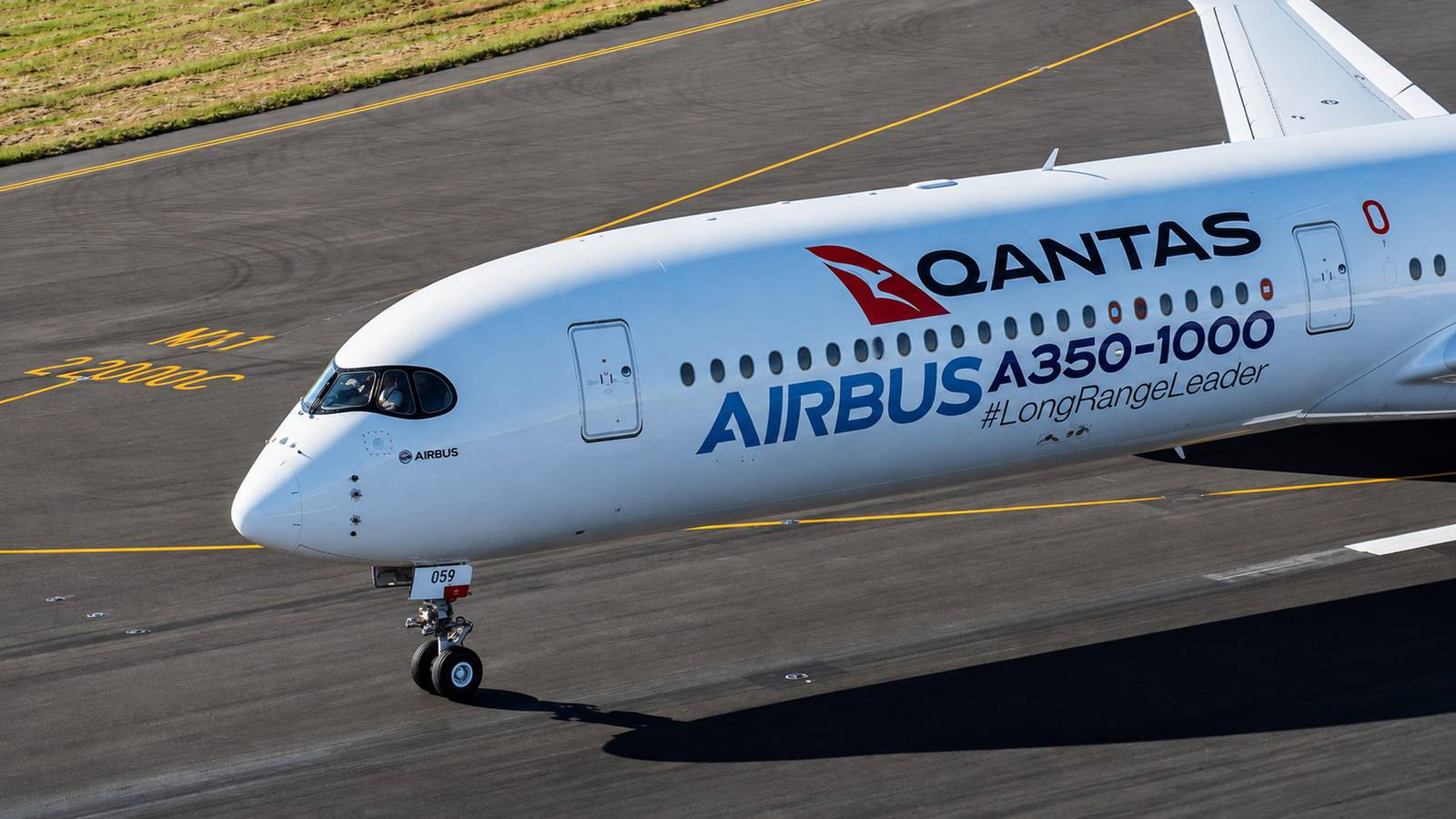
Published Nov 9, 2026, 5:17 PM EST Paul has had a career of 25+ years focused on the international technology sector, which has taken him to over 100 countries. Along the way, he developed a deep love for aviation, with a travel bucket list measured by aircraft types flown rather than destinations reached. Now he brings that avgeek passion, along with the journalism experience he accumulated early in his career, to write insightful pieces for Simple Flying. Airbus has officially broken the Guinness World Record for the longest nonstop flight by a commercial airliner, with its Airbus A350-1000ULR covering an extraordinary 14,388 miles (23,155 km) in 24 hours and 24 minutes. The achievement, announced earlier today, ends a record held for more than two decades by Boeing with its Boeing 777-200LR Worldliner. The flight took place between Melbourne Airport (MEL) and Toulouse-Blagnac Airport (TLS) on July 27–28 as part of the A350-1000ULR's development program for Qantas' Project Sunrise. Remarkably, the official announcement of the record came exactly 21 years after Boeing's record-setting aircraft departed Hong Kong on November 9, 2005. The achievement represents an important milestone ahead of Qantas' planned introduction of nonstop Sydney–London services in October 2027. Credit: Qantas Operating as AIB35LR, the Airbus A350-1000ULR departed Melbourne at 5:27 PM local time on July 27, arriving in Toulouse at 9:51 AM the following morning. The aircraft flew eastwards, initially flying over Sydney before crossing the Pacific toward Los Angeles, traversing North America and the Atlantic, and passing over London. The extraordinary routing crossed three continents and two oceans, treating those onboard to two sunsets and two sunrises. Credit: Airbus The flight carried just 13 people, including three Airbus test pilots, two Qantas pilots, engineers and an International Aeronautical Federation representative. The extended flight-test program focused particularly on fuel management and cabin environmental systems. Airbus also evaluated its redesigned crew-rest compartments, while pilots operated overlapping four-hour shifts, staggered every two hours. Today's Guinness certification follows independent validation of aircraft data by the International Aeronautical Federation and Flightradar24. Interestingly, Airbus originally reported the flight distance as 14,338 miles (23,076 km), approximately 50 miles (79 km) shorter than the officially certified figure. Airbus Commercial Aircraft CEO Lars Wagner described the achievement as confirmation of the aircraft's ultra-long-range capabilities, adding: "This achievement reflects the pioneering and innovative spirit that is part of our DNA at Airbus. Flying 12,503 nautical miles non-stop, we have fully proven the aircraft's capability to fulfill its mission. And the world record was the icing on the cake!” How Airbus Finally Broke Baby Blue 2's 21-Year-Old World Record Credit: Boeing To achieve the record, Airbus had to surpass a truly extraordinary flight. On November 9, 2005, Boeing's distinctive blue-and-white 777-200LR demonstrator, N6066Z, nicknamed Baby Blue 2, departed Hong Kong International Airport (HKG) on a momentous journey. Rather than following the conventional westbound route to London, Captain Suzanna Darcy-Hennemann and her crew headed east across the Pacific. The aircraft crossed North America and the Atlantic before reaching Heathrow, setting a remarkable record of 13,423 miles (21,601 km) in 22 hours and 42 minutes. The Worldliner carried 35 people, including Boeing executives, engineers, airline representatives and journalists. Its fuel tanks contained approximately 164 tonnes of fuel, with the weight of passengers and baggage carefully controlled. A specially fitted interior even featured a reception area and business class seating. Remarkably, the aircraft still had approximately two hours of fuel remaining upon arrival. Baby Blue 2 subsequently entered commercial service with Pakistan International Airlines as AP-BGZ. Metric Boeing 777-200LR Airbus A350-1000ULR Aircraft Baby Blue 2 MSN707 Registration N6066Z F-WULR Flight dates November 9–10, 2005 July 27–28, 2026 Route Hong Kong – London Melbourne – Toulouse Distance 13,423 mi (21,601 km) 14,388 mi (23,155 km) Flight time 22h 42m 24h 24m People onboard 35 13 Engines GE90 Trent XWB-97 Two decades later, Airbus has finally surpassed Boeing's achievement. The A350-1000ULR benefits from advances in composite structures, aerodynamics and engine efficiency, alongside a new rear center fuel tank holding approximately 20,900 liters. The modification extends the A350-1000's range by approximately 1,000 nautical miles (1,151 miles, 1,852 km). Qantas' Project Sunrise Will Launch In October 2027 Credit: Airbus The record comes as Qantas edges closer to introducing the world's longest scheduled passenger flights. The airline expects its first A350-1000ULR delivery in April 2027, with nonstop Sydney–London services launching in October under flight numbers QF1 and QF2. The existing Singapore-stop services will continue as QF5 and QF6. Sydney–New York will follow in mid-2028, with Qantas expecting the new nonstop journey to take approximately 18 hours. Route Great-Circle Distance Flight Time Launch Sydney – London 10,573 mi (17,016 km) Up to 22 hours October 2027 Sydney – New York 9,950 mi (16,013 km) Approximately 18 hours Mid-2028 Qantas has ordered 12 A350-1000ULRs, each configured with 238 seats, including 98 premium seats and a dedicated Wellbeing Zone. The commercial strategy centers on attracting higher-yield passengers while removing the inconvenience of stopovers. Qantas forecasts approximately A$400 million in additional annual earnings once Project Sunrise reaches scale, supported by new nonstop flying, network optimization and freight opportunities. Its broader fleet strategy also includes 12 standard A350-1000s. Significant operational preparations remain underway. Qantas is preparing more than 360 pilots and 1,200 cabin crew for the new fleet, while simulator training has already begun in Sydney. Aircraft certification, crew preparation and further deliveries will determine how quickly the airline can expand its network. With five A350-1000ULRs expected by November 2027, the Guinness World Record marks a remarkable engineering accomplishment, but the more consequential achievement will be translating that capability into regular commercial operations.
14,388 Miles: Airbus A350-1000ULR Test Flight Officially Breaks The Guinness World Record
Full Article
Original Source
Read the full article at Simpleflying →KhanList aggregates and links to publicly available news content. We do not host full articles from third-party sources. Always verify important information with original sources.