
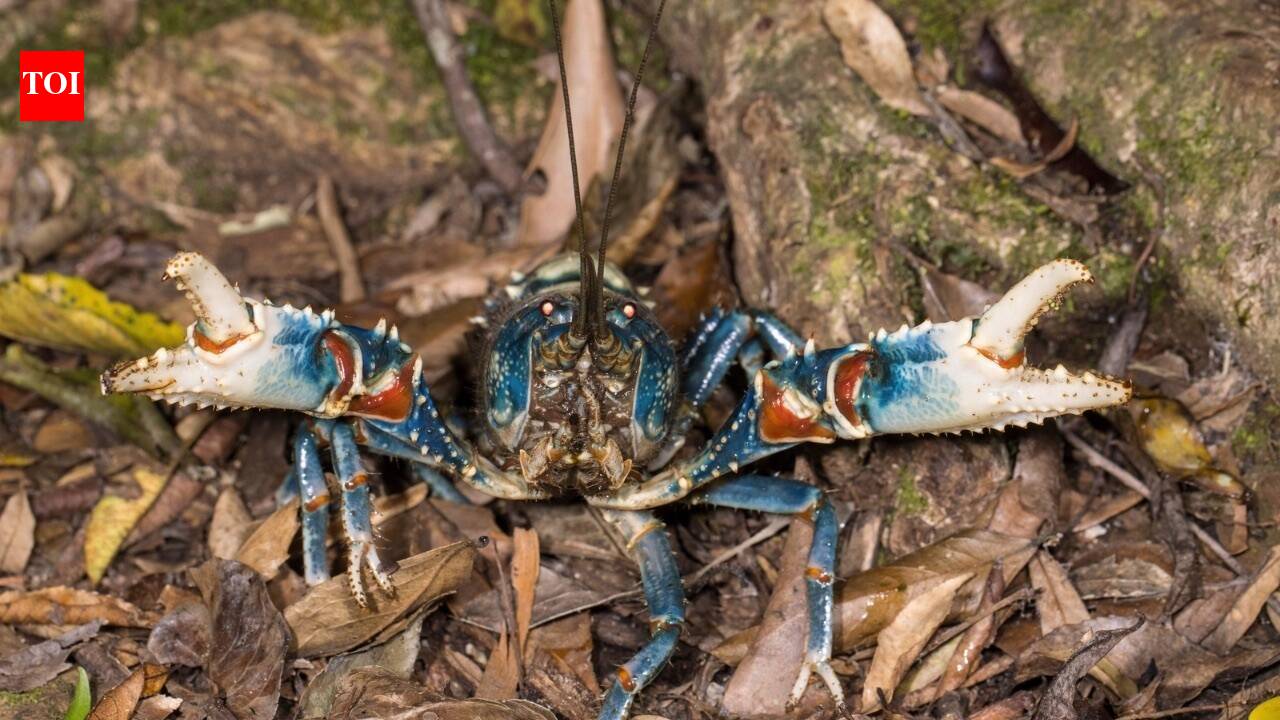
A representative image (credit: Canva)Bushfires can threaten to wipe out an entire wildlife species, let alone one that is already endangered. This is a concern that has prompted many conservationists and scientists to take part in rescue operations. In Victoria, Australia, a group of scientists rushed to the rescue of the endangered alpine spiny crayfish during the January 2026 bushfires, rescuing a total of 11 from a creek. Months later, after being cared for in captivity, the creatures are finally making their way back to the waters they call home.According to an ABC News report dated November 7, 2026, scientists from the Arthur Rylah Institute rescued 11 of these crayfish from a creek near Lucyvale in the immediate aftermath of the fires. The concern was that the creatures could suffocate as debris and sediment entered the waterway, affecting the conditions they depended on to survive. Will Sowersby, a senior scientist at the Arthur Rylah Institute, explained to ABC News that without intervention, the species could disappear from some of these freshwater areas. The rescue was therefore not simply about moving a handful of creatures away from an immediate threat, but also about protecting a vulnerable population whose limited distribution makes it particularly susceptible to environmental disturbances.The feisty residents of a conservation hatcheryOnce rescued, the 11 crayfish were transported to the Snobs Creek conservation hatchery near Eildon, which is operated by the Victorian Fisheries Authority. They remained there while scientists waited for the water quality in their natural habitat to improve sufficiently for their return.However, keeping them alive in captivity presented an entirely different set of challenges. This was the first time alpine spiny crayfish had been taken into captivity, meaning hatchery staff were learning about their behaviour and care requirements as they went along. One of the more unexpected difficulties was just how aggressive the creatures could be towards one another. Dylan White, a senior conservation hatchery officer at Snobs Creek, told ABC News that the crayfish had to be housed separately because they would attack each other if kept together.It meant that the hatchery team had to make individual arrangements for the rescued animals, keeping them apart throughout their stay. While the creatures were no longer facing the immediate threat of deteriorating water conditions in the creek, their temporary home still required careful attention to ensure they remained healthy until they could be returned.Preparing for a future beyond the rescueThe return of the crayfish comes as the Victorian High Country gradually recovers from the Walwa-River Road bushfire, which burned approximately 121,000 hectares. Although the immediate danger has passed for the rescued animals, scientists are continuing to monitor the waterways and the surrounding habitat to understand how the species will fare in the months ahead.There is also a larger conservation question emerging from the experience. Scientists hope that alpine spiny crayfish could eventually become part of a captive breeding programme at the Snobs Creek hatchery. The hatchery itself has become an important centre for the rescue and care of vulnerable freshwater species following natural disasters. Its staff have also looked after other animals affected by Victoria's summer bushfires, including Macquarie perch and trout cod rescued from Seven Creek following the Longwood bushfire. More than 100 of these fish have already been released back into the wild. However, the work at the hatchery is not without its challenges for the staff, as each rescue brings a different set of requirements and, sometimes, the need to learn how to care for a species that has never been kept in captivity before.For the alpine spiny crayfish, the journey from a fire-affected creek to a conservation hatchery and eventually back to their home waters has been an atypical one. Their rescue also offers a reminder that the consequences of a bushfire are not always immediately visible. Beneath the surface of a stream, entire populations of small and often overlooked creatures can be at risk, making the work of protecting them just as important as restoring the landscapes we see above ground. With the country at risk of facing more natural disasters as climate change progresses, protection and rescue operations for species, particularly those already at a high risk of extinction, have become a need of the hour.
11 endangered crayfish rescued from bushfires return to Australian creek
Full Article
Original Source
Read the full article at Timesofindia →KhanList aggregates and links to publicly available news content. We do not host full articles from third-party sources. Always verify important information with original sources.