
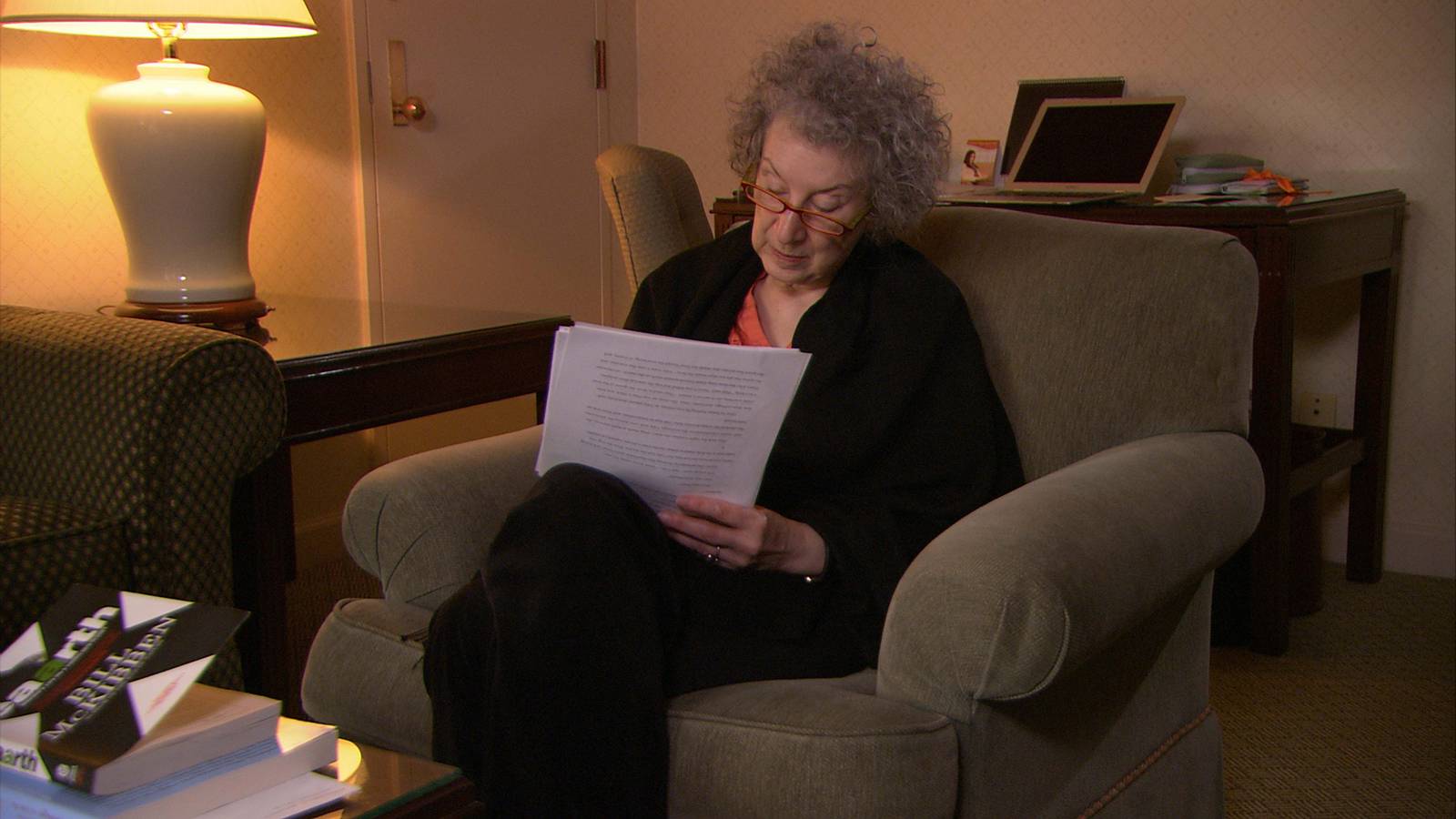
Mongrel Media/Courtesy Everett Collection Published Sep 12, 2026, 3:16 PM EDT Cher Thompson is a Senior Staff Writer at Screen Rant, where she covers everything from explosive reality TV moments to cast interviews about the twists and turns of scripted dramas. With a background in creative writing, marketing, and teaching, Cher knows how to spot both the storytelling genius and the guilty pleasures in pop culture. Her work blends wit with insight, making readers feel like they’re chatting with a friend who just happens to know way too much about TV. After spending decades shaping conversations with work of her own, Margaret Atwood's takes on the science fiction genre are some of the most trustworthy and interesting. Best known for her novels, like The Handmaid's Tale and Oryx and Crake, Atwood has been an outspoken champion of writers, both who influenced the genre and opened doors for her, as well as writers who have come after her to continue doing the work. Through interviews, essays, and reading lists, Atwood has provided some public recommendations surrounding the work she feels is the most imperative for readers of the expansive science fiction genre. While Atwood's own novels have been adapted into TV shows and films, her love for the work of others has been one of the most inspiring parts of her persona through the years. Within her lists of recommendations, Atwood has suggested foundational texts, books she's found to be thought provoking, and novels that she's hopeful will become classics in their own right. From George Orwell to Emily St. John Mandel, Atwood's recommendations of science fiction novels bring social and environmental change to the forefront, shining a spotlight on what happens in the moments before, after, and between deep societal turmoil. 10 Brave New World by Aldous Huxley As one of the most popular dystopian novels of all time, it's no surprise that Atwood feels Brave New World by Aldous Huxley is required reading. The novel takes place in a futuristic society where citizens are genetically engineered into social groups, conditioned from the time of their birth to be compliant through pleasure and consumerism with a drug, soma, to keep them at bay. Atwood has highlighted the novel repeatedly as one of the foundational works of dystopia that feels consistently and eternally relevant. An essential book for anyone interested in speculative sci-fi fiction, Brave New World holds up. 9 Company Town by Madeline Ashby Company Town by Madeline Ashby is set in a future that's dominated by corporations and advanced biotechnology, painting a picture of a dystopian society that Atwood's readers would likely enjoy. Following its main character, Hwa, who stands out from the crowd because she's chosen not to have common genetic enhancements, the novel sees her living in an authoritarian community and caught up in conspiracies that threaten her life and the fabric of society. Atwood's love for the novel comes from its compelling protagonist and Company Town's exploration of power and inequality through the lens of artificial life in several ways. 8 1984 by George Orwell Another classic of science fiction, 1984 by George Orwell resonates in many ways in the modern day, but Atwood's recommendation of it comes less from a place of warning and more from a place of understanding. Following Winston Smith, a government employee living under the surveillance of the ominous Big Brother, the novel sees its main character begin to challenge the status quo and question the system he's been a part of. With current connotations and a legacy as one of the best dystopian novels of all time, Atwood has cited 1984 as both an inspiration and a prerequisite text. 7 Parable of the Sower by Octavia E. Butler Octavia E. Butler's Parable of the Sower follows Lauren Olamina, who lives in a near-future version of the United States that's been ravaged by climate change, social upheaval, and economic downturn. With an intense sense of empathy to the point that she can feel others' pain, Lauren takes on the journey of forging ahead with a new belief system, even when the odds are against her. Atwood's interest in Butler's work makes sense with the novels she's written, and she recommends Parable of the Sower because of the way it treats societal collapse and larger concerns about the near future. 6 Woman on the Edge of Time by Marge Piercy Marge Piercy's Woman on the Edge of Time explores issues of gender, class, and social status through the story of Consuelo "Connie" Ramos, a woman in a psychiatric institution who experiences visions of a potential future society. Through the visions, Connie understands that society is headed toward a dystopian future, but because of her own standing, it's difficult to get anyone to actually believe what she's saying. Atwood's recommendation of this novel is twofold, because it's not only a fantastic work of science fiction with formative tropes, but it's a feminist novel that challenges its readers to think critically. 5 Fahrenheit 451 by Ray Bradbury Ray Bradbury's classic novel, Fahrenheit 451, follows Guy Montag, a firefighter whose job it is to burn books in a future society where reading is considered to be dangerous and discouraged in case it influences independent thought. As Montag begins to question his world, his own intellectual awakening becomes a huge piece of the novel's momentum. Atwood has long spoken highly of Bradbury, even talking about reading his work at a young age, and his influence is clear in her own writing. Her recommendation of Fahrenheit 451 makes it clear that even though it's a classic, it remains entirely relevant. 4 The Water Knife by Paolo Bacigalupi Paolo Bacigalupi's The Water Knife imagines an American Southwest of the near-future that is ravaged by a severe drought, making water into the regions most valuable resource. The story follows several different characters as they navigate the new world's landscape, which is defined by corruption and violence in the face of a resource being so scarce. An example of climate fiction that feels disastrous in the current day but could be more relevant as time passes, Atwood's recommendation of The Water Knife comes from the fact that it examines political and economic changes in the face of something genuinely disastrous. 3 Station Eleven by Emily St. John Mandel Emily St. John Mandel's Station Eleven takes place after a pandemic wipes out the majority of the world's population, devastating humanity at its core. A post-apocalyptic story at its core, the novel follows interconnected characters as it moves through the aftermath of something tremendously grim and grave. Station Eleven acknowledges its tragedy, which is part of why Atwood recommends the novel. Praising its emphasis on human connection, Atwood has talked about how the novel works to preserve a sense of optimism in the face of something incredibly tragic, and shared that it stands out for its focus on the positive. 2 The Iron Heel by Jack London Penguin Classics A lesser-known novel by Jack London, The Iron Heel follows the rise of an oligarchy in the United States through the lens of an activist, Ernest Everhard. Depicting the struggles between the wealthy and the less-than, London's work is one of the earliest in the realm of dystopian fiction. Atwood cites The Iron Heel as one of the foundational texts of dystopian writing, explaining that its influence on books like 1984 have helped shape every dystopia that came after it. An essential and historically significant novel, The Iron Heel is the blueprint from which all other dystopian works have stemmed. 1 The Left Hand of Darkness by Ursula K. Le Guin The Left Hand of Darkness by Ursula K. Le Guin is a foundational science fiction novel, and one that Atwood has repeatedly praised for being a fascinating, relevant, and insightful piece of the genre's history. Following Genly Ai, an emissary sent to the plante Gethen, the novel paints a vast, lush picture of a world without the construct of gender. With the main character forced to confront their own assumptions about gender and society, the novel pushes readers to do the same as it weaves an interesting story at its core. The Left Hand of Darkness is a landmark work.
10 Science Fiction Books You Need To Read According To Margaret Atwood
Full Article
Original Source
Read the full article at Screenrant →KhanList aggregates and links to publicly available news content. We do not host full articles from third-party sources. Always verify important information with original sources.