
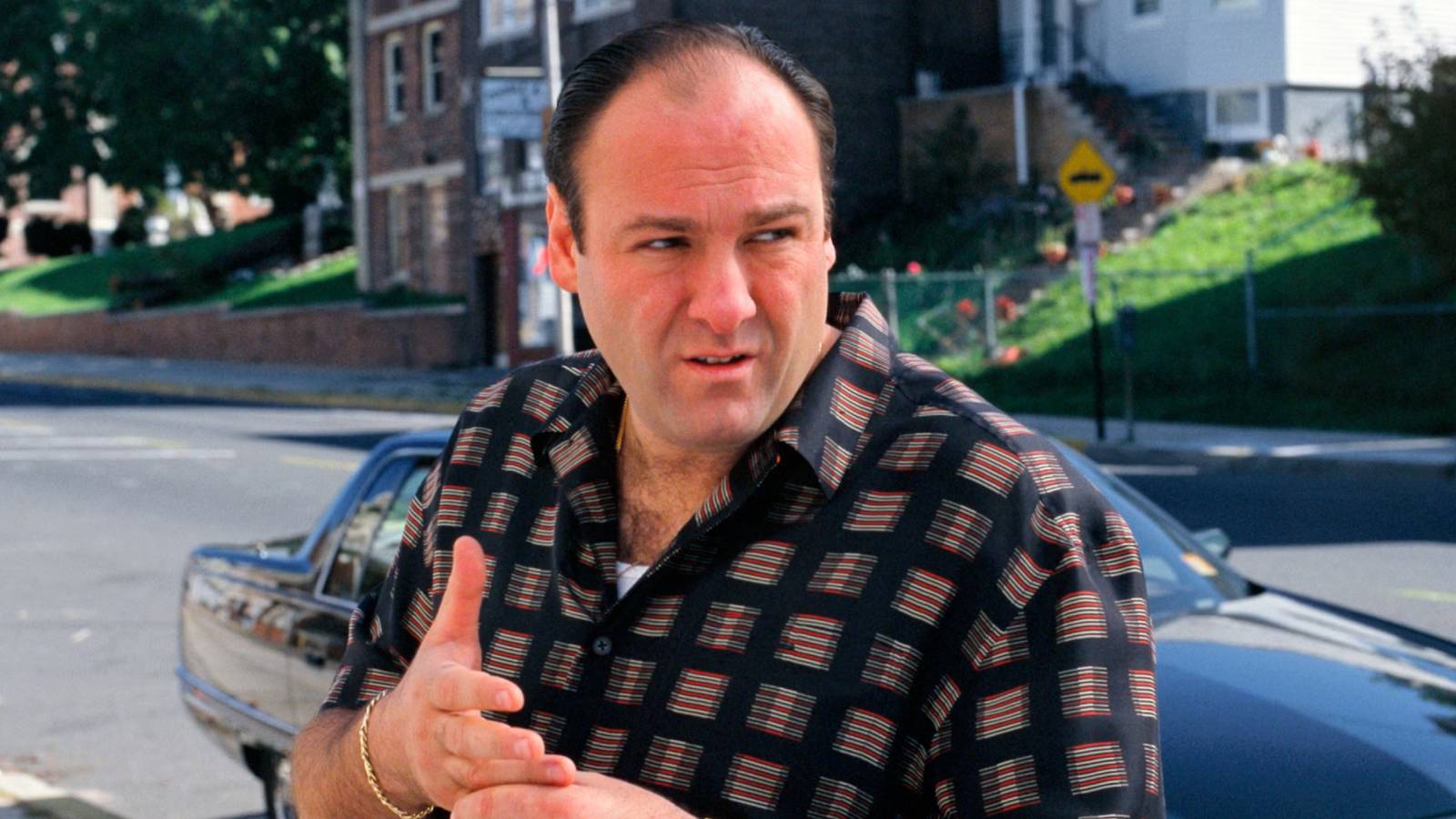
With stories that take place over the course of several years, or, in some cases, even decades, TV shows are able to create complex, multifaceted characters with a wide capacity for change and nuance. TV villains are rarely so cut and dry as simply being the "bad" to their protagonist's "good." A well-written and well-acted villain invites a level of sympathy that complicates a show's depiction of right and wrong. Thanks to Walton Goggins' undeniable charisma, Justified's Boyd Crowder was entertaining and soulful to the point that many viewers found themselves rooting for crime to prevail over justice. Barry, meanwhile, featured a Chechen mob enforcer who won hearts even as he killed ruthlessly. In both shows, the antagonists drew enough sympathy that the "heroes" had villainous traits in their own right. Whether they are able to convey some level of logic to their diabolical behavior or simply have such an alluring personality that viewers are left questioning their own morality, the best TV villains not only keep their heroes from their goals, but challenge their very way of thinking. In many cases, that ability to complicate a story comes down to a villain's pure, undeniable lovability. Tony Soprano The Sopranos Known today as the character who kickstarted the trend of anti-hero protagonists, James Gandolfini's Tony Soprano was ahead of his time. In just its fifth episode, The Sopranos changed television by showing Tony Soprano killing a man on-screen. While the man had committed the mafia's cardinal sin of ratting to the FBI, the man posed no threat to Tony, who went out of his way to strangle him. This was just the beginning of Tony's on-screen descent into violence, as he would later execute one of his closest friends and even suffocate his own nephew, among plenty of other villainous acts. Yet at the same time, James Gandolfini made it almost impossible not to like Tony Soprano. He was palpably charismatic, deeply emotionally attached to animals and young, innocent people, and, at least in his own mind, able to justify nearly everything he did. By the end of The Sopranos, little evidence remains to suggest that Tony is a good person, but he was undoubtedly a pleasure to watch. Ben Linus Lost Ben Linus' first impression on Lost was that of a deadly nuisance that the survivors of flight Oceanic 815 couldn't get rid of. Yet as the Island's lore began to take shape, Ben actually proved to be one of the show's sadder and more selfless characters. Ben knew the Island's secrets, including the presence of the Light and Jacob's search for Candidates to protect it. A deserter of the manipulative Dharma Initiative, Ben had been doing the Island's bidding long before the Oceanic 815 survivors ever arrived, yet he had little to show for it. Even after years of working alongside Richard, Ben had actually never been personally graced with Jacob's presence. Despite feeling slighted and offended, Ben continued to support Jacob and resist the influence of the Man in Black, unlike John Locke, whose interactions with the Island left Ben incredibly jealous. In Lost's final, emotional moments, the show revealed that Hurley ultimately became the Island's protector, while Ben remained on the Island and served as his "number two," an endearing act of humility. Negan The Walking Dead After killing Glenn in The Walking Dead's most infamous death scene, Negan had a nearly impossible road ahead of him to get back into fans' good graces. For a good while after the shocking execution, redemption seemed out of the question for Negan, and even regaining his status as a love-to-hate villain was a challenge the character risked failing. Yet even as he continued down the path of The Walking Dead's most diabolical villain, Jeffrey Dean Morgan's performance gave Negan an undeniable magnetism. His dubious charisma made him compelling to watch, while the pure evil of his behavior made viewers invested in Rick's mission to defeat him. Instead of seeing his downfall, though, The Walking Dead did the impossible and managed to give Negan a sincere redemption arc. Today, The Walking Dead: Dead City has brought Maggie and Negan to a place of understanding and even begrudging care for one another, a concept that fans have accepted despite the fact that it would have sounded laughable after The Walking Dead season 7. Billy Hargrove Stranger Things Dacre Montgomery's portrayal of Max Mayfield's troubled older brother made the actor the center of a cultural moment for his portrayal of both the character's emotional complexity and his brazen mom-flirting sexuality. Even as he spent most of his stint on Stranger Things terrorizing Max and her friends and ultimately becoming a pawn of the Upside Down, Billy was a scene-stealer. Yet Billy's significance took an even more memorable and tragic turn at the end of season 3, when Eleven managed to tap into the deep-seated humanity that had been buried under the years of abuse that Billy himself had endured. At a pivotal moment, Billy managed to break free of the Mind-Flayer's influence and sacrifice himself for Max and the rest of the group. Not only did his death prompt one of Stranger Things' most memorable storylines as Max dealt with the aftermath, but it changed the legacy left by Billy himself, highlighting that he, too, was a victim of his and Max's toxic upbringing. Even in his comparatively short and villainous stay on the series, Billy became one of Stranger Things' most memorable and beloved characters. Harley Quinn Batman: The Animated Series Image via MovieStillsDB The character of Harley Quinn has had a meaningful role in everything from comic books to live-action movies, but the character was at her whimsical best in Batman: The Animated Series. While Margot Robbie's iteration of the character quickly dispensed with her relationship with the Joker in Birds of Prey, The Animated Series fully explored the depths of that toxic relationship and was better for it. Though Harley was undeniably aligned with the bad guys, her motive stemmed from an intense devotion to the Joker, despite his constantly subjecting her to physical and emotional abuse. While its animated and family-friendly format allowed the show to take this depiction to entertaining extremes, the emotional core of the situation was surprisingly earnest and sympathetic. Harley's complicated relationship with the Joker informed her entire character, as she tended to view Batman not as a hero or crime fighter, but as a nuisance to her love life. A poor judge of character and never in a completely sound state of mind, Harley Quinn brought a fun, unpredictable perspective to Batman: The Animated Series that was nonetheless shrouded in genuine, endearing emotional pain. Thrawn Star Wars Rebels Star Wars Rebels could have easily been a small, unassuming animated series that was drowned out by the rest of the sprawling Star Wars franchise. Yet its quality made Rebels a crucial connecting piece in the Star Wars timeline, endearing fans to its heroes and villains alike. Thrawn was a cruel and cunning officer of the Empire, but he was also uniquely sophisticated and surprisingly respectful. As a villain, Thrawn was unique in that he didn't look down on his enemies. Rather, a deep and purposeful understanding of his foes' culture, art, and history was what gave him the insight that made him such a capable tactical thinker. His general poise and high regard for his enemies made Thrawn an unexpected villain. Yet perhaps the most thought-provoking thing about him was not simply the respect he had for his foes, but the fact that he was able to feel that respect and still pursue them as mercilessly as he did. With so much depth and philosophy to unpack, Thrawn has long been a fan-favorite character to see on screen. Rita Repulsa Mighty Morphin Power Rangers Though she would go on to get a redemption arc, Rita Repulsa was iconic from the very beginning as an agent of evil, chaos, and whimsy. Her place among the Mighty Morphin Power Rangers cast of characters was inherently comical, as the show opened by ending her 10,000 years of imprisonment in a space dumpster. Finally freed by astronauts, the space witch resumed her goal of controlling the universe. Early in the show, Rita was comically evil, once seeking a gift in the form of a submissive planet and burning down her parents' house when she didn't get one. She nearly always met her match when confronted by the Power Rangers, and losses brought her comedic nature to the forefront as she would often descend into screaming tirades, then storm off with the declaration, "I have such a headache!" Rita was an endlessly entertaining villain, but she later had a change of heart, adopting the new title of Mystic Mother. She became an ally to the Power Rangers and proved to be much more capable of stopping evil than she was at practicing it. Gus Fring Breaking Bad Breaking Bad saw the rising trend of anti-hero protagonists and took it to the extreme, managing to change Walter White from an eccentric and pitiable chemistry teacher dying of cancer to a ruthless drug lord who had long lost all of his sympathetic traits. As the show went on, Walter's inability to collaborate, compromise, or jeopardize his inflating ego in any way made him a frustrating main character to watch. Giancarlo Esposito's Gus Fring offered a completely different portrait of a successful drug lord, one arguably more cunning and strategic than Walter, and certainly more personable. Gus offset his criminal enterprise by building an upstanding reputation in his community, running a pristine, functioning fast food chain and speaking out against illegal drug use. Despite his benevolent persona, though, Gus was merciless when it came to his illicit activities. As meticulous as Walter in his own way, Gus didn't bat an eye when ordering the death of anyone who jeopardized his fine-tuned operation. Seeing him switch between his legal and illegal personas was compelling, while the threat his competence posed to Walter made him a crucial piece of Breaking Bad's puzzle. Mr. Milchick Severance Tramell Tillman's Seth Milchick has a delightfully bizarre demeanor that adds a crucial level of whimsy to Severance's overall tone, even as he perpetuates the horrors the show's "innies" are forced to endure. Scenes where he doles out strange workplace rewards to the Macrodata Refinement department are among the show's most iconic, thanks largely to his broad smile and full-throated dance moves. Beyond being a fun-to-watch villain, though, Severance season 2 humanized Mr. Milchick in a way that gave viewers the opportunity to truly root for his success. Strange interactions with Lumon management revealed that Milchick was forced to tolerate racist microaggressions and character insults out of fear of retaliation if he were to speak out of turn. Mr. Milchick's singular personality and character depth paint a vivid picture of the reality of having a position of power in Lumon, making both the character and the areas that he is able to access one of the most compelling elements of the show. The Master Doctor Who The Master is the only other Time Lord in Doctor Who's sprawling timeline who comes close to giving the Doctor a run for his money. While the Master is set on destroying and humiliating the Doctor in addition to controlling the universe, the not-quite-eternal nature of Time Lords gives the Master and the Doctor an understanding of and arguably even a bond with one another. The character is also a rarity in that, like the Doctor, he is able to regenerate, allowing the Master to be played by different actors over decades. Also like the Doctor, every iteration of the Master brings their own flair to the character, bringing a unique level of versatility and new personalities to a single character. The Master was first portrayed by Roger Delgado beginning in 1971, and Delgado's version of the Master still holds a special place for fans who have watched the show from the beginning. Yet other iterations of the character, namely versions played by John Simms and Michelle Gomez, have also become fan favorites, allowing the character to continue to find new fans over 50 years later.
10 Most Universally Loved TV Villains Of All Time
Full Article
Original Source
Read the full article at Screenrant →KhanList aggregates and links to publicly available news content. We do not host full articles from third-party sources. Always verify important information with original sources.