
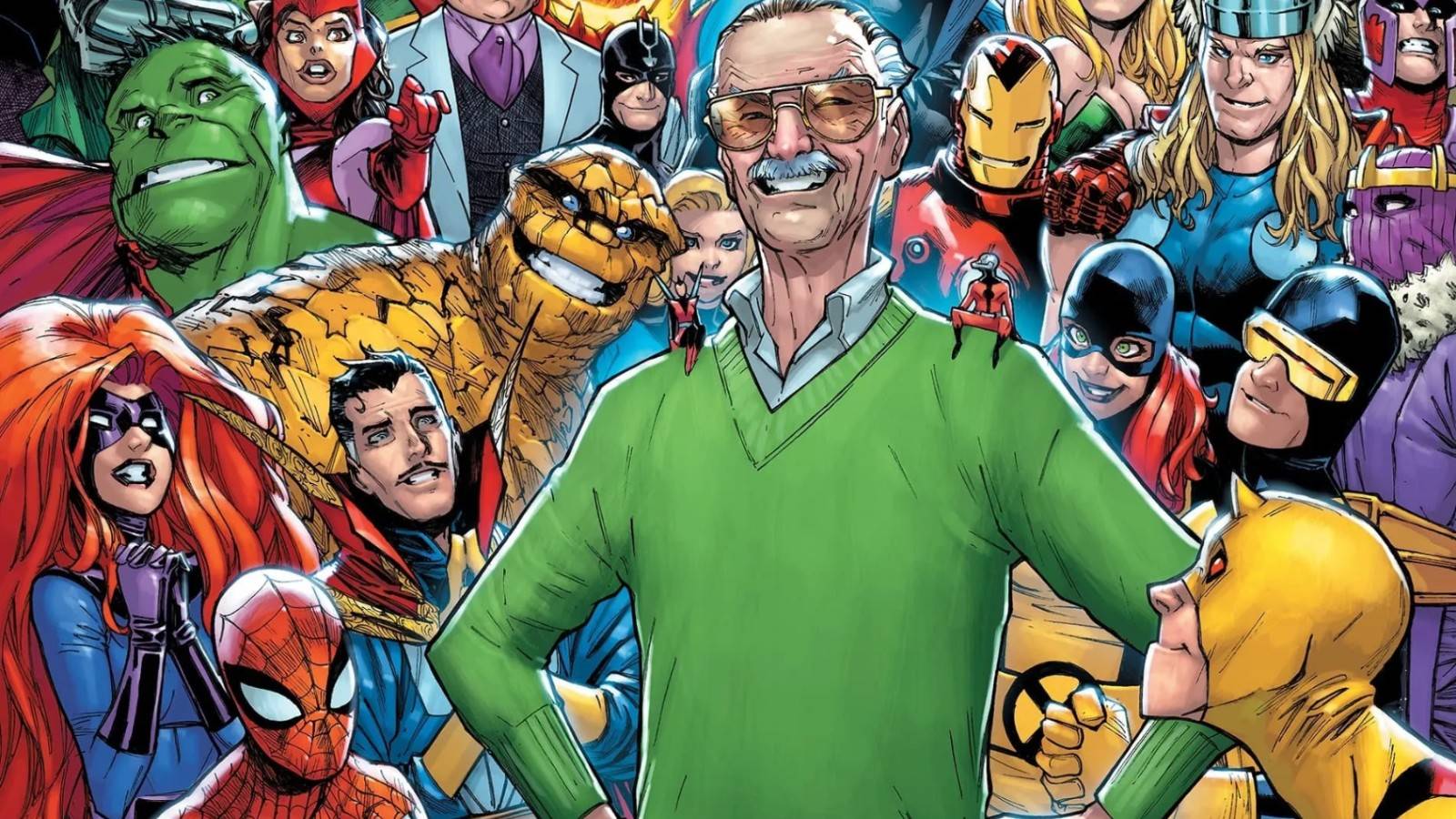
In the pantheon of comic book creators, no name is better known than Stan Lee. Lee, along with Jack Kirby, Steve Ditko, and a variety of other artists, reimagined what the superhero genre could be when they built the Marvel Universe in the 1960s. They added pathos to their characters, placing them in "our" world and giving them more realistic emotions and problems than had been seen on the comics racks. The world Lee and his peers built has stood as the blueprint of superhero comics ever since. Across his decades of work, Stan Lee was partly responsible for some of the most exciting and beloved fictional heroes of all time. They also built the "Marvel Method," giving the artists more freedom in the creation of the stories, with Lee being there to help plot and spice up the dialogue for a new generation of readers. And his weekly musings in Stan's Soapbox gave readers an inside look at not only how comics were made, but how Lee saw the world. But, when it comes down to it, it was the characters who were always at the center of it all, and Lee was there to help shepherd them along. These titans of the four color page have jumped from the page to the big screen, becoming massive franchises that reach millions of people. But when Lee started this journey all the way back in 1941 with a prose story in Captain America #1, he never could have dreamed that his imagination — and his characters — would capture the world's attention. Spider-Man Was The Reader In Hero Form Created by Stan Lee and Steve Ditko, Spider-Man may be the perfect superhero. With a suit and mask that covers his entire body, any reader can easily imagine themselves being the one fighting Green Goblin, and Peter Parker's money and girl troubles made him feel real. Readers could instantly connect with Spider-Man in a way they couldn't connect to any other hero. Adding to the power of the character was that, in his early adventures, Spider-Man was just a nerdy high school kid, not unlike the majority of readers. He lived a life not that different from theirs, but with the addition of superpowers. Spider-Man quickly became Marvel's most recognizable character and, based on how much money Spider-Man: Brand New Day has made at the box office, he isn't in danger of losing that status any time soon. Hulk Connected To Children While originally inspired by Dr. Jekyll and Mr. Hyde, the Hulk has become a character unlike any other in comics, and in fiction. Imagined by Stan Lee and Jack Kirby, Hulk went through a lot of changes early on, from gray to green, and from transforming at night to changing whenever Bruce Banner became enraged. And those changes helped make the character a huge hit with one specific demographic: children. The bright green pulled the kids in, but the Hulk's actions hooked them. Like a child, Hulk can't really control his emotions and tends to have tantrums. And, like kids, Hulk can't find the words to properly express what he is feeling (which leads to the tantrums.) Subconsciously, younger fans see a piece of themselves in Marvel's Green Goliath, and Stan Lee played a major role in making that happen. The Fantastic Four Is Stan Lee's Masterpiece The first Marvel series is also the best work Stan Lee and Jack Kirby ever did together. The Fantastic Four not only announced the new comic publisher with a bang, it set the stage for all that would follow. Lee and Kirby filled the team with inner turmoil and family squabbles, making them feel real, even if they burst into flames, stretched their bodies across city blocks, vanished from human sight, or were a big orange guy made of rocks. Across 102 issues, Lee and Kirby mixed sci-fi action with soap opera drama and recontextualized what a superhero story could be. The duo did some of their best work in those 8 years, creating a cavalcade of characters and ideas that remains unmatched to this day. And while there are still debates over who is really responsible for the idea of the Fantastic Four, there is no doubting Lee's role in making the team so iconic. Silver Surfer Was Stan Lee's Philosophical Side First appearing in Stan Lee and Jack Kirby's Fantastic Four #48, Silver Surfer soon became a favorite of Lee's. While it was Kirby who initially created the Silver Surfer, Lee was instantly drawn to the character, who he saw as a way to express his more philosophical side. For Lee, the Surfer was speaking for him, saying what he wanted the world to think and feel, to understand how foolish our petty fights are. The way Lee wrote Silver Surfer made the character a massive hit with college-aged readers who were themselves starting to dig into their own philosophical beliefs. The character also stars in what many consider to be Lee's greatest work, Silver Surfer: Parable, the Eisner-winning two-issue series with art by the legendary Moebius. Iron Man Was Stan Lee's Test As the story goes — told by the man himself — Stan Lee came up with Iron Man as a way to test himself. It was 1962, and most comics readers were young and, unsurprisingly, not fans of real world wars. Growing up learning to "duck and cover" in case a nuclear war starts didn't exactly make the youth look at the military industrial complex with love in their eyes. But Lee wanted to see if he could convince his readers to have empathy for an arms dealer, and that shockingly rich arms dealer ended up being none other than Tony Stark, the Invincible Iron Man. Sure enough, Lee was able to create an — on paper — unlikable archetype and make him a fan favorite. If Lee had never challenged himself, the Marvel Cinematic Universe as we know it would not exist today. Black Panther Broke Barriers Often credited as the first Black superhero (in reality, George J. Evans Jr.'s Lion Man, appearing in 1947, was the first), Stan Lee and Jack Kirby introduced readers to Black Panther in Fantastic Four #52 in 1966. The character, the prince of the technologically advanced nation of Wakanda, was an instant hit with readers. Black Panther broke a number of barriers not only in comics, but in pop culture overall. Depicting a Black hero who was treated as an equal to the other characters was virtually unheard of at the time. The character also paid homage to other Black heroes, his name coming from the boxer Harry Wills and the 761st Tank Battalion that fought in World War II, both nicknamed "Black Panther(s)." For Lee and Kirby, the goal was to create a hero that a sizable portion of their readers - young Black men - were not seeing. Still, T'Challa's journey to the page wasn't easy. Kirby initially designed the costume to show off the hero's face, but the art was redone to give him a full facemask shortly before printing. The X-Men Became A Symbol For Those Unjustly Attacked Originally an allegory for puberty, Stan Lee and Jack Kirby's X-Men have become the superhero team that best represents members of society that are hated for who they are. The team, a group of mutants who are born with their powers, have become a way for comics to discuss racism, homophobia, and more, and while Lee would later say that was always the plan, the early stories say otherwise. Still, there is no denying that, from the beginning, the X-Men were there to represent kids who felt different, and showed them that their differences shouldn't be hidden away. The X-Men initially struggled to find readers, and the book was essentially canceled with #66, running reprints for half a decade before 1975's Giant-Size X-Men reignited the concept and helped turn Marvel's mutants into one of the biggest sellers for decades. Rick Jones Was The Connection Tissue While Nick Fury was the thread that ran through several early Marvel movies, that role was occupied by a teen in the early comics. Making his debut in The Incredible Hulk #1, Rick Jones soon became the Forrest Gump of Marvel Comics. He was Hulk's sidekick, helped form the Avengers, and even took on the role of Bucky for a time. And while Stan Lee and Jack Kirby created Rick Jones, it was primarily other creators — most notably writer Roy Thomas — who saw the character's worth. Rick's greatest era came when he worked with Captain Marvel, helping the Kree warrior keep the peace with the use of the Nega-Bands. Still, Lee's use of Rick Jones throughout the early stories helped readers see how Marvel's comics were connected, something the MCU would repeat decades later. Daredevil Was A Spider-Man Copy Who Went In A Different Direction Created by Stan Lee and Bill Everett, Daredevil initially started out as something of a Spider-Man knockoff. He was agile and fought street level villains while cracking wise. But one thing that instantly set Daredevil apart was being blind. A play on the old "justice is blind" saying, this element made the character stand out from the crowd, and made his designation as "The Man Without Fear" all the more impressive. Not unlike Hulk, Daredevil went through a number of changes early on. It was artist Wally Wood who introduced the character's radar sense in Daredevil #5, and the iconic red costume in #7, and Lee was a part of those changes, writing the first 51 issues (except for #10) of the hero's adventures. Lee's stories, especially one where Murdock defends a Vietnam War veteran, helped set the stage for what Daredevil would become. Stan Lee Had Two Reasons To Create Captain Marvel Created by Stan Lee and Gene Colan in 1967, Captain Marvel, aka Mar-Vell, was brought to life for two reasons. The first was that Lee wanted to make sure that Marvel Comics had control over the name Captain Marvel, which had been laying dormant for over a decade since the original Big Red Cheese had vanished from the racks in 1953. The second goal was to create a character who connected to the growing resentment surrounding the Vietnam War. Lee and Colan's character was a Kree soldier who tired of war and, when the Kree Empire sent him to scout Earth for potential invasion, turned against his people. Lee's ability to tap into the public consciousness once again helped build a lasting legacy that has been passed down to multiple heroes over the years (and, as an added bonus, really sticks it to the Distinguished Competition).
10 Greatest Superheroes Stan Lee Ever Created
Full Article
Original Source
Read the full article at Screenrant →KhanList aggregates and links to publicly available news content. We do not host full articles from third-party sources. Always verify important information with original sources.