
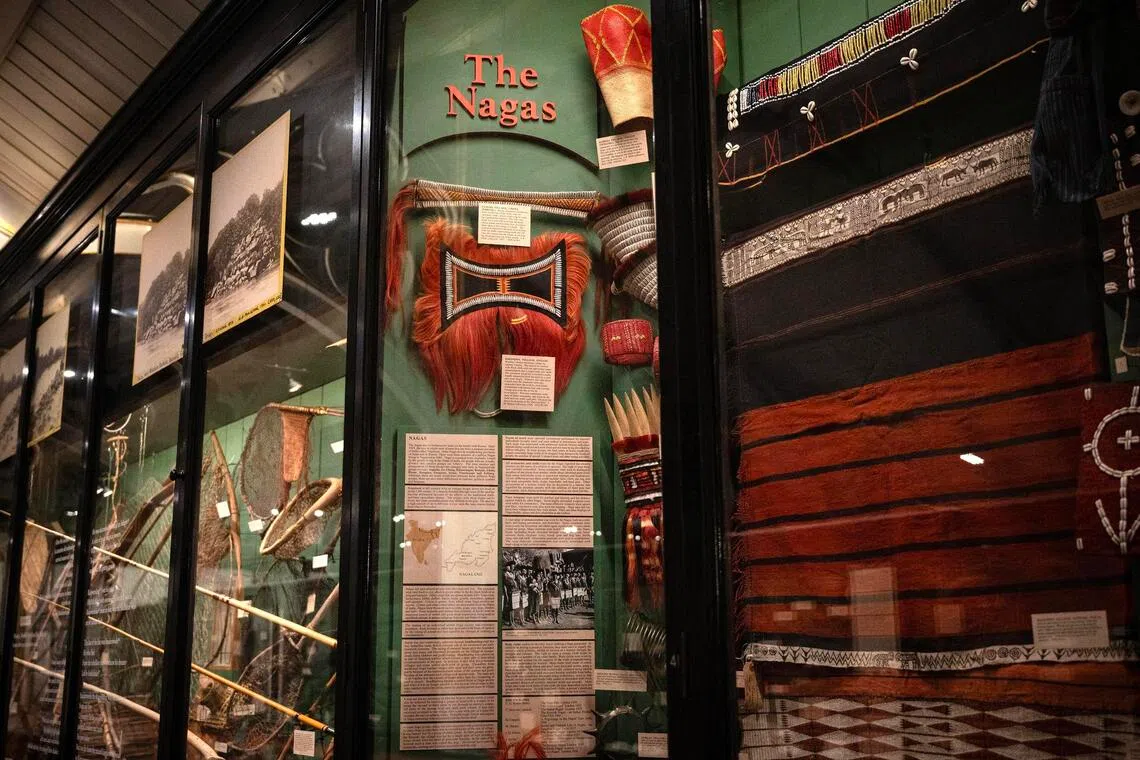
LONDON – Oxford University’s Pitt Rivers Museum will return the remains of 39 people taken during Britain’s colonial era to the Naga community in north-east India, the museum said on Sept 7.The museum, which holds the world’s largest collection of Naga artefacts, confirmed it was preparing the repatriation after the university approved a restitution request by the Forum for Naga Reconciliation (FNR).The remains “have been away from their homeland for far too long”, museum director Laura Van Broekhoven said in a statement.The human remains were collected in the early 20th century by British colonial administrators, and some remained on public display until 2020.“Repatriation, for the Nagas, is not simply about bones and ancestral remains finding their way back to the land but importantly about memory returning to where it belongs,” the FNR and other Naga organisations said in a statement, welcoming the agreement.The request covered 40 sets of human remains, Pitt Rivers Museum said.Oxford University approved the return of 39 of them on July 13, concluding that one specimen “does not have a clear provenance as Naga”.The museum said it was “working closely” with the Naga community to agree a date for a handover ceremony, which has not been set yet.The agreement forms part of a wider international movement to repatriate artefacts and human remains acquired by Western institutions during the colonial era.In 2022, London’s Horniman Museum returned 72 artefacts to Nigeria, including 12 Benin bronze artefacts, and earlier in 2026 the University of Edinburgh returned the skulls of six people to a Native American group.Greece has for decades demanded the return from Britain of the Parthenon Marbles, saying they were looted in the early 19th century by Lord Elgin, British ambassador to the Ottoman Empire.London insists they were legally acquired and successive British governments have noted that the decision rests with the British Museum, where they are kept. AFP
Oxford University museum to return human remains to Naga people
Full Article
Original Source
Read the full article at Straitstimes →KhanList aggregates and links to publicly available news content. We do not host full articles from third-party sources. Always verify important information with original sources.