
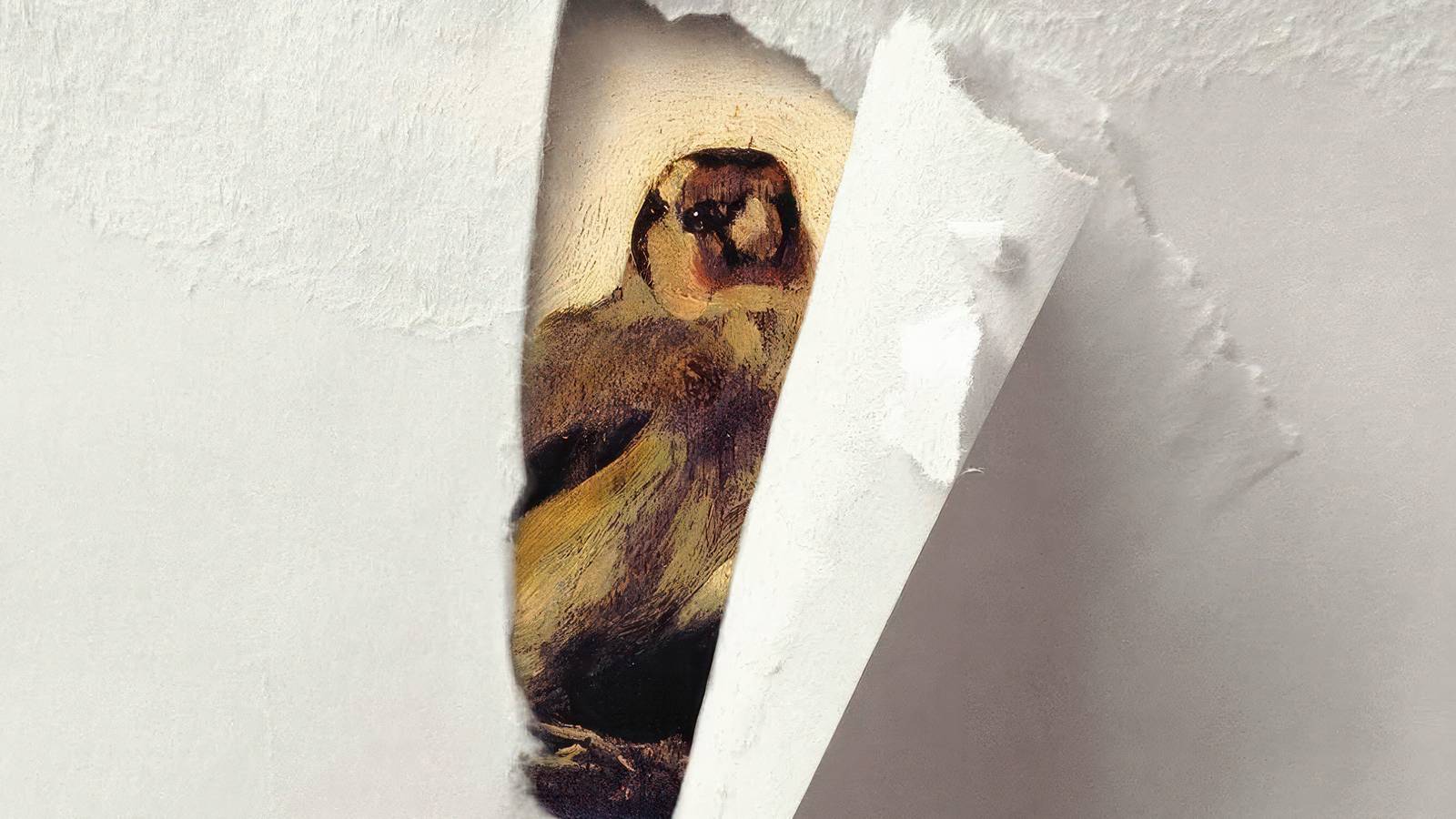
The past fifteen years have been an interesting time for fiction. Reading in general has been under assault from screens and scrolling, yet some writers have still stubbornly clung to the idea that novels can provide a unique experience. Waging war against our shrinking attention spans, they've penned several modern classics. This list looks at the very best American books of the last decade-and-a-half, from historical epics to intimate character studies. Together, they serve as a great reminder of the medium's capacity to help us understand our rapidly changing world, all while becoming strong contenders for the title of Great American Novel this century. 10 'All the Light We Cannot See' (2014) Image via Scribner "Open your eyes and see what you can with them before they close forever." Plenty of new World War II novels come out every year, yet Anthony Doerr cut through the noise with this lyrical, moving drama, anchored in meticulous historical research. All the Light We Cannot See charts two seemingly unrelated lives destined to intersect. Marie-Laure LeBlanc, a blind French girl, flees Nazi-occupied Paris with her father, while Werner Pfennig, a German orphan whose talent for engineering earns him a place within Hitler's military machine. Although the backdrop is dark, Doerr's prose is frequently vivid and highly descriptive, immersing us in sensory details, particularly sound and touch. Not to mention, the plot itself rolls by at a steady clip, ensuring our attention never wavers. Not for nothing, the book took home that year's Pulitzer Prize. 9 'Trust' (2022) Image via Riverhead Books "Everyone had a version of the story." Another Pulitzer winner, Trust is an inventive gem from writer Hernan Diaz, whose new book Ply is slated for release in September. The novel revolves around a legendary New York financier and his enigmatic wife during the early twentieth century, but Diaz refuses to tell their story from a single perspective. Instead, it unfolds through four distinct sections, Rashomon-style, each presenting a different version of the same lives. Every shift in perspective adds a new layer to the book. As those conflicting accounts accumulate, we're forced to reconsider everything we thought we knew. We slowly realize that the central mystery isn't simply what happened, but who possesses the power to shape history itself. Diaz uses this challenging structure to touch on everything from wealth and marriage to the power of authorship itself. 8 'Annihilation' (2014) Image via Farrar, Straus and Giroux "The tower, which was not supposed to be there..." Before it was one of the most striking sci-fi movies of the 2010s, Annihilation was a Nebula-winning novel. The tale chronicles an expedition of four women entering Area X, a mysterious region where the natural world has undergone impossible transformations. The plot is mostly the same as the movie's, but where director Alex Garland serves up body horror, author Jeff VanderMeer leans more into existential (even cosmic) dread. Rather than treating Area X as a puzzle waiting to be solved, he transforms it into a source of profound psychological and philosophical unease (very much paying homage to the film Stalker). The mood is a combustible mix of wonder and uncertainty, an eerie sense of danger ever-lurking. All in all, Annihilation combines sci-fi, horror, ecological fiction, and mystery into a finished product that's unlike anything else published in the last 15 years. 7 'The Candy House' (2022) Image via Scribner "What if nothing could ever be forgotten?" The Candy House is writer Jennifer Egan's sequel to her acclaimed 2010 book A Visit from the Goon Squad, which won the Pulitzer. Like its predecessor, The Candy House is a sequence of interrelated short stories featuring the same sprawling cast of characters. At the center of it all is a revolutionary technology capable of allowing people to store and share their memories, fundamentally altering how individuals experience relationships, history, and personal identity. The first book was psychologically rich as well as formally daring, shifting between different narration styles and serving up several experimental chapters, like one that famously took the form of a PowerPoint presentation. A similar recipe for deep characterization and stylistic innovation animates The Candy House. It adds up to a sweeping, colorful, symphonic novel, gracefully dodging the sophomore slump. 6 'The Goldfinch' (2013) Image via Little, Brown and Company "Caring too much for objects can destroy you." The movie adaptation was awful, but Donna Tartt's original novel is brilliant, almost as good as her debut The Secret History. The story follows Theo Decker, whose life is forever changed after surviving a terrorist bombing at a New York museum that kills his mother. In the chaos that follows, he impulsively takes a small Dutch masterpiece—Carel Fabritius' painting The Goldfinch—setting in motion a remarkable journey. The artwork becomes the MacGuffin that drives the whole plot, providing the narrative with real momentum, yet Tartt also gets ambitious with the book's themes. Indeed, Theo's quest sees him dealing with grief, addiction, crime, art world politics, and the ups and downs of friendship. He's a remarkably three-dimensional protagonist, one whose flaws make him feel deeply human. 5 'The Topeka School' (2019) Image via Picador "The stories we tell ourselves become the stories we live." The defining project by Ben Lerner, a master of autobiographical fiction (his latest book, Transcription, came out this year, also receiving rave reviews). The story focuses on Adam Gordon, a gifted high school debater navigating adolescence. His psychologist parents, meanwhile, struggle with professional and personal challenges. The book shifts between perspectives and periods, painting a detailed character portrait. Although rooted in the experiences of just a single family living in Kansas in the 1990s, the novel ultimately becomes a snapshot of the broader social dynamics that define America in the early 21st century. In particular, The Topeka School has a lot to say about identity, the crises of self, and the issues facing many young men at this moment in history. 4 'Lincoln in the Bardo' (2017) Image via Random House "The dead are not always gone." Lincoln in the Bardo is an experimental novel by legendary short story writer (and meditation enthusiast) George Saunders. The book takes place during a single night in 1862 after the death of Abraham Lincoln's young son, Willie. Set within a cemetery populated by spirits trapped between life and death (a concept drawn from Buddhism), the story unfolds through an extraordinary chorus of voices, with ghosts commenting on one another, recalling fragments of their former lives, and observing Lincoln's overwhelming sorrow as he visits his son's crypt. In other words, rather than being a conventional historical novel, Lincoln in the Bardo is a strange, moving, surprisingly colorful study of grief and memory. It sends a strong message about forgiveness and empathy, as well as the connections that bind people together across generations. 3 'The Underground Railroad' (2016) Image via Doubleday "If you want to see what this nation is all about, you have to ride the rails." This is the most well-known book by Colson Whitehead, author of novels like The Nickel Boys and the underrated zombie story Zone One. The Underground Railroad reimagines one of the most familiar metaphors in American history, asking: What if the Underground Railroad had actually been a physical railroad running beneath the country? In this alternate history, an enslaved woman named Cora escapes a Georgia plantation and begins a perilous journey northward. Each stop along the railroad presents a different vision of America, revealing new forms of oppression and exploitation and suggesting that freedom is rarely as straightforward as reaching a single destination. It's an ambitious premise that could easily have crashed and burned, but Whitehead strikes the perfect balance between historical realism and speculative "what ifs." 2 'My Name is Lucy Barton' (2016) Image via Random House Trade Paperbacks "I would like to say a few things about my life." My Name is Lucy Barton is a character-driven drama by Elizabeth Strout, set in the same universe as her Pulitzer-winning 2008 novel Olive Kitteridge. The book follows the title character as she recovers from a lengthy hospital stay in New York City while being unexpectedly visited by her estranged mother. Over several days, their conversations drift between memories, family history, small-town gossip, and long-buried hurts. Strout possesses a rare gift for finding profound meaning in ordinary moments. Her prose is elegant without drawing attention to itself, allowing subtle gestures and fragmented conversations to reveal key, intimate details. Strout is also an incredibly nuanced and compassionate writer. For example, she frequently engages with difficult subject matter, but ensures that every character feels complex and real, never casting them simply as a villain or victim. 1 'Crossroads' (2021) Image via Farrar, Straus & Giroux "We all imagine ourselves to be better than we are." Jonathan Franzen's 2001 book The Corrections was hailed by many as a new Great American Novel, though, in some ways, his 2021 effort Crossroads is better. Once again, it's a family saga, this time looking at the Hildebrandts, each of whom is standing at a personal crossroads. Russ, a pastor questioning both his faith and his marriage; Marion, his deeply complicated wife; and their children, each wrestling with ambitions and failures. Crucially, Franzen allows every character to emerge as a fully realized individual rather than simply serving the larger narrative. On top of being a great ensemble character study, Crossroads is also a brilliant time capsule of the 1970s in all their shifting, disillusioned glory. While the prose style might not be as ambitious as some of Franzen's other books, the conversations sparkle, and the plot is loaded with charming twists and turns.
10 Greatest American Books of the Last 15 Years
Full Article
Original Source
Read the full article at Collider →KhanList aggregates and links to publicly available news content. We do not host full articles from third-party sources. Always verify important information with original sources.