
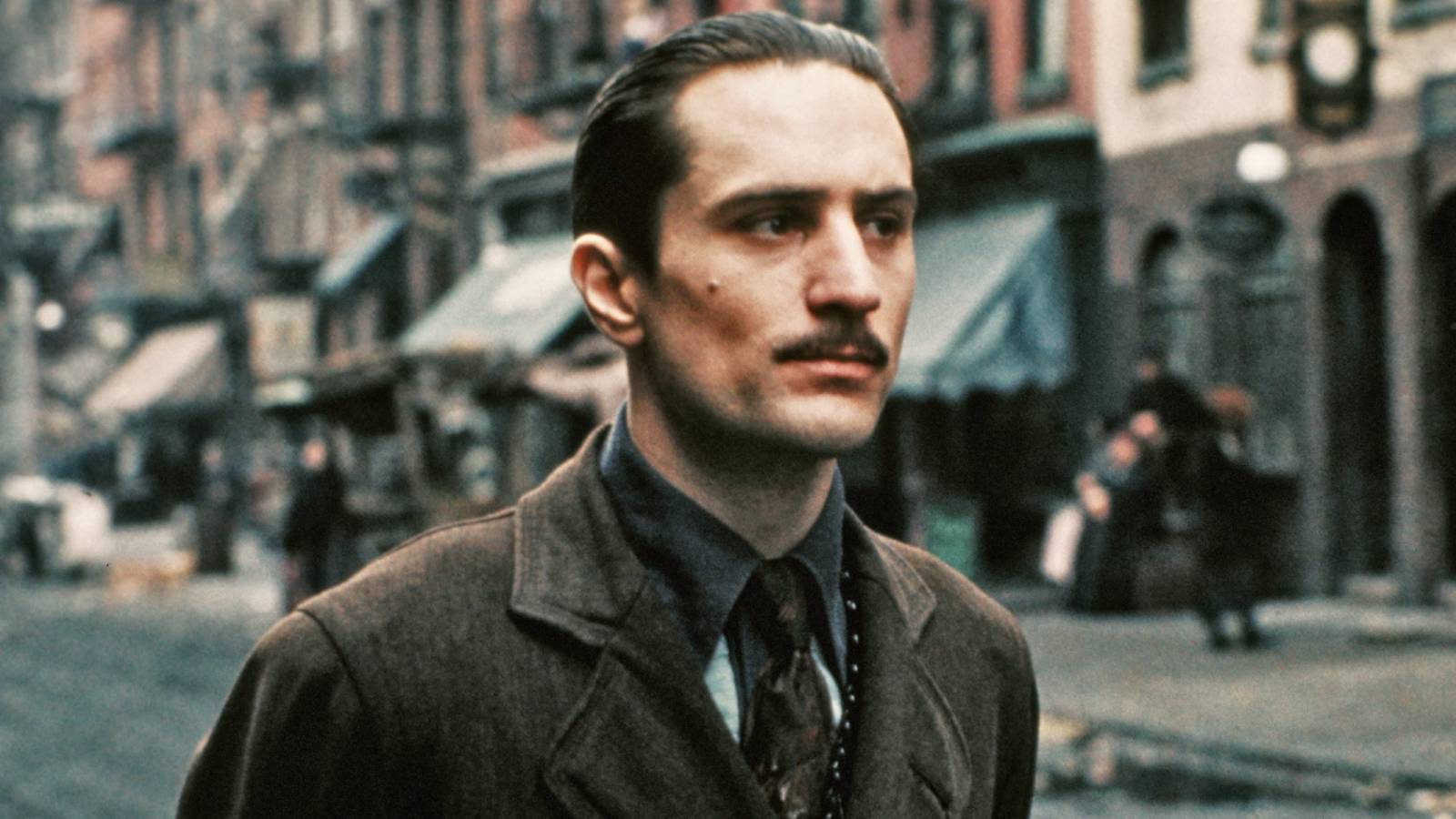
Image via Paramount Pictures Published Oct 28, 2026, 1:41 PM EDT Michael Block is a 14 time GLAM Award nominated writer, producer, and host of the podcast Block Talk. Throughout his time in the entertainment industry, he has worked on and off Broadway as a stage manager, written several produced plays, critiqued hundreds of theatrical performances, drag and cabaret shows, and has produced events randing from drag competitoons to variety concerts! On Block Talk, he interviews nightlife personalities, covers the wide world of entertainment through features, ranking episodes, and recaps ALL of Drag Race, as well as Dragula and Survivor. He has interviewed hundreds of RuGirls that span the globe at DragCon NYC, DragCon LA, and DragCon UK. In his free time, he makes one-of-a-kind jewelry and gift baskets with his mom. He is a proud member of the LGBTQ+ community. Sign in to your Collider account The gangster film remains one of cinephiles' favorite crime subgenres. These movies often explore the dark underbelly of ambition, subverting traditional social structures to tell a gripping story of power, family, and survival. Often examining rags-to-riches empires where anyone who crosses them gets whacked, these films deliver high-stakes thrills led by ruthless anti-heroes who will do anything to keep control. With so many incredible gangster films in movie history, the best ones often hook you immediately. After only ten minutes, it was clear that these ten gangster films would be instant masterpieces. From one of the most influential films ever made to a thriller inspired by real-life gangsters, these movies made a clear impact from the start. 'Carlito's Way' (1993) Image via Universal Pictures Based on the work of Judge Edwin Torres, Brian De Palma's Carlito's Way tells the story of Carlito Brigante (Al Pacino), a Nuyorican former drug kingpin released early from prison after serving five years of a thirty-year sentence. Though he rejects violence and a gangster life, his corrupt lawyer, Dave Kleinfeld (Sean Penn), and rising gangster Benny Blanco (John Leguizamo) drag him back into the New York underworld. In less than ten minutes, De Palma and screenwriter David Koepp establish the entire world. Rather than building to a surprise climax, they boldly start at the very end with Carlito shot on a subway platform. It's no longer about whether he survives; it's about how he got there. Tagged with his lyrical voice-over, Carlito's code, humor, and resignation are immediately revealed. The film then pushes back to the past, where he walks out of court as a free man. You're hooked, trying to figure out how this man died when he literally got his life back. 'Casino' (1995) Image via Universal Pictures Martin Scorsese's epic gangster film Casino adapts Nicholas Pileggi's nonfiction book, tracking the rise and fall of mob-controlled Las Vegas casinos in the '70s and '80s. Sam "Ace" Rothstein (Robert De Niro), a genius sports handicapper, is sent by the Chicago mob to run the Tangiers Casino, with Nicky Santoro (Joe Pesci) there to protect him and the mob's profits. Ace's steady, meticulous management unravels as Nicky's violent street crimes, FBI investigations, political corruption, and volatile marriage to Ginger McKenna (Sharon Stone) take hold. Within the first ten minutes, Casino uses sensory overload, kinetic editing, and a biblical visual and auditory language to tell the audience how this epic tragedy will end. Two minutes in, Scorsese kills Ace in a vehicle explosion, establishing a fatalistic framing where any sense of safety is obliterated. As Ace's body is tossed in the air, the explosion leads straight into the iconic title sequence. Scorsese then juxtaposes the neon lights of the Vegas Strip with Johann Sebastian Bach, reminding us that this gritty story is something much grander. 'Goodfellas' (1990) Image via Warner Bros. Pictures Based on Pileggi's nonfiction book, the biographical film Goodfellas follows mob associate Henry Hill's (Ray Liotta) rise and fall. The biographical film details Henry's life inside the Lucchese crime family alongside partners Jimmy Conway (De Niro) and Tommy DeVito (Pesci). From his start as an errand boy for mob capo Paulie Cicerto (Paul Sivero) to his federal betrayal and entry into the Witness Protection Program, Goodfellas combines breakneck technical direction with an authentic, unglamorized look at the inner workings of organized crime. Rather than start with an origin story, Goodfellas opens with three men driving in silence. When a strange thumping causes them to pull over, they open the trunk to find a bloody, half-dead man in it. Tommy stabs him, Jimmy shoots him, and then Henry Hill delivers the infamous line, "As far back as I can remember, I always wanted to be a gangster." It then cuts to a freeze-frame montage, narrated by Henry like a scrapbook of memories, establishing young Henry's (Christopher Serrone) formative years in a hectic sequence seen through the adoring eyes of someone about to willingly corrupt himself. 'Mean Streets' (1973) Image via Warner Bros. Directed by Scorsese from a script he co-wrote alongside Mardik Martin, Mean Streets follows Charlie Cappa (Harvey Keitel), a low-level mob collector in Little Italy, as he tries to balance his Catholic guilt and career ambitions with his loyalty to Johnny Boy (De Niro), an explosive and reckless friend drowning in dangerous debts. A raw, street-level, deeply personal story of faith and a flawed brotherhood, Mean Streets established Scorsese's signature style and became a blueprint for modern crime dramas. The film's opening single-handedly spearheaded a new, stylized cinematic language. Scorsese's voice provides Charlie's inner monologue: "You don't make up for your sins in church. You do it in the streets. You do it at home. The rest is bull—t, and you know it." In a single line, Scorsese sets up the film's entire thematic conflict. The first visual is then Charlie looking at his reflection in a mirror under a forbidding crucifix. The modern needle drop is born with The Ronettes' "Be My Baby," a moment of complete cinematic subversion for '70s Hollywood. 'Miller's Crossing' (1990) Image via 20th Century Fox In Miller's Crossing, the neo-noir gangster film from Joel and Ethan Coen, the Prohibition-era set drama centers on the vicious power struggle between rival mob factions: the Irish mob led by the reigning boss, Leo O'Bannon (Albert Finney), and the Italian mob, led by challenger Johnny Caspar (Jon Polito). The film follows Tom Reagan (Gabriel Byrne), Leo's sharp, cynical right-hand man and consigliere. The celebrated film rests on the Coens' masterful atmospheric worldbuilding. It introduces the film's three pillars through action and body language. Casper is the passion, monologuing about ethics and character. O'Bannon is power, listening patiently while controlling the room. Reagan is the brains, remaining silent, observing, and calculating as he's established as the quiet mastermind. Within minutes, the audience is immersed in fast-paced underworld vocabulary, thematic poetry, and enough high-stakes exposition to carry the film through. 'Once Upon a Time in America' (1984) Image via Warner Bros. Pictures Lifted from Harry Grey's semi-autobiographical novel, Sergio Leone's epic crime drama Once Upon a Time in America follows a group of Jewish gangsters in New York City over five decades, centered on David "Noodles" Aaronson (De Niro) and his lifelong best friend, Max Bercovicz (James Woods). The film tracks them from impoverished youths in the Jewish slums to Noodles' return after decades of hiding. Through non-linear storytelling, the opening minutes discard genre conventions by plunging viewers into a haunting, dreamlike state of guilt and memory. The film opens in shadow-drenched noir as thugs hunt and interrogate a woman named Eve (Darlanne Fluegel) for Noodles. Inside an opium den, Noodles lies in a daze as a phone endlessly rings. Rather than explaining who is who, Leone trusts the audience to immerse themselves in the atmosphere, as past and present are woven into a tapestry of regret. With Ennio Morricone's melancholic score, Once Upon a Time in America becomes a memory play. 'Scarface' (1983) Image via Universal Pictures With a screenplay by Oliver Stone, De Palma's Scarface follows the rise and violent fall of Tony Montana (Pacino), a Cuban refugee who arrives in Miami during the 1980 Mariel boatlift. Working his way up from a small-time job to eliminating drug lord Frank Lopez (Robert Loggia), Tony acquires great wealth, living an aggressive, unconstrained version of the American Dream, only for his empire to collapse due to severe cocaine addiction and a war with Bolivian cartel boss Alejandro Sosa (Paul Shenar). Known for intense violence and a crude style, Scarface thrives because it wastes no moments. Rather than start off with a bang, it uses a slow-burning historical reality and tense dialogue to establish who Tony is at his core. The historical hook, featuring documentary footage, anchors a larger-than-life character in a gritty, hyperrealistic reality. The opening sees Tony questioned by immigration officers. In a single scene, we witness the infamous scare, his disdain for authority, and his core philosophy. From there, Tony's charisma carries you through the rest of his journey. 'The Departed' (2006) Image via Warner Bros. Pictures Written by William Monahan, Scorsese's The Departed is a high-stakes cat-and-mouse game in Boston where undercover state trooper Billy Costigan (Leonardo DiCaprio) infiltrates an Irish mob, while corrupt mob-planted cop Colin Sullivan (Matt Damon) rises through the police ranks, as both race to expose the other. A story of identity and duplicity, The Departed explores corruption, institutional failure, and the inescapable weight of one's background. The film's entire thematic foundation is introduced through mirror-image structure and tension. It begins with archival footage of Boston bus riots, set to The Rolling Stones' "Gimme Shelter," before Frank Costello's (Jack Nicholson) cynical voiceover cuts through the noise. His god-complex philosophy is introduced as rapid-fire editing showcases Sullivan and Costigan's trajectories. The prologue moves like its own mini movie before the title card even arrives: from then on, you know who the rats are, what they stand for, and the collision course they're on. 'The Godfather' (1972) Image via Paramount Pictures Francis Ford Coppola's epic gangster masterpiece The Godfather lifts Mario Puzo's novel to tell the story of the Corleone family, led by Don Vito Corleone (Marlon Brando), a powerful mafia boss. The story tracks Michael Corleone (Pacino) as he descends into the family business following the assassination attempt on his father. The film examines how love and family can trap individuals in cycles of violence and moral compromise. The film begins in pitch darkness: "I believe in America." The camera pulls back to reveal the speaker, Amerigo Bonasera (Salvatore Corsitto), before moving to Vito sitting in a darkened office, petting a cat, and speaking in a raspy, measured whisper. His authority is visually established before he even utters a word, and the moral universe is revealed. Just outside the darkness, Connie's (Talia Shire) wedding is in full swing, the contrast exhibiting how family celebration and the brutal underworld exist side by side. 'The Godfather Part II' (1974) Image via Paramount Pictures Continuing the story through dual timelines, The Godfather Part II contrasts Michael Corleone's (Pacino) decline and moral isolation with flashbacks showing his father, Vito Corleone (De Niro), rising from a Sicilian orphan to a New York mafia kingpin. The bold structure masterfully explores themes of power, family betrayal, and moral corruption. Coppola brilliantly establishes the two timelines by contrasting young Vito's tragic, isolated origins with Michael's cold, institutional expansion of power in Lake Tahoe. First, we see young Vito looking out a quarantine window, vulnerable and wholly unprepared for the harsh reality behind his journey to a new life. Then, we see him sitting in a large chair where his feet don't reach the ground, evoking the classic trope of powerful figures sitting imposingly in large chairs and mirroring his introduction in the first film. Meanwhile, Michael is not fully engulfed in the role his father once held. It all ties together! The Godfather Part II Release Date December 20, 1974 Cast Al Pacino, Robert Duvall, Diane Keaton, Robert De Niro, John Cazale, Talia Shire, Lee Strasberg, Michael V. Gazzo, G. D. Spradlin, Richard Bright, Gastone Moschin, Tom Rosqui, Bruno Kirby, Frank Sivero, Francesca De Sapio, Morgana King, Marianna Hill, Leopoldo Trieste, Dominic Chianese, Amerigo Tot, Troy Donahue, John Aprea, Joe Spinell, Abe Vigoda, Tere Livrano Runtime 202 minutes Director Francis Ford Coppola Writers Francis Ford Coppola, Mario Puzo
10 Gangster Movies That I Knew Would Be Masterpieces From the First 10 Minutes
Full Article
Original Source
Read the full article at Collider →KhanList aggregates and links to publicly available news content. We do not host full articles from third-party sources. Always verify important information with original sources.