
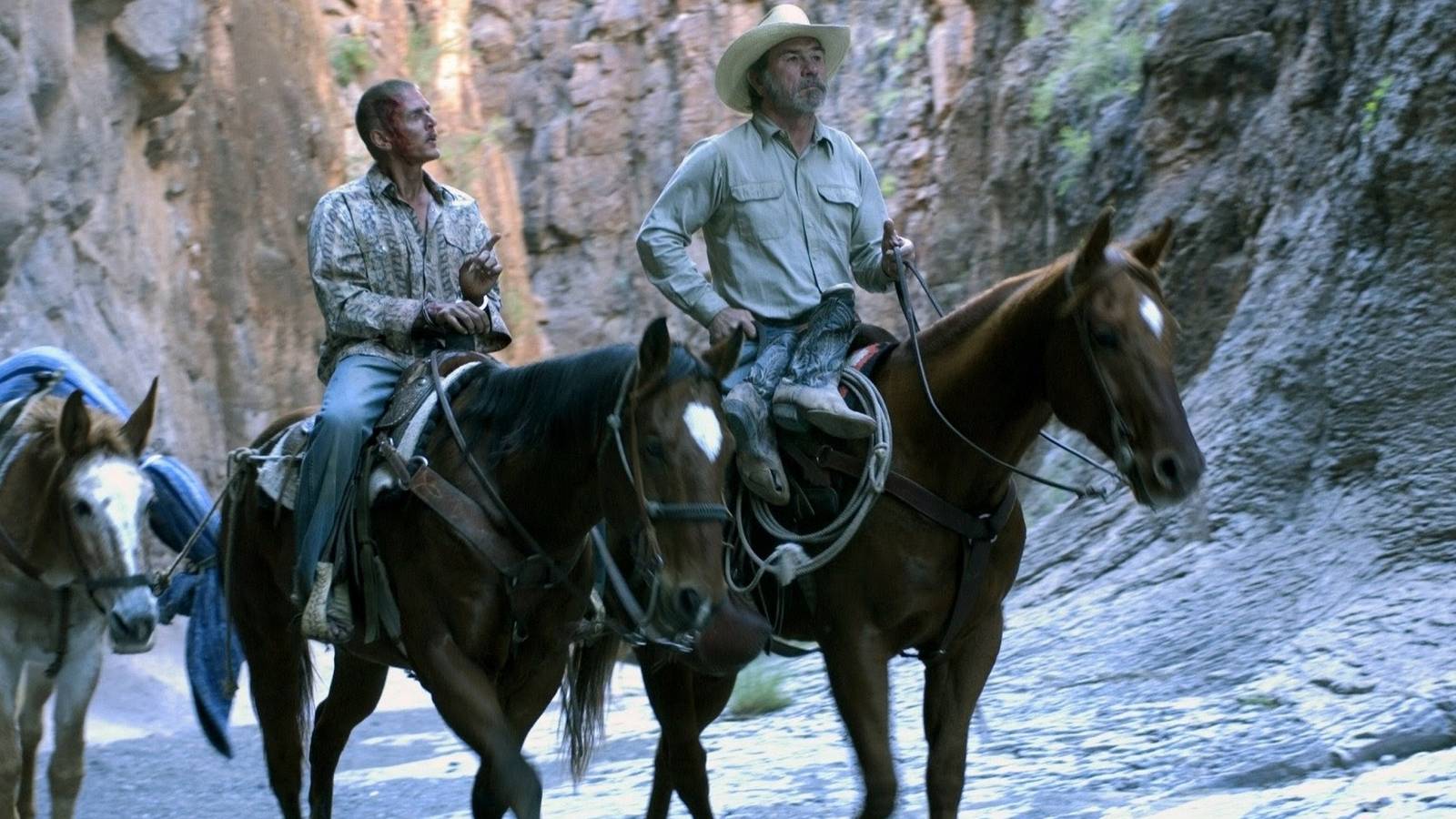
Image via Sony Pictures Classics Published Oct 31, 2026, 3:36 PM EDT Michael John Petty is a Senior Author for Collider who spends his days writing, in fellowship with his local church, and enjoying each new day with his wonderful wife and precious daughters. At Collider, he writes features, reviews, recaps, interviews, and breaking news on select occasion. In addition to writing about stories, Michael has told a few of his own, from supernatural thrillers to historical fiction. His Western short story, The Devil's Left Hand, received the Spur Award for "Best Western Short Fiction" in 2025 from the Western Writers of America, of which he is a member. Michael currently resides in North Idaho with his growing family. Sign in to your Collider account Everyone loves a good Western. Be it the classics like The Good, the Bad and the Ugly or Butch Cassidy and the Sundance Kid, or something a bit more obscure, there's room in every cinephile's library for a few great horse operas. While die-hard Western fans no doubt already know all the best genre "deep cuts," we put together a list of some of the most overlooked Western movies that deserve another shot. That's right, these are the movies that will rarely make those average "Top 10" lists. Despite the fact that this author prefers some of these movies to the classics (and other Western lovers may do the same), let's remember that these horse operas are the ones that probably won't first come to mind when folks think of the genre. In many circles, they have been largely forgotten in favor of bigger names, bigger stars, and even bigger shootouts that will blow you away. Still, there's something about these pictures in particular that brings Western fanatics back to them again and again, and hopefully those not as familiar with the genre will start to do the same. 'Old Henry' (2021) Image via Shout! Studios A recent Western flick that completely flew under the mainstream radar, Old Henry is the story of the titular former gunslinger (played masterfully by Tim Blake Nelson) whose quiet life with his teenage son, Wyatt (Gavin Lewis), is interrupted by some ne'er-do-wells looking to make trouble. Even if you've heard of Old Henry, it's not the first 21st-century Western that likely comes to mind when you think of the genre. It may be forgotten by many, but once you've seen it, that final act will stick with you. "You can't beat the past," the poster teaser reads, and Old Henry certainly proves that to be true. An introspective mix of classic Western fare in the spiritual vein of Unforgiven or Shane, this 2021 flick by Potsy Ponciroli excels for its slow-burn nature, relying on character work and the performance of its leading man to carry the film. Although not exactly action-packed, every gunshot carries real weight here, which is something of a novelty in the genre. 'The Ballad of Little Jo' (1993) Image via Fine Line Features Probably the most unconventional Western on this list, The Ballad of Little Jo loosely tells the true story of "Little Joe" Monaghan (played here by Suzy Amis). After birthing an illegitimate child, Josephine Monaghan ventures west in male garb to make a new life for herself. In that time, she falls for a Chinese laborer named Tinman Wong (David Chung), who is likewise pretending to be something he isn't in order to survive. Together, they build a life on the frontier. The Ballad of Little Jo is a fascinating portrait of how a woman fights to exist in a world, a frontier, dominated by men. Directed by Maggie Greenwald, the production doesn't follow the traditional Western plot. There are no real shoot-'em-ups here, nor does it fixate on the typical land-grabbing plots associated with the horse opera (though someone does try to take Jo's land, legally). Rather, it defies typical genre convention and subverts the viewers' expectations by fixating on daily hardships and struggles of frontier living. 'Angel and the Badman' (1947) Image via Republic Pictures Although there's a remake presently in theaters, the original Angel and the Badman is typically overlooked when folks examine the best of John Wayne's larger Western filmography. Produced by the Duke himself, the film follows Quirt Evans (Wayne) as he finds himself wounded and cared for in the home of a Quaker family. With his eyes set on the woman presiding over his care, Penelope Worth (Gail Russell), he considers giving up his wayward outlaw ways. Angel and the Badman reinvented the genre at the time, but has largely been overlooked in favor of other pictures. Of course, diehards already know and love the film well, but for casual Western audiences, the 2026 remake may be the first time you ever hear the title. Instead of watching it in color, give the original black-and-white classic a go — it's an excellent picture, if not just due to a young Wayne's comforting charisma. 'The Tall T' (1957) Image via Columbia Pictures When it comes to forgotten Western movies that are actually great, The Tall T deserves a quick highlight. Randolph Scott stars as cowboy Pat Brennan, a man who is stranded, kidnapped, and held for ransom. Why exactly it's called "The Tall T," we cannot say (apparently it has to do with the name of the ranch), but it was based on the short story "The Captives" by Elmore Leonard. In addition to Scott's solid (as always) performance, Richard Boone of Have Gun—Will Travel fame plays the lead antagonist, Frank Usher. The pair make the already claustrophobic and suspenseful feature stand out, as Brennan does all he can to unravel the villains' plot. The Tall T was one of several collaborations between Scott and director Budd Boetticher, and easily one of their best. 'The Three Burials of Melquiades Estrada' (2005) Image via Sony Pictures Classics One neo-Western flick that few remember comes from Tommy Lee Jones, who not only stars in The Three Burials of Melquiades Estrada, but also directed and co-produced the south-of-the-border picture. After rancher Pete Perkins (Jones) discovers his titular friend (Julio Cesar Cedillo) dead, he finds the man (Barry Pepper) responsible and forces him down to Old Mexico for a proper burial. As you can tell by the title, it takes a few tries to stick. Utilizing introspective flashbacks and some great performances by its leads, Three Burials hit theaters a few years before Jones would revisit the genre (and the region) in No Country for Old Men. Although that neo-Western far outshines this one, this 2005 entry has a bit more going for it than folks likely gave it credit for. It's a bit of a slow-burn, but it's worth it just for that powerful ending. 'The Ox-Bow Incident' (1943) Image via Warner Bros. Based on the popular novel of the same name, folks may consider this 1943 feature a classic in some circles, but in others, The Ox-Bow Incident has been largely swept away by time. A detailed examination of how a mob can sway "justice" in whichever direction the wind blows, this film is a powerful reminder of why the law exists in the first place. As a few cattle rustlers are suspected of murder, things get wildly out of hand as the locals take matters into their own hands. "Somewhere along the line we forgot to ask if we were right." That's the famous line from this book-to-screen adaptation, and it certainly rings true no matter which period you exist in. Henry Fonda plays the leading man here in one of his earlier Westerns (pre-My Darling Clementine), and basically steals the show. Collider Exclusive · 8 Questions · 2 Minutes Which Western Icon Are You Most Like? No Name · Doc Holliday · Wyatt Earp · Mattie Ross Pick your name, your gun, your horse and how you spend a night in town, and we will tell you which legend of the Old West you would have been. Four icons are waiting at the end of this: the stranger who never gives his name, the gambler who would die for a friend, the lawman who never wanted the badge, and the girl nobody has ever talked out of anything. 🚬No Name(Dollars Trilogy) 🃏Doc Holliday(Tombstone) ⭐Wyatt Earp(Tombstone) 🐎Mattie Ross(True Grit) FIND YOUR ICON → 01 The town is about to learn your name. What do they call you? In a Western, what people call you is already half the character. AThey never do find it out, so the stranger will have to do. BA nickname I picked up at a card table and never shook off. CMarshal, and most people say it with a bit of respect. DMy full name, and I will correct anybody who tries to shorten it. NEXT QUESTION → 02 What are you carrying? Everything out here is character, right down to what is sitting on your hip. AOne revolver I have had for years and have never once talked about. BA pistol, a knife and a deck of cards, and the cards do most of the damage. CA shotgun, because it tends to end arguments rather than start them. DMy father's gun, which is far too big for me, and I am carrying it anyway. NEXT QUESTION → 03 What are you riding? A hero and their horse is one of the oldest relationships in cinema. ASomething plain that nobody in town would look at twice. BWhatever I won last night, which may not be strictly mine yet. CA big steady horse that will not spook when things get loud. DA pony I overpaid for and named myself, and I will hear nothing against him. NEXT QUESTION → 04 You have got one evening in town. How does it go? The saloon is where these films quietly tell you who somebody really is. AOne drink at the far end of the bar with my back to the wall. BAt the card table, holding court, up forty dollars and climbing. CA quick drink, then a walk round town to see that everything is quiet. DUpstairs with the ledger, working out exactly what tomorrow is going to cost. NEXT QUESTION → 05 A stranger offers you money for a job that sounds like trouble. Somebody always turns up with a full purse and a bad idea. AI ask how much, and then I ask for a good deal more than that. BI say yes before he has finished, mostly because it sounds like a story. CI ask him who gets hurt if I turn him down. DI ask for the terms in writing before anybody shakes on anything. NEXT QUESTION → 06 Somebody is waiting for you in the street. What does the town see? Two people, an empty road, and everybody else watching from behind the shutters. ASomebody walking out very slowly who has not said a single word. BSomebody grinning, which everyone watching finds deeply unnerving. CSomebody making one last attempt to talk the other man down. DSomebody far too young to be out there, walking out regardless. NEXT QUESTION → 07 What is the one thing you will not do out here? The code is about the only thing west of the river that actually holds. AExplain myself to somebody who has not earned an explanation. BRide off and leave a friend standing out there on his own. CLet a whole town pay for a fight it had nothing to do with. DLet a grown man tell me I am too young to be standing here. NEXT QUESTION → 08 The job is finished. Where does the story leave you? Eight questions in, this is the one that decides your icon. AOn a ridge somewhere, riding away, without saying goodbye to anybody. BSomewhere warm and worn out, having enjoyed very nearly all of it. CHome, with the badge on the table and the whole thing behind me. DOlder, changed by it, and telling this story for the rest of my life. REVEAL MY ICON → The Dust Has Settled Your Western Icon Is…Four icons and four completely different ways of walking into trouble. This is the one you would have been out there, why it fits, and what it would have cost you. The Man With No NameYou have never explained yourself and you have never needed to, because people work out fairly quickly that you are the most capable person in the room without you ever having to mention it. Eastwood built the character out of everything he refused to do, stripping away the backstory, the speeches and every bit of reassurance until only the competence was left. You keep your own counsel, and while other people occasionally find that unnerving, you have never felt any real need to fix it for them. The Dollars films work because he genuinely is in it for himself right up until the moment he is not, and he never explains that part either. You would be gone before anybody got a chance to thank you. Doc HollidayYou are the funniest person in most rooms and the most loyal person in all of them, and you would be genuinely insulted if somebody suggested those two things were in any tension. Doc has no real reason to be in this fight beyond the fact that his friend is in it, which is the only reason he has ever needed for anything. You lead with wit, and it does a very effective job of hiding how seriously you take the handful of people you actually care about. Val Kilmer's performance is the most quoted in the entire genre because the jokes keep getting sharper as the situation gets worse. You would spend everything you had on this and still describe it as a good week. Wyatt EarpYou never wanted this job, and you took it anyway because the alternative was standing there watching somebody less careful do it badly, which is the most Western reason there has ever been. Earp is the reluctant authority figure, a man who came to town specifically to be left alone and somehow ended up answerable for all of it. You are protective by instinct, so when something goes wrong your first thought is who is exposed rather than who is to blame. These films understand that keeping order costs far more than breaking it, and that the person holding the line almost never gets thanked. You would do the whole thing again, and you would complain about it the entire time. Mattie RossNobody has ever successfully talked you out of something you had already decided was right, and a long line of grown adults has found that out the hard way. Mattie is the most relentless character in the Western canon and she manages it through argument, paperwork and flat refusal rather than a fast draw. You have no patience for being managed, so you negotiate, you check the details and you turn up exactly when you said you would. True Grit is the rare Western where the moral centre is the youngest person on screen and every adult around her has to catch up. You would get what you came for, and the film is honest about what that takes out of you. ↻ RETAKE THE QUIZ 'The Naked Spur' (1953) Image via MGM One of the handful of collaborations between Hollywood legend James Stewart and director Anthony Mann, The Naked Spur is not the most remembered of their shared Western works (that's probably either Winchester '73 or The Man from Laramie), but it is a riveting tale of suspense that deserves proper recognition. As Howard Kemp (Stewart) takes to the hills to hunt down a killer, he finds more than he bargained for. An exceptional Western that has aged quite gracefully, and it's no wonder, as the screenplay was nominated for an Academy Award back in its day. Stewart is phenomenal, of course, and although he wasn't a star limited largely to the genre, it's a reminder of how well-suited he is to it. More Jimmy Westerns, please! 'Blood on the Moon' (1948) Image via RKO Radio Pictures Robert Mitchum delivers one of his most complex and engaging performances in Blood on the Moon, a noir-fueled Western that is perfect for folks looking for a fun blend of genres. When Jim Garry arrives in town to help an old friend with a complication regarding land and cattle, things go from bad to worse when Garry discovers he may be on the wrong side of the conflict. Things get even dicey when the heart gets involved. Although not typically counted among the best Robert Mitchum movies, Blood on the Moon is what happens when you pull a noir star known for his moody and layered characters and toss him into a genre where good and evil are more often clear. The moral complexity is part of what makes Blood on the Moon such a memorable delight. It's a great time if you're looking for some black-and-white excitement. 'Open Range' (2003) Image via Touchstone Pictures One of Kevin Costner's few big-screen directorial Westerns, Open Range may not be as famous as Dances with Wolves or as notorious as Horizon: An American Saga, but it's arguably among his very best cinematic works. Costner stars as hired-hand Charlie Waite opposite Robert Duvall's "Boss" Spearman as they enter the cattle domain of a man unwilling to give them an inch. When things go south, things get bloody. Open Range has plenty of stellar action and memorable character work that contributes mightily to the genre. Some have gone so far as to call this underrated Western a masterpiece, and there's probably some truth to that statement. Duvall and Costner had such wonderful on-screen chemistry that we lament they never played in a horse opera together again. 'The Gunfighter' (1950) Image via 20th Century Studios A true masterclass in Western filmmaking, The Gunfighter is certainly well-known by Western lovers but has been largely forgotten in casual conversation. Gregory Peck plays Jimmy Ringo, a gunslinger who has become disillusioned with the rambling life he's led and hopes to finally set his guns aside. The problem is, he's lived by them for so long that the rest of the world isn't ready to let him hang them up. As one of the most psychologically rich Westerns of its day, The Gunfighter is profound for the weight that each trade of bullets carries. It's not known for its shoot-'em-up action or quick-draw suspense, but rather for the emotionally complex character work Peck does as Ringo on the screen. Western lovers like myself will already be intimately familiar with this picture, but genre tourists and newcomers alike ought to give it a go. The Gunfighter Release Date August 21, 1950 Cast Gregory Peck, Helen Westcott, Millard Mitchell, Jean Parker, Karl Malden, Skip Homeier, Anthony Ross, Verna Felton Runtime 85 Minutes Director Henry King Writers William Bowers, William Sellers, André De Toth
10 Forgotten Western Movies That Deserve To Be Called Classics
Full Article
Original Source
Read the full article at Collider →KhanList aggregates and links to publicly available news content. We do not host full articles from third-party sources. Always verify important information with original sources.