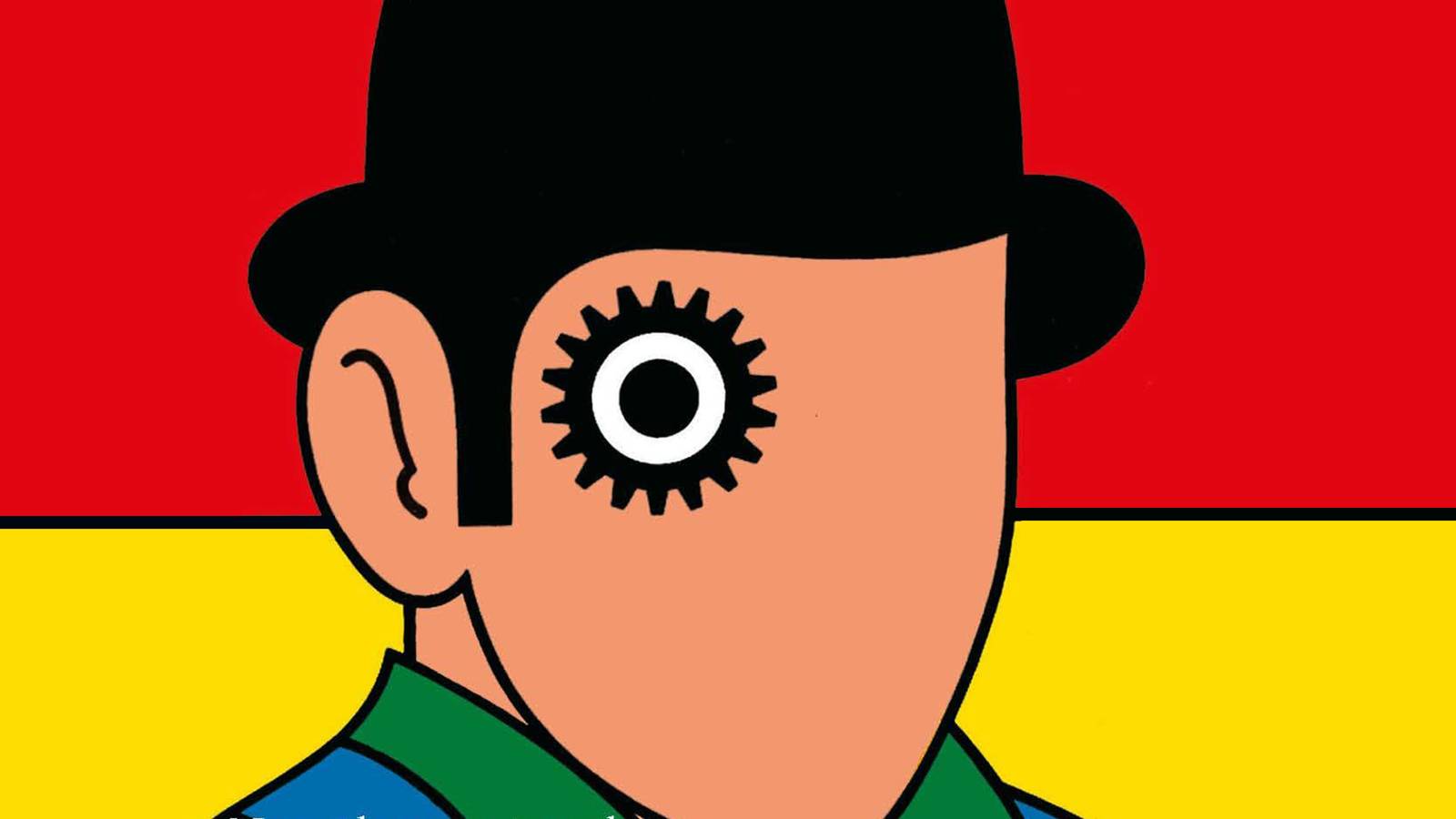
Image via Heyne Published Jul 18, 2026, 8:02 AM EDT Luc Haasbroek is a writer and videographer from Durban, South Africa. He has been writing professionally about pop culture for eight years. Luc's areas of interest are broad: he's just as passionate about psychology and history as he is about movies and TV. He's especially drawn to the places where these topics overlap. Luc is also an avid producer of video essays and looks forward to expanding his writing career. When not writing, he can be found hiking, playing Dungeons & Dragons, hanging out with his cats, and doing deep dives on whatever topic happens to have captured his interest that week. Sign in to your Collider account Although they ostensibly concern the future, the greatest dystopian stories across different mediums really hold up a distorted mirror to the present. They exaggerate humanity's worst tendencies to help us confront uncomfortable truths about things like power, technology, conformity, and violence. The bleakest dystopian worlds are thus usually the ones that are eerily plausible. They're cautionary tales, harrowing visions of what the world could become if we're not careful right now. With all that in mind, this list looks at the very grimmest futures the dystopian genre has to offer, from the violence of A Clockwork Orange to the mind-invading tyranny of Nineteen Eighty-Four. 10 'Fahrenheit 451' (1953) Image via Simon & Schuster "It was a pleasure to burn." Fahrenheit 451 is genre legend Ray Bradbury's most urgent book. In it, he shows us a society where books have been outlawed, critical thought discouraged, and entertainment reduced to endless passive distraction (that latter point rings uncomfortable close to home in our day and age). Citizens willingly surrender their curiosity and critical thinking. The government's censorship succeeds because people have stopped valuing difficult ideas. The protagonist is fireman Guy Montag, whose job is no longer extinguishing fires but burning books, eliminating dangerous ideas before they can spread. However, Montag's comfortable existence begins unraveling after he meets free-thinking neighbors and begins to understand literature's real power. Although the plot does contain some seeds of hope, the future of Fahrenheit 451 is genuinely unsettling, in part because it relies less on brute force than voluntary cultural decline. 9 'Never Let Me Go' (2005) Image via Knopf Doubleday Publishing Group "We all complete. Maybe none of us really understand what we've lived through." Never Let Me Go is one of the very best books by Japanese-British novelist Kazuo Ishiguro, perhaps best known for The Remains of the Day. It's one of the quietest dystopian stories ever, operating on a more personal level, but it's still one of the most moving. Kathy H., Ruth, and Tommy grow up together at the idyllic boarding school Hailsham. While, at first, their childhoods seem idyllic, they eventually learn that they were created to serve a horrifying social system, and that an inescapable future awaits them. Around them, ordinary people continue participating in immense cruelty while convincing themselves it serves a greater good. However, rather than setting the stage for a pulpy revenge plot, this information triggers a philosophical reckoning, forcing the characters to contend with deep questions about humanity, mortality, love, and dignity. 8 'The Road' (2006) Image via Picador "You have to carry the fire." After a catastrophe has reduced Earth to ash-covered ruins, a father and his young son travel south through a landscape where nearly all life has vanished. Food has become desperately scarce, surviving communities have collapsed, and many remaining humans have turned to murder and cannibalism simply to endure another day. Stripped of color and hope, the barren landscape reflects the moral collapse of the civilization that once existed. Every encounter with strangers carries enormous danger, making even brief moments of kindness feel almost miraculous. Yet despite its overwhelming darkness, The Road ultimately concerns love rather than despair. The core of the novel is the father's unwavering determination to protect his son. In this regard, the book is actually possibly Cormac McCarthy's most hopeful project, although that's admittedly a pretty low bar to clear. 7 'A Canticle for Leibowitz' (1959) Image via Bantam Books "Blessed is the preservation of knowledge." A Canticle for Leibowitz spans centuries after nuclear war has destroyed civilization, following generations of monks dedicated to preserving fragments of humanity's lost knowledge. Rather than depicting a single dystopian society, the book presents history itself as cyclical. Humanity painstakingly rebuilds knowledge, only to drift once again toward the arrogance and conflict that previously resulted in nuclear annihilation. In other words, this book is a warning that a new Dark Age could always be around the corner. The mood is deeply pessimistic. The monastery provides one of the few stable institutions remaining in a fractured world, symbolizing humanity's fragile determination to preserve learning despite overwhelming destruction. Yet even this noble mission can't ultimately prevent history from repeating itself. Ultimately, the book struck a chord and proved influential; even the Fallout games have drawn inspiration from it. 6 'A Clockwork Orange' (1962) Image via Penguin Books "What's it going to be then, eh?" Before it was a Stanley Kubrick masterpiece, A Clockwork Orange was a vivid, hard-hitting book where violence and authoritarianism are intertwined. Teenage delinquent Alex spends his nights committing shocking, brutal acts before eventually becoming the subject of an experimental government rehabilitation program. The procedure is designed to eliminate criminal behavior... by removing a person's capacity for moral choice altogether. It's a rich premise that raises all sorts of tough questions, and author Anthony Burgess refuses to offer easy answers. Alex is undeniably monstrous, yet the state's methods of controlling him prove equally disturbing because they destroy his free will. Through this, A Clockwork Orange asks what the value of compelled goodness even is, an idea with very deep, almost religious implications. It suggests that evil and mayhem are the price we pay for freedom. 5 'The Handmaid's Tale' (1985) Image via Anchor Books "Nolite te bastardes carborundorum." The Handmaid's Tale has resonated with readers and viewers for decades now, with the TV show bringing it to wider attention. Following a collapse in fertility rates, the near-future Republic of Gilead seizes power in the United States and constructs a rigid theocracy where women are stripped of their rights and assigned roles based entirely on reproductive function. Offred, one of the regime's Handmaids, struggles to survive this world while quietly preserving memories of the life that was stolen from her. Instead of inventing unprecedented forms of oppression, writer Margaret Atwood combines and amplifies real practices that have existed in different societies throughout history. This approach makes Gilead feel like an extreme version of real tendencies rather than a wholly fantastical place. This epistolary book is layered and contains a lot of food for thought, lending itself to endless analysis and debate. Collider Exclusive · Sci-Fi Survival Quiz Which Sci-Fi World Would You Survive? The Matrix · Mad Max · Blade Runner · Dune · Star Wars Five universes. Five completely different ways the future went wrong — or sideways, or up in flames. Only one of them is the world your instincts were built for. Eight questions will figure out which dystopia, galaxy, or desert wasteland you'd actually make it out of alive. 💊The Matrix 🔥Mad Max 🌧️Blade Runner 🏜️Dune 🚀Star Wars TEST YOUR SURVIVAL → 01 You sense something is deeply wrong with the world around you. What do you do? The first instinct is often the truest one. APull on every thread until I understand the system — then figure out how to break it. BStop asking questions and start stockpiling — food, fuel, weapons. Questions don't keep you alive. CKeep my head down, observe carefully, and trust no one until I know who's pulling the strings. DStudy the patterns. Every system has a rhythm — learn it, and you learn how to survive it. EFind the people fighting back and join them. You can't fix a broken galaxy alone. NEXT QUESTION → 02 In a world of scarcity, what resource do you guard most fiercely? What we protect reveals what we believe survival actually requires. AKnowledge. If you understand the system, you don't need resources — you can generate them. BFuel. Everything else — movement, power, escape — runs on it. CTrust. In a world of fakes and informants, a truly reliable ally is rarer than any commodity. DWater. And after water, information — the two things empires are truly built on. EShips and credits. The galaxy is big — you survive it by being able to move through it freely. NEXT QUESTION → 03 What kind of threat keeps you up at night? Fear is useful data — if you're honest about what you're actually afraid of. AThat reality itself is a lie — that everything I experience has been constructed to keep me compliant. BA raid. No warning, no mercy — just the roar of engines and then nothing left. CBeing identified. Once someone with power decides you're a problem, you're already out of time. DBeing outmanoeuvred — losing a political game I didn't even know I was playing. EThe Empire tightening its grip until there's nowhere left to run. NEXT QUESTION → 04 How do you deal with authority you don't trust? Every dystopia has a power structure. Your approach to it determines everything. ASubvert it from the inside — learn its rules well enough to weaponise them against it. BIgnore it and stay out of its reach. The further from any power structure, the better. CAppear to comply while doing exactly what I need to do. Visibility is the enemy. DManoeuvre within it carefully. You can't beat a system you refuse to understand. EResist openly when I have to. Some things are worth the risk of being seen. NEXT QUESTION → 05 Which environment could you actually endure long-term? Survival isn't just tactical — it's physical, psychological, and very much about where you are. AUnderground bunkers and server rooms — cramped, artificial, but with access to everything that matters. BOpen wasteland — brutal sun, no shelter, constant movement. At least the threat is honest. CA dense, rain-soaked city where you can disappear into the crowd and nobody asks questions. DMerciless desert — extreme heat, no water, and something enormous living beneath the sand. EThe fringe — backwater planets and busy spaceports where the Empire's attention rarely reaches. NEXT QUESTION → 06 Who do you want in your corner when things fall apart? The company you keep is the clearest signal of who you actually are. AA tight crew of believers who've seen behind the curtain and have nothing left to lose. BOne or two people I'd trust with my life. Any more than that and someone talks. CNobody, ideally. Alliances are liabilities. I work alone unless I have no choice. DA community bound by shared hardship and mutual survival — people who need each other to last. EA ragtag team with wildly different skills and total commitment when it counts. NEXT QUESTION → 07 Where do you draw the line — if you draw one at all? Every survivor eventually faces a moment that tests what they're actually made of. AI won't harm the innocent — even the ones who'd report me without hesitation. BI do what I have to to protect the people I've chosen. Everything else is negotiable. CThe line shifts depending on who's asking and what's at stake. DI draw a long-term line — nothing that compromises my people's future, even if it'd help now. ESome lines, once crossed, can't be uncrossed. I know which ones they are. NEXT QUESTION → 08 What would actually make survival worth it? Staying alive is one thing. Having a reason to is another. AWaking others up — dismantling the illusion so no one else has to live inside it. BFinding somewhere — or someone — worth protecting. A reason to keep moving. CAnswers. Understanding what I am, what any of this means, before time runs out. DLegacy — shaping the future in a way that outlasts me by generations. EFreedom — for myself, for others, for every world still living under someone else's boot. REVEAL MY WORLD → Your Fate Has Been Calculated You'd Survive In…Your answers point to the world your instincts were built for. This is the universe your temperament, your survival instincts, and your particular brand of stubbornness were made for. The MatrixYou took the red pill a long time ago — probably before anyone offered it to you. You're a systems thinker who can't help but notice the seams in things. You're drawn to understanding how the system works before figuring out how to break it. You'd find the Resistance, or it would find you — your instinct for spotting constructed realities is the machines' worst nightmare. You function best when you have access to information and the freedom to act on it. The Matrix built an airtight prison. You'd be the one probing the walls for the door. Mad MaxThe wasteland doesn't reward the clever or the well-connected — it rewards those who are hard to kill and harder to break. That's you. You don't need comfort, community, or a cause larger than the next horizon. You need a vehicle, a clear threat, and enough fuel to outrun it — and you're good at all three. You are unsentimental enough to survive that world, and decent enough — just barely — to be something more than another raider. In the wasteland, that distinction is everything. Blade RunnerYou'd survive here because you know how to exist in moral grey areas without losing yourself completely. You read people accurately, keep your circle small, and ask the questions others prefer not to answer. In a city where humanity is a legal designation rather than a feeling, you hold onto something that keeps you functional. You're not a hero. But you're not lost, either. In Blade Runner's world, that distinction is everything. DuneArrakis is the most hostile environment in the known universe — and you are precisely the kind of person it rewards. Patience, discipline, and political awareness are your core strengths — and on Arrakis, they're survival tools. You understand that the long game matters more than any single victory. Others come to Dune and are consumed by it. You'd learn its logic and earn its respect. In time, you wouldn't just survive Arrakis — you'd begin to reshape it. Star WarsThe galaxy far, far away is vast, loud, and in a constant state of violent political upheaval — and you wouldn't have it any other way. You find meaning in being part of something larger than yourself — a cause, a crew, a rebellion. You'd gravitate toward the Rebellion, or the fringes, or whatever pocket of the galaxy still believes the Empire's grip can be broken. You fight — not because you have to, but because standing aside isn't something you're capable of. In Star Wars, that willingness is what makes all the difference. ↻ RETAKE THE QUIZ 4 'The Stand' (1978) Image via Doubleday "The place where you made your stand never mattered." The Stand is arguably Stephen King's most ambitious book, clocking in at a whopping 1152 pages and grappling with big ideas around destruction and rebuilding, around good and evil. It begins with a weaponized flu strain escaping from a lab. It kills more than 99% of the world's population within weeks, leaving civilization shattered almost overnight. The surviving few gradually gather into opposing communities, setting the stage for a final confrontation between forces of hope and overwhelming evil. Although King paints a frightening post-apocalyptic world, the story ultimately extends beyond pure dystopia into borderline-mythic territory. The struggle between Mother Abagail and Randall Flagg feels like something from an epic fantasy story at times. King uses it as a vehicle to examine humanity's capacity to choose between compassion and cruelty. 3 'The Trial' (1925) Image via Knopf "Someone must have been telling lies about Josef K." This masterpiece by Kafka presents one of literature's most psychologically oppressive dystopian worlds. Josef K. is arrested one morning by mysterious officials without ever being informed of his alleged crime. As he desperately attempts to navigate an endlessly confusing legal system, he finds himself ensnared by bureaucracies that seem simultaneously omnipresent, incomprehensible, and utterly indifferent to justice. Crucially, the system functions according to obscure rules that no one understands yet everyone obeys. This absence of logic is at the heart of what can make bureaucracy so terrible. Likewise, the book's bleakness stems from its complete erosion of individual agency: every attempt Josef makes to defend himself only drags him deeper into the quicksand. In his world, the system isn't concerned with establishing guilt. Instead, it seeks to perpetuate helplessness and submission. 2 'Brave New World' (1932) Image via Horizon Ridge Publishing "Everybody belongs to everybody else." Brave New World's dystopia is very different from most, because everyone in it appears content. Humanity has eliminated war, poverty, and disease through genetic engineering, psychological conditioning, rigid social castes, endless shallow entertainment, and the widespread use of pleasure-inducing drugs. Individuality, family, religion, and genuine emotional depth have all been sacrificed in exchange for perpetual comfort. The oppression in this book is thus a lot more subtle than the kind you typically see in dystopian novels, though perhaps no less insidious. It's soft tyranny by consumerism, technology, and distraction, where everybody is "happy" but no one is really human anymore. Worse still, rather than being browbeaten into it by an authoritarian government, most of the citizens seem to have chosen this empty life. Not for nothing, a lot of people say that Huxley's vision of dystopia has proved even more accurate and prescient than Orwell's. 1 'Nineteen Eighty-Four' (1949) Image via Secker & Warburg "Big Brother is watching you." All these decades later, Nineteen Eighty-Four remains the bleakest (and greatest) dystopian novel ever written. It was light-years ahead of its time and gave us important new ways of thinking about oppression. Orwell's key insight here is that the most terrible (and effective) tyranny will be one that conquers not just bodies but minds. In this society, the Party controls history, language, truth, and even private thought through constant surveillance and propaganda. Worse still, the government isn't simply content with people mouthing the words; it demands that they actually believe its lies and illogic. In this sense, it forces the citizens to become complicit in their own subjugation. Along the way, Orwell serves up an endless stream of striking imagery and clever concepts. Ideas like "doublethink" and "thoughtcrime" have permanently entered political discourse because they hit on very real and recognizable patterns.
10 Bleakest Dystopias in Book History
Full Article
Original Source
Read the full article at Collider →KhanList aggregates and links to publicly available news content. We do not host full articles from third-party sources. Always verify important information with original sources.