
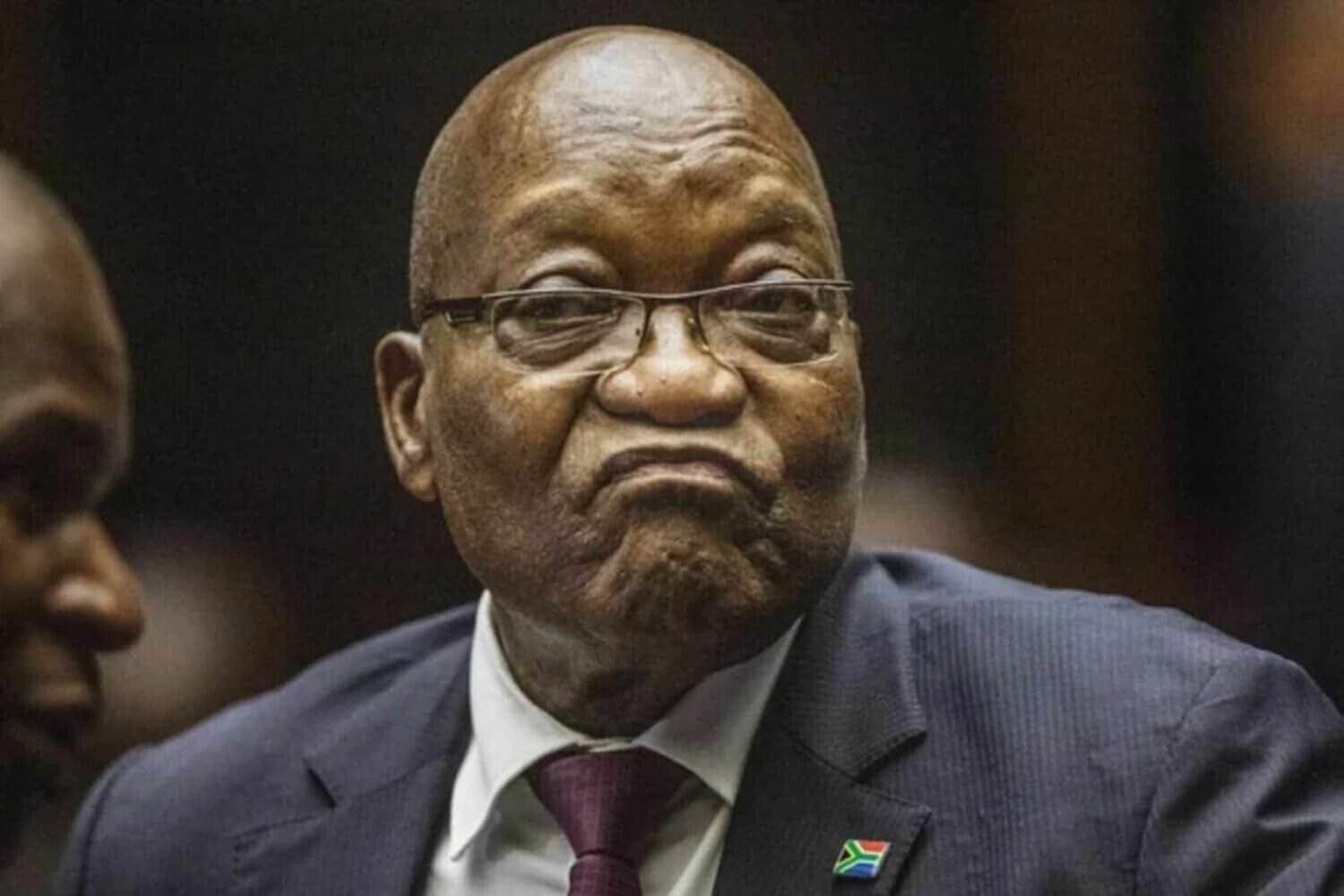
Jacob Zuma's death would not necessarily end his political influence. It could instead strengthen MK, reshape KZN politics and disrupt South Africa's governing coalition. Like Mark Twain, Jacob Zuma can, with a certain relish, reassure his concerned friends and gleeful foes that “rumours of my death have been greatly exaggerated”. For the second time. Zuma’s family and retinue, together with an agog media, have been engaged in an absurdist to-and-fro comedy over whether the former president is at death’s door. Sections of the press, with their own relish, have seized on the drama as a portent of uMkhonto weSizwe (MK) party’s electoral obliteration in 4 November’s local government elections. The current speculation is a reprise of the run-up to the 2024 general election. Then, a hostile press carried a stream of wildly speculative, anonymously sourced reports portraying him as a man on his last legs, unlikely even to survive until polling day. If this was an ANC-orchestrated disinformation campaign, as some suggested, it failed spectacularly. MK turned in a stunning performance for a fledgling party that many had dismissed as a knuckle-dragging, ethno-nationalist throwback, whose appeal would be confined to the Zulu rural backwaters of KwaZulu-Natal. Instead, MK swept to first place in KZN with 45% of the vote, reducing the once-dominant ANC from 54% in 2019 to a humiliating 17%. Nationally, MK secured almost 15% of the vote, becoming the country’s third-largest party and displacing the EFF (10%) as the principal voice of a fractured radical opposition. Zuma’s death could strengthen his political legacy Given Zuma’s role in state capture and the damage he has inflicted on the ANC, there is no shortage of people who would be only too delighted were he to obligingly shuffle off this mortal coil. But they would be grievously mistaken to assume that his death would mark the end of his extraordinarily disruptive influence in South African politics. For many, Zuma is more than a politician. He symbolises resistance to an ANC elite perceived to have betrayed the liberation struggle, abandoned its black constituency and, first Monday, 19 October 2026 under Thabo Mbeki and then Cyril Ramaphosa, persecuted and humiliated a struggle stalwart for political ends. His legal travails and brief imprisonment for contempt of court have reinforced rather than diminished that narrative. His death will magnify it, creating a political martyr whose memory would be considerably easier to gild than his conduct was to defend. MK faces a power vacuum without Zuma MK has so far thrived electorally, despite being an organisational shambles, with Zuma on a whim appointing his choices for the party’s top jobs. The loss of his authority will undoubtedly leave a power vacuum. Under a less tainted and divisive leader, MK could begin to wield the political leverage that has so far been denied to it by the bitter personal enmity between Zuma and Ramaphosa. For all their mutual loathing, the ANC and MK share much the same ideological DNA. Their estrangement is more of a family feud than an ideological schism. Within the tripartite alliance, there are many who would prefer a radical, nationalist alliance to the uncomfortable embrace of the DA. For Deputy President Paul Mashatile, who aspires to succeed Ramaphosa, there could be considerable political advantage in presenting himself as the man capable of healing the schism. Could an ANC-MK alliance reshape KZN politics? The immediate pressure for this kind of realignment could come from KZN. An ANC-MK alliance would command 51 of the legislature’s 80 seats, allowing the ANC to abandon the shaky Inkatha Freedom Party-ANC-DA-National Freedom Party coalition in favour of a new arrangement with MK. Of course, assembling such a coalition is not the same as reclaiming the ANC’s lost electoral support. Nor is such an alliance inevitable. But a reunited liberation-movement bloc is likely to spell the end of the government of national unity in its present form and thwart Ramaphosa’s hesitant attempts at economic and political reform. There is, after all, a political afterlife. Zuma could prove as disruptive from beyond the grave as he has been in life.
Zuma’s political afterlife could be as disruptive as his life
Full Article
Original Source
Read the full article at Citizen →KhanList aggregates and links to publicly available news content. We do not host full articles from third-party sources. Always verify important information with original sources.